
United Express Flight UA5952 Diverted to Grand Junction Due to Severe Denver Thunderstorms
United Express Flight UA5952, operated by SkyWest Airlines, diverted to Grand Junction Regional Airport on August 3, 2026, due to severe convective weather over Denver.

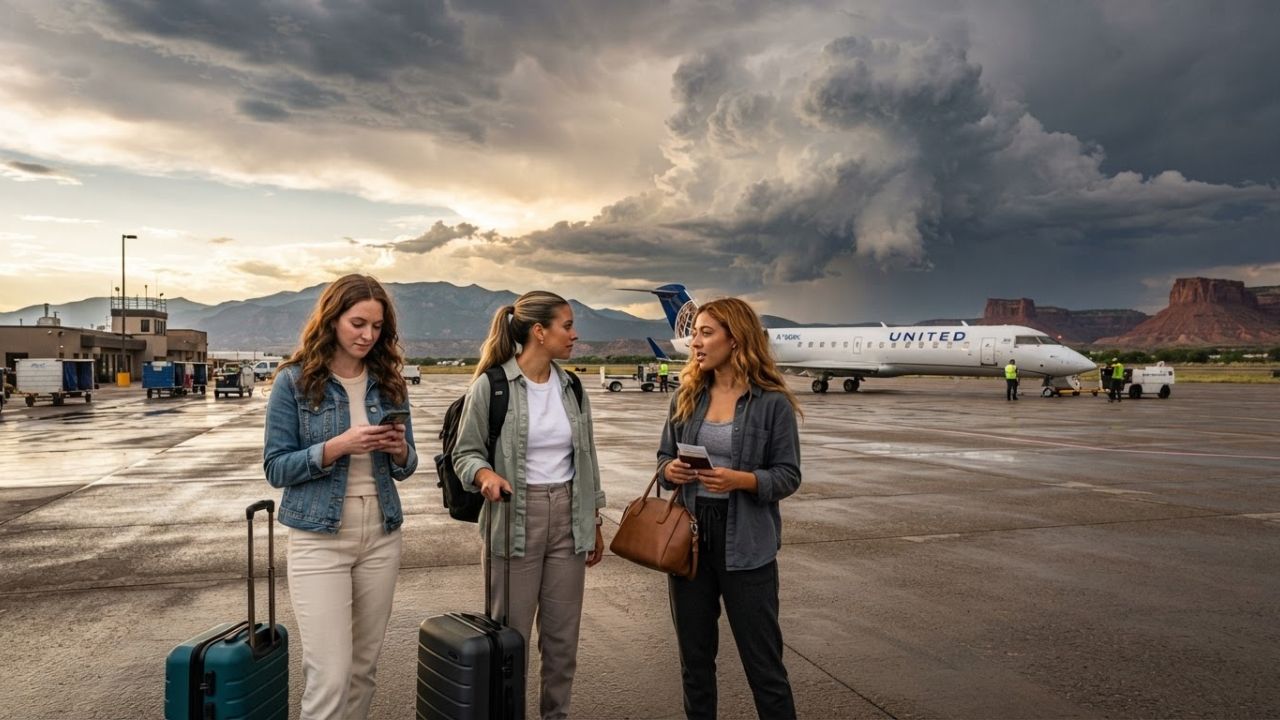
Image generated by AI
A United Express regional flight operated by SkyWest Airlines was forced to execute an emergency diversion to Grand Junction Regional Airport on August 3, 2026, after severe convective thunderstorms blocked all approaches to Denver. The diversion left passengers displaced on Colorado’s Western Slope as flight dispatchers scrambled to coordinate re-routing options.
The Disruption Details
Severe weather disruptions have impacted regional flights along the Rocky Mountain aviation corridor. United Express flight UA5952 (operating under SkyWest flight designator SKW5952) was scheduled to land at Denver International Airport (DEN) with a scheduled time of arrival (STA) of 17:02 EST on August 3, 2026.
As the aircraft approached the Denver terminal area, the flight crew and regional air traffic control identified a line of severe convective thunderstorm cells blocking the arrival runways. The storm generated extreme turbulence and sudden wind shear, rendering flight paths into Denver exceptionally hazardous. To manage safety, cockpit crew placed the aircraft into a holding pattern; however, to prevent unsafe fuel depletion, the captain elected to divert to Grand Junction Regional Airport (GJT) in western Colorado.
Flight & Airport Impact Breakdown
The weather-induced diversion has altered schedules across regional terminals:
- Denver Terminal Access: The storm cells triggered severe ground delay programs, preventing regional aircraft from accessing active descent paths.
- Western Slope Gate Management: Grand Junction Regional Airport (GJT) accommodated the unscheduled arrival of the SkyWest aircraft, coordinating gates and baggage teams.
- Contingency Fuel Operations: The flight crew exited the Denver holding pattern before reaching critical reserve levels, landing safely at GJT without incident.
- Missed Connection Backlog: Displaced passengers missed scheduled domestic and international connections out of the Denver hub.
Passenger Rights & Advisory (Information Gain & Experience)
For regional travelers experiencing unscheduled flight diversions due to severe weather, understanding airline carriage rules is key to resolving travel problems.
Our analysis of the policy suggests the following rules:
- Refund and Cancellation Rights: Under U.S. Department of Transportation (DOT) regulations, if your flight is diverted and you choose to terminate your journey at the alternate airport rather than wait for rebooking, you have the right to a full refund of the unused ticket portion, including baggage fees, paid in cash rather than vouchers.
- Hotel and Meal Accommodations: Because Denver's convective storm cells represent an act of nature (non-controllable delay), United and SkyWest are not legally required to provide free meals or overnight lodging in Grand Junction. The airline must assist in securing discounted rates at local partner hotels.
- Onward Carriage and Rebooking: If you choose to wait, the airline is obligated to rebook you on the next available flight to Denver at no additional cost. Passengers who choose to rent cars and drive the four hours to Denver must notify the airline immediately to prevent the automatic cancellation of subsequent return flight segments.
- Real-Time Status Monitoring: Passengers can verify flight records, ground track coordinates, and departure updates through the FlightAware flight database.
Industry Analyst View
The diversion of UA5952 highlights the thin margins regional operators face during summer convective storm seasons in the Rocky Mountains. Regional aircraft carry smaller fuel capacities than wide-body aircraft, limiting their ability to remain in extended holding stacks during major hub ground stops.
Directing the aircraft to Grand Junction is a standard safety measure. Grand Junction's runway capabilities and localized ground handling facilities provide a reliable backup, ensuring flight crews do not operate near fuel exhaustion limits while waiting for Denver skies to clear. While this detour creates short-term logistical delays, it reflects the safety-first protocols built into modern commercial aviation networks.
Related Travel Guides
Disclaimer
This article is for informational and educational purposes only. It does not constitute legal, financial, or professional advice. While we strive to provide accurate and up-to-date information, travel policies, regulations, and conditions change rapidly. Always verify information with official sources before making travel decisions. Nomad Lawyer makes no representations about the accuracy, reliability, completeness, or suitability of the information provided. Readers should consult qualified professionals for advice specific to their circumstances. The views expressed in this article are those of the author and do not necessarily reflect the views of Nomad Lawyer.
Kunal K Choudhary
Co-Founder & Contributor
A passionate traveller and tech enthusiast. Kunal contributes to the vision and growth of Nomad Lawyer, bringing fresh perspectives and driving the community forward.
Learn more about our team →