
American Airlines Flight AA1883 Diverts to Bozeman Due to Jackson Hole Operational Disruption
American Airlines Flight AA1883 from Dallas-Fort Worth to Jackson diverted to Bozeman Yellowstone International Airport on August 3, 2026, due to mountain operational challenges.

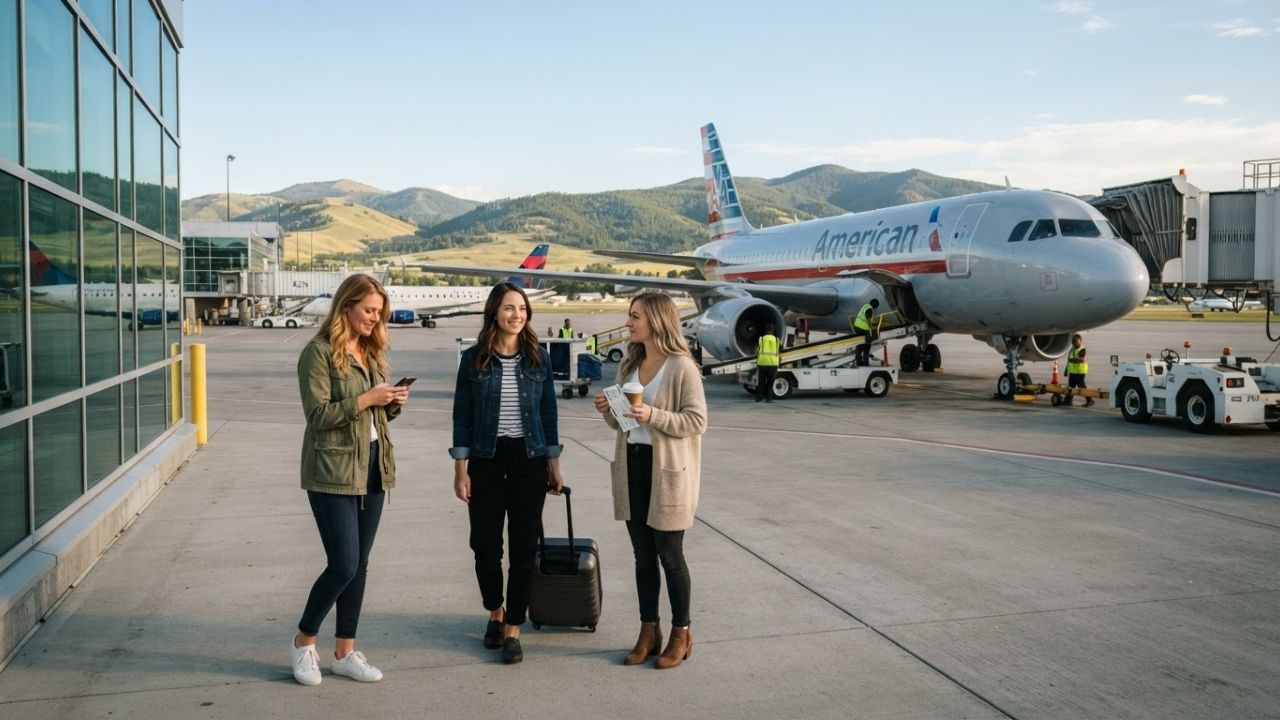
Image generated by AI
American Airlines flight AA1883 operating from Dallas-Fort Worth was forced to abort its descent into Jackson Hole, executing an unscheduled diversion to Bozeman on August 3, 2026. The diversion left passengers stranded in Montana as weather and terrain challenges disrupted mountain arrivals.
The Disruption Details
High-altitude wind patterns and mountain operations have disrupted flights into the Teton region. American Airlines flight AA1883 (also tracked as AAL1883) departed Dallas-Fort Worth International Airport (DFW) at approximately 13:12 CDT on August 3, 2026.
The flight, operated by an Airbus A319-115 with registration N8001N and powered by CFM International CFM56 engines, was scheduled to land at Jackson Hole Airport (JAC) at 14:59. However, during the descent phase towards the Wyoming runway, the flight crew aborted the approach and redirected the aircraft to Bozeman Yellowstone International Airport (BZN) in Montana. While American Airlines has not confirmed whether the detour was triggered by visibility, wind shear, or an aircraft system check, the plane landed safely at BZN.
Flight & Airport Impact Breakdown
The diversion has altered schedules and passenger movements across the regional network:
- Jackson Hole Approach Termination: Volatile wind conditions near the Teton range blocked the narrow-body Airbus A319 arrival.
- Bozeman Hub Integration: BZN ground agents managed the unscheduled arrival, coordinating baggage handling and gate assignments.
- Onward Passenger Transit: Displaced passengers bound for Jackson Hole faced delays as they arranged ground transfers or waited for replacement flights.
- Aircraft Grounding: Airbus A319 (registry N8001N) remained parked at Bozeman pending operational clearance from American Airlines teams.
Passenger Rights & Advisory (Information Gain & Experience)
For travelers affected by mountain flight diversions, navigating airline obligations is key to resolving disruptions.
Our analysis of the policy suggests the following rules:
- DOT Refund Guidelines: Under U.S. Department of Transportation (DOT) guidelines, if a domestic flight is diverted and terminates at an alternate airport, passengers have the right to a full cash refund for the unused ticket portion, including baggage fees, if they choose to cancel the remainder of their journey.
- Controllable vs. Weather Delays: If the diversion was caused by mountainous weather (non-controllable), American Airlines is not legally required to pay for meals or hotels in Bozeman, though they typically offer discounted rates at local lodging partners. If the return was due to an operational maintenance check (controllable), the carrier is obligated to provide meal vouchers and hotel accommodations.
- Self-Transit Coordination: Bozeman is approximately 350 kilometers north of Jackson Hole. Passengers who choose to rent a vehicle and drive to their destination must notify the airline immediately to prevent the automatic cancellation of subsequent return flight segments.
- Real-Time Flight Logs: Real-time departures, flight track maps, and tail numbers can be monitored using the FlightAware flight tracking database.
Industry Analyst View
The diversion of AA1883 highlights the operational complexity of operating narrow-body aircraft into Jackson Hole during the summer months. High-density altitudes combined with strong thermal winds near mountainous terrain limit performance margins, making approaches sensitive to minor wind direction shifts.
Directing the aircraft to Bozeman is a standard safety protocol. BZN’s long runway (approximately 9,000 feet) and robust commercial facilities make it the primary alternate for flights serving the Yellowstone and Grand Teton regions. By choosing to divert rather than risk an unstable approach in turbulent mountain air, the flight crew prioritized passenger safety while conserving aircraft fuel margins.
Related Travel Guides
Disclaimer
This article is for informational and educational purposes only. It does not constitute legal, financial, or professional advice. While we strive to provide accurate and up-to-date information, travel policies, regulations, and conditions change rapidly. Always verify information with official sources before making travel decisions. Nomad Lawyer makes no representations about the accuracy, reliability, completeness, or suitability of the information provided. Readers should consult qualified professionals for advice specific to their circumstances. The views expressed in this article are those of the author and do not necessarily reflect the views of Nomad Lawyer.
Kunal K Choudhary
Co-Founder & Contributor
A passionate traveller and tech enthusiast. Kunal contributes to the vision and growth of Nomad Lawyer, bringing fresh perspectives and driving the community forward.
Learn more about our team →