
Delta Airlines Plunges Global Network into Travel Chaos, Canceling 25 Flights and Delaying 179 Across New York, Atlanta, Dallas, and Asia: Latest Airline News
A massive operational breakdown forces Delta Airlines to abruptly cancel 25 flights and severely delay 179 others, stranding thousands of passengers across domestic US hubs and critical international gateways.

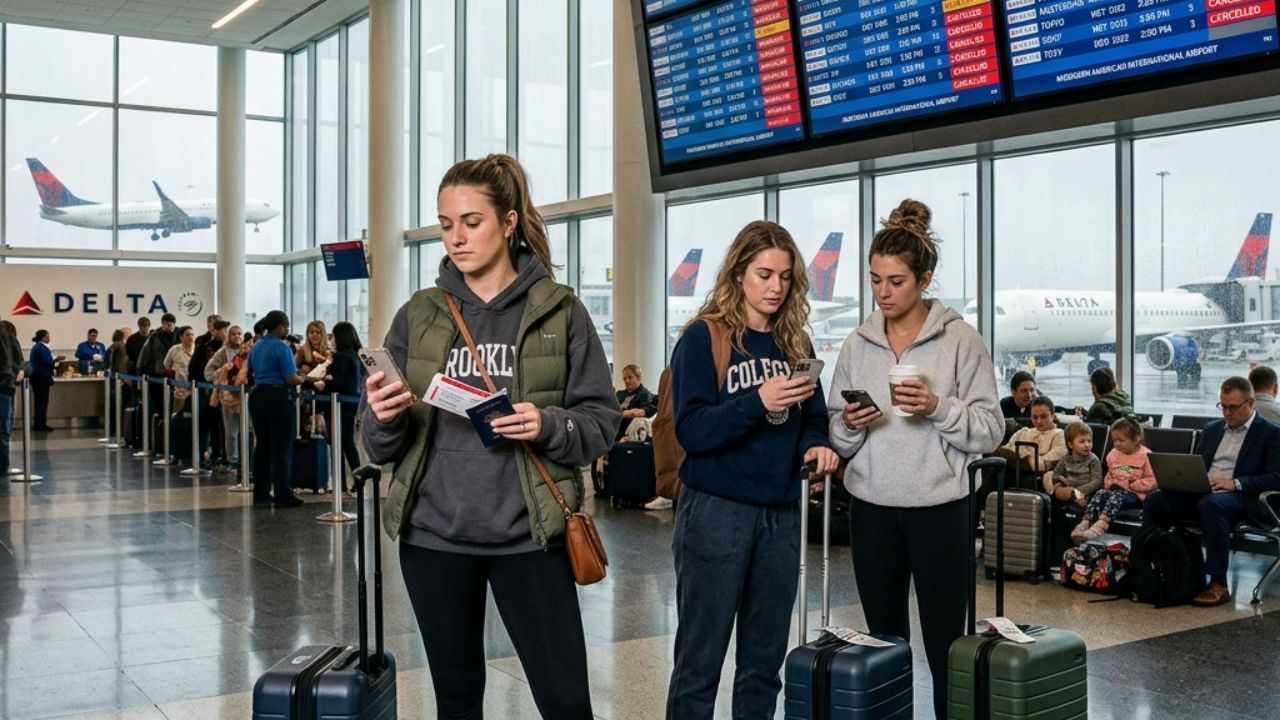
Image generated by AI
A Total Operational Collapse for the US Aviation Giant
While the global passenger network frequently battles unpredictable weather events and standard seasonal congestion, a massive, highly disruptive operational breakdown is currently paralyzing one of the world's absolute largest legacy carriers. Delivering highly urgent, breaking airline news, verified flight data confirms that Delta Airlines has succumbed to overwhelming system-wide gridlock. While desperate travelers attempt to navigate sudden airport disruptions, these exclusive aviation updates reveal that an astonishing 25 full flight cancellations and 179 severe delays have been aggressively executed across the Delta network. By completely bottlenecking critical departures across its primary domestic hubs—including New York, Atlanta, Orlando, and Dallas—and violently severing intercontinental routes to Asia and Europe, this massive operational collapse has triggered uncontrollable travel chaos, stranding hundreds of passengers and shattering itineraries across the globe.
Expanded Overview: The Scale of the Delta Meltdown
The sudden execution of these mass cancellations serves as a massive, undeniable example of how rapidly a heavily interconnected, multi-continent airline network can collapse under operational pressure. Historically, Delta Airlines prides itself on exceptional operational reliability, effectively utilizing massive mega-hubs to funnel passengers globally. However, the sheer scale of today's disruption has completely dismantled that reputation.
By aggressively failing to dispatch 204 scheduled operations, the airline's ground and flight logistics have violently cascaded into failure. This is not a localized technical fault affecting a single airport; the cancellations heavily impact massive, wide-body long-haul sectors and critical domestic short-haul shuttles simultaneously. The severe gridlock has trapped business executives, international tourists, and transit passengers inside overcrowded departure halls across multiple time zones, desperately competing for rapidly diminishing rebooking options while Delta's system-wide backlog aggressively multiplies.
Section-Wise Breakdown of the Airport Disruptions
The Collapse of Major US Hubs
The absolute epicenter of this logistical nightmare is located squarely within the United States. Hartsfield-Jackson Atlanta International Airport (ATL), the absolute beating heart of the Delta network, suffered devastating operational halts. Domestic flights linking Atlanta directly to Pensacola, Orlando, and Piedmont Triad International were abruptly wiped from the departure boards. Furthermore, the contagion rapidly spread to New York, heavily impacting John F. Kennedy International (JFK) and LaGuardia Airport, severely disrupting East Coast corporate travel. The network failure violently rippled through Dallas (affecting DFW and Dallas Love Field), Salt Lake City (SLC), Minneapolis (MSP), Reagan National, Cleveland, and Detroit, proving that the disruption was not geographically isolated but rather a systemic, nationwide collapse.
Intercontinental Severance: Asia and Europe
Compounding the massive domestic collapse, critical international connectivity was also violently severed. Delta Airlines was forced into executing full cancellations and delays on highly lucrative, ultra-long-haul routes. Narita International Airport in Japan and Incheon International Airport in South Korea experienced severe disruptions, heavily crippling Delta's Asian footprint and stranding passengers on routes like Narita to Minneapolis and Incheon to Salt Lake City. Simultaneously, European operations were severely compromised as operations out of Amsterdam Schiphol (Netherlands)—including a highly critical route from Amsterdam to Detroit—suffered devastating delays, proving that the operational failure transcended oceans and completely dismantled Delta's transatlantic and transpacific reliability.
Aircraft Types and Operational Strain
To understand the sheer magnitude of this collapse, analysts must examine the massive variety of aircraft swept into the gridlock. The disruptions heavily involved a massive mix of both narrow-body and wide-body aircraft types. Specifically, the cancellations and delays completely paralyzed Airbus A321, A320, and the flagship A359 (A350-900) models, alongside massive disruptions for the Boeing 737-900, 752 (757-200), and 712 fleets. This vast range of aircraft types and flight distances underscores the extreme operational complexity of the disruption, indicating a massive crew scheduling, maintenance, or systemic routing failure rather than an isolated mechanical fault.
Verified Delta Airlines Disruption Metrics Table
To fully comprehend the highly severe operational parameters and massive logistical breakdown dictating this network collapse, the following table explicitly details the exact delay metrics, aircraft deployments, and affected routes:
| Operational Metric / Flight Data | Verified Disruption & Logistics Tracking |
|---|---|
| Total System Delays | A staggering 179 flights severely delayed |
| Total System Cancellations | 25 full cancellations executed network-wide |
| Heavily Impacted US Hubs | Atlanta (ATL), JFK, LaGuardia, DFW, SLC, MSP, Detroit |
| Impacted International Gateways | Narita (Japan), Incheon (South Korea), Amsterdam |
| Critical Severed Routes | Narita-Minneapolis, Incheon-SLC, Amsterdam-Detroit |
| Paralyzed Aircraft Types | Airbus A321, A320, A359; Boeing 737-900, 752, 712 |
| Domestic Corridors Blocked | Atlanta to Pensacola/Orlando; JFK to LaGuardia; Dallas to ATL |
Passenger Impact: Stranded Without Alternatives
For the modern global tourist and corporate commuter, the passenger impact of these massive, coordinated cancellations is financially and emotionally devastating. The modern demographic is increasingly demanding absolute logistical speed, actively relying on massive legacy carriers like Delta to execute rapid, seamless connections.
Hundreds of passengers booked on these specific Delta flights immediately experienced the massive terror of sudden, full-route cancellations. Instead of arriving in Tokyo, Amsterdam, or New York, these passengers were forced to endure hours of severe uncertainty inside overcrowded terminals without immediate alternatives. Missed connections are violently cascading across subsequent travel plans, ruining hotel bookings and cruise embarkations. Furthermore, for international travelers stranded in the US or abroad, the situation is increasingly desperate, with aviation authorities advising passengers to seek immediate embassy or consulate guidance regarding potential visa extensions caused by the severe departure delays.
Industry Analysis: The Economic Toll on Global Tourism
From a macroeconomic and industry operations perspective, this incident highlights a highly terrifying reality for global aviation planners. Travel analysts fiercely argue that when a carrier the size of Delta suffers 204 simultaneous disruptions across its flagship aircraft fleet, it immediately threatens local tourism economies.
Key leisure destinations such as Orlando, New York, and Salt Lake City are currently experiencing decreased inbound accessibility, severely impacting local hospitality sectors, rental car operations, and convention attendance. Furthermore, the disruption of critical inbound routes from Japan and South Korea physically starves the US tourism market of high-yield Asian travelers. If Delta cannot immediately rectify these massive network vulnerabilities, the airline risks severely deterring future travelers seeking reliability, permanently damaging tourism confidence ahead of the peak summer holiday season.
Conclusion: A Highly Volatile Recovery Phase for Delta
The sudden, highly publicized reporting of 25 cancellations and 179 delays across the Delta Airlines network is exponentially more than a routine operational hiccup—it represents a massive, highly visible failure of the airline's daily operational integrity. By completely severing critical connections from Atlanta to Amsterdam, and from Dallas to Tokyo, the disruption has proven how rapidly transcontinental travel can devolve into absolute chaos. As Delta operations teams aggressively attempt to process the backlog of stranded wide-body aircraft and rebook thousands of displaced passengers, travelers are urgently advised to completely avoid arriving at the airport without aggressively monitoring the Delta app for real-time flight status and demanding immediate rebooking compensation.
Key Takeaways
- Massive Network Collapse: Delta Airlines officially registered a staggering 25 flight cancellations and 179 severe delays globally.
- Domestic Hubs Devastated: Atlanta, JFK, LaGuardia, Dallas, Detroit, SLC, and Minneapolis suffered the absolute brunt of the domestic gridlock.
- Transcontinental Routes Severed: Highly lucrative international links to Narita (Japan), Incheon (South Korea), and Amsterdam were severely crippled.
- Multi-Fleet Paralysis: The operational breakdown simultaneously grounded Airbus A359 wide-bodies alongside Boeing 752 and 737-900 narrow-bodies.
- Severe Passenger Chaos: Hundreds of global travelers were left completely stranded, forcing massive rebooking efforts and requiring immediate consular assistance for international visa extensions.
Disclaimer: The specific flight delay counts, aircraft types, and cancellation metrics presented in this report are based on verified flight tracking data (FlightAware) regarding operations for Delta Airlines. Official causes for this massive operational breakdown, subsequent network recovery timelines, and passenger compensation procedures are highly volatile and subject to continuous, real-time update. Affected passengers are urgently advised to monitor their specific booking status directly via the Delta official portal and avoid traveling to the airport unless their departure is explicitly confirmed.
Disclaimer
This article is for informational and educational purposes only. It does not constitute legal, financial, or professional advice. While we strive to provide accurate and up-to-date information, travel policies, regulations, and conditions change rapidly. Always verify information with official sources before making travel decisions. Nomad Lawyer makes no representations about the accuracy, reliability, completeness, or suitability of the information provided. Readers should consult qualified professionals for advice specific to their circumstances. The views expressed in this article are those of the author and do not necessarily reflect the views of Nomad Lawyer.
Kunal K Choudhary
Co-Founder & Contributor
A passionate traveller and tech enthusiast. Kunal contributes to the vision and growth of Nomad Lawyer, bringing fresh perspectives and driving the community forward.
Learn more about our team →