
Delta Air Lines Flight DL2322 Diverts to Baltimore After Atlanta Departure on August 5 2026
Delta Air Lines Flight DL2322, an Airbus A321 traveling from Atlanta to Newark, was forced to divert to Baltimore/Washington International Airport on August 5, 2026.

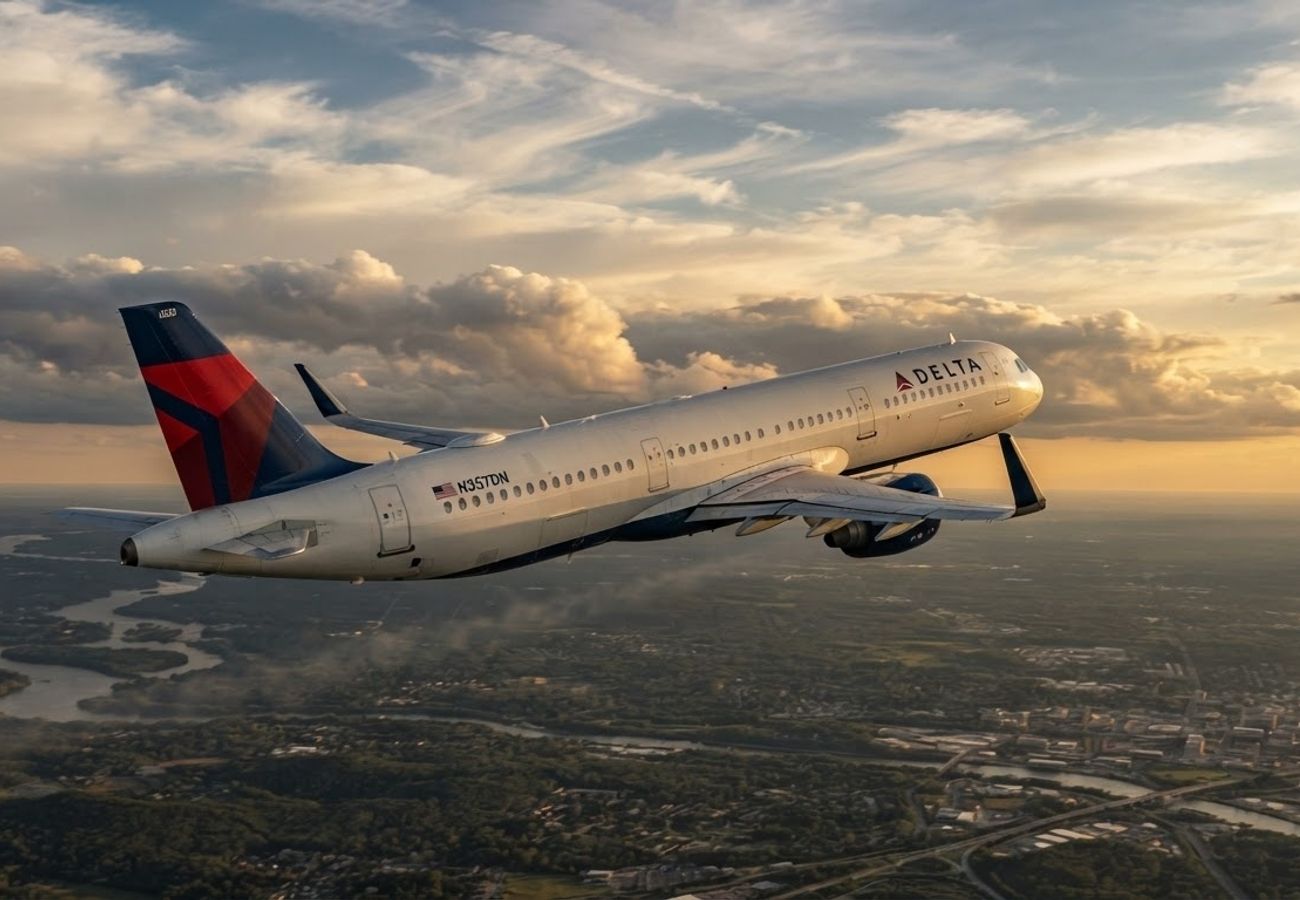
Image generated by AI
A Delta Air Lines service from Atlanta to Newark was forced to land at Baltimore/Washington International Airport on August 5, 2026, resulting in a 37-minute delay for passengers.
[Baltimore, August 7, 2026] — A scheduled domestic flight operated by Delta Air Lines experienced an unexpected change in destination this week. Flight DL2322, which was intended to connect Hartsfield-Jackson Atlanta International Airport (ATL) with Newark Liberty International Airport (EWR), diverted to Baltimore/Washington International Airport (BWI) during its transit on Wednesday, August 5.
The aircraft, an Airbus A321 registered as N342DN, departed from Atlanta at 1:08 PM EDT. While the flight was originally slated to touch down in New Jersey at approximately 3:24 PM EDT, it instead touched down in Maryland at 4:01 PM EDT.
Flight Path and Arrival Logistics at BWI
The diversion shifted the aircraft's trajectory away from the New York metropolitan area toward the Baltimore-Washington corridor. Upon arrival at BWI, the Airbus A321 was directed to Gate A4. This change in destination meant that passengers who had planned for a Newark arrival were instead processed through a different state's aviation hub.
According to flight tracking data, the arrival occurred 37 minutes behind the original scheduled time for the Newark route. Despite the change in geography, the landing was executed safely, and the aircraft completed its operation without further incident.
Undisclosed Reasons for the Delta Diversion
Industry observers note that the specific catalyst for the diversion of Flight DL2322 has not been publicly detailed. No official statement from Delta Air Lines has specified whether the decision to land in Baltimore was driven by mechanical issues, inclement weather, air traffic control mandates, or airport congestion at Newark Liberty International.
In the aviation industry, diversions are standard safety protocols. Flight crews may opt for an alternative airport if they encounter technical anomalies, medical emergencies on board, or if the destination airport becomes temporarily unavailable due to ground delays or runway closures. In this instance, the transition to BWI allowed the crew to land the aircraft safely and efficiently.
Technical Specifications of the Airbus A321 N342DN
The aircraft utilized for this route was an Airbus A321, identified by the registration N342DN. This narrow-body jet is a staple of Delta's domestic fleet, specifically designed for medium-haul routes that require a balance of high passenger capacity and fuel efficiency.
The A321 is frequently deployed on high-traffic corridors connecting major US hubs, such as the route between Atlanta—the world's busiest airport—and the densely populated New York/New Jersey region. The reliability of the N342DN airframe ensured that despite the redirection, the flight remained stable throughout the diversion process.
Passenger Impact and Ground Logistics
For the travelers aboard DL2322, the diversion created immediate logistical challenges. Landing in Baltimore instead of Newark typically requires passengers to arrange alternative ground transportation, such as rental cars, rideshares, or trains, to reach their final destinations in New Jersey or New York.
For those with connecting flights departing from Newark, such a diversion can lead to missed connections and the need for rebooking. Airline protocols generally dictate that staff provide guidance on the ground, though the responsibility for onward travel often falls to the passenger depending on the cause of the diversion.
Operational Realities of US Domestic Aviation
The diversion of Flight DL2322 serves as a case study in the operational flexibility required to manage the United States' complex airspace. With thousands of flights intersecting daily, the ability to pivot to a secondary airport like BWI is essential for maintaining the overall stability of the national aviation network.
The coordination between the cockpit, Delta's operations center, and air traffic controllers is what allows a flight to be rerouted in real-time without compromising safety. While these events are inconvenient, they demonstrate the systemic redundancy built into US aviation to handle unforeseen variables.
Why This Matters: The Traveler's Perspective
For the modern traveler, this incident highlights a critical reality: a confirmed ticket to a specific airport is a plan, not a guarantee. When a diversion occurs, the "last mile" of the journey becomes the most volatile.
From a logistical standpoint, landing at a hub like BWI instead of EWR can add several hours of travel time and significant unplanned expenses for ground transport. Travelers are increasingly encouraged to maintain flexible itineraries and comprehensive travel insurance that covers "trip interruption," which can mitigate the costs associated with unexpected airport changes.
Furthermore, this event underscores the importance of real-time communication. Passengers who rely solely on airport monitors may miss critical updates that are often pushed faster through airline mobile apps. In an era of high-frequency domestic travel, the ability to adapt to a destination change is as much a part of the journey as the flight itself.
Safety remains the absolute priority in the skies, even when it means changing the destination on the fly.
Related Travel Guides
Disclaimer
This article is for informational and educational purposes only. It does not constitute legal, financial, or professional advice. While we strive to provide accurate and up-to-date information, travel policies, regulations, and conditions change rapidly. Always verify information with official sources before making travel decisions. Nomad Lawyer makes no representations about the accuracy, reliability, completeness, or suitability of the information provided. Readers should consult qualified professionals for advice specific to their circumstances. The views expressed in this article are those of the author and do not necessarily reflect the views of Nomad Lawyer.
Kunal K Choudhary
Co-Founder & Contributor
A passionate traveller and tech enthusiast. Kunal contributes to the vision and growth of Nomad Lawyer, bringing fresh perspectives and driving the community forward.
Learn more about our team →