
Delays Snarl Newark Liberty as 150+ Flights Back Up Tuesday
More than 150 flights experienced delays snarl Newark Liberty International Airport on Tuesday in 2026, with six cancellations affecting United, Delta, and American Airlines on domestic and transatlantic routes.

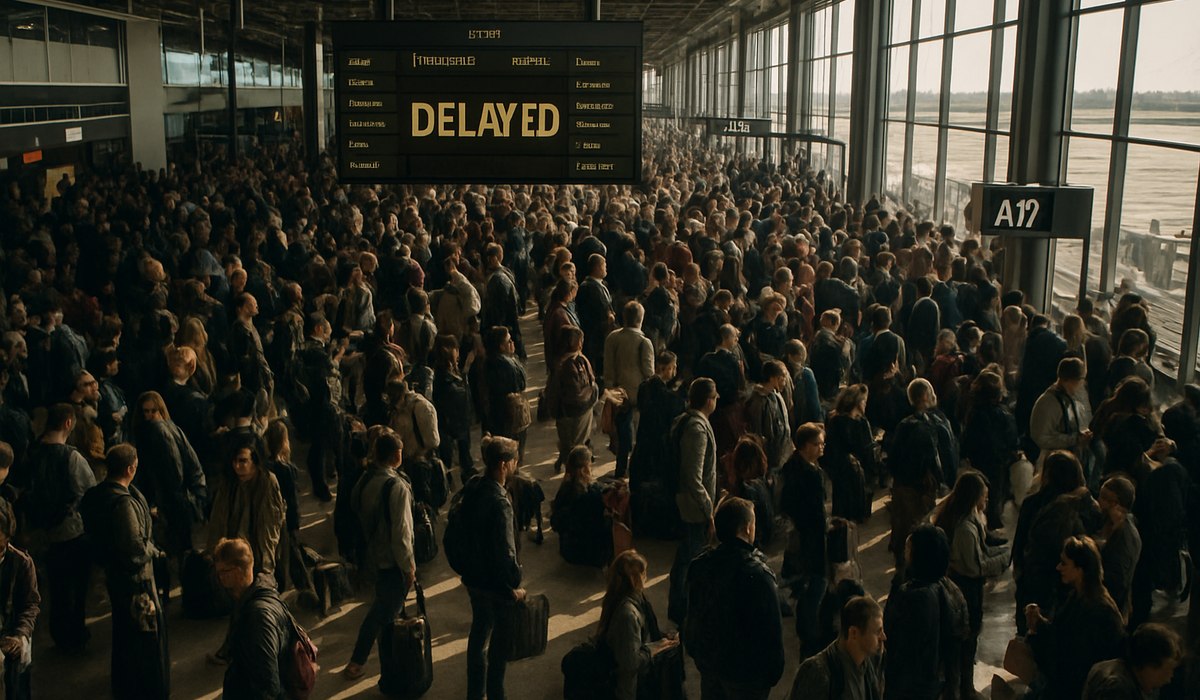
Image generated by AI
Major Disruption Hits Newark Liberty Hub
More than 150 flights faced delays and six were canceled at Newark Liberty International Airport on Tuesday, creating cascading disruptions across one of the Northeast's busiest aviation hubs. United Airlines, Delta Air Lines, and American Airlines bore the brunt of the operational snarl, which affected both short-haul domestic connections and long-haul international departures to European gateways. The incident underscores persistent capacity challenges at the New Jersey airport, where congestion during peak travel periods frequently translates into extended passenger waits and missed connections.
Flight-tracking data confirmed approximately 155 departures and arrivals running significantly behind schedule throughout the day. Passengers booked on transatlantic routes to London and Frankfurt experienced the longest boarding delays, while domestic services linking Newark with Chicago and other hub cities also faced extended ground holds. The simultaneous disruption across multiple carriers suggests systemic airport-level constraints rather than airline-specific operational issues.
Widespread Disruptions Hit Northeast Hub
Newark Liberty International Airport occupies a critical position within the Northeast Megalopolis air network, serving as a primary gateway for the New York metropolitan area and a vital connecting point for transcontinental and international traffic. When operational disruptions occur at this scale, their ripple effects extend far beyond the airport's immediate airspace.
The Tuesday delays reflected a combination of factors including late-arriving inbound aircraft, limited departure slot availability, and ground congestion affecting gate assignments and taxiway operations. The airport's role as a dense hub operation means minor upstream delays compound rapidly into significant local gridlock. Passengers faced extended waits in crowded terminals, with some experiencing delays exceeding three hours. Airlines implemented same-day rebooking procedures and issued travel waivers to accommodate stranded customers, though accommodation availability at peak travel periods remained constrained. Monitor real-time flight status updates on FlightAware for detailed delay information and expected departure times.
Newark's Chronic Delay Problem
Delays snarl Newark with regularity far exceeding national averages, according to recent Federal Aviation Administration data. The airport consistently ranks among America's most delay-prone large hubs, a distinction driven by structural capacity limitations and infrastructure constraints that persist despite ongoing modernization efforts.
Federal aviation authorities implemented hourly operation caps beginning in 2025, restricting the number of scheduled arrivals and departures through late October 2026. These limitations reflect years of radar outages, controller staffing shortages, and airspace management challenges that have periodically paralyzed Newark operations. Recent infrastructure projects, including runway and taxiway rehabilitation work, temporarily exacerbated congestion while improving long-term capacity. The airport's aging air traffic control technology and ongoing staff development initiatives mean additional disruptions remain probable during high-demand travel periods. Check FAA advisories for ground stop notices and operational update notices affecting Newark operations.
Impact on International and Domestic Routes
Passengers booked on transatlantic services faced the most severe consequences of Tuesday's operational disruption. Departures to London Heathrow, Frankfurt, and other major European hubs experienced boarding delays ranging from 90 minutes to over three hours. Airlines responded by shuffling aircraft and repositioning crews to maintain service to high-demand international markets, though this strategy created downstream cascading effects on domestic connections.
Domestic corridor services, particularly those connecting Newark with Chicago and other Midwest hubs, also experienced substantial delays. Short-haul flights within the Northeast Megalopolis—including services to Boston, Philadelphia, and Washington—faced extended ground holds as air traffic control spacing requirements tightened during peak periods. Passengers on connecting journeys experienced missed onward flights, forcing costly same-day rebookings or overnight hotel stays. Airlines operating smaller footprints at Newark proved no more insulated than dominant carriers, as gate scarcity and ramp congestion affected point-to-point services uniformly across all carriers.
Cascading Effects of Hub Congestion
Hub operations depend on precise timing synchronization, where arriving flights must discharge passengers and cargo quickly before the same aircraft departs on subsequent rotations. When one flight falls behind schedule, the cascade begins immediately. United Airlines, as Newark's dominant carrier, experienced amplified disruption effects given its extensive hub operations at the airport.
The airline's transcontinental and international network connections proved particularly vulnerable to single-day disruptions. Passengers missing international connections faced rebooking onto flights days later, essentially converting short trips into extended journeys. Ground crews worked extended shifts managing aircraft deplaning and turnaround procedures, while gate personnel struggled to accommodate holding aircraft awaiting available departure slots. The congestion extended to ramp operations, where taxiway queues forced pilots to hold departing aircraft in compact holding areas, burning additional fuel and extending actual flight times beyond scheduled flight plans.
Traveler Action Checklist
If your flights were affected by Tuesday's delays at Newark Liberty International Airport, follow these essential steps:
-
Monitor real-time flight status on your airline's mobile app or FlightAware before departing for the airport, refreshing updates every 15 minutes during peak disruption periods.
-
Contact your airline immediately if you experienced a delay exceeding three hours or a canceled flight, as you may qualify for compensation under U.S. Department of Transportation regulations.
-
Document all disruption details including original booking confirmations, boarding passes, delay duration, rebooking information, and out-of-pocket expenses like meals, hotels, or ground transportation.
-
Request written delay documentation from your airline, including the official reason code for the disruption—essential for filing compensation claims with the U.S. DOT.
-
File a complaint with the U.S. Department of Transportation if compensation is denied, using their Aircraft Consumer Complaint Form.
-
Review your airline's commitment of performance regarding rebooking on alternative flights, hotel accommodations, and meal vouchers during extended delays.
-
Consider travel insurance for future Newark-based itineraries, ensuring coverage for airline-caused delays and cancellations.
Key Disruption Data Table
| Metric | Details |
|---|---|
| Total Delayed Flights | 155+ departures and arrivals |
| Canceled Flights | 6 flights completely canceled |
| Primary Affected Carriers | United Airlines, Delta Air Lines, American Airlines |
| International Routes Impacted | London, Frankfurt, Paris, Brussels |
| Domestic Hub Connections | Chicago, Washington, Boston, Philadelphia |
| Maximum Delay Duration | 3+ hours for some departures |
| Typical Rebooking Wait | 12-48 hours for alternative flights |
| Airport Operation Caps | Extended through October 2026 |
What This Means for Travelers
Tuesday's disruption at Newark Liberty International Airport reflects deepening structural challenges at one of America's busiest aviation hubs. The simultaneous impact on 150+ flights across major carriers signals systemic congestion rather than isolated incidents, suggesting travelers should prepare for additional disruptions during peak travel periods through fall 2026.
Passengers planning Newark connections should build substantial buffer time between flights, ideally 2-3 hours for domestic connections and 3+ hours for international links. Consider alternative departure airports when possible, particularly for transcontinental or transatlantic flights where missed connections create expensive rebooking scenarios. Enroll in airline frequent flyer programs offering priority rebooking and hotel accommodations during disruptions. Purchase comprehensive travel insurance covering airline-caused delays and cancellations. Monitor FAA notices and traffic management advisories before traveling, as ground stops can occur with minimal notice. Join airline text alert programs to receive real-time delay notifications. Review your airline's current policies regarding meal vouchers, hotel accommodations, and rebooking procedures, as these vary significantly between carriers
Disclaimer
This article is for informational and educational purposes only. It does not constitute legal, financial, or professional advice. While we strive to provide accurate and up-to-date information, travel policies, regulations, and conditions change rapidly. Always verify information with official sources before making travel decisions. Nomad Lawyer makes no representations about the accuracy, reliability, completeness, or suitability of the information provided. Readers should consult qualified professionals for advice specific to their circumstances. The views expressed in this article are those of the author and do not necessarily reflect the views of Nomad Lawyer.
Preeti Gunjan
Contributor & Community Manager
A passionate traveller and community builder. Preeti helps grow the Nomad Lawyer community, fostering engagement and bringing the reader experience to life.
Learn more about our team →