Czechia Slow Travel Pivot: How Český Krumlov Drives Regional Tourism Beyond Prague

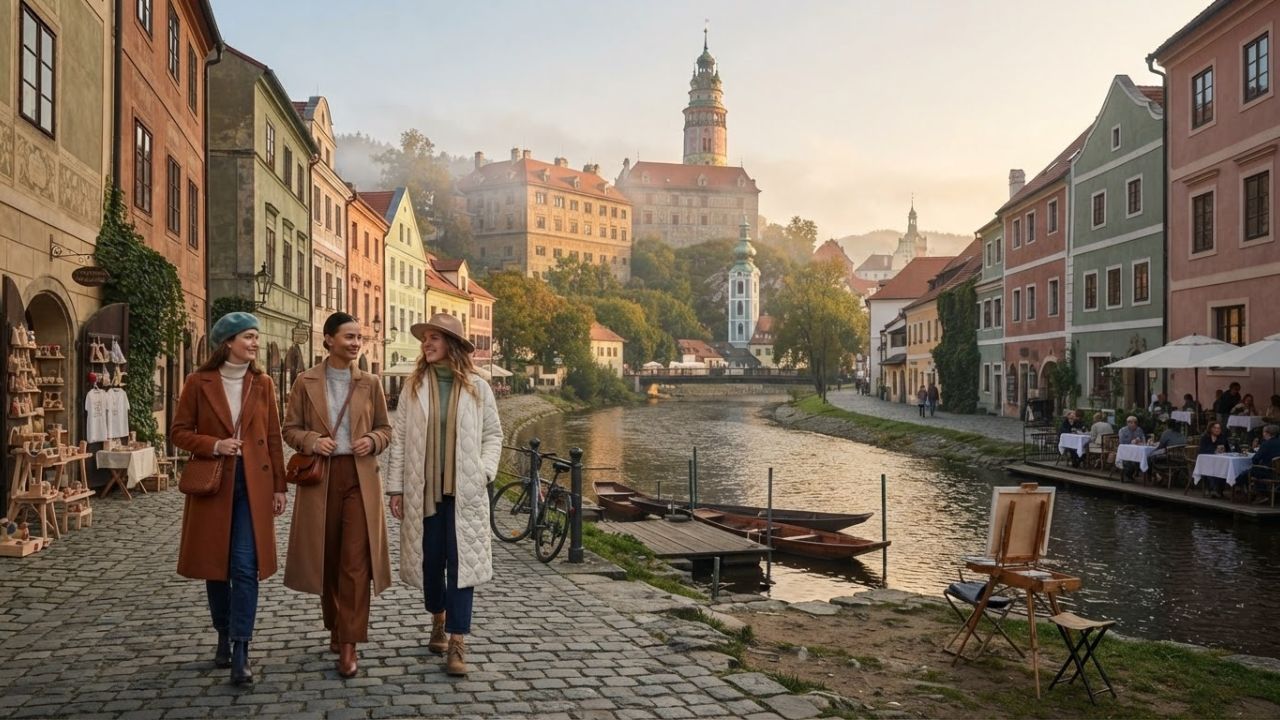
Czechia is accelerating its regional tourism strategy as international travelers pivot toward slow travel in Český Krumlov and the South Bohemia region. Driven by a 6.9 per cent surge in regional overnight stays, lower daily spending of €85 to €140, and electrified passenger rail links, the UNESCO World Heritage town provides an alternative to capital city congestion in Prague.
[ČESKÝ KRUMLOV, Czechia] — Tourism analysts and Czech municipal leaders report a major structural shift as long-haul international visitors expand their itineraries into secondary regional destinations. Located two hours south of Prague along a dramatic double bend of the Vltava River, the medieval town of Český Krumlov has emerged as a cornerstone of Czechia’s regional dispersal strategy.
By encouraging travelers to spend multiple nights in South Bohemia rather than taking rapid single-day excursions, regional tourism authorities are successfully decentralizing visitor spending. The strategy reduces peak seasonal crowd density in Prague by 12 to 18 per cent while channeling capital directly into independent family businesses, regional microbreweries, and local craft workshops.
South Bohemia Regional Dispersal Cuts Prague Crowd Density by 12–18%
The economic structure of slow travel in South Bohemia contrasts with capital city tourism. While daily visitor expenditures in Prague average between €180 and €250 per day, daily spending in provincial destinations like Český Krumlov ranges between €85 and €140 per day, allowing travelers to extend their stays while retaining travel value.
Key economic and demographic indicators driving regional travel growth include:
- Regional Overnight Surge: Overnight stays across Czechia's regional provinces experienced a 6.9 per cent year-over-year increase, reflecting growing demand for multi-day heritage stays.
- National Employment Support: Tourism directly sustains over 154,000 jobs nationwide, with an increasing share of employment generated outside primary urban centers.
- Extended Stay Duration: Average international stay durations in non-metropolitan heritage and wellness districts have expanded to 4.67 days.
This decentralized financial distribution shields regional municipalities from macroeconomic shocks while supporting national tourism revenues, which total over $9.13 billion annually and contribute 2.6 per cent directly to Czechia’s Gross Domestic Product (GDP).
Low-Emission Electric Rail Links Reduce Carbon Footprint by 35%
Connecting Prague to South Bohemia via electrified passenger rail infrastructure supports Czechia's national sustainability targets. Substituting road transportation and domestic flights with electric rail passenger corridors yields a 35 per cent reduction in carbon emissions per passenger-kilometer.
Sustainable transport integration provides critical environmental benefits:
- National Emissions Targets: Aligns travel growth with national carbon reduction efforts in a country recording per capita greenhouse gas emissions between 7.04 and 7.9 tonnes of CO₂ equivalent.
- Mitigating Capital Congestion: Reduces visitor density on Prague's public transit infrastructure by 12 to 18 per cent during peak summer and autumn seasons.
- Multimodal River Activities: Complements zero-emission land transport with low-impact aquatic leisure along the Vltava River, including traditional wooden rafting and canoeing.
The electrified rail link allows environmentally conscious travelers to tour historical Bohemian landscapes without contributing to regional highway pollution.
IoT Crowd Management and Preservation Reinvestment Frameworks
Preserving the delicate medieval urban architecture of Český Krumlov—centered around its 13th-century castle complex and Gothic, Renaissance, and Baroque buildings—requires advanced spatial management. Municipal authorities deploy Internet of Things (IoT) sensors and crowd-monitoring applications to prevent physical wear on historic structures.
Smart tourism management protocols include:
- Bridge Capacity Caps: Automated spatial systems restrict pedestrian bottlenecks on historic Vltava River bridges to fewer than 1,200 visitors per hour.
- Infrastructure Savings: Intelligent foot-traffic distribution delivers a 20 per cent reduction in annual municipal infrastructure maintenance expenses.
- Preservation Reinvestment: Local municipal frameworks allocate 15 to 22 per cent of tourism tax revenues directly into dedicated historic preservation funds, supporting multi-million-euro restorations of the 13th-century castle complex.
- Local Sourcing Standards: Over 70 per cent of ingredients served in traditional riverfront taverns are sourced within a 50-kilometer radius, keeping culinary spending within the local value chain.
High public satisfaction metrics accompany these municipal investments, with over 80 per cent of local residents confirming improvements in public space quality, road maintenance, and transit cleanliness.
Český Krumlov and Czechia Regional Tourism Metrics
| Tourism & Economic Indicator | Recorded Benchmark / Operational Figure |
|---|---|
| Location & UNESCO Status | Český Krumlov, South Bohemia, Czechia (UNESCO World Heritage Site) |
| Distance & Geography | 2 Hours South of Prague (Inland along a Vltava River bend) |
| Provincial Daily Spend Variance | €85–€140/day in South Bohemia vs €180–€250/day in Prague |
| Regional Overnight Stay Growth | 6.9% Year-Over-Year Increase in Provincial Overnight Stays |
| National Hospitality Employment | Supports 154,000+ Direct Jobs Nationwide |
| National Tourism GDP Contribution | Generates $9.13+ Billion in Revenue (2.6% Direct GDP Contribution) |
| Annual National Guest Inflow | 23.6 Million Domestic and Foreign Guests |
| Extended Regional Stay Average | Expanded to 4.67 Days in Non-Metropolitan Heritage Destinations |
| Electric Rail Emissions Reduction | 35% Lower Carbon Footprint per Passenger-Kilometer vs Road/Air |
| Prague Crowding Mitigation | Reduces Peak Metropolitan Visitor Density by 12–18% |
| IoT Spatial Bottleneck Cap | Caps Pedestrian Traffic to <1,200 Visitors/Hour on Historic Bridges |
| Preservation Tax Reinvestment | 15–22% of Tourism Tax Revenues Dedicated to Historic Preservation Funds |
| Regional Food Sourcing | 70%+ of Tavern Ingredients Sourced Within a 50-Kilometer Radius |
| Top European Source Markets | Germany (2.35M Visitors), Poland (939K), Slovakia (931K) |
| Visitor Retention Rate | Multi-Day Regional Visitors Show 28% Increase in Return Visits |
Economic Analysis: Slow Travel Retains High-Value Visitor Markets
Comparative evaluations against competing European UNESCO heritage towns—such as Hallstatt in Austria or Bruges in Belgium—highlight the commercial stability of multi-day regional stays. International travelers engaging in multi-night regional itineraries demonstrate a 28 per cent higher return visit rate compared to single-day tour bus excursionists.
The regional market relies heavily on strong cross-border arrivals from Central European neighbors:
- Germany: 2.35 million annual visitors entering Czechia.
- Poland: 939,000 annual visitors.
- Slovakia: 931,000 annual visitors.
Independent regional tours averaging €50 to €150 per day present an accessible, sustainable alternative to luxury package tours costing upwards of €2,000, attracting long-haul travelers who seek authentic cultural immersion.
Why This Matters (Information Gain & Experience)
For international travelers, choosing slow travel in Český Krumlov delivers a restful experience away from capital city crowds. Visitors can explore 13th-century castle courtyards, take traditional wooden raft trips down the Vltava River, and sample regional South Bohemian cuisine at lower daily costs than in Prague.
From a travel planning perspective, allocating two to three nights in South Bohemia allows travelers to utilize low-emission electric train connections from Prague Central Station. Choosing locally owned guesthouses and riverfront taverns ensures that visitor spending directly supports regional heritage preservation and independent craft artisans.
Frequently Asked Questions
How far is Český Krumlov from Prague?
Český Krumlov is located inland in the South Bohemia region, approximately two hours south of Prague by train or road along the Vltava River.
What is the cost difference between staying in Prague versus South Bohemia?
Daily spending in provincial South Bohemia ranges between €85 and €140 per day, compared to €180 to €250 per day in capital city Prague.
How does Český Krumlov manage tourist crowds on historic structures?
Municipal authorities utilize IoT spatial sensors and crowd-monitoring applications to cap pedestrian traffic to fewer than 1,200 visitors per hour on historic bridges over the Vltava River.
How much tourism tax revenue goes toward historic preservation?
Český Krumlov allocates 15 to 22 per cent of municipal tourism tax revenue directly into historic preservation funds to maintain its 13th-century castle and medieval urban structures.
Related Travel Guides
This article is for informational purposes. Flight routes, passenger regulations, visa rules, and transit advisories are subject to change by airlines and aviation authorities. Readers are advised to verify schedules and travel documentation with relevant carriers and border agencies before departure.
Related Stories

Angola Courts Gulf Capital to Power Tourism Expansion as Portuguese Hospitality Enrolments Surge by 106%