
Costa Rica Witnesses Historic Aviation Expansion as Inbound Flights Bring Over One Million Tourists to San José and Guanacaste, Straining Local Parks and Infrastructure: Costa Rica Travel Update
A massive influx of international travelers has shattered records in Central America, prompting a major Costa Rica travel update as airports in San José and Guanacaste face gridlock.

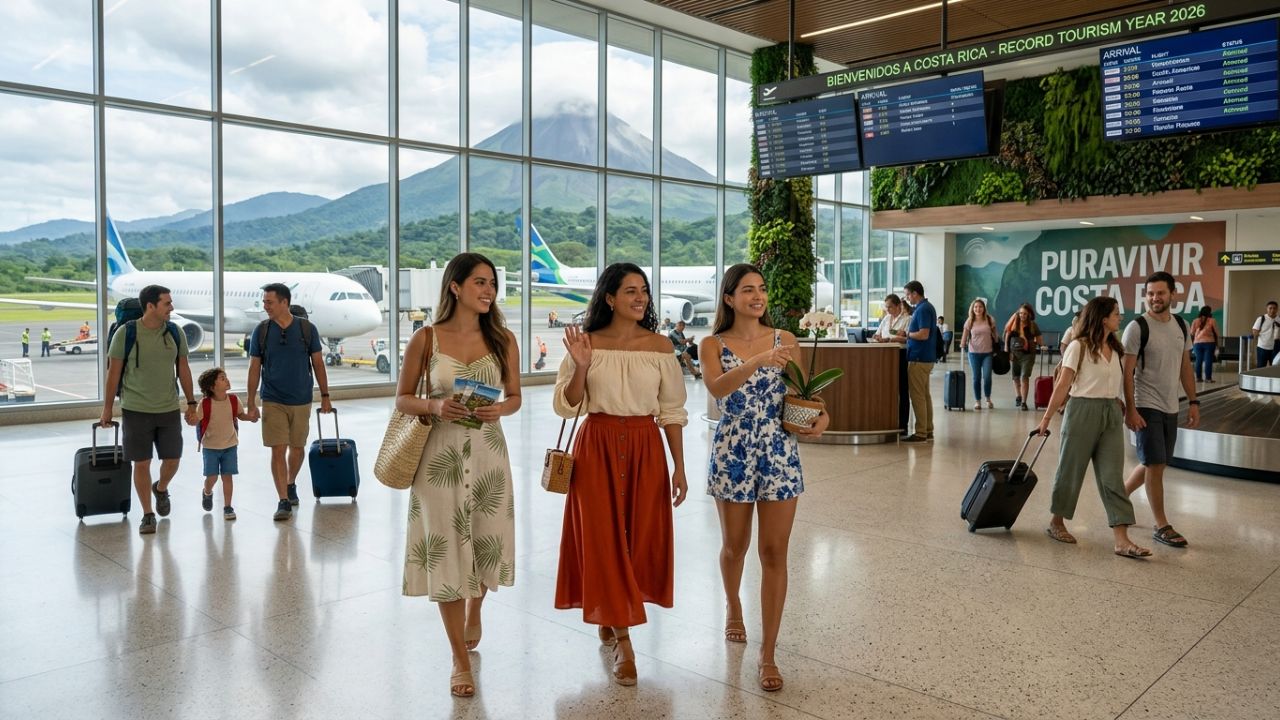
Image generated by AI
Published on June 23, 2026
A massive influx of international travelers has shattered previous records in Central America, prompting a major Costa Rica travel update as airports in San José and Guanacaste struggle to process the passenger surge. Over one million overnight visitors arrived during the first quarter of 2026, leading to operational constraints and travel bottlenecks at major terminals. To manage this unprecedented demand, authorities are introducing automated entry limits at major national parks while expanding airport handling capabilities before the next holiday rush.
Quick Summary
- Historic Tourism Peak: Costa Rica welcomed a record-breaking 1,033,777 international overnight visitors during the first quarter of 2026.
- Double-Digit Growth: Inbound travel grew by 11.3 percent year-on-year, successfully surpassing pre-pandemic operational benchmarks.
- Aviation Seat Expansion: Airlines scheduled over 5.4 million seats across the seasonal calendar, with Liberia Airport growing at a record 16.9 percent.
- Billion-Dollar Inflow: Total tourism revenues soared to $5.57 billion, with average visitor spending reaching $1,892.
- Environmental Preservation Capping: Authorities are introducing strict automated capacity limits at Manuel Antonio National Park and Monteverde Cloud Forest to prevent ecological damage.
This dramatic rise in inbound travelers has placed significant pressure on the country's transportation and environmental infrastructure. According to registries from the Instituto Costarricense de Turismo (ICT), the surge has outpaced previous high-volume holiday periods. The expansion of direct flight links from non-legacy secondary hubs in North America has successfully funneled high-yield tourists directly into popular coastal spots and community eco-lodges, bypassing traditional transit hubs.
Event and Incident Details: Q1 Influx Metrics in the Costa Rica Travel Update
The historic million-visitor landmark is supported by a significant increase in scheduled airline seats. According to data monitored by the U.S. National Travel and Tourism Office, commercial carriers have allocated over 5.4 million seats throughout the current seasonal calendar. Juan Santamaría International Airport in San José handled the majority of these arrivals, while Daniel Oduber Quirós Airport in Liberia recorded the fastest growth rate at 16.9 percent.
The following table provides an overview of Q1 aviation performance and economic metrics across the primary travel zones:
| Travel Hub / Metric | Inflow Performance (Q1 2026) | Growth Rate / Financial Yield | Key Operational Impact |
|---|---|---|---|
| Juan Santamaría Airport | Processed the majority of inbound passenger manifests | Baseline growth in line with regional expansions | Strained immigration lanes and baggage reclaim zones |
| Daniel Oduber Quirós Airport | Liberia terminal processed record arrivals | 16.9 percent fastest relative acceleration | Direct passenger access to premium Guanacaste resorts |
| Seasonal Flight Capacity | Scheduled transcontinental airline seats | Over 5.4 million total seats allocated | Scale-up of direct corridors from secondary U.S. hubs |
| Bilateral Travel Revenue | Foreign exchange earnings reached peak heights | $5.57 billion total travel revenue | Record dollar inflows offset by local currency strength |
This capacity expansion has also driven average individual visitor spending to an estimated $1,892. While the influx has boosted revenues, a unique currency appreciation has impacted local merchants on the ground.
Risk and Impact: Key Operational Pressures and Traveler Considerations
Managing a massive surge of this scale presents unique logistical considerations and operational pressures for the transport network:
- Airport Gridlock and Processing Bottlenecks: Heavy passenger traffic at Juan Santamaría and Daniel Oduber Quirós terminals causes significant queues during peak arrivals.
- Fragile Ecosystem Degradation: The high volume of tourist footprints risks ecological degradation in sensitive areas like Manuel Antonio National Park and the Monteverde Cloud Forest.
- Currency Exchange Profit Margin Squeeze: The steady strengthening of the local colón against the US dollar reduces profit margins for independent domestic merchants.
- Inventory and Spot Depletion: Extreme demand for highly sought-after hotspots requires strict, mandatory capacity caps and automated digital allocation systems.
What Authorities and Tourism Leaders Are Saying
Administrative departments have emphasized the need to balance economic growth with environmental conservation. Tourism directors explained that while the country is celebrating record foreign exchange earnings, the steady strengthening of the colón against the dollar means local businesses face tighter margins. Concurrently, regional conservation authorities stated that capacity realignments at major reserves are mandatory to protect biodiversity.
Offering an industry perspective, a prominent travel publication leader commented on this milestone:
“The spectacular launch of new direct flight corridors and the subsequent million-visitor surge across Costa Rica represents a monumental triumph for the global tourism economy, beautifully demonstrating how independent nations can successfully leverage sustainable eco-tourism to future-proof their hospitality sectors against macroeconomic friction. By aligning pristine nature conservation with modern wide-body jet capacity, these dynamic destinations are capturing the absolute premium share of the global leisure market while generating vital economic resilience for local communities. We proudly and enthusiastically celebrate this absolute industry victory, which stands as an evergreen testament to the enduring power of international exploration and cultural exchange across our magnificent world today,” stated Anup Kumar Keshan, Founder and Editor-in-Chief of Travel And Tour World.
Practical Traveler Advice: Planning Your Trip Under the Latest Costa Rica Travel Update
To navigate the current peak travel season successfully, visitors are advised to incorporate the following guidelines:
- Pre-Book National Park Passes: Secure entry permits early via automated reservation portals to avoid being turned away at Manuel Antonio and Monteverde.
- Monitor Airport Arrival Windows: Allow extra time for customs clearance when arriving at Juan Santamaría or Liberia Airport during peak hours.
- Understand Local Currency Variations: Be prepared for pricing shifts, as the appreciation of the colón affects the purchasing power of the U.S. dollar.
- Utilize Direct Secondary Corridors: Book flights out of secondary North American hubs to bypass major urban hubs and speed up transit.
- Support Community-Led Eco-Lodges: Stay at local lodges to help distribute expenditures directly to rural communities facing tighter margins.
Broader Context: Eco-Tourism as a Driver of Regional Development
The rapid growth in outbound travel from the United States to Costa Rica is driven by historical commercial ties and strong market demand for biodiversity experiences. U.S. travelers seek out the region's nature reserves and wellness offerings, motivated by marketing campaigns focused on environmental sustainability and premium wellness. By directing these high-yield travelers to rural resort corridors, the country distributes tourism spending beyond major cities, supporting local hospitality networks.
What to Expect Next and Looking Ahead
In response to ongoing gridlock, airport operators are building dedicated premium processing terminals and expanding electric vehicle charging stations to improve terminal throughput. Environmental watchdogs plan to refine digital booking limits across additional ecological zones to prevent crowding. Furthermore, airlines are expected to maintain or expand direct flight capacities, reinforcing the region's position as a leading global eco-tourism destination.
Conclusion Paragraph
The record-breaking travel numbers achieved during this quarter highlight the enduring appeal of the region's sustainable tourism model. While the surge has caused operational bottlenecks and currency challenges, strategic infrastructure upgrades and capacity limits will help protect the country's natural assets. Travelers who plan ahead and secure park reservations in advance can expect a seamless and rewarding tropical experience.
Related Travel Guides
Europe Unveils New Coolcation Corridor for Summer Tourism in 2026
Hungary Emerges as Top Value-For-Money Holiday Destination for Austrian Travelers in 2026
The 10 Best Eco-Lodges in Guanacaste, According to Reddit
Disclaimer: Flight capacities, national park daily entrance caps, and currency exchange rates in Costa Rica are subject to operational fluctuations. Travelers are advised to check real-time airline updates, local park reservation requirements, and currency margins before finalizing their trip.
FAQ: Costa Rica Travel Surge 2026
What caused the airport gridlock in Costa Rica during Q1 2026?
The gridlock was triggered by a record-breaking influx of 1,033,777 overnight international visitors, supported by expanded direct flights from secondary North American hubs.
How are authorities protecting national parks from overtourism?
Environmental conservation bodies are implementing strict, automated digital allocation systems and capacity caps at highly visited reserves, including Manuel Antonio and Monteverde.
Which airport recorded the fastest passenger growth rate?
Liberia’s Daniel Oduber Quirós Airport recorded the fastest relative growth, with a spectacular 16.9 percent increase in inbound travel capacity.
How is the local colón exchange rate affecting tourism businesses?
The colón has appreciated steadily against the U.S. dollar, resulting in tighter profitability margins for independent domestic merchants who operate in local currency.
What is the average expenditure per tourist in Costa Rica this season?
Individual tourist spending has increased significantly to an estimated average of $1,892 per visitor, driven by premium wellness and nature itineraries.
Disclaimer
This article is for informational and educational purposes only. It does not constitute legal, financial, or professional advice. While we strive to provide accurate and up-to-date information, travel policies, regulations, and conditions change rapidly. Always verify information with official sources before making travel decisions. Nomad Lawyer makes no representations about the accuracy, reliability, completeness, or suitability of the information provided. Readers should consult qualified professionals for advice specific to their circumstances. The views expressed in this article are those of the author and do not necessarily reflect the views of Nomad Lawyer.
Kunal K Choudhary
Co-Founder & Contributor
A passionate traveller and tech enthusiast. Kunal contributes to the vision and growth of Nomad Lawyer, bringing fresh perspectives and driving the community forward.
Learn more about our team →