
Aviation Updates: Massive Copenhagen Airport Meltdown Triggers Terrifying Travel Chaos as 164 Delays and Flight Cancellations Paralyze Denmark
As a massive logistical collapse completely suffocates Copenhagen Airport, desperate global travelers face terrifying flight cancellations and agonizing regional airport disruptions.
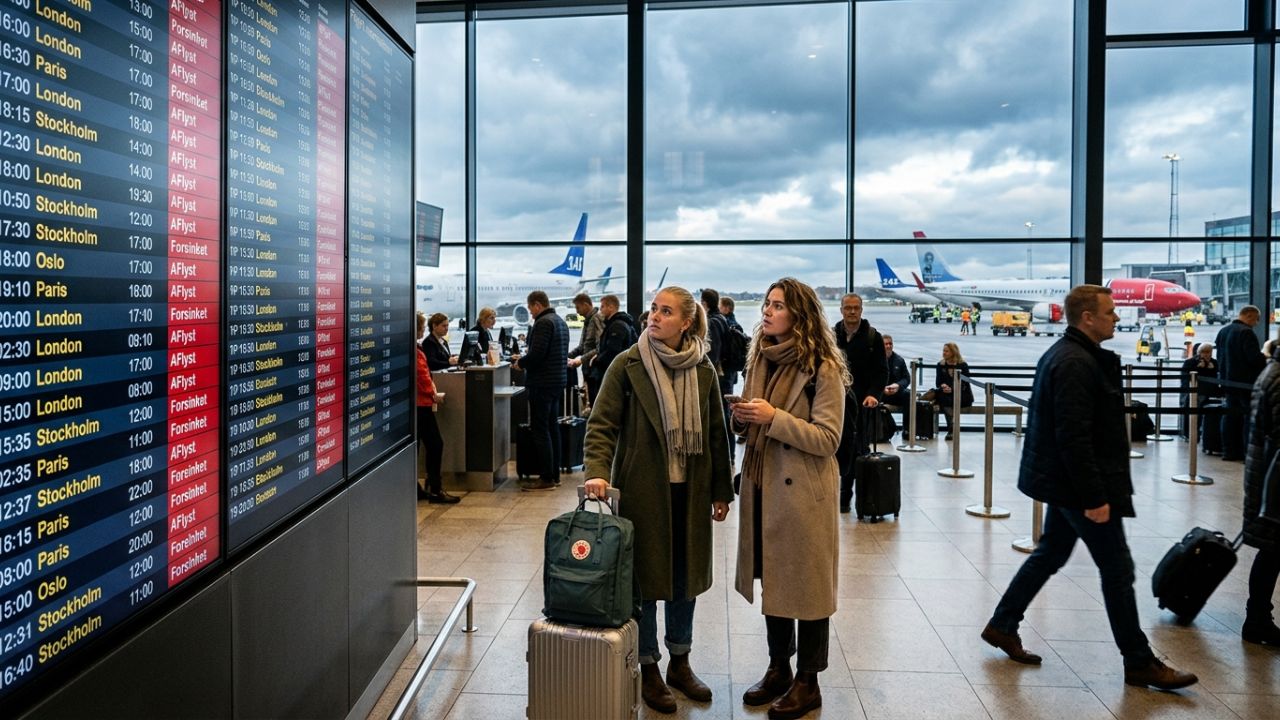
Image generated by AI
Aviation Updates: Massive Copenhagen Airport Meltdown Triggers Terrifying Travel Chaos as 164 Delays and Flight Cancellations Paralyze Denmark
As incredibly severe terminal gridlock and massive ground handling failures completely suffocate the primary aviation gateway of Denmark, tens of thousands of global passengers are trapped in terrifying travel chaos as 164 flight delays and crippling flight cancellations aggressively paralyze operations across Copenhagen, rippling violently into Northern Europe and beyond.
While incredibly exhausted global passengers desperately navigate an incredibly brutal peak travel season, a massive, highly destructive operational meltdown is actively shattering the absolute highest levels of Scandinavian commercial aviation. According to the absolute latest breaking airline news, Denmark's primary aviation node has officially collapsed under the crushing weight of systemic congestion and severe operational friction. Desperate to ensure that severe, localized regional hub gridlock does not completely destroy the entire intercontinental network, airlines are violently battling a massive logistical backlog at Copenhagen Airport. At the time of reporting, real-time operational tracking systems confirmed an agonizing total of 164 severe delays and 7 outright flight cancellations, stranding massive volumes of domestic and international travelers indefinitely.
This highly critical operational collapse explicitly exposes Copenhagen not as an efficient global gateway, but as a heavily congested, deeply fragile capacity zone prone to sudden, catastrophic failure. By violently overwhelming ground handling crews, air traffic management protocols, and aircraft rotation schedules, this systemic breakdown is directly driving massive travel chaos that routinely plagues travelers attempting to transit through under-resourced mega-hubs. Because traditional Scandinavian transit nodes frequently suffer from severe tarmac congestion leading to massive, unannounced airport disruptions, this current meltdown serves as an absolute warning. It completely bypasses the terrifying logistical nightmares of simple weather delays, representing a structural failure that forces major carriers—including Scandinavian Airlines, Norwegian, Lufthansa, KLM, and Air France—into a brutal, high-stakes battle of schedule revisions and agonizing tarmac holding patterns.
Aviation Updates: The Collapse of the Scandinavian Corridor
This massive, highly structural shift in Northern European network stability perfectly illustrates the intense, incredibly fragile nature of modern intercontinental mobility.
According to highly detailed, official aviation updates, this strategic capacity failure was explicitly triggered by a toxic combination of crew scheduling limitations, slow aircraft turnaround times, and severe airspace congestion. The sheer density of the disruptions applies across almost the entire operational day, effectively capping outbound flow at one of Europe's most critical gateways. Because primary connecting hubs like Copenhagen are increasingly crippled by rolling travel chaos stemming from systemic infrastructure bottlenecks, funneling passenger flows through Denmark is currently a massive logistical gamble. This massive breakdown prevents a unified, highly reliable transit model, instead generating severe, cascading delays that ripple violently across the entire global air traffic system, directly impacting inbound and outbound flows from major economic centers like London, Paris, Amsterdam, Oslo, Stockholm, and Berlin.
Section-Wise Breakdown: Navigating the Paralyzed Hub
The sudden, massive evolution of these critical transit failures actively impacts several incredibly distinct, highly sensitive operational dynamics at Copenhagen's central airport.
The Regional Scandinavian Gridlock: Oslo and Stockholm
At the absolute core of this massive operational pivot is the total logistical failure affecting domestic and regional Scandinavian travel. As the absolute epicenter of the crisis, Copenhagen's short-haul terminals are actively trapping passengers in massive, agonizing security queues. Flights heavily reliant on rapid turnaround times to Oslo and Stockholm are experiencing severe airport disruptions, destroying critical regional commuting schedules. Because dominant local carriers like Scandinavian Airlines and Norwegian rely on Copenhagen for immediate hub-and-spoke distribution, the failure of aircraft rotation actively subjects regional passengers to rolling travel chaos. Arriving passengers face agonizingly slow baggage retrieval, while thousands physically watch their connecting flights depart without them.
The Intercontinental and European Trap: London, Paris, Amsterdam, Berlin
The ultimate execution of this highly destructive failure heavily targets massive intercontinental and European operations. Functioning as a massive release valve for Northern European traffic, the international terminal has completely failed to maintain scheduled rotations. This gridlock violently interrupts flights to London and Berlin, completely shattering Central European connections. Furthermore, legacy European carriers like Lufthansa, Air France, and KLM are trapped in severe tarmac holding patterns, delaying critical departures to Paris and Amsterdam. This failure strands thousands of international passengers in heavily congested, overcrowded terminal waiting areas, severing vital links to global transfer hubs.
Flight Details and Verified Disruption Impact Matrix
To fully understand the exact structural parameters of this massive performance collapse and how airlines are desperately attempting to navigate complex regional congestion, the following matrix explicitly details the operational failures at the hub.
Confirmed Copenhagen Disruption Impact Matrix
| Aviation Facility / Operational Metric | Documented Failures | Primary Traffic Type Impacted |
|---|---|---|
| Copenhagen Airport (CPH) | 164 Severe Delays. | System-Wide Domestic and International Rotations. |
| Outright Terminations | 7 Flight Cancellations. | Immediate passenger stranding and mandatory rebooking. |
| Major Airlines Impacted | Scandinavian Airlines, Norwegian, Lufthansa, KLM, Air France. | Severe travel chaos spreading to global hubs. |
| Key Regional Destinations | Oslo, Stockholm. | Destruction of local Scandinavian commuting. |
| Key International Destinations | London, Paris, Amsterdam, Berlin. | Cascading delays hitting Central and Western Europe. |
| Supervising Authorities | Danish Transport Authorities. | Scrambling to enforce passenger compensation policies. |
Data explicitly reflects the massive, highly structural operational collapse currently paralyzing the Danish capital, directly forcing legacy and regional carriers to violently abandon their daily flight schedules.
Passenger Impact: The Financial and Emotional Toll
For the highly demanding passengers actively engaged in this massive Scandinavian mobility crisis, traditional, highly anticipated peak travel is currently viewed as completely terrifying and incredibly unpredictable.
The immediate enforcement of these rolling delays significantly degrades travel convenience for tens of thousands of incredibly exhausted families and corporate transit passengers. Instead of relying absolutely solely on a highly competitive global network—where efficient connections are standard—travelers are now trapped in a collapsed capacity-managed terminal. Passengers facing these massive airport disruptions are forced to seek alternative arrangements, suffering intense anxiety as they miss onward connections across Europe. The massive volume of delayed departures guarantees persistent high stress, as airlines desperately attempt to secure finite hotel rooms or rebooking slots. Passengers are legally entitled to compensation and meal vouchers, but actually securing these rights during active terminal gridlock is incredibly exhausting.
Industry Analysis: The Economics of Systemic Congestion
Aviation structural analysts strictly point out that this massive, multi-national operational collapse perfectly illustrates the extreme, highly vital importance of heavily optimized, continuous ground and airspace operations.
Aviation data explicitly indicates that massive global carriers are absolutely desperate to secure rapid tarmac turnarounds to actively combat the terrifying reality of capacity saturation. Industry observers strongly view this 164-delay meltdown as the absolute ultimate catalyst for broader Northern European aviation instability. When tarmac operations are tightly constrained by technical inspections and massive air traffic management spacing requirements, relying on a deeply fragile infrastructure completely destroys the reliance on scheduled intercontinental rotations. The Danish transport authorities continue to monitor safety margins, but the high density of flights means even minor technical or baggage handling issues multiply instantly into massive network failures. By aggressively failing to maintain flow rates, Copenhagen absolutely ensures that it maintains a highly unpredictable grip on regional transit.
Conclusion: A Highly Congested Scandinavian Future
The massively evolving infrastructure dynamics directly defining the integration of massive passenger volume into the Copenhagen network violently reflect a much broader, highly critical structural transformation currently dominating how Northern European commercial aviation is physically managed in 2026.
Rather than violently forcing massive international traffic through deeply congested, highly restricted, delay-prone legacy networks, global travelers must actively reconsider routing through Copenhagen without massive buffer times. As airlines aggressively struggle to clear the backlog and permanently alter their immediate flight paths, travelers actively navigating the incredibly busy intercontinental sector must absolutely remain highly vigilant. To actively survive potential travel chaos this evening, passengers must aggressively monitor all breaking aviation updates, actively utilize airline mobile applications to check real-time status before leaving for the airport, and perfectly understand that escaping modern airport disruptions fundamentally requires accepting that schedules out of Denmark will not return to standard parameters until late into the night.
Key Takeaways
- Massive System Failure: Copenhagen Airport suffers 164 severe delays and 7 flight cancellations due to overwhelming operational congestion.
- Airlines Severely Impacted: Scandinavian Airlines, Norwegian, Lufthansa, KLM, and Air France are actively battling slow tarmac turnarounds.
- Global Ripple Effect: The Danish gridlock triggers cascading travel chaos impacting flights to London, Paris, Amsterdam, Berlin, Oslo, and Stockholm.
- Root Causes: The meltdown is fueled by a toxic mix of crew scheduling failures, air traffic management spacing, and aircraft rotation breakdowns.
- Authority Intervention: Danish aviation agencies are actively enforcing passenger rights and attempting to restore safe navigation services amid the backlog.
- Passenger Survival Strategy: Stranded travelers are legally required to endure agonizing waits; demanding rebooking options and meal vouchers via airline apps is the only defense against active airport disruptions.
Related Travel Guides
Massive UAE Visa Bombshell: Strict New 30-Day Escape Window Announced
Travel Chaos Cripples Spain as Iberia and Ryanair Suffer 1,079 Delays
Global Flight Cancellation and Compensation Guide 2026
Disclaimer: This article is strictly for informational purposes only. Massive airport ground failures, highly localized terminal transit protocols, and complex airline rebooking procedures change rapidly based on operational demand and real-time recovery efforts. Always carefully verify your specific itinerary and aggressively monitor real-time flight statuses directly via your airline's application before attempting to travel through Copenhagen.