
Colombia Opens Guaviare Amazonian Rock Art Sites to Controlled Community Tourism in 2026
Colombia implements a new biocultural tourism strategy in Guaviare, granting controlled access to ancient rock art sites in Serranía La Lindosa and Cerro Azul through community-led guiding.
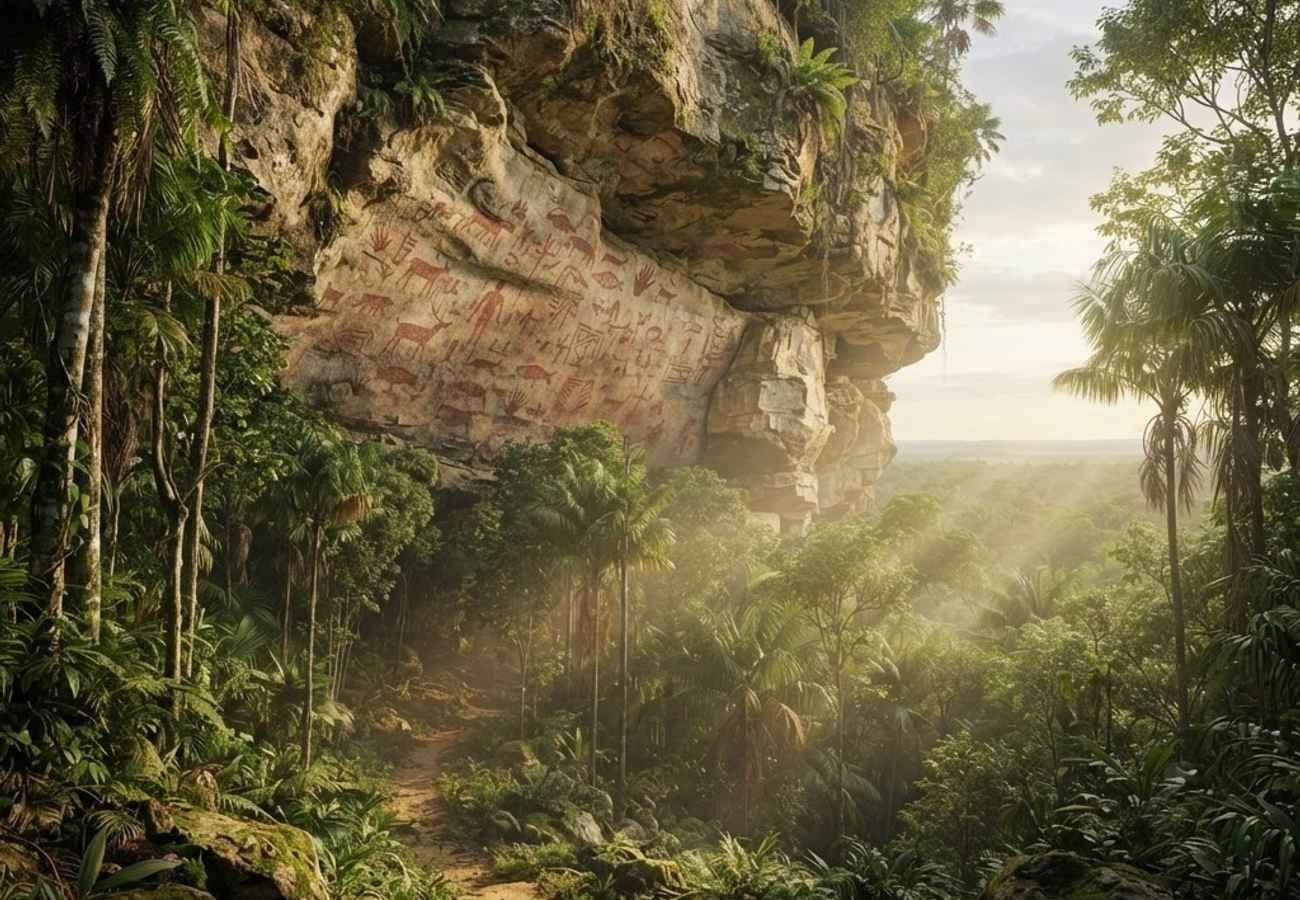
Image generated by AI
Colombia is pivoting toward a high-value, low-impact tourism model in the Guaviare department. By integrating prehistoric rock art heritage with strict community-led management, the region is opening a new frontier for slow travel in 2026.
The Colombian government has launched a strategic tourism initiative in Guaviare, specifically designed to protect the fragile intersection where the Amazon basin meets the Orinoco plains. This 2026 planning strategy centers on the creation of "biocultural tourism corridors," shifting the region away from mass tourism and toward a structured, community-based experience.
These corridors focus on the preservation of ancient rock art while providing economic stability to local rural and Indigenous populations. By implementing controlled entry and mandatory local guiding, Colombia aims to balance international curiosity with the physical preservation of prehistoric sites.
Archaeological Anchors: La Lindosa and Cerro Azul
The heart of this new network is Serranía La Lindosa. This area is characterized by extensive rock shelters and cliffs featuring prehistoric paintings of humans, animals, and abstract figures. Rather than treating these sites as static monuments, the biocultural corridors integrate them into the wider natural landscape, allowing visitors to experience archaeological interpretation alongside outdoor exploration.
Within the La Lindosa landscape, Cerro Azul stands as a primary archaeological hub. The site offers an immersive alternative to traditional museum exhibits, placing ancient artwork in its original environmental context. Guided tours here emphasize the symbiotic relationship between the prehistoric artists and the surrounding Amazonian ecosystem.
Preservation Through Restricted Access
To prevent the degradation of these sensitive sites, the 2026 strategy implements rigorous visitor management protocols:
- Strict Capacity Limits: Maximum visitor counts are enforced to reduce physical pressure on rock surfaces and fragile soil.
- Mandatory Local Guides: Independent exploration is prohibited; all visitors must be accompanied by certified community guides.
- Structured Routing: Tourism is confined to defined heritage networks to prevent the accidental discovery or damage of unmapped archaeological sites.
The Shift to Community-Owned Tourism
A defining feature of the Guaviare model is the role of local campesino and Indigenous cooperatives. These groups are no longer merely service providers for external agencies; they are the primary managers of the visitor experience.
This shift ensures that the economic benefits of tourism remain within the region. Local guides provide deep-contextual knowledge of the terrain, rural life, and cultural heritage that outside operators cannot replicate.
Expanding the Rural Infrastructure
To support multi-day itineraries, the region is developing community-based accommodation, most notably in Playa Güio. The introduction of homestay-style lodges allows travelers to remain in rural settings rather than commuting daily from urban centers.
This infrastructure shift serves two purposes: it makes the exploration of distant sites more practical for the traveler and increases local demand for secondary services, including traditional meals, regional transportation, and specialized guiding.
Beyond the Art: Ecological Integration
While rock art is the primary draw, the 2026 strategy promotes Guaviare as a comprehensive nature destination. The region's unique position as a transition zone between the Amazonian rainforest and the Orinoco plains offers diverse activities:
- Wildlife Observation: Guided treks through primary forests.
- River Exploration: Navigating the complex river systems that define the basin.
- Biocultural Hiking: Itineraries that link ecological landmarks with archaeological sites.
Tourism as a Tool for Conservation
Revenue generated from these community corridors is being directly reinvested into environmental protection. This creates a circular economy where visitor spending funds:
- Reforestation Patrols: Active planting and protection of native flora.
- Fire Monitoring: Establishing buffer zones to protect archaeological sites from seasonal wildfires.
- Landscape Management: Ensuring the forests that house the rock art remain intact.
By linking the visitor economy to the health of the ecosystem, Guaviare is transforming its complex historical narrative into a future centered on conservation and cultural pride.
Guaviare Tourism Framework 2026
| Feature | Implementation Detail | Primary Objective |
|---|---|---|
| Access Model | Mandatory Community Guides | Site Preservation & Local Employment |
| Key Sites | Serranía La Lindosa & Cerro Azul | Archaeological Education |
| Accommodation | Homestays (e.g., Playa Güio) | Increased Local Economic Spend |
| Conservation | Reforestation & Fire Patrols | Environmental Sustainability |
| Geography | Amazon-Orinoco Transition Zone | Biodiversity Promotion |
Key Takeaways
- Controlled Access: Guaviare is avoiding mass tourism by using mandatory guides and strict visitor caps at rock art sites.
- Economic Empowerment: Indigenous and campesino cooperatives now manage the tourism value chain.
- Environmental Linkage: Tourism profits are directly funding reforestation and fire prevention.
- Diversified Appeal: The region is marketed as a blend of prehistoric archaeology and Amazonian biodiversity.
FAQ
Do I need a guide to visit the rock art in Guaviare? Yes. Under the 2026 regulations, mandatory community guides are required for all visitors to ensure the protection of fragile archaeological surfaces.
Where can I stay when visiting Serranía La Lindosa? The region is promoting community-based homestays, particularly in areas like Playa Güio, to encourage longer stays and support the local economy.
What makes Guaviare different from other Colombian destinations? Unlike the urban centers of Bogotá or Medellín, Guaviare offers a "slow travel" experience focused on the transition between the Amazon and Orinoco ecosystems and prehistoric heritage.
A bold step toward sustainable heritage management in the heart of the Colombian Amazon.
Related Travel Guides
Disclaimer
This article is for informational and educational purposes only. It does not constitute legal, financial, or professional advice. While we strive to provide accurate and up-to-date information, travel policies, regulations, and conditions change rapidly. Always verify information with official sources before making travel decisions. Nomad Lawyer makes no representations about the accuracy, reliability, completeness, or suitability of the information provided. Readers should consult qualified professionals for advice specific to their circumstances. The views expressed in this article are those of the author and do not necessarily reflect the views of Nomad Lawyer.