
Bahamas Dominates Caribbean Cruise Market in 2026 as Florida Ports Eclipse Mexico, Jamaica, and Dominican Republic
The Bahamas has surpassed Mexico, Jamaica, and the Dominican Republic as the leading Caribbean cruise destination, driven by high-frequency sailings from Miami, Fort Lauderdale, Port Canaveral, and Tampa in 2026.

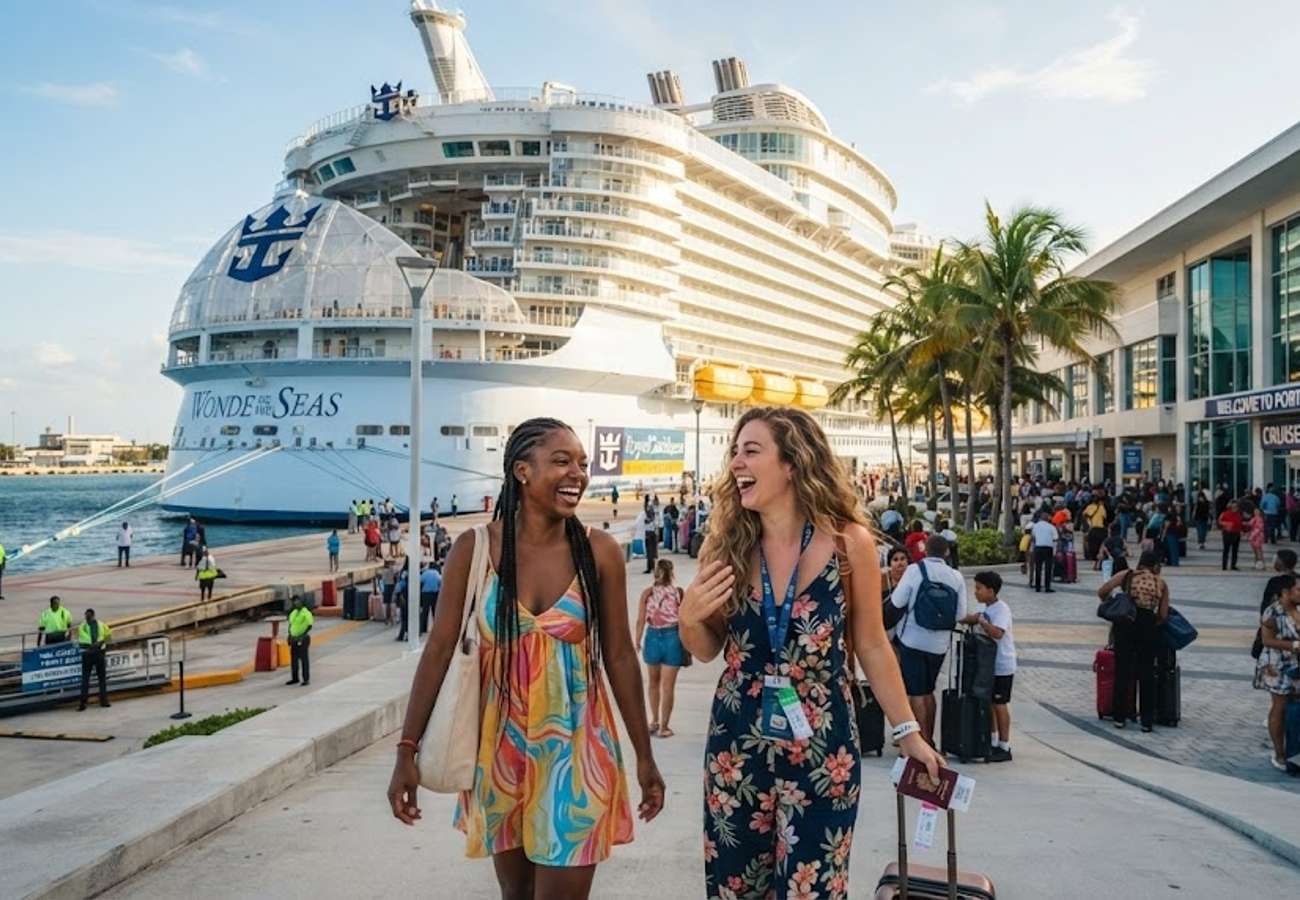
Image generated by AI
The Bahamas Just Knocked Out the Competition
The Bahamas has officially dethroned Mexico, Jamaica, Colombia, Puerto Rico, the Dominican Republic, Saint Lucia, and every other Caribbean contender as the premier gateway for premium cruise routes departing from Florida's four major ports in 2026.
This isn't a close race anymore. The data is overwhelming.
Cruise operators are restructuring entire Caribbean routing strategies to prioritize shorter sailings, faster turnaround cycles, and concentrated demand across Miami, Fort Lauderdale, Port Canaveral, and Tampa. The result? A maritime logistics revolution anchored by the Bahamas.
Reddit: "Just booked a 4-night Bahamas cruise from Miami for less than I'd spend on a flight to Mexico. The ports are so convenient now." — r/Cruising
Geography Wins Every Time
The Bahamas' ascent isn't accidental—it's pure geographical mathematics. Located mere nautical miles from Florida, the Bahamas allows cruise lines to operate multiple weekly rotations with minimal fuel consumption and maximum operational efficiency.
Compare this to Mexico's Caribbean ports like Cozumel and Costa Maya, which require longer transit times and higher fuel costs. The Dominican Republic and Jamaica suffer similar disadvantages despite their vibrant tourism infrastructure.
Miami now functions as the world's busiest cruise port, supporting more than 200 weekly sailings during peak season in 2026 according to Norwegian Cruise Line deployment schedules. Fort Lauderdale's Port Everglades has evolved into the luxury cruise capital, while Port Canaveral near Orlando has claimed the family cruise crown.
Tampa rounds out the network, maintaining Western Caribbean itineraries for operators like Carnival, Royal Caribbean, and MSC Cruises who still prioritize Mexico, Belize, and Honduras routes.
The Short Cruise Phenomenon
Here's what cruise executives won't explicitly say: passengers have voted with their wallets, and they're voting for short.
The 3–5 night Bahamas cruise segment now dominates Florida's embarkation patterns. These sailings account for the highest passenger turnover in the entire region and represent the fastest-growing segment of Caribbean cruising.
Why? Speed, predictability, and cost efficiency. Modern leisure travelers want quick escapes—not week-long voyages requiring time off work. The Bahamas delivers precisely that: private island experiences like CocoCay and Half Moon Cay, combined with Nassau and Freeport port calls, all compressed into a manageable timeline.
Carnival Cruise Line leads this charge, followed aggressively by Royal Caribbean and MSC Cruises. Their operational model emphasizes rapid boarding cycles, high cabin occupancy, and minimal turnaround time between sailings.
The Infrastructure Advantage
The Bahamas government recognized the opportunity early and invested heavily in cruise infrastructure. Nassau has transformed into one of the busiest cruise ports globally, with modernized terminal facilities, expanded docking capacity, and streamlined passenger processing.
Private island development sealed the deal. Cruise lines now operate controlled shore excursions on exclusive Bahamas islands, eliminating the variables that plague other Caribbean destinations. Weather patterns are predictable. Security is managed. Revenue per port stop is optimized.
This isn't tourism—it's logistics perfected into an art form.
A Comprehensive Look at Caribbean Cruise Routes
The data tells the story clearly. The following destinations remain part of Florida's cruise ecosystem, but their frequency and centrality have shifted dramatically:
Eastern Caribbean Hub includes the Dominican Republic (Amber Cove, Puerto Plata), Puerto Rico (San Juan), the British Virgin Islands (Tortola), and Antigua & Barbuda (St. John's). These routes typically run 5–10 nights and attract passengers willing to stay longer.
Western Caribbean Routes still feature Mexico (Cozumel, Costa Maya, Progreso), Jamaica (Montego Bay, Falmouth), Belize (Belize City), and Honduras (Roatán). These sailings last 4–8 nights but face declining frequency as short Bahamas cruises steal capacity.
Southern Caribbean Cruises serving Barbados, Saint Lucia, Curaçao, Aruba, Martinique, and Guadeloupe remain premium offerings at 7–12 nights. These longer itineraries appeal to luxury-focused passengers and command higher per-diem pricing.
The Bahamas, however, occupies an entirely different tier. Its routes are the most frequent, the most profitable per sailing, and the easiest to operate.
Why Florida Became Unstoppable
Florida's dominance in Caribbean cruising reflects decades of strategic port development and cruise line consolidation. The state's four major ports collectively support millions of passengers annually, creating a network effect that other U.S. ports cannot replicate.
New Orleans, Galveston, and Charleston have tried to compete. They've failed. Florida's proximity to the Bahamas, combined with established infrastructure and airline connectivity, proved insurmountable.
According to cruise industry analytics from major operators, Florida ports now function as the central distribution hub for all Caribbean maritime tourism. Ships depart multiple times daily, creating a volume-based economic moat.
The 2026 deployment cycle confirms this consolidation: mega-ship deployments favor Miami and Fort Lauderdale. Family-focused ships concentrate at Port Canaveral. Tampa maintains its Western Caribbean niche.
The Disruption Nobody Expected
Smaller Caribbean nations watching this unfold face a harsh reality. Jamaica's cruise port traffic has plateaued. Puerto Rico's tourism strategy depends on longer itineraries that are becoming less popular. Colombia's Caribbean gateway at Cartagena serves only 7–12 night Southern Caribbean itineraries—luxury passengers who represent a shrinking percentage of total cruise demand.
The Bahamas, by contrast, serves the mass market with increasing efficiency. Every quarter produces higher passenger statistics, higher revenue per port, and increased infrastructure investment.
This is what market dominance looks like when geography, infrastructure, and passenger preference align perfectly.
What Happens Next?
Expect further Bahamas-focused expansion throughout 2026 and into 2027. New private island developments are already planned. Terminal facilities at Nassau are slated for additional modernization. Cruise line investment is flowing specifically into Bahamas operations.
Other Caribbean destinations will adapt by specializing: longer itineraries, niche experiences, and premium positioning. But the Bahamas short cruise segment will remain the gravitational center of Caribbean maritime tourism.
The hierarchy has been established. The Bahamas leads. Everyone else competes for the overflow.
The geography that made Columbus famous 534 years ago just made the Bahamas the cruise capital of the 21st century.
Related Travel Guides
Disclaimer
This article is for informational and educational purposes only. It does not constitute legal, financial, or professional advice. While we strive to provide accurate and up-to-date information, travel policies, regulations, and conditions change rapidly. Always verify information with official sources before making travel decisions. Nomad Lawyer makes no representations about the accuracy, reliability, completeness, or suitability of the information provided. Readers should consult qualified professionals for advice specific to their circumstances. The views expressed in this article are those of the author and do not necessarily reflect the views of Nomad Lawyer.
Preeti Gunjan
Contributor & Community Manager
A passionate traveller and community builder. Preeti helps grow the Nomad Lawyer community, fostering engagement and bringing the reader experience to life.
Learn more about our team →