
China’s Lee Kum Kee Sauce Joins Fortune Global 500 Forum 2026 as Global Expansion and Innovation Take Centre Stage
China’s Lee Kum Kee Sauce Joins Fortune Global 500 Forum 2026 as Global Expansion and Innovation Take Centre Stage

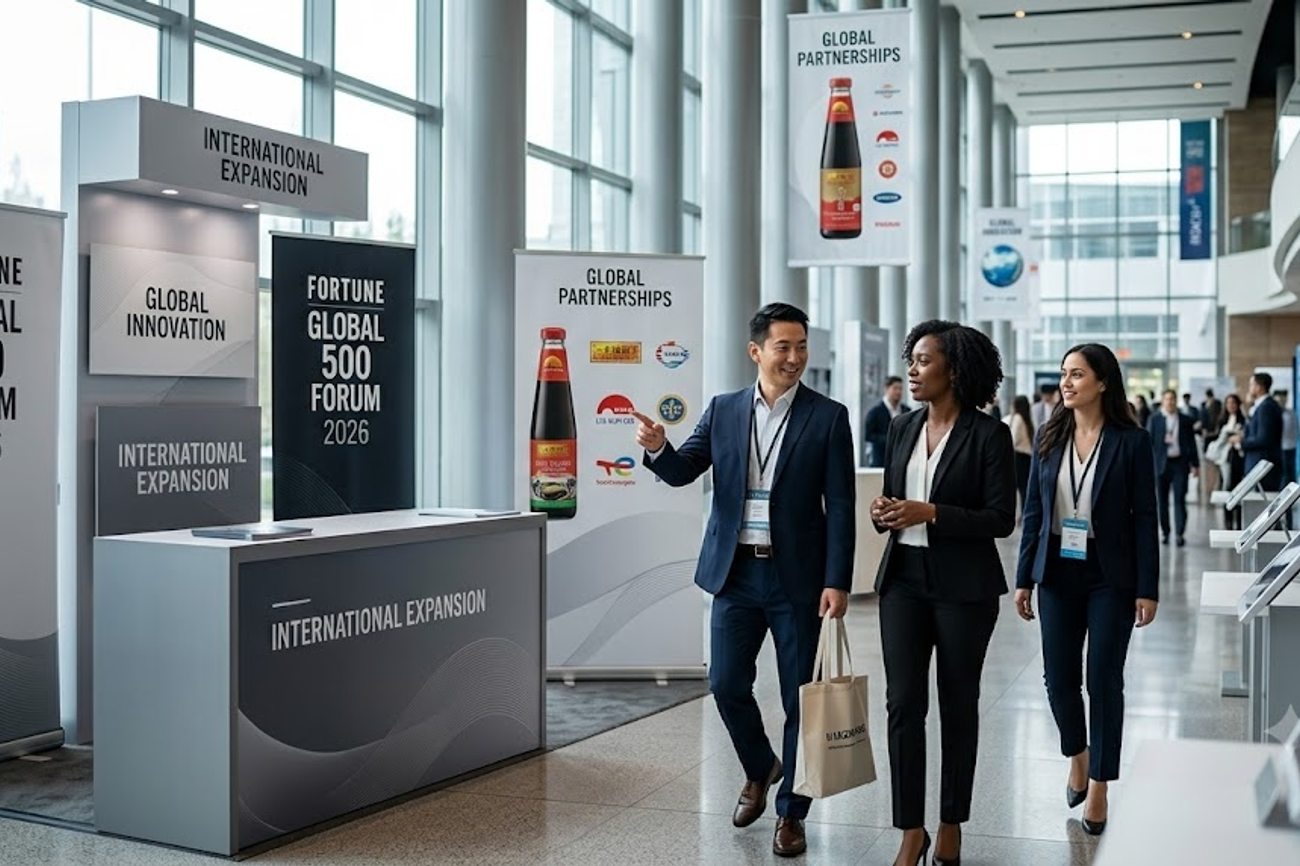
Image generated by AI
title: Lee Kum Kee Outlines Glocalization Strategy at 2026 Fortune Global 500 Forum date: 2026-09-16 category: Global Business tags: [Lee Kum Kee, Fortune Global 500, Guangzhou 2026, Glocalization Strategy, Fortune MPW]
[Guangzhou, September 16, 2026] — Lee Kum Kee Sauce has positioned "glocalization" and the integration of artificial intelligence as the primary drivers for its next phase of global expansion. The century-old condiments giant served as the sole representative of the sauce and seasonings sector among partners at the 2026 Fortune Global 500 Forum, where leadership detailed a shift away from traditional asset-based competition toward "soft power" and consumer trust.
The forum, themed “The New Growth Equation,” convened representatives from over 350 global corporations, academic institutions, and industry captains to address the volatility of modern supply chains and the disruptive nature of AI. Julie Xing, Ph.D., Global Board Chairman and CEO of Lee Kum Kee Sauce, spearheaded the company's presence, participating in high-level strategic panels and the Most Powerful Women (MPW) Breakfast to discuss the intersection of operational efficiency and human leadership.
The Shift to Soft Power and AI
The catalyst for Lee Kum Kee's current strategic pivot is the recognition that physical products are increasingly easy to replicate in a hyper-competitive global market. During a panel titled “The Invisible Moat: Revaluing Soft Power and Sustainability,” Dr. Xing argued that the only sustainable competitive advantage—the "moat"—is built on intangible assets. This includes brand credibility, emotional resonance with the consumer, and a superior user experience.
The discussion, moderated by Fortune China Senior Editor Wei Yue, featured a cross-industry analysis including perspectives from GE Aerospace, Shandong Weiqiao Pioneering Group, and McKinsey & Company. The consensus among the panelists was that traditional moats—such as proprietary technology or sheer scale—are eroding. In their place, data-driven insights and organizational agility are becoming the new benchmarks for market leadership.
Dr. Xing specifically identified AI as a disruptive force that extends beyond simple automation. According to the CEO, AI is currently transforming how the company gathers consumer insights and manages its internal organizational structure. The goal is to transition toward an agile framework where AI agents handle routine operational tasks, thereby freeing human capital to focus on high-level strategic innovation and long-term value creation.
Global Expansion and the Glocalization Model
Lee Kum Kee is moving away from a standard export-led growth model in favor of a sophisticated three-tier international expansion strategy. This roadmap is designed to mitigate the risks associated with entering diverse foreign markets and ensures that the brand does not remain a "foreign entity" in its target regions.
The three phases of the Lee Kum Kee expansion model are:
- Phase 1: Product Exportation – Initial entry into a market via the shipment of goods produced in home hubs to test demand and establish brand presence.
- Phase 2: Local Manufacturing – Transitioning to the establishment of production facilities within the target country to reduce logistics costs and improve supply chain resilience.
- Phase 3: Glocalization – The final stage of integration, where the company blends global brand standards with deep local customization. This involves tailoring flavors, packaging, and marketing to align with specific cultural preferences and regional consumer needs.
This approach acknowledges that a "one size fits all" strategy is no longer viable for Chinese enterprises expanding globally. By prioritizing local consumer behavior and cultural nuances, Lee Kum Kee aims to build a resilient presence that can withstand local market fluctuations.
What This Means for Travelers and Consumers
While Lee Kum Kee is a B2C condiment brand, its strategic shifts at the Fortune Global 500 Forum signal broader trends in the "glocalization" of consumer goods that affect international travelers and expats.
For the global consumer, this means a shift in product availability and variety. As the company moves into Phase 3 (Glocalization), travelers will likely see region-specific product lines that vary significantly between Asia, Europe, and North America. The emphasis on "innovative scenarios" suggests the company is looking beyond the home kitchen, potentially expanding into travel-friendly formats or partnerships with global hospitality chains to integrate their products into the tourist experience.
From a corporate governance perspective, the company's push for "responsible business development" and sustainability indicates a move toward greener packaging and ethical sourcing. For the environmentally conscious traveler or consumer, this represents a shift toward transparent supply chains and a reduction in the carbon footprint associated with shipping heavy liquid condiments across oceans—a direct result of the move toward local manufacturing.
The Role of Leadership in the AI Era
A significant portion of the forum focused on the "Decision-Making Power in the Age of Efficiency." During the MPW Breakfast, Dr. Xing addressed the anxiety surrounding AI-driven displacement. She posited that while AI can optimize productivity and streamline operational processes, it cannot replace the core tenets of executive leadership.
The company maintains that strategic judgment, long-term vision, and the ability to lead people through organizational transformation remain exclusively human capabilities. This philosophy is being baked into Lee Kum Kee's internal talent development programs, which now emphasize strategic thinking over tactical execution.
Dr. Xing's presence at the event also highlighted her continued influence in the corporate sphere; she has now been named to the Fortune China Most Powerful Women list for three consecutive years. Since its inception in 2010, this list has served as a benchmark for female leadership in China's economic evolution.
Future Roadmap and Sustainability
Moving forward, Lee Kum Kee has committed to a growth trajectory that balances aggressive expansion with corporate responsibility. The company's stated goals include:
- Accelerating AI Adoption: Implementing AI agents across the supply chain to improve efficiency and responsiveness.
- Sustainability Integration: Expanding initiatives that reduce environmental impact, likely tied to the local manufacturing push to cut shipping emissions.
- Governance Overhaul: Improving corporate governance to meet the standards of the diverse global markets it now inhabits.
- Talent Development: Shifting the workforce toward roles that prioritize innovation and "soft power" creation.
The company's participation in the forum underscores a broader trend among century-old brands: the need to digitally transform or risk obsolescence. By combining a legacy of quality with a future-facing AI strategy, Lee Kum Kee is attempting to create a blueprint for other traditional Chinese enterprises seeking global dominance.
FAQ: Lee Kum Kee Global Strategy 2026
What is "glocalization" in the context of Lee Kum Kee? It is a three-step process: exporting products, building local factories, and finally tailoring products to meet the specific cultural and taste preferences of local markets rather than selling a universal version.
How is Lee Kum Kee using AI in its business? The company is deploying AI agents to handle operational tasks and analyze consumer insights, allowing human employees to focus on strategic innovation and long-term value creation.
What is the "Invisible Moat" mentioned by Dr. Julie Xing? The "Invisible Moat" refers to intangible competitive advantages—such as consumer trust, brand loyalty, and emotional value—which are harder for competitors to replicate than physical products.
Why is local manufacturing important for the company? Local manufacturing reduces reliance on long-distance shipping, lowers costs, increases supply chain resilience, and allows the company to react faster to local market changes.
A century of tradition meets the age of algorithms in the pursuit of global taste.
Related Travel Guides
- Smithsonian Craft2Wear 2026: 75 American Artists, 12 Korean Masters, and Heritage Access in Washington D.C.
- Why the 2026 Spirit of Africa Festival in Nairobi Is Revolutionising Intra-Continental Tourism Now
- United Arab Emirates Joins Other Countries in Leading an Unstoppable $116 Billion Middle East Tourism Surge in Astonishing Global Growth Juggernaut
Disclaimer
This article is for informational and educational purposes only. It does not constitute legal, financial, or professional advice. While we strive to provide accurate and up-to-date information, travel policies, regulations, and conditions change rapidly. Always verify information with official sources before making travel decisions. Nomad Lawyer makes no representations about the accuracy, reliability, completeness, or suitability of the information provided. Readers should consult qualified professionals for advice specific to their circumstances. The views expressed in this article are those of the author and do not necessarily reflect the views of Nomad Lawyer.
Kunal K Choudhary
Co-Founder & Contributor
A passionate traveller and tech enthusiast. Kunal contributes to the vision and growth of Nomad Lawyer, bringing fresh perspectives and driving the community forward.
Learn more about our team →