
China's Qiantang River Tidal Bore Surges to Peak Spectacle Drawing Global Nature Tourists to Zhejiang
The Qiantang River tidal bore in Zhejiang, China, reaches its peak on September 28, 2026, attracting global tourists to Haining and Hangzhou Bay.

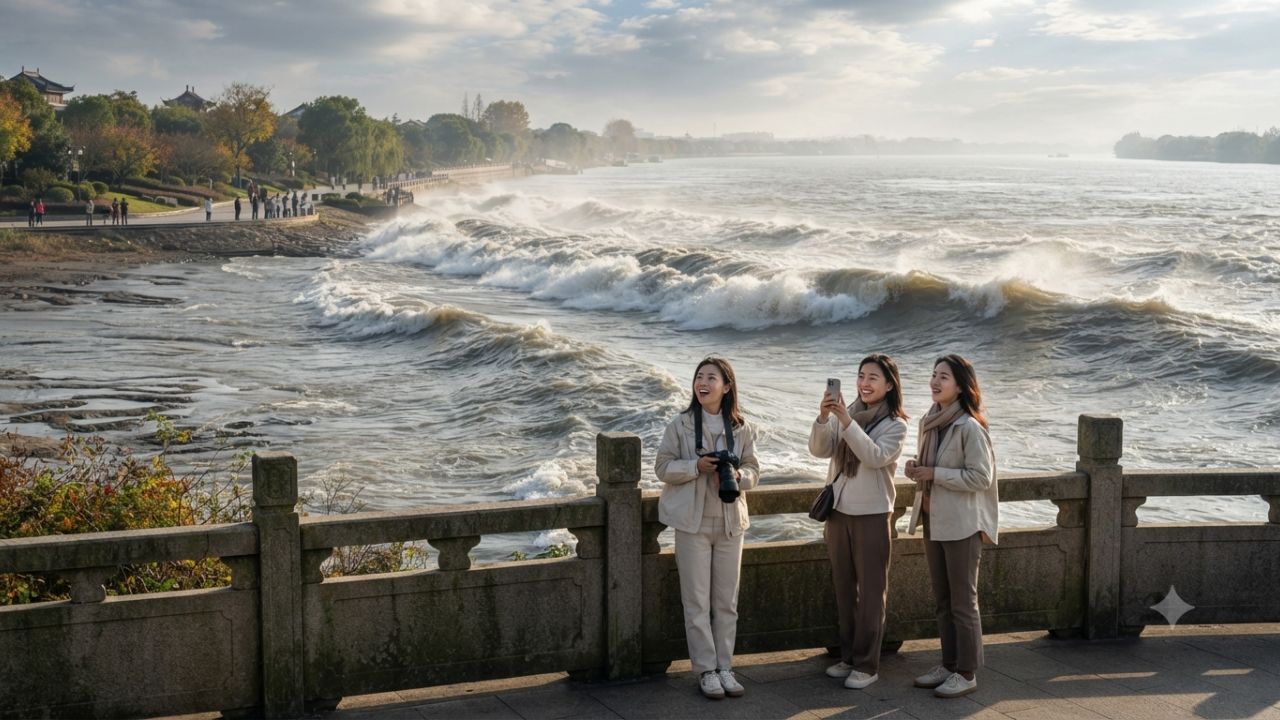
Image generated by AI
China’s Qiantang River tidal bore is reaching its annual peak in late September 2026, drawing thousands of international travelers and eco-tourists to Haining in Zhejiang Province to witness one of the planet's largest estuarine wave spectacles. Driven by celestial alignment and the funneling geometry of Hangzhou Bay, the tidal surges create roaring river waves alongside rare "tidal tree" sediment formations along the exposed riverbed.
[HAINING, China] — International nature tourists and photography enthusiasts are converging along the banks of the Qiantang River in Eastern China's Zhejiang Province as the annual tidal bore reaches its climax. Data from the Ministry of Culture and Tourism of the People's Republic of China highlights increased seasonal travel bookings around Haining, where surging ocean tides from Hangzhou Bay collide with river currents to form massive walls of water traveling upstream. The peak of this year's tidal phenomenon arrives on September 28, 2026, coinciding with the 18th day of the eighth month in the Chinese lunar calendar.
The Funneling Mechanism Behind Hangzhou Bay's Marine Surge
The Qiantang River tidal bore is recognized worldwide for its scale and velocity. The phenomenon occurs when incoming ocean tides enter Hangzhou Bay, a wide estuarine inlet that narrows rapidly as it extends inland toward Haining City. As seawater compresses into the narrowing channel, the advancing tide forms a steep, fast-moving wall of water that surges upstream against the river’s natural flow.
Environmental guidance monitored by UN Tourism highlights the event as a premier global example of estuarine hydrodynamics, drawing hydrologists, adventure travelers, and eco-tourists to observation platforms established along the Haining riverfront.
Qiantang River Tidal Bore Hydrodynamic Specifications
| Feature Parameter | Verified Phenomenon Specification |
|---|---|
| Geographic Location | Qiantang River & Hangzhou Bay, Haining, Zhejiang Province, China |
| 2026 Annual Peak Date | September 28, 2026 (18th Day of 8th Lunar Month) |
| Primary Physical Mechanism | Seawater compression within the funneling Hangzhou Bay estuary |
| Key Viewing Destination | Yanguan Tidal Bore Viewing Park, Haining City |
| Associated Geological Feature | "Tidal Tree" sandbar channels formed on retreating mudflats |
Tidal Tree Formations and Post-Surge Landscape Changes
Beyond the roaring wall of water, the Qiantang River tidal bore creates a secondary visual spectacle once the main surge recedes. As millions of tons of water retreat, the dynamic ebb flow carves branching channel patterns into the exposed silt and mudflats along the riverbed.
These natural sediment designs, known locally as "tidal trees," resemble vast branching forests or intricate arterial networks when viewed from elevated vantage points and aerial photography drones. The temporary formations change with every tidal cycle, providing an evolving landscape that attracts nature photographers and geological researchers throughout the viewing season.
Visual and Ecological Elements of the Qiantang Surge
| Phenomenon Aspect | Tourism & Visual Impact |
|---|---|
| Upstream Wave Surge | Fast-moving wall of water crashing against river embankments |
| Tidal Tree Mudflats | Branching sediment channels exposed during low tide |
| Estuarine Ecosystem | Dynamic shifting of riverbed silt and nutrient deposition |
| Cultural Festival Focus | Centuries-old lunar viewing gatherings and regional folklore |
Cultural Legacy and Centuries-Old Viewing Traditions
The observation of the Qiantang River tidal bore is deeply rooted in Chinese history and literature, dating back over a thousand years to the Song Dynasty. Historic observation pavilions and stone seawalls along Haining reflect centuries of coastal engineering designed both to protect agricultural lands and provide safe viewing platforms for seasonal onlookers.
During the peak lunar viewing window around September 28, local authorities host regional cultural festivals featuring traditional music, folk performances, and culinary showcases. The integration of natural spectacle and regional heritage reinforces Zhejiang Province's strategy of expanding high-value, experience-focused travel.
Regional Travel Logistics and Gateway Connections for Zhejiang Visitors
Travelers planning itineraries to experience the Qiantang River tidal bore can access Haining through major transportation hubs across Zhejiang Province:
- High-Speed Rail Links: Haining is directly connected via high-speed rail to Hangzhou (approx. 20 minutes) and Shanghai (approx. 45 minutes), allowing easy day-trip access to riverfront viewing parks.
- Air Gateways: Hangzhou Xiaoshan International Airport (HGH) serves as the primary aviation entry point, located roughly one hour by road from Haining's key viewing zones.
- Designated Safety Zones: Local authorities enforce strict safety perimeters along river barriers, requiring visitors to view the surge from authorized platforms such as Yanguan Ancient Town.
Frequently Asked Questions
What causes the Qiantang River tidal bore in China?
The tidal bore is caused by incoming ocean tides from the East China Sea compressing into the funnel-shaped Hangzhou Bay, creating a fast-moving wall of water that surges upstream into the Qiantang River.
When is the best time to see the Qiantang River tidal bore in 2026?
The 2026 peak viewing period occurs on September 28, which corresponds to the 18th day of the eighth month in the traditional Chinese lunar calendar.
What are the "tidal trees" of the Qiantang River?
"Tidal trees" are intricate, tree-like channel patterns carved into the riverbed mudflats by receding tidal waters after the main bore wave passes.
Related Travel Guides
Disclaimer
This article is for informational and educational purposes only. It does not constitute legal, financial, or professional advice. While we strive to provide accurate and up-to-date information, travel policies, regulations, and conditions change rapidly. Always verify information with official sources before making travel decisions. Nomad Lawyer makes no representations about the accuracy, reliability, completeness, or suitability of the information provided. Readers should consult qualified professionals for advice specific to their circumstances. The views expressed in this article are those of the author and do not necessarily reflect the views of Nomad Lawyer.
Kunal K Choudhary
Co-Founder & Contributor
A passionate traveller and tech enthusiast. Kunal contributes to the vision and growth of Nomad Lawyer, bringing fresh perspectives and driving the community forward.
Learn more about our team →