China Follows South Korea in Triggering Bohol Tourism Slump Due to Rising Costs, Airline Cuts and Market Shifts

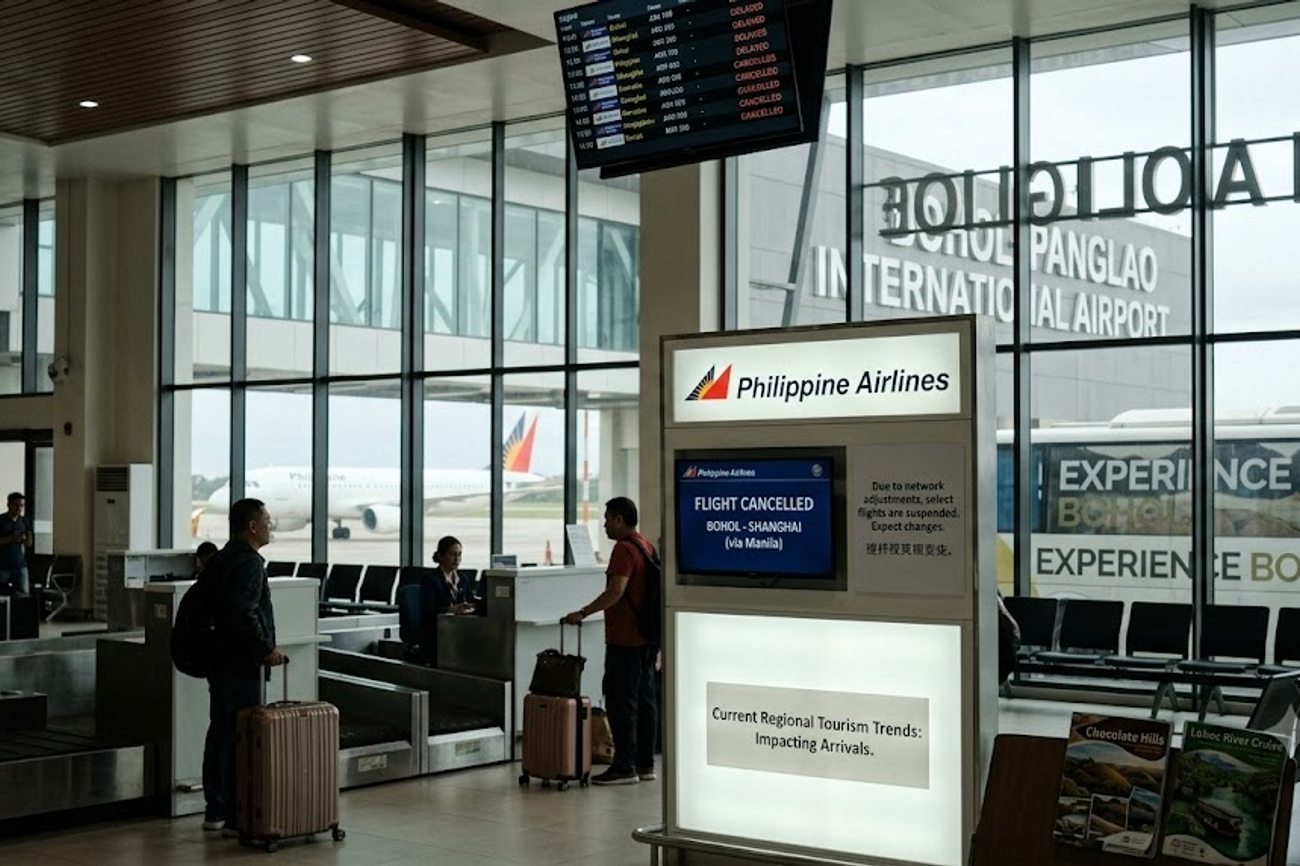
Image generated by AI
Bohol's visitor arrivals plummeted from 816,000 in the first half of 2025 to 637,288 during the same period this year—a sharp 21.8% contraction that signals a systemic vulnerability in the region's reliance on East Asian markets. This decline is not an isolated incident but a data point reflecting a broader volatility in the Asia-Pacific aviation sector, where fluctuating fuel costs and shifting consumer spending habits in China and South Korea are forcing a rapid pivot in destination marketing strategies.
The Bohol Contraction in Numbers
The current data indicates a significant correction in Bohol's tourism trajectory. The loss of approximately 178,712 visitors year-over-year represents a critical gap in occupancy and revenue for the island's hospitality infrastructure. While the destination maintains a relatively balanced split between visitor types—with domestic travelers accounting for 54.9% of arrivals and international visitors making up 45.1%—the volatility is concentrated entirely within the international segment.
The decline is primarily driven by a collapse in demand from two powerhouse markets: China and South Korea. Historically, these nations provided the high-volume, short-haul traffic necessary to sustain low-cost carrier (LCC) operations. However, as economic conditions in these countries shift, the outbound travel appetite has waned, leading to a ripple effect across the supply chain. When demand from these hubs drops, LCCs—which operate on razor-thin margins—rapidly reduce flight frequencies or cancel routes entirely to mitigate losses.
This capacity reduction creates a negative feedback loop. Fewer flights lead to higher ticket prices due to decreased supply, which further deters price-sensitive travelers. This is particularly evident in the connectivity between Bohol and its primary gateway, Cebu. Because Bohol relies on Cebu as a transit hub, any reduction in international capacity into Cebu directly translates to a decrease in footfall for Bohol's hotels and tour operators.
Regional Market Shifts and Connectivity Benchmarks
To understand the scale of this downturn, one must compare Bohol's performance against the broader trends reported by the World Travel & Tourism Council (WTTC) and the International Air Transport Association (IATA). The Philippines is currently battling a combination of rising jet fuel costs and intense regional competition from destinations like Thailand and Vietnam, which have aggressively expanded their visa-free entries and LCC partnerships.
The following table illustrates the shift in Bohol's arrival data and the resulting market composition:
| Metric | H1 2025 (Previous) | H1 Current Year | Variance (%) |
|---|---|---|---|
| Total Tourist Arrivals | 816,000 | 637,288 | -21.8% |
| Domestic Market Share | 54.9% (Est.) | 54.9% | 0.0% |
| International Market Share | 45.1% (Est.) | 45.1% | 0.0% |
| Primary Market Dependence | High (China/SK) | Transitioning | High Risk |
| Connectivity Status | Stable LCC Flow | Reduced Capacity | Negative |
The data shows that while the ratio of domestic to international visitors has remained steady, the absolute volume of the international segment has shrunk. This indicates that domestic tourism, bolstered by returning overseas Filipino workers, is currently the only factor preventing a total collapse of the local tourism economy.
Practical Traveler Advisory and Strategic Insights
For the individual traveler, the current volatility in Bohol’s tourism sector creates a specific set of opportunities and risks. The reduction in airline capacity means that "last-minute deals" are becoming rarer on flights into Cebu and onwards to Bohol.
Booking Advice for Q4 and Early Next Year: If you are planning a visit between November and February—the peak window for long-haul travelers from the US and Europe—booking 12-16 weeks in advance is now mandatory. Because LCCs are reducing their schedules, the remaining seats on flights are filling faster and commanding a premium.
Budgeting for Volatility: Travelers should expect higher airfares due to the increased operating costs passed down from airlines struggling with fuel prices. However, because local hotels and tour operators are facing a 22% drop in volume, there is significant leverage for travelers to negotiate better rates on accommodation and private tours. This is a "buyer's market" for ground services, even as it remains a "seller's market" for airfare.
Alternative Routing: Given the instability of LCC routes into Cebu, travelers should monitor flight availability across multiple hubs. Diversifying your entry point into the Philippines may be necessary if primary routes show signs of further capacity cuts.
Diversification as a Survival Strategy
The trajectory of Bohol's recovery depends on its ability to decouple its economy from the East Asian "volume" model. The current strategy is a pivot toward "value" travelers—specifically those from the United States and Europe. While these markets provide fewer visitors in absolute numbers compared to China, they typically offer higher average spend per visitor and longer average lengths of stay.
Data from Statista suggests that long-haul travelers are less sensitive to minor fluctuations in airfare than short-haul LCC passengers, providing a more stable revenue stream. Bohol is now focusing on its unique natural assets—its marine biodiversity and geological landmarks—to attract these segments.
The success of this pivot will be measured by the island's ability to secure more direct long-haul partnerships and improve its competitiveness against other Southeast Asian islands. The goal is to move from a market share dominated by two countries to a diversified portfolio where no single nation's economic downturn can trigger a 20%+ drop in total arrivals.
FAQ: Bohol Tourism Trends 2024-2025
Will travel costs to Bohol continue to rise? Airfares are likely to remain high or increase due to reduced LCC capacity and rising fuel costs. However, hotel and tour pricing may stabilize or drop as operators compete for a smaller pool of visitors.
Is this a good time to book a trip to Bohol? Yes, provided you book flights early. The decrease in visitor volume means fewer crowds at major attractions, offering a more premium, quiet experience for those who can secure transportation.
Which markets are currently driving growth in Bohol? While East Asian demand is falling, there is a measurable increase in arrivals from the United States and Europe, particularly during the peak window of November through February.
Why are flights to the region becoming less available? Airlines are cutting capacity to offset higher operating costs and a decline in demand from the South Korean and Chinese markets, which previously fueled high-frequency routes.
The shift from volume-based tourism to value-based diversification is no longer a choice for Bohol; it is a requirement for economic survival.
Related Travel Guides
This article is for informational purposes. Flight routes, passenger regulations, visa rules, and transit advisories are subject to change by airlines and aviation authorities. Readers are advised to verify schedules and travel documentation with relevant carriers and border agencies before departure.
Related Stories

Tunisia Accelerates Tourism Pivot to Asia and High-Yield UNESCO Heritage Circuits Following Record 2026 Revenue

Zen Awakening Festival 2026: Florida's Transformational Music, Mindfulness, and Arts Gathering in Fruitland Park