South Korea Travellers Ignite Japan Travel Boom as Chuseok Holiday Sparks Massive Demand for Osaka Tokyo and Fukuoka Escapes

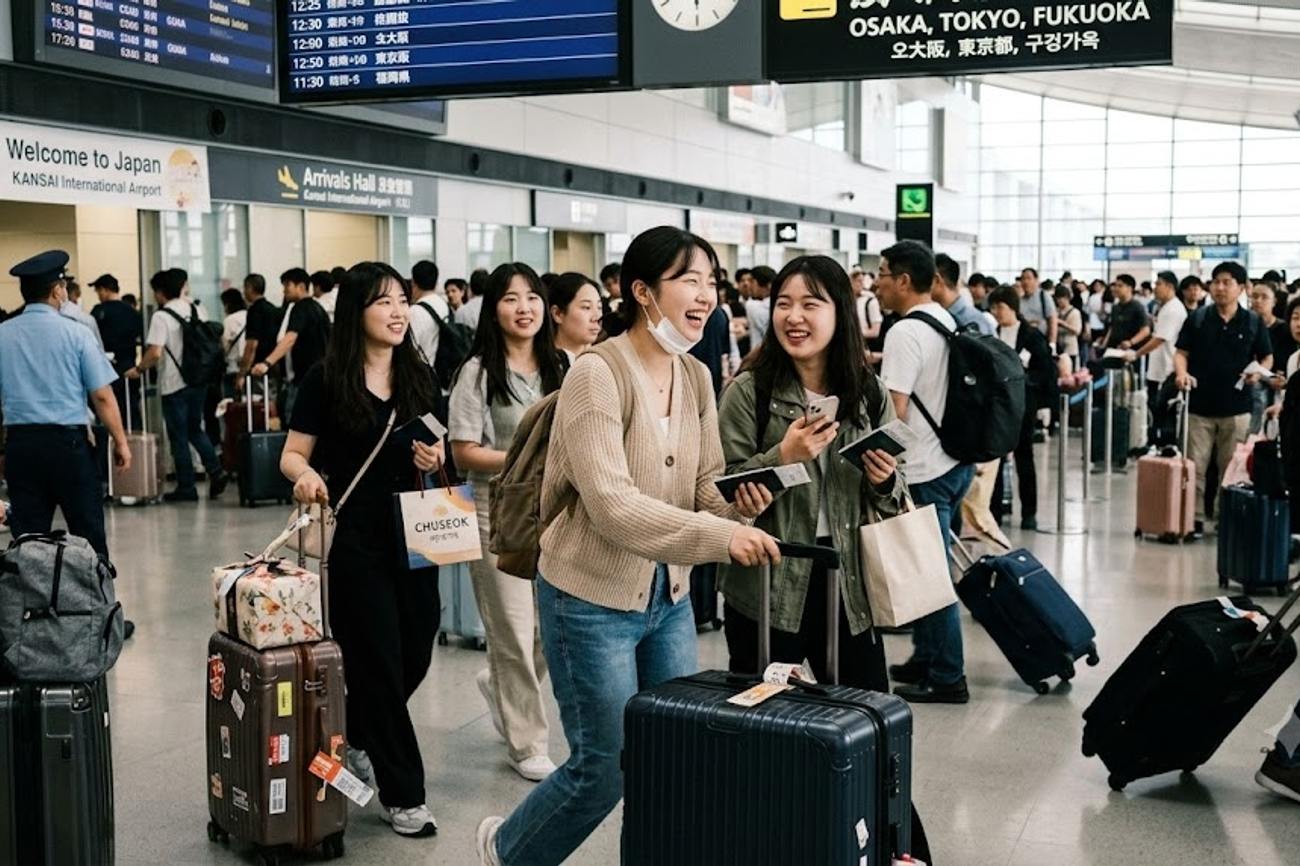
Image generated by AI
Three primary Japanese hubs—Osaka, Tokyo, and Fukuoka—dominated the booking charts for South Korean travelers during the recent Chuseok holiday period. This surge in short-haul international movement underscores a strategic shift in regional travel behavior, where the proximity of the Japanese archipelago is being leveraged to maximize extended public holiday windows. The data indicates a clear preference for "convenience-first" tourism, where minimal transit time is prioritized over long-haul exploration.
The Chuseok Catalyst and Regional Migration
The Chuseok holiday, traditionally a period of familial reunion, has evolved into a primary driver for outbound tourism from South Korea. This year, the phenomenon was amplified by a specific behavioral trend: the "pre-departure surge." Booking data reveals that more passengers departed on the day immediately preceding the official start of the holiday than on the first official day of the break. This suggests a systemic integration of annual leave with public holidays to extend the duration of international stays.
This shift in timing creates a specific pressure point for regional aviation. When a significant portion of a population attempts to exit the country simultaneously, it leads to temporary spikes in ticket pricing and capacity constraints on short-haul routes. The dominance of Japan in this cycle is not accidental; it is the result of dense flight connectivity and a diversified tourism product that appeals to various demographics, from luxury shoppers in Tokyo to culinary tourists in Osaka.
Geographic Distribution of Demand
While Japan held the primary position, the demand was not monolithic. South Korean travelers distributed their interest across three distinct Japanese urban centers and several Southeast Asian and East Asian alternatives.
| Destination | Primary Appeal Factor | Market Position |
|---|---|---|
| Osaka | Culinary tourism & historic landmarks | High Demand |
| Fukuoka | Proximity & coastal accessibility | High Demand |
| Tokyo | Luxury retail & modern entertainment | High Demand |
| Da Nang | Beach resorts & cultural heritage | Moderate Demand |
| Nha Trang | Tropical leisure & island experiences | Moderate Demand |
| Shanghai | Urban architecture & shopping | Moderate Demand |
The preference for Da Nang and Nha Trang in Vietnam suggests a secondary market for travelers seeking "warm-weather" escapes, contrasting with the autumn city-breaks offered by Japan. Meanwhile, the ability of Shanghai to maintain notable demand highlights a persistent interest in Chinese urban centers, despite the dominance of the Japanese market.
Expert Analysis: The Economics of Short-Haul Dominance
For the modern South Korean traveler, the decision to visit Japan over other international destinations is a calculation of "time-cost." When a holiday window is extended by combining personal leave with Chuseok, the goal is often to maximize the time spent at the destination rather than getting to the destination.
For travelers booking these routes, the direct consequence is an intensification of "weekend-style" international travel. The high frequency of flights between Seoul and cities like Fukuoka means that Japan is effectively treated as a domestic extension. This creates a pricing environment where airlines can maintain high load factors even with fluctuating ticket prices, as the demand is driven by a rigid calendar event (Chuseok) rather than seasonal leisure.
The Chuseok holiday has sparked a massive demand for travel from South Korea to Japan, with popular destinations including Osaka, Tokyo, and Fukuoka. According to the Japan National Tourism Organization, the number of South Korean tourists visiting Japan is expected to increase significantly during this period. As a result, airlines and travel agencies are offering special packages and discounts to cater to the surge in demand.
However, this concentration of movement introduces a systemic risk: health volatility. The recent warning from the Korea Disease Control and Prevention Agency (KDCA) regarding a rise in measles cases in Japan serves as a critical reminder. In a high-density travel corridor, a localized health outbreak can rapidly become a regional concern. For the traveler, the logistical burden now includes vaccination verification—a step that was largely ignored during the pre-pandemic era but is returning as a necessity for short-haul transit.
Furthermore, the reliance on a few key hubs like Osaka and Tokyo suggests a market consolidation. As these cities become "safe bets" for travelers, we can expect continued investment in infrastructure and hospitality specifically tailored to South Korean preferences. This symbiotic relationship is further supported by the International Air Transport Association (IATA), which tracks the recovery of Asia-Pacific aviation, noting that short-haul regional routes are often the first to return to—and exceed—pre-pandemic capacity.
Key Takeaways
- Temporal Shift: Travelers are increasingly departing a day early to maximize Chuseok breaks, shifting peak demand away from the official holiday start date.
- Japanese Hegemony: Osaka, Tokyo, and Fukuoka remain the top three choices due to a combination of flight frequency and diverse urban offerings.
- Diversified Alternatives: Vietnam (Da Nang and Nha Trang) and China (Shanghai) serve as the primary alternatives for those seeking beach leisure or different urban environments.
- Health Mandates: A spike in measles cases in Japan has prompted official health warnings, making vaccination record reviews a necessary part of the travel checklist.
- Logistical Efficiency: The trend confirms a preference for destinations with minimal transit times to maximize actual vacation hours.
FAQ: South Korea to Japan Travel 2024
Why is Fukuoka so popular for South Korean travelers? Fukuoka is one of the closest major Japanese cities to South Korea. Its proximity allows for extremely short flight times and affordable fares, making it the ideal gateway for those seeking a quick international escape without significant travel fatigue.
What health precautions are currently recommended for visiting Japan? Due to an increase in measles cases, health authorities recommend that all travelers review their vaccination records. Ensuring you are up-to-date on the MMR (Measles, Mumps, and Rubella) vaccine is strongly advised before departure.
Which Vietnamese cities are the best alternatives to Japan during Chuseok? Da Nang and Nha Trang are the leading choices. Da Nang is preferred for its blend of beach resorts and nearby cultural heritage sites, while Nha Trang is favored for its tropical atmosphere and island-hopping opportunities.
How can I avoid the peak crowds during the Chuseok travel rush? Data shows that departing the day before the official holiday begins is a common trend. To avoid the heaviest congestion, consider booking flights for the mid-point of the holiday or extending your stay into the following week.
The shift toward hyper-convenient, short-haul tourism suggests that for the modern nomad, the luxury of time has finally surpassed the allure of distance.
Tags: Chuseok 2024, South Korea Tourism, Japan Travel Trends, KDCA Health Advisory, Seoul-Osaka Route, Asia-Pacific Aviation
Related Travel Guides
This article is for informational purposes. Flight routes, passenger regulations, visa rules, and transit advisories are subject to change by airlines and aviation authorities. Readers are advised to verify schedules and travel documentation with relevant carriers and border agencies before departure.
Related Stories

Zen Awakening Festival 2026: Florida's Transformational Music, Mindfulness, and Arts Gathering in Fruitland Park

South Africa Expands Inclusive Wildlife Tourism with Woman-Owned Wellness Centre at Addo Elephant National Park