
China Follows Canada And More Powerful Places In Expanding Mexico Tourism As Digital Campaigns And Smart Strategies Target New Tourists
China Follows Canada And More Powerful Places In Expanding Mexico Tourism As Digital Campaigns And Smart Strategies Target New Tourists

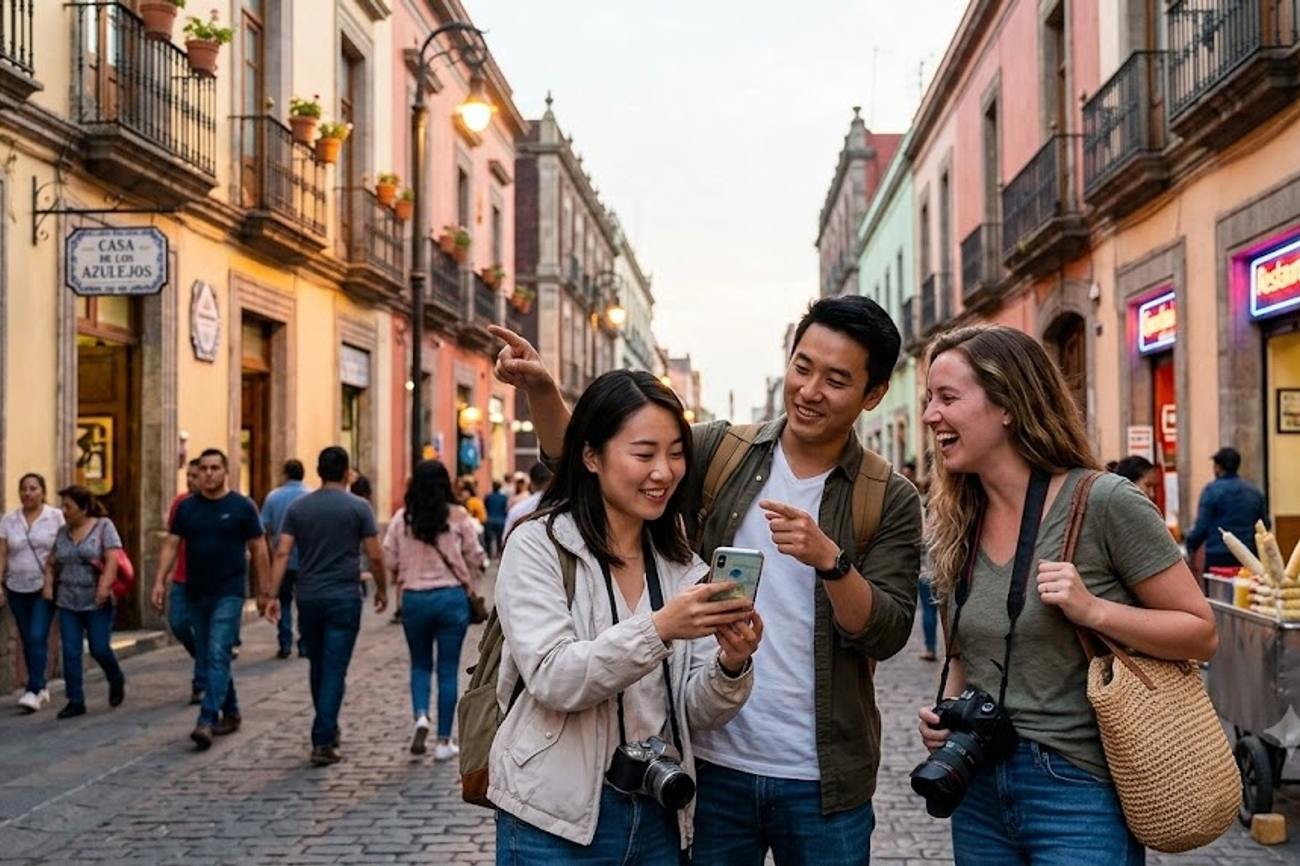
Image generated by AI
Mexico's international visitor arrivals have historically leaned on a heavy concentration of North American travelers, but the 2026 strategic pivot signals a calculated shift toward diversifying source markets to reduce regional dependency. While the United States and Canada remain the primary engines of volume, the aggressive integration of Mandarin-language infrastructure and targeted digital campaigns for the Chinese market indicates a move toward capturing high-yield, long-haul segments that traditionally under-index in Latin American destinations.
The Diversification Strategy in Numbers
The 2026 tourism framework is not a general promotional effort but a segmented market acquisition strategy. By transitioning from "normal holiday promotion" to customized tourism services, Mexico is attempting to shift its visitor profile from the budget-conscious short-stay traveler to the high-value, experiential tourist. This is most evident in the prioritization of the Chinese market, where the focus has shifted to five specific pillars: digital tourism promotion, Mandarin-language information, Chinese-friendly hospitality, cultural experiences, and strategic industry partnerships.
The geographic distribution of these efforts reveals a desire to move traffic away from the saturated "Sun and Beach" corridor. While Quintana Roo remains a luxury hub, the 2026 plan explicitly pushes high-value visitors toward Mexico City, Michoacán, Guanajuato, and Chiapas. This redistribution is designed to increase the average length of stay and spread economic impact across diverse municipalities. According to data patterns tracked by the World Travel & Tourism Council (WTTC), diversifying source markets is a primary hedge against regional economic downturns, a strategy Mexico is now implementing with precision.
Market Comparative Analysis: 2026 Source Dynamics
The current trajectory shows a clear distinction between "Maintenance Markets" (USA, Canada) and "Growth Markets" (China, Germany, Japan, South Korea). Maintenance markets provide the baseline volume, while growth markets are targeted for their higher spend-per-visitor and interest in niche sectors like eco-tourism and archaeology.
The following table outlines the specific value propositions Mexico is deploying across its primary 2026 target demographics:
| Source Market | Primary Driver | Key 2026 Target Destinations | Strategic Focus |
|---|---|---|---|
| China | History & Heritage | Mexico City, Chiapas, Guanajuato | Digital storytelling & Language accessibility |
| Canada | Seasonal/Wellness | Cancún, Riviera Maya, Los Cabos | Long-stay & Retirement travel |
| USA | Proximity/Connectivity | Multi-destination (City + Beach) | Diversification beyond resorts |
| Germany | Sustainability | Archaeological sites, Nature reserves | Eco-tourism & Meaningful travel |
| UK | Authenticity | Archaeological sites, Food hubs | Cultural identity over resort stays |
| France | Premium/Gastronomy | Boutique hotels, Culinary centers | Luxury & High-end experiences |
| Brazil/Colombia | Regional Leisure | Beach resorts, Urban centers | Short-haul regional flow |
This shift reflects a broader global trend where destinations are moving away from mass tourism toward "value-based tourism." By tailoring products to specific habits—such as the German preference for biodiversity or the French focus on gastronomy—Mexico is optimizing its yield per visitor. Data from Statista suggests that experiential travel continues to grow at a faster rate than traditional leisure travel, aligning perfectly with Mexico's 2026 focus on "unique local experiences."
What This Means for Travelers
The shift toward "smart policies" and customized services will fundamentally change the on-the-ground experience for international visitors in 2026.
For the Luxury and Cultural Traveler: If you are planning a visit to the interior of the country (e.g., Guanajuato or Michoacán), expect a significant upgrade in hospitality infrastructure. The push for "high-value visitors" means an increase in boutique hotel offerings and curated, multi-city itineraries. Booking these experiences 4-6 months in advance is recommended, as the focus on "customized services" often implies limited-capacity, high-touch tours.
For the North American Traveler: The trend is moving away from the "all-inclusive bubble." The 2026 strategy encourages American and Canadian travelers to engage in multi-destination journeys. To capitalize on this, travelers should look for "City + Beach" packages. Because the government is actively promoting lesser-known destinations, you may find more competitive pricing and better availability in regions like Chiapas compared to the perennial crowds of the Riviera Maya.
For the Asian Market Traveler: The introduction of Mandarin-language information and Chinese-friendly services will drastically lower the barrier to entry. Travelers from China, Japan, and South Korea will find a more seamless integration of digital payment systems and language support, making independent travel (FIT - Free Independent Traveler) more viable than the traditional group tour model.
Forward Projection: The 2027-2030 Trajectory
Based on the current data-driven pivot, Mexico is positioning itself to become the primary gateway for Asian tourism in the Americas. By investing in the "digital storytelling" and "smart policies" mentioned in the 2026 plan, Mexico is building a moat against competitors in Central and South America.
We can project three primary movements over the next few years:
- Decentralization of Revenue: A measurable shift in GDP contribution from the Quintana Roo region to the central highlands (Mexico City, Guanajuato) as cultural tourism gains traction.
- Digital Integration: The adoption of "smart tourism" will likely lead to integrated digital visas or streamlined entry processes for targeted growth markets to maintain momentum.
- Sustainability Benchmarking: As Germany and the UK drive demand for eco-tourism, Mexico will likely implement stricter sustainability certifications for its nature-based operators to maintain its appeal to the European market.
The integration of IATA standards for improved connectivity will be the final piece of the puzzle, as increased flight frequencies from Asia and Europe are required to support this diversified demand.
FAQ: Mexico Tourism Trends 2026
Will flight prices increase due to new market targeting? Likely not for major hubs. As Mexico attracts more diverse markets (China, Europe), airlines typically increase capacity and frequency, which can stabilize or even lower fares through increased competition on long-haul routes.
Is this a good time to book cultural tours in Mexico? Yes. With the 2026 focus on "customized tourism services," there is a current surge in the development of high-quality, boutique cultural experiences that are less crowded than traditional beach resorts.
Which airlines are expanding to support this growth? While specific carriers aren't named in the strategy, the focus on China and Europe suggests an expansion in partnerships with major Asian and European flag carriers to facilitate the "long-haul" growth target.
Are beach resorts becoming less popular? No, but they are no longer the sole focus. The trend is "augmentation"—adding cultural and nature-based stops to a traditional beach holiday to increase the total value of the trip.
Mexico is no longer selling a destination; it is engineering a diversified portfolio of experiences to insulate its economy from any single market's volatility.
#MexicoTourism2026 #SourceMarketDiversification #HighValueTravel #AsianOutboundGrowth #CulturalTourismShift #MexicoEcoTourism
Related Travel Guides
- Italy Teams Up With Germany And More Countries To Lift France Tourism Revenue With Premium Holidays And Cultural Experiences
- Romania Advances With Greece and Others as TOURAL Expands Digital Tourism Validation in Tulcea and Pineto
- Discover Asmara Now: Why This UNESCO Capital’s Modernist Architecture Is Africa’s Best-Kept Secret
Disclaimer
This article is for informational and educational purposes only. It does not constitute legal, financial, or professional advice. While we strive to provide accurate and up-to-date information, travel policies, regulations, and conditions change rapidly. Always verify information with official sources before making travel decisions. Nomad Lawyer makes no representations about the accuracy, reliability, completeness, or suitability of the information provided. Readers should consult qualified professionals for advice specific to their circumstances. The views expressed in this article are those of the author and do not necessarily reflect the views of Nomad Lawyer.
Raushan Kumar
Founder & Lead Developer
Full-stack developer with 11+ years of experience and a passionate traveller. Raushan built Nomad Lawyer from the ground up with a vision to create the best travel and law experience on the web.
Learn more about our team →