
Travelex Extends Foreign Exchange Partnerships Across Major UK Travel Hubs
Travelex Extends Foreign Exchange Partnerships Across Major UK Travel Hubs

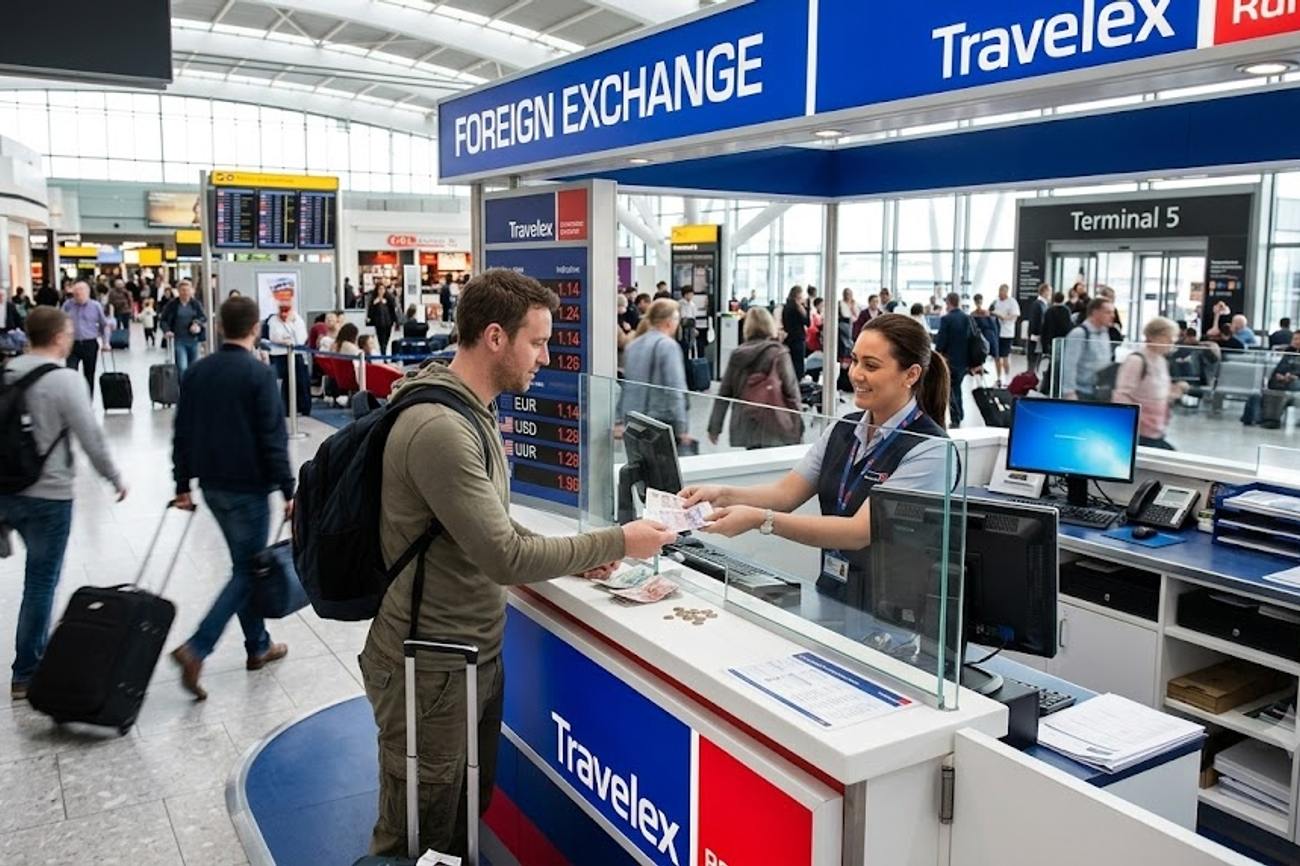
Image generated by AI
The shift in UK travel financial behavior is stark: 92% of travelers now secure their currency before departure, yet physical infrastructure in transit hubs is expanding rather than contracting. This paradox indicates a transition toward a hybrid financial model where the "last-mile" physical touchpoint serves as a critical safety net rather than the primary procurement method. Travelex's recent series of contract extensions across the United Kingdom—spanning aviation, maritime, and luxury retail—confirms that despite the rise of fintech, high-volume transit hubs still require a tangible financial presence to manage the volatility of international travel.
The FX Infrastructure in Numbers: Strategic Hubs
The scale of these renewals reveals a calculated bet on high-density passenger corridors. The data shows a diversified footprint designed to capture travelers at every stage of the transit funnel, from the luxury retail phase in London to the final boarding gate in Scotland.
At Liverpool John Lennon Airport, the operational scale is tied to a record-breaking performance metric: the hub handled 5.6 million passengers in 2025. To service this volume, Travelex maintains a dual-pronged approach consisting of two physical storefronts and twelve automated teller machines (ATMs). This ratio of six ATMs per store suggests a strategic pivot toward self-service automation to handle the bulk of transactions while retaining storefronts for complex currency needs.
In Scotland, the commitment is even more long-term. The agreement at Edinburgh Airport has been extended through 2030, a partnership that originally began in 2021. The infrastructure here is more comprehensive, featuring five stores, twelve ATMs, and a mobile kiosk distributed across both airside (post-security) and landside (pre-security) zones. This distribution ensures that the "capture rate" of passengers is maximized regardless of their location within the terminal.
The maritime sector shows a different deployment pattern. Rather than static stores, the focus is on mobility. Travelex has renewed its partnership with DFDS Seaways to operate euro and British pound ATMs aboard six different vessels sailing between Dover and Calais or Dunkirk. This is supplemented by a physical exchange outlet at the Port of Dover’s Eastern Docks. Finally, the retail integration at London’s Oxford Street Selfridges places the service in front of a massive consumer base of over 20 million annual visitors, blending travel finance with luxury shopping.
Comparative Context: Physical vs. Digital Evolution
Historically, foreign exchange providers relied on a "high-street" model—standalone bureaus located in city centers. However, current data from the World Travel & Tourism Council (WTTC) suggests that traveler spending patterns are increasingly tied to the "transit experience." Travelex has shifted from a centralized model to a multi-modal integration strategy.
The following table illustrates the shift in operational focus from previous industry standards to the current integrated model seen in these renewals.
| Metric/Feature | Legacy FX Model (Pre-2020) | Integrated Hybrid Model (2025-2030) |
|---|---|---|
| Primary Location | High-Street Bureaus | Multi-modal Hubs (Air, Sea, Retail) |
| Service Delivery | Counter-based transactions | Stores + ATMs + Mobile Kiosks |
| Contract Duration | Short-term/Transactional leases | Long-term strategic anchors (e.g., to 2030) |
| Customer Behavior | Walk-in, spontaneous purchase | 92% Pre-trip planning / Last-minute top-up |
| Asset Distribution | Centralized airport hubs | Airside, Landside, and On-vessel |
This evolution reflects a broader trend identified by IATA, where the seamless integration of ancillary services into the passenger journey is paramount. By securing presence in both the Eastern Docks and on the vessels themselves, the provider is not just selling currency; they are embedding themselves into the logistics of the journey.
What This Means for Travelers
The data regarding the 92% pre-purchase rate is the most critical metric for the modern traveler. It signals that the era of relying solely on airport counters for primary currency acquisition is over. However, the expansion of ATMs and kiosks means that the "cost of error" for those who forget to prepare is decreasing.
Actionable Advice for Q3 and Q4 Travelers:
- Prioritize Pre-Ordering: Given that nearly all UK travelers (92%) now order money in advance, avoid the potential queues at the two stores in Liverpool or five stores in Edinburgh. Use digital platforms to pre-order and utilize the "collection services" mentioned in the contract extensions to save time.
- Leverage the Hybrid Footprint: If you are traveling via the English Channel, do not feel pressured to carry large sums of cash through the terminal. The presence of ATMs on six DFDS Seaways vessels allows for mid-journey liquidity in euros or pounds.
- Strategic Top-ups: For those using prepaid Travelex Travel Money Cards, the increased number of ATMs (12 in Liverpool, 12 in Edinburgh) means you can perform "just-in-time" funding. Instead of carrying a high balance, top up your card at the landside or airside kiosks immediately before departure.
Projection: The Future of Transit Finance
The extension of the Edinburgh Airport contract to 2030 suggests that the industry believes physical currency will remain a necessity for at least the next five years. We are seeing a move toward "invisible finance," where the physical store becomes a brand anchor and a service center for complex issues, while the actual transaction is handled by an ATM or a mobile kiosk.
As international mobility continues to rebound, we can expect further integration. The move into luxury retail (Selfridges) indicates that FX providers are chasing the "high-net-worth" traveler who views currency exchange as part of a luxury shopping experience rather than a chore. We will likely see more of these "lifestyle" integrations in high-end hotels and designer districts globally.
The data suggests a trajectory where the "store" becomes a "hub." We will see fewer traditional counters and more high-speed, automated touchpoints that sync with mobile apps. The goal is to eliminate the friction of the transaction while maintaining the security of a physical brand presence.
FAQ: UK Transit Foreign Exchange 2025
Will currency exchange prices increase at airports? Prices are driven by market volatility and convenience fees. While the expansion of ATMs at Liverpool and Edinburgh airports increases accessibility, pre-ordering remains the most cost-effective method, as evidenced by the 92% of travelers who now plan ahead.
Is it better to use an ATM or a store at the airport? For simple withdrawals of major currencies, the 24 ATMs across the two airports are faster. For prepaid card top-ups or collecting pre-ordered funds, the physical stores provide necessary human verification and support.
Which routes have the best cash accessibility? The Dover-to-Calais/Dunkirk routes are highly optimized, with ATMs available both at the Eastern Docks and onboard six DFDS Seaways vessels, providing multiple opportunities to acquire euros.
Are physical currency bureaus becoming obsolete? No, but they are evolving. The shift toward multi-modal hubs and long-term contracts (through 2030) shows that physical presence is still vital for traveler peace of mind and as a hedge against digital-only systems.
The data is clear: the future of travel finance isn't digital-only—it's digital-first, backed by a strategic physical safety net.
#UKTravelFinance2025 #TravelexExpansion #AirportRetailData #MultiModalTransitFX #UKPassengerTrends2025 #EdinburghAirportGrowth
Related Travel Guides
Disclaimer
This article is for informational and educational purposes only. It does not constitute legal, financial, or professional advice. While we strive to provide accurate and up-to-date information, travel policies, regulations, and conditions change rapidly. Always verify information with official sources before making travel decisions. Nomad Lawyer makes no representations about the accuracy, reliability, completeness, or suitability of the information provided. Readers should consult qualified professionals for advice specific to their circumstances. The views expressed in this article are those of the author and do not necessarily reflect the views of Nomad Lawyer.
Raushan Kumar
Founder & Lead Developer
Full-stack developer with 11+ years of experience and a passionate traveller. Raushan built Nomad Lawyer from the ground up with a vision to create the best travel and law experience on the web.
Learn more about our team →