Capella Sydney Elevates Australia’s Luxury Hotel Market as Boutique Retreats and Michelin Keys Transform Premium Tourism

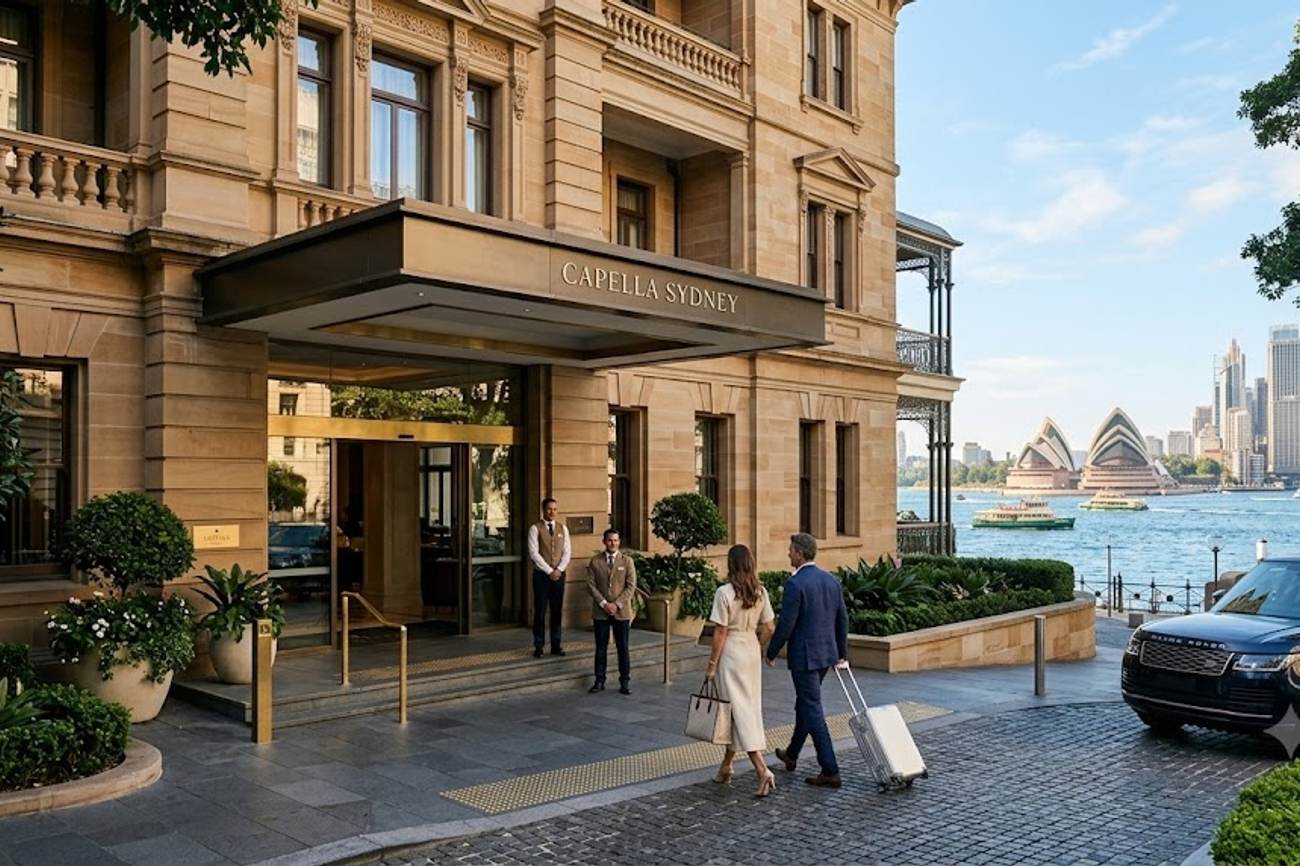
Image generated by AI
[Sydney, May 2026] — Capella Sydney has secured a Two Michelin Keys designation, signaling a pivotal shift in Australia’s luxury hospitality sector toward high-yield, bespoke accommodations. The recognition places the hotel within an elite global tier of lodging and underscores a broader national transition from mass-market urban hotel towers to a decentralized network of heritage revivals, eco-resorts, and ultra-premium wilderness retreats.
The promotion of Capella Sydney reflects the success of the Australian government's THRIVE 2030 (THe Re-Imagined Visitor Economy) strategy, which prioritizes high-net-worth individuals (HNWIs) over raw visitor volume. By focusing on "high-yield" tourism, federal and state authorities aim to maximize economic returns per guest while reducing the strain on municipal infrastructure and environmental resources. This strategic pivot is supported by Tourism Australia, which has developed specialized marketing collectives including the Luxury Lodges of Australia and Discover Aboriginal Experiences to attract affluent travelers from the Asia-Pacific, Europe, and North America.
The Catalyst for Luxury Evolution
The immediate trigger for this industry transformation is a structural change in global travel behavior. Affluent travelers are increasingly rejecting standardized luxury in favor of "architectural storytelling," curated culinary access, and deep cultural immersion. This shift has driven institutional capital away from large-scale CBD hotels and toward adaptive reuse projects—where historic buildings are converted into luxury hubs—and regional eco-lodges.
The Michelin Key rating system has provided the international benchmark necessary to validate this transition. Unlike traditional star ratings, the Michelin Key evaluates properties based on five specific pillars:
- Excellence in architectural and interior design.
- Consistency and quality of service.
- The distinct personality and character of the property.
- Value relative to price.
- The property's contribution to the local guest experience.
Regional Distribution of Luxury Benchmarks
The distribution of Michelin Key properties reveals a clear concentration of luxury investment along the eastern seaboard, with New South Wales emerging as the dominant force in the premium visitor economy.
| State | Michelin Key Properties | Market Position |
|---|---|---|
| New South Wales (NSW) | 18 | National Luxury Hub |
| Victoria | 8 | Secondary Luxury Capital |
| Queensland | 8 | Secondary Luxury Capital |
The dominance of NSW is exemplified by Capella Sydney's location in the historic Sandstone Precinct. The hotel is an adaptive reuse of the former Department of Education building, originally designed by Government Architect George McRae in the early 20th century. This project demonstrates the viability of integrating contemporary luxury engineering into heritage architecture to attract high-spending international guests.
Practical Traveler Advisory and Strategic Insights
For the modern traveler, the "high-yield" pivot means that the experience of visiting Australia is shifting from generic tourism to hyper-personalized itineraries. Travelers booking premium stays should expect the following:
Higher Entry Costs, Higher Customization The move toward boutique properties with intimate room counts allows operators to command higher Average Daily Rates (ADR). In exchange, guests receive a level of service that large-scale hotels cannot replicate, including bespoke excursions and wellness integrations tailored to individual needs.
Regional Expansion Luxury is no longer confined to the CBDs of Sydney or Melbourne. The rise of ultra-premium wilderness retreats and glamping sites means travelers can now access five-star amenities in remote regional zones, creating a seamless luxury corridor between city gateways and the Outback or rainforests.
The launch of Capella Sydney is poised to redefine the luxury hotel landscape in Australia, offering an unparalleled boutique retreat experience that showcases the city's iconic harbor and Opera House views. For travelers planning to visit Sydney, it's essential to check the latest entry requirements and travel guidelines on the Australian Government Department of Home Affairs website to ensure a seamless arrival process. By doing so, visitors can focus on exploring the city's vibrant culture and Michelin-starred culinary scene.
Heritage-Centric Stays The trend toward adaptive reuse means more "story-driven" accommodations. Guests are increasingly staying in converted administrative buildings or historic estates that preserve the local identity of the city, moving away from the "glass box" hotel aesthetic.
The Path Toward THRIVE 2030
The trajectory of Australia's premium economy is now tied to the THRIVE 2030 mandate. This federal directive seeks to ensure that tourism growth is sustainable by targeting visitors who stay longer and spend more per night. By channeling capital into localized supply chains and regional economies, the government aims to distribute the wealth of high-end tourism beyond the major metropolitan centers.
Data from Tourism Research Australia (TRA) indicates that this strategy is already yielding results. By early 2026, visitor spending reached record highs, fueled by a combination of a rapid rebound in international arrivals and a sustained domestic preference for premium regional escapes.
The success of Capella Sydney serves as a blueprint for future developments. It proves to private investors that heritage preservation, when combined with international luxury standards, can generate significant global brand recognition and premium pricing power. As more properties pursue Michelin Key status, the competition among Australian states to attract the Asia-Pacific's affluent demographic is expected to intensify.
FAQ: Australia Luxury Travel 2026
What is a Michelin Key and how does it differ from a star rating? A Michelin Key focuses on the unique character, design, and local experience of a hotel rather than just the quantity of amenities. It recognizes exceptional properties that offer a distinct personality and superior service quality.
Which Australian state currently has the most luxury accommodations? New South Wales leads the country with 18 Michelin Key locations, making it the primary destination for high-end luxury lodging in Australia, followed by Victoria and Queensland with eight properties each.
What is "adaptive reuse" in the context of Australian hotels? Adaptive reuse is the process of converting old, often historic, buildings for a new purpose. An example is Capella Sydney, which transformed a former government education building into a luxury hotel while preserving its heritage architecture.
How does the THRIVE 2030 strategy affect the average tourist? While THRIVE 2030 targets high-net-worth individuals, it benefits the broader economy by investing in regional infrastructure and preserving cultural heritage sites, which improves the overall quality of destinations for all visitors.
Australia's luxury sector has officially traded volume for value.
Related Travel Guides
This article is for informational purposes. Flight routes, passenger regulations, visa rules, and transit advisories are subject to change by airlines and aviation authorities. Readers are advised to verify schedules and travel documentation with relevant carriers and border agencies before departure.
Related Stories

Delta's Austin–Arkansas Flights Reshape Regional Tourism Economics: Day Trips, Late Arrivals, and Visitor Spending 2027

UK Noise Pollution Rankings 2026: Salford Loudest City While Scotland's Perth and Kinross Emerges as Ultimate Peaceful Travel Retreat