
Canada's Historic Ocean Train: A 840-Mile Journey from Montreal to Halifax in 2026
Experience the 840-mile rail corridor connecting Montreal to Halifax, crossing Quebec, New Brunswick, and Nova Scotia via the historic Ocean train service.

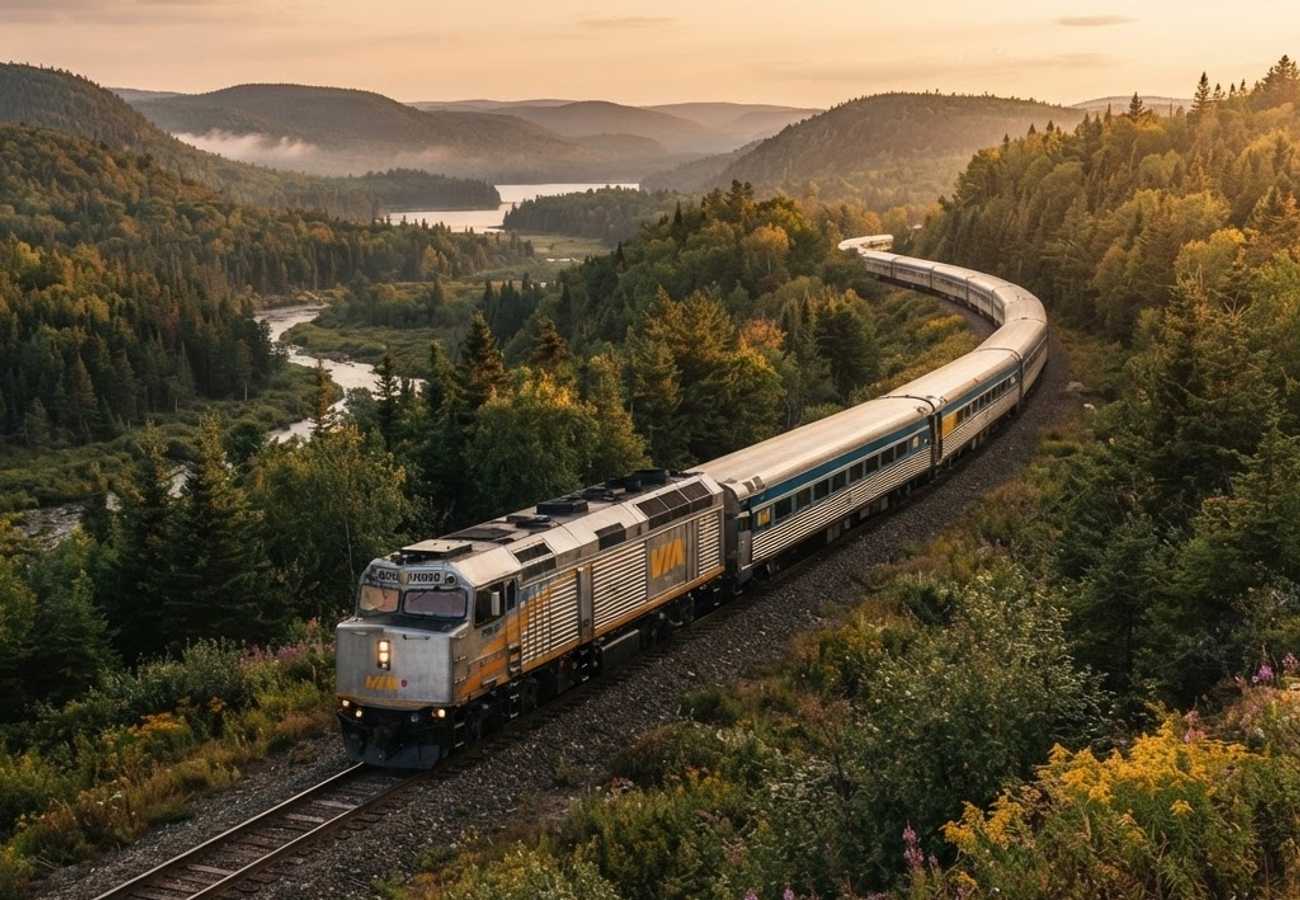
Image generated by AI
The Ocean remains the sole rail link between Montreal and Halifax, offering a 840-mile transit through the heart of Eastern Canada. This 24-hour overnight service transforms a standard transit route into a deep immersion in Maritime and Central Province heritage.
The Ocean is more than a transit corridor; it is a moving archive of Canadian settlement. Originally built in 1904 as part of the Intercolonial Railway, this route served as the primary physical link between the Maritime Provinces and Canada's Central Provinces. Today, it provides the only way to access specific rural communities and landscapes that are bypassed by major highways and flight paths.
The journey spans three distinct provinces, transitioning from the urban sprawl of Montreal through the rugged forests of Quebec, the fishing traditions of New Brunswick, and the Atlantic coastlines of Nova Scotia.
Route Specifications and Regional Highlights
The transit is defined by its diversity of terrain and the cultural identity of the towns that grew around the tracks.
- Quebec: Characterized by historic railway communities and river valleys.
- New Brunswick: Defined by maritime landscapes, rural fishing traditions, and coastal scenery.
- Nova Scotia: Marked by Atlantic culture, rugged coastlines, and historic industrial towns.
Cultural Anchors Along the Corridor
Our analysis of the route identifies three key communities that offer significant historical and artistic value:
- Mont-Joli (Quebec): A town whose identity is inextricably linked to the rail. It is currently recognized for its extensive collection of outdoor murals.
- Matapédia (Quebec): Located at the confluence of the Matapédia and Restigouche rivers. This community is a hub for salmon fishing and reflects a blend of Mi’kmaq, Irish, French-Canadian, and Acadian influences.
- Truro (Nova Scotia): A former industrial powerhouse in lumber and printing. It holds critical historical weight as the training ground for the No. 2 Construction Battalion during World War I, a pivotal element of Black Canadian military history.
Transit Logistics and Passenger Experience
The Ocean operates as an overnight service, requiring a different strategic approach than short-haul excursions.
Accommodation Tiers Passengers can choose between Economy travel for a direct experience or Sleeper Plus, which provides beds and enhanced dining amenities. For groups, party cabins are available for booking.
Seasonal Variations The visual experience shifts dramatically by quarter:
- Winter: A traverse through snow-covered wilderness.
- Spring: Rapid transition to fresh greenery.
- Summer: High-visibility landscapes and reflective waterways.
- Autumn: Peak foliage featuring red, orange, and yellow hues.
Directional Strategy From a logistical perspective, eastbound travel is recommended for scenery enthusiasts. This direction maximizes daylight exposure over the most visually striking sections of the 840-mile route.
Regional Breakdown: The Ocean Corridor
| Province | Notable Character | Primary Travel Experience |
|---|---|---|
| Québec | Historic railway communities and rivers | Villages, forests, and cultural heritage |
| New Brunswick | Maritime landscapes and fishing traditions | Rivers, rural communities, and coastal scenery |
| Nova Scotia | Atlantic culture and historic towns | Coastlines, communities, and changing landscapes |
Why This Matters: Industry Implication
For the modern traveler, the Ocean represents a shift from "efficiency-based" travel to "experience-based" travel. While flying from Montreal to Halifax is significantly faster, it removes the geographical context of the region.
From a logistical standpoint, the Ocean is the only method of transport that allows for the observation of the "interstitial spaces" of Eastern Canada—the small towns and river valleys that are invisible from 30,000 feet. This route preserves the legacy of the Intercolonial Railway, proving that heritage rail can still compete in a high-speed era by offering "slow travel" as a luxury product. For those researching Canadian maritime history or rural development, this train is a primary research tool rather than just a ticket to a destination.
Forward Outlook
As travel trends move toward sustainable and immersive tourism, the Ocean is positioned to attract a growing demographic of "slow travelers." We expect a continued emphasis on the Sleeper Plus experience to compete with boutique hotel trends. Furthermore, the integration of local art (like the Mont-Joli murals) into the rail narrative suggests a future where the journey is marketed as a curated gallery of Eastern Canadian life.
A timeless transit through the Atlantic heartland.
Related Travel Guides
Disclaimer
This article is for informational and educational purposes only. It does not constitute legal, financial, or professional advice. While we strive to provide accurate and up-to-date information, travel policies, regulations, and conditions change rapidly. Always verify information with official sources before making travel decisions. Nomad Lawyer makes no representations about the accuracy, reliability, completeness, or suitability of the information provided. Readers should consult qualified professionals for advice specific to their circumstances. The views expressed in this article are those of the author and do not necessarily reflect the views of Nomad Lawyer.
Kunal K Choudhary
Co-Founder & Contributor
A passionate traveller and tech enthusiast. Kunal contributes to the vision and growth of Nomad Lawyer, bringing fresh perspectives and driving the community forward.
Learn more about our team →