
Travel Boost Lumo Launches Sub-€35 London-Scotland Rail Service
Travel boost Lumo launches budget train service connecting London with Scotland in 2026, with fares starting below €35, challenging airlines and expanding affordable rail access.

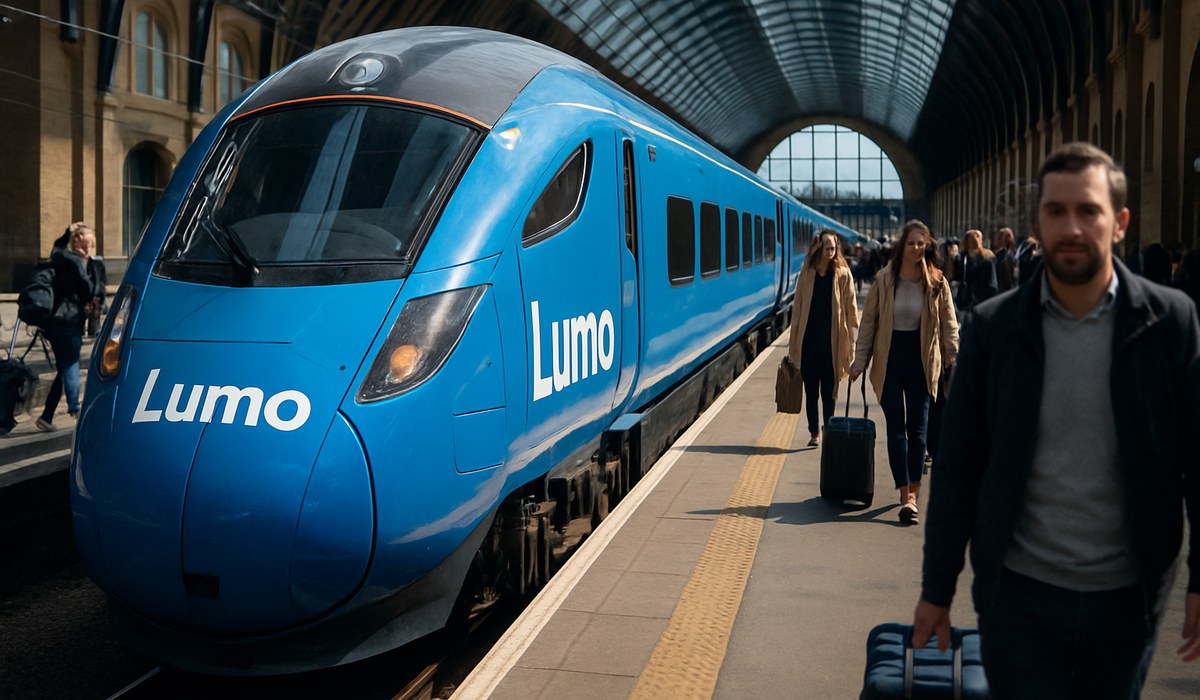
Image generated by AI
Train travel between London and Scotland just became cheaper than most taxi rides to the airport. Lumo, a revolutionary rail operator, has dramatically slashed fares to under €35 on its direct services connecting England's capital with key Scottish cities. This aggressive pricing strategy positions rail transport as a genuine competitor to budget airlines while delivering significant environmental benefits for eco-conscious travelers.
The launch represents a fundamental shift in UK intercity mobility. For years, expensive rail tickets drove passengers toward low-cost carriers despite the carbon footprint. Now, travellers can board modern trains in central London and arrive in Edinburgh or Newcastle without airport security queues, baggage fees, or urban-to-airport transfers—all for less than the cost of a restaurant meal.
Quick Summary
- Lumo introduces London-Scotland train fares starting below €35, undercutting most airline options
- Service utilizes electric trains on the East Coast Main Line, cutting journey times significantly
- Launch threatens budget airline market share by offering city-centre to city-centre convenience
- Environmental impact analysis shows rail emits up to 90% less carbon than equivalent flights per passenger
Game-Changing Fares: What €35 Gets You on Lumo
The pricing model breaks with traditional railway economics. Advance bookings on Lumo services between London King's Cross and Edinburgh Waverley now start at £29 (approximately €34), with similar rates to Newcastle upon Tyne. Off-peak midweek departures offer the deepest discounts, though even Friday evening slots remain below €50 in many booking windows.
Each ticket includes standard seating in modern carriages with complimentary WiFi, power outlets, and luggage storage. Unlike many budget airlines charging for carry-on bags, passengers can bring two pieces of luggage without additional fees. The operator has eliminated class distinctions entirely, creating a single cabin standard comparable to premium economy on airlines.
The fare structure follows dynamic pricing algorithms that adjust costs based on demand, booking lead time, and capacity. Tickets released twelve weeks before departure typically hit the minimum price floor. According to operator statements released in late March 2026, approximately 40% of inventory sells at the entry-level tier when booked more than six weeks in advance.
This mirrors successful strategies employed by Eurostar's high-speed model connecting major cities, where early-bird pricing captures price-sensitive leisure travellers while business demand fills remaining premium-priced seats. The approach has proven effective in continental Europe at shifting modal share from aviation to rail on routes under five hours.
Industry analysts note the pricing directly challenges Ryanair and easyJet on the London-Edinburgh corridor, where base airfares appear competitive until travelers add baggage, seat selection, and ground transport costs. Rail's city-centre departure and arrival points eliminate £30-50 in taxi or rail transfers to Luton, Stansted, or Edinburgh airports.
Route Network and Journey Times Explained
Lumo operates exclusively on the East Coast Main Line, Britain's premier north-south railway corridor. Services depart London King's Cross with stops at Newcastle Central, Morpeth, and Edinburgh Waverley. The route covers approximately 393 miles between London and Edinburgh, with journey times averaging four hours and thirty minutes on direct services.
Recent track upgrades funded by Network Rail infrastructure improvements have enabled consistent 125mph running speeds on upgraded sections. Digital signaling systems permit tighter train spacing, allowing Lumo to slot additional services into the timetable without disrupting incumbent operators like LNER.
The operator runs five return services daily, with departures concentrated during peak commuter hours and late afternoon leisure slots. Morning trains from Edinburgh arrive in London before midday, enabling same-day business meetings. Evening departures let Londoners reach Edinburgh for dinner, supporting weekend tourism breaks.
Newcastle benefits particularly from the pricing strategy. Fares from London to this northern England hub start at £24 (€28), making it cheaper than some regional bus services. Journey time of approximately three hours positions the city within comfortable day-trip range for both leisure and business travellers.
The service does not currently extend to Glasgow, Aberdeen, or Inverness, though operator filings with transport regulators indicate interest in western Scotland routes if initial demand proves sustainable. Current infrastructure constraints limit immediate expansion opportunities, with track capacity on shared portions of the network already near maximum.
Technical specifications reveal the fleet comprises Class 803 bi-mode trains, capable of running on electrified track or switching to diesel engines on non-electrified sections. However, the East Coast Main Line runs fully on 25kV overhead electric power, enabling zero-emission operation between London and Edinburgh.
How Lumo Compares to Airlines and Traditional Rail
Budget airlines dominate the London-Scotland market, with multiple daily flights from Heathrow, Gatwick, Luton, Stansted, and London City airports. Flight time averages 75 minutes, but total journey time including check-in, security, boarding, and baggage claim typically exceeds three and a half hours.
Base airfares from Ryanair or easyJet start around £30-40 when booked far in advance, superficially similar to Lumo's entry pricing. The cost equation shifts dramatically when including ancillary fees. A carry-on bag adds £12-25, checked luggage another £20-40, and seat selection £5-15. Airport transfers via Stansted Express or Gatway Express trains cost £17-35 return.
Traditional rail operator LNER offers competing services on the same route with higher service frequency. However, LNER's off-peak returns typically start around £70-90, with peak-time anytime returns exceeding £200. The premium reflects LNER's first-class carriages, dining service, and flexibility to board any train without advance reservation.
Lumo positions itself between these extremes—structured like an airline with mandatory advance booking and assigned seating, but delivering the convenience and speed of rail. The model has proven successful in other European markets, particularly on Spain's low-cost AVE services and France's Ouigo trains.
Environmental conscious travellers gain a clear winner. Rail transport on electrified routes generates approximately 35 grams of CO2 per passenger-kilometer according to International Union of Railways sustainability benchmarks, compared to 255 grams for short-haul aviation. A London-Edinburgh return by train produces roughly 20kg of carbon versus 180kg by plane—a 90% reduction.
This positions Lumo alongside broader sustainable travel alternatives gaining momentum worldwide, where environmental considerations increasingly influence booking decisions, particularly among younger demographics who prioritize climate impact.
Business travellers appreciate the ability to work productively throughout the journey, with reliable WiFi enabling video calls and document collaboration impossible during flight phases. The lack of size restrictions on laptops and absence of airplane mode requirements delivers genuine productivity advantages over aviation.
Environmental Impact: The Carbon Case for Rail
Electrified rail transport stands among the lowest-carbon options for long-distance travel. The East Coast Main Line draws power from Britain's national grid, which has dramatically reduced coal dependency over the past decade, shifting toward wind, solar, and nuclear generation. During periods of high renewable output, trains effectively run on clean energy.
Per-passenger emissions depend on train occupancy and grid carbon intensity at journey time. Average calculations show a London-Edinburgh rail journey produces 16-25kg CO2 equivalent per passenger on a well-loaded service. The identical trip by plane generates 150-200kg, while driving a petrol car emits approximately 75-100kg depending on vehicle efficiency and occupancy.
The environmental advantage strengthens as more travellers shift from aviation to rail. Each plane requires a certain passenger load to justify operation, but reducing airline market share eventually forces route frequency cuts or airline withdrawals, amplifying per-flight environmental savings.
Rail infrastructure also benefits from continuous operation efficiency gains impossible in aviation. Newer rolling stock, regenerative braking systems that return energy to the grid, and improved aerodynamics have reduced energy consumption per passenger-kilometer by 23% since 2015 according to industry data.
Scotland's tourism sector stands to benefit substantially from improved affordable access. Budget travelers previously deterred by high rail costs can now reach UK heritage destinations increasingly accessible to budget travelers, including Edinburgh's historic old town, Highland landscapes, and cultural institutions without aviation's carbon penalty.
The model aligns with UK government transport decarbonization targets requiring 50% of journeys under 500 miles to shift from aviation to rail by 2035. Affordable pricing removes cost barriers that previously kept rail as a premium option accessible mainly to business travelers with corporate accounts.
Critics note that truly comprehensive environmental accounting must include embodied carbon in rail infrastructure construction and maintenance, plus emissions from manufacturing rolling stock. However, lifecycle analyses consistently show rail infrastructure carbon costs amortize over decades of operation, while aircraft manufacturing emissions must be divided across fewer total service years.
The service also integrates with broader patterns in global travel infrastructure innovations being discussed at major industry conferences, where modal shift from short-haul aviation to high-speed rail represents a key decarbonization strategy across developed economies.
FAQ: Everything You Need to Know About Lumo
How far in advance can I book Lumo tickets?
Lumo releases tickets up to twelve weeks before departure. The cheapest fares sell out within days of release during peak travel periods like summer holidays and Christmas, so booking early delivers both availability and optimal pricing. Off-peak midweek services retain low fares even with shorter booking windows.
Can I bring luggage without extra charges?
Yes, each passenger can bring two pieces of luggage without additional fees—one carry-on item and one larger case. This contrasts sharply with budget airlines that charge £12-40 for checked bags. Luggage storage areas accommodate standard suitcases, though oversized items like bicycles require advance notification and may incur small fees.
What happens if I miss my booked train?
Lumo tickets are advance-purchase only and tied to specific services, similar to airline tickets. Missing your departure typically requires purchasing a new ticket, as transfers to later trains involve rebooking fees. Travel insurance covering missed connections may reimburse costs. Arriving at the station 15 minutes early ensures smooth boarding.
How does onboard service compare to traditional trains?
Lumo offers complimentary WiFi, power outlets at every seat, and climate-controlled modern carriages. There is no complimentary food service, but passengers can bring their own refreshments or purchase snacks from trolley service. Seating comfort matches standard class on premium operators, with adequate legroom for most passengers.
Is Lumo suitable for families with children?
Absolutely. Family seating areas keep groups together, and the baggage allowance accommodates children's luggage without penalty fees. The four-and-a-half-hour journey offers kids freedom to move around, use restrooms comfortably, and avoid the confined space anxiety some experience on aircraft. Changing facilities are available onboard.
Related Coverage
Disclaimer
This article is for informational and educational purposes only. It does not constitute legal, financial, or professional advice. While we strive to provide accurate and up-to-date information, travel policies, regulations, and conditions change rapidly. Always verify information with official sources before making travel decisions. Nomad Lawyer makes no representations about the accuracy, reliability, completeness, or suitability of the information provided. Readers should consult qualified professionals for advice specific to their circumstances. The views expressed in this article are those of the author and do not necessarily reflect the views of Nomad Lawyer.
Preeti Gunjan
Contributor & Community Manager
A passionate traveller and community builder. Preeti helps grow the Nomad Lawyer community, fostering engagement and bringing the reader experience to life.
Learn more about our team →