Canada Teams Up With France To Drive Tourism Revival In A Unique French Island Gateway Near North America

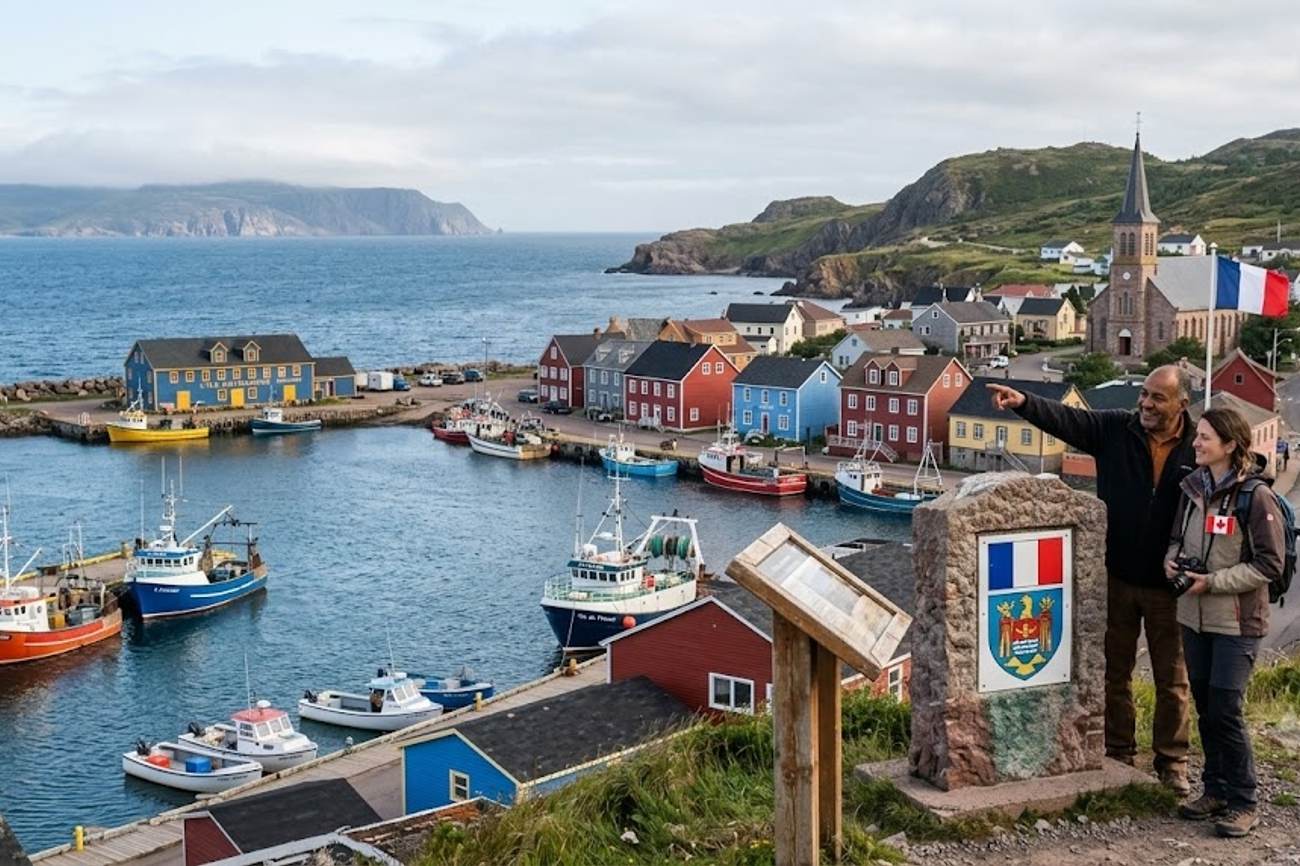
Image generated by AI
The 2026 wreath-laying ceremony involving French President Emmanuel Macron and Canadian Prime Minister Mark Carney has transformed Saint-Pierre-et-Miquelon from a remote Atlantic outpost into a high-profile heritage destination. This diplomatic event, centered on the archipelago's role as a sanctuary for Free France during the Second World War, has effectively repositioned the territory within the global tourism market. By leveraging the presence of two G7 leaders, the islands are pivoting from a niche curiosity to a strategic stop for cultural and historical explorers.
The Geopolitical Catalyst for Tourism
Saint-Pierre-et-Miquelon occupies a singular position in the North Atlantic, serving as the sole territorial remnant of France in North America. While its geography places it adjacent to Newfoundland and Labrador, its political and cultural identity remains firmly European. The 2026 ceremony served as more than a commemorative act; it was a calculated diplomatic signal regarding the enduring partnership between France and Canada.
The historical pivot point for this renewed interest is December 1941. During this period, the archipelago transitioned from the control of the Vichy French administration to the leadership of General Charles de Gaulle’s Free France movement. This specific historical arc—the struggle for legitimacy and liberation during World War II—provides the territory with a "heritage anchor." In the business of tourism, an anchor is a definitive historical or cultural narrative that justifies a long-distance journey. For Saint-Pierre-et-Miquelon, the transition to Free France provides that narrative, allowing the islands to market themselves not just as a scenic getaway, but as a site of global geopolitical significance.
Mapping the Heritage Economy
The influx of attention following the Macron-Carney summit is expected to shift the demographic of visitors arriving at the islands. The territory is moving away from incidental tourism toward "intentional travel," where visitors seek specific educational or historical outcomes.
The following table outlines the primary tourism sectors poised for growth based on the 2026 diplomatic surge:
| Tourism Segment | Primary Driver | Expected Visitor Activity |
|---|---|---|
| Heritage Tourism | WWII / Free France Legacy | Memorial visits, military archives, guided historical walks |
| Cultural Tourism | French-North American Hybridity | Gastronomy, architecture, linguistic immersion |
| Maritime Tourism | Atlantic Fishing Traditions | Port visits, artisanal seafood tours, coastal exploration |
| Diplomatic/Educational | Canada-France Relations | Academic study tours, geopolitical research, state-sponsored visits |
This shift is supported by the islands' unique infrastructure, consisting of the primary islands of Saint-Pierre and Miquelon-Langlade. The integration of these sites into wider Atlantic Canada itineraries suggests a symbiotic relationship with the tourism boards of neighboring provinces, potentially increasing the average length of stay for travelers visiting the region.
Expert Analysis: The "Diplomatic Halo" Effect
For the modern traveler, the "Diplomatic Halo" effect occurs when a high-level political event validates a destination's importance, reducing the perceived risk or effort required to visit a remote location. Saint-Pierre-et-Miquelon has historically suffered from a lack of global awareness; many travelers are unaware that a piece of the European Union exists off the coast of Canada.
The 2026 ceremony solves this visibility problem instantly. For travelers booking routes through the North Atlantic, the direct consequence is an increase in "stop-over" demand. We are seeing a pattern where the territory is no longer viewed as a detour, but as a primary destination. The pricing pressure this creates is significant: as demand for limited hotel and guesthouse capacity increases, we can expect a rise in premium heritage packages.
Furthermore, the alignment with the Government of France and the Government of Canada suggests that future infrastructure investments—potentially in airport capacity or maritime docking—may be fast-tracked to accommodate the surge. The strategic move toward "slow travel" is also evident here. By promoting authentic fishing traditions and peaceful island environments, the territory is insulating itself against the volatility of mass tourism, instead attracting high-spending, low-impact cultural explorers.
The most critical shift, however, is in the cruise sector. Cruise lines are currently seeking "boutique ports" to differentiate their offerings from the overcrowded Caribbean or Mediterranean circuits. A French territory in the North Atlantic, now validated by world leaders, is an irresistible addition to a luxury Atlantic cruise itinerary. This provides a steady stream of high-volume, short-stay visitors who support local craft producers and restaurants without putting permanent strain on housing.
Key Takeaways
- Historical Pivot: The islands are leveraging their December 1941 transition to Free France to build a specialized military and memorial tourism product.
- Diplomatic Validation: The 2026 summit between Emmanuel Macron and Mark Carney has provided the global visibility necessary to attract heritage travelers.
- Market Positioning: Saint-Pierre-et-Miquelon is positioning itself as a "European experience in North America," targeting those seeking authentic, non-crowded destinations.
- Economic Diversification: Growth is expected across local hospitality, guided tours, and maritime services, reducing reliance on traditional fishing industries.
- Strategic Integration: The territory is being integrated into broader Atlantic Canada itineraries, encouraging longer regional trips.
FAQ: Saint-Pierre-et-Miquelon 2026
Do I need a visa to visit Saint-Pierre-et-Miquelon? As a French overseas collectivity, the territory follows French immigration rules. However, because it is located near Canada, entry requirements often depend on your nationality and your point of arrival. Check the official French Ministry for Europe and Foreign Affairs for current visa mandates.
How do I get to the islands from mainland Canada? Most travelers reach the archipelago via flights or ferries from Newfoundland and Labrador. The increase in 2026 visibility is expected to lead to more frequent connections and integrated travel packages between St. John's and Saint-Pierre.
What is the best time of year for heritage tourism there? The summer months offer the best weather for exploring outdoor memorials and coastal sites. However, the anniversary of the 1941 Free France transition in December provides a more poignant, albeit colder, experience for dedicated history enthusiasts.
Is French the only language spoken on the islands? Yes, French is the official language, which adds to the unique cultural appeal for visitors. While many in the tourism sector speak English due to the proximity to Canada, basic French is highly encouraged for authentic interaction.
A remote archipelago has successfully traded its isolation for an invitation to the world stage.
Tags: Saint-Pierre-et-Miquelon, Free France 1941, Emmanuel Macron, Mark Carney, North Atlantic Tourism, French Overseas Collectivities
Related Travel Guides
- China Travel Milestone As Xi’an Almaty Tourist Train Arrives In Kazakhstan Boosting Silk Road Tourism Connections
- UK Tourism Eyes Major Shopping Boost as Conservatives Pledge Return of Tax Free Shopping for Overseas Visitors
- Mohe China Tourism Boom: How Ice, Snow and Nature Are Creating a New Arctic Travel Experience
This article is for informational purposes. Flight routes, passenger regulations, visa rules, and transit advisories are subject to change by airlines and aviation authorities. Readers are advised to verify schedules and travel documentation with relevant carriers and border agencies before departure.
Related Stories
Canada Inbound Travel from India Falls 7.8% in 2026: Gateway Analysis for Toronto, Vancouver, and Montréal
Thailand Tourism Slowdown Tests Small Businesses as Kingdom Pivots to High-Yield Travel and Secondary Provinces