Canada Strengthens North American Trade Routes as CN Railway Expands Mexico Connectivity and Growth Outlook

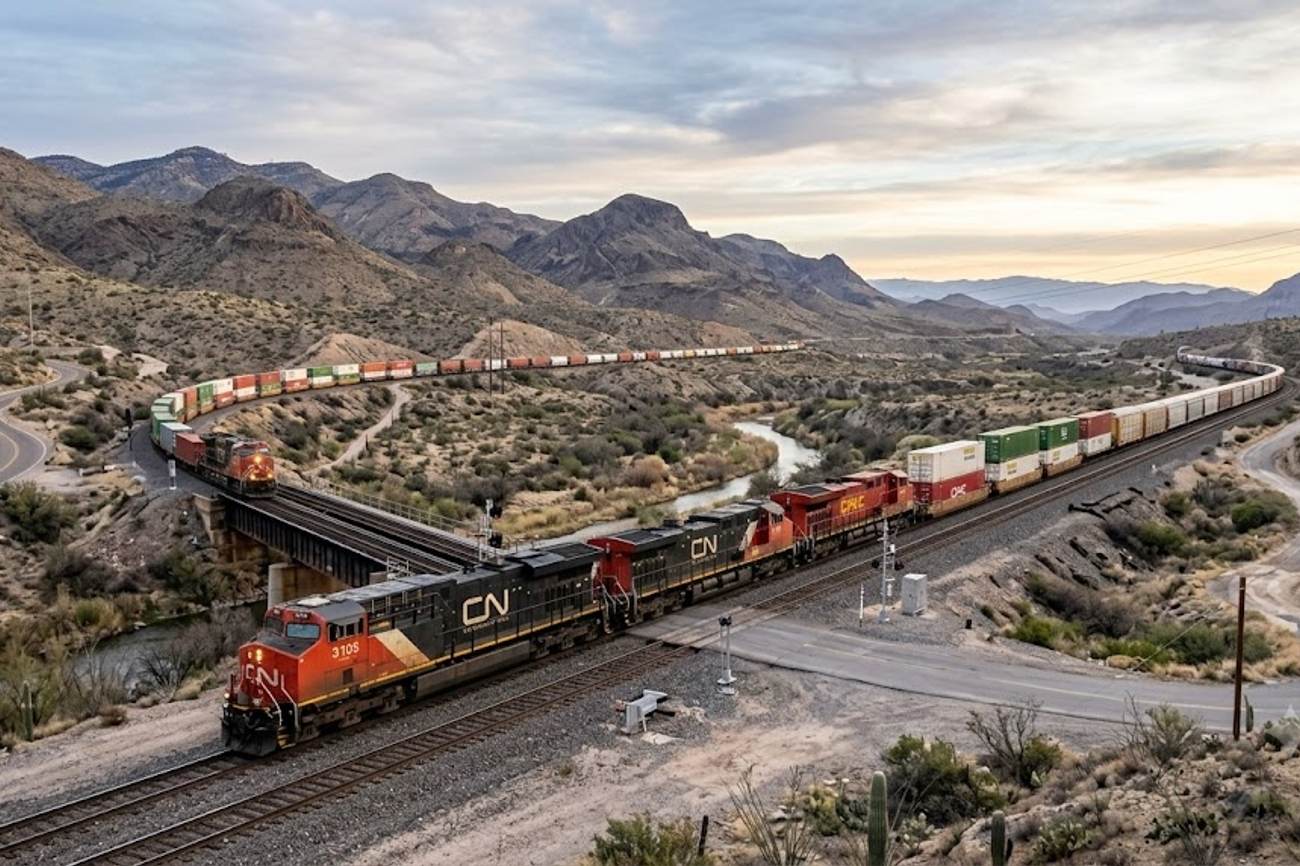
Image generated by AI
[Montreal, October 2024] — Canadian National Railway (CN) is aggressively expanding its freight connectivity into Mexico to capitalize on the structural shift toward regionalized North American supply chains. The railway is pivoting its operational focus to strengthen north-south corridors, moving away from traditional east-west trade patterns to better integrate Canadian industries with Mexican manufacturing hubs.
The strategic push comes as businesses across the continent seek to mitigate global disruption risks by shortening supply chains. By leveraging its existing 20,000 route miles of track across Canada and the United States, CN aims to position itself as the primary logistics artery for the automotive, electronics, and agricultural sectors operating under the United States-Mexico-Canada Agreement (USMCA).
The Catalyst for Mexican Integration
The immediate driver for this expansion is the rapid growth of Mexico as a premier global manufacturing center. As "nearshoring" trends accelerate, companies are relocating production from Asia to Mexico to be closer to the North American consumer base. This shift has created an urgent demand for high-capacity freight solutions capable of moving massive volumes of industrial components and finished goods across three borders.
CN is responding by optimizing its network to facilitate seamless movement between resource-rich Canadian zones and the industrial heartlands of Mexico. This integration is designed to reduce reliance on road-based freight, which is increasingly prone to congestion and volatility, and replace it with the stability of integrated rail and intermodal solutions.
Markets and Sectors Under Impact
The expansion of CN’s Mexico-linked connectivity directly impacts several high-value industries and specific geographic trade corridors. The following sectors are seeing the most significant shifts in logistics planning:
- Automotive Manufacturing: This is the primary beneficiary. The production of vehicles requires a constant flow of parts and raw materials between Canadian suppliers and Mexican assembly plants.
- Industrial Machinery & Electronics: High-value electronics and heavy machinery are transitioning to rail to ensure more predictable delivery timelines.
- Agricultural Commodities: Increased connectivity allows for more efficient movement of Canadian grain and agricultural products into southern markets.
- Consumer Goods: Retailers are utilizing these expanded links to diversify their sourcing and reduce lead times for inventory replenishment.
The network specifically targets the connection between Canada's interior resource zones, major U.S. transit hubs, and Mexican ports and distribution centers.
Practical Traveler Advisory and Strategic Insights
While CN is a freight-focused entity, the ripple effects of this infrastructure shift impact the broader transportation ecosystem. For those managing the movement of goods or operating within the logistics sector, the implications are immediate:
1. Shift in Transit Times: The move toward integrated north-south corridors means that freight moving from Canada to Mexico will likely see reduced transit times as CN eliminates bottlenecks and optimizes intermodal transfers.
2. Reduced Road Congestion: As more heavy freight moves from trucks to rail, there is a potential for reduced congestion on major North American highways, which may indirectly benefit commercial road travel and trucking efficiency.
3. Increased Capacity for Shippers: Companies currently struggling with "last-mile" delivery or port congestion in the U.S. may find more reliable alternatives by utilizing CN’s expanded reach into the Mexican interior.
4. Pricing Volatility: As CN optimizes its network and increases volume, shippers may see a stabilization in long-haul freight costs, though initial infrastructure adjustments could lead to short-term pricing fluctuations.
The Continental Logistics Roadmap
Looking forward, CN is integrating its services to handle more than C$250 billion worth of goods annually. The railway is not merely adding tracks but is implementing a comprehensive logistics model that includes intermodal solutions—combining rail, ship, and truck—to ensure a "single-window" experience for shippers.
The company is currently focusing on operational improvements to increase freight volume expectations. Investors and industry analysts are monitoring these developments closely, as the success of the Mexico connectivity project will serve as a bellwether for the overall economic integration of the USMCA region. Future phases of this expansion are expected to focus on digital tracking and automated logistics to further streamline cross-border customs and transit.
For more information on regulatory standards governing these movements, stakeholders can refer to the Federal Aviation Administration (FAA) for air-freight coordination or the Canadian National Railway official corporate updates.
FAQ: CN Mexico Connectivity 2024
How does CN's expansion affect the cost of goods? By increasing the efficiency of north-south trade and reducing reliance on expensive trucking, CN aims to lower overall transportation costs. This can lead to more competitive pricing for automotive parts and consumer electronics across North America.
Which trade agreement governs this rail expansion? The expansion is heavily supported by the United States-Mexico-Canada Agreement (USMCA), which reduces tariffs and streamlines trade regulations between the three nations, making integrated rail networks more financially viable.
Is this expansion only for raw materials? No. While natural resources remain a core component, the focus has shifted significantly toward finished manufactured goods, specifically in the automotive and electronics sectors, to support "just-in-time" manufacturing.
Will this affect passenger rail services? CN is primarily a freight railway. This expansion focuses on the movement of cargo and industrial goods; it does not directly impact passenger rail schedules or services.
The North American supply chain is no longer a series of isolated markets, but a single, integrated machine.
Related Travel Guides
- Great Western Railway Suspends Wales to London Services Following Emergency Line Closure from Didcot Parkway Gas Leak
- US Holiday Rail Travel Surges for 2026 as Heritage Christmas Trains in Texas, Colorado, California, and North Carolina Report Early Sell-Outs
- South Central Railway Deploys Overnight MMTS Trains in Hyderabad for Ganesh Visarjan Immersion Rush Across Key City Corridors
This article is for informational purposes. Flight routes, passenger regulations, visa rules, and transit advisories are subject to change by airlines and aviation authorities. Readers are advised to verify schedules and travel documentation with relevant carriers and border agencies before departure.
Related Stories

France Expands Winter Rail Travel: SNCF Deploys New OUIGO Routes and Over 336,000 Extra TGV Seats for Christmas Markets and Ski Resorts