
Canada Issues Severe South America Travel Warnings for Brazil, Colombia, and Ecuador in 2026
Canada has upgraded travel advisories for Brazil, Colombia, and Ecuador due to rising organized crime and instability, while maintaining a total travel ban for Venezuela.

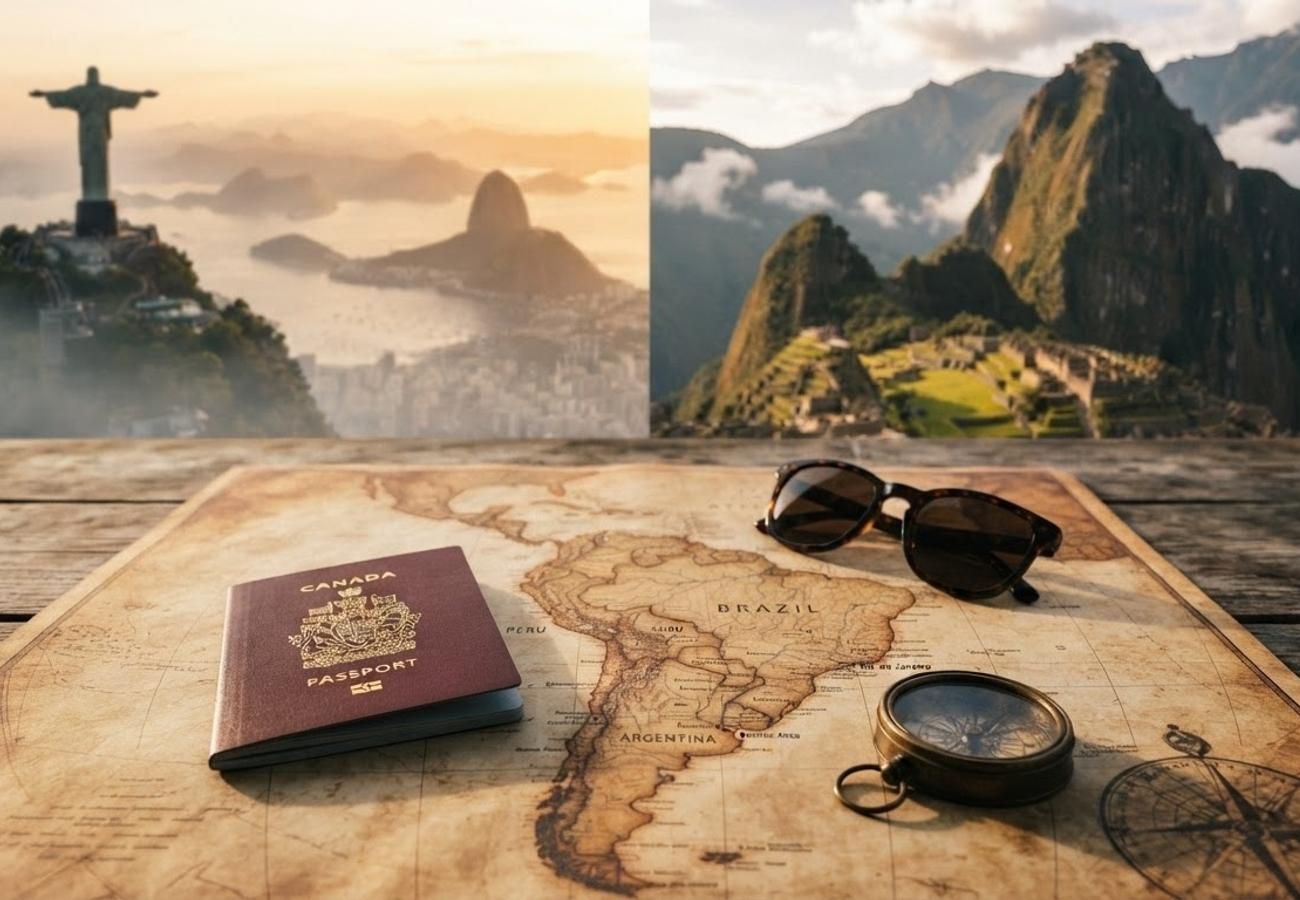
Image generated by AI
Canada has significantly tightened its security guidance for South American destinations, citing a surge in organized crime, kidnapping, and regional instability. These updated warnings force travelers to weigh the cultural appeal of the region against escalating risks of violence and systemic insecurity.
The Canadian government's latest directives target four primary nations, ranging from "high caution" requirements to a total prohibition of travel. This shift reflects a deteriorating security environment characterized by gang warfare and political volatility.
Security Directives for Brazil
Canada currently advises travelers to exercise a high degree of caution when visiting Brazil. While the country remains a global tourism hub, the advisory warns of systemic crime and frequent violence linked to gangs in urban centers.
The security risks are not uniform across the country. Canadian officials have identified specific danger zones and behaviors that increase vulnerability:
- Urban Violence: High risks of carjackings, armed robberies, and theft in major cities.
- Border Vulnerabilities: Non-essential travel is discouraged in border regions due to the presence of illegal armed groups involved in arms and drug smuggling.
- Rio de Janeiro Red Zones: Travelers are explicitly warned to avoid Complexo da Penha and Complexo da Maré. These areas are marked by extreme crime levels and frequent police operations, often leaving visitors without emergency support.
To mitigate these risks, visitors are urged to use only trusted transportation, avoid displaying luxury items, and maintain high situational awareness in crowds.
Regional Risks in Colombia
Colombia remains under a "high degree of caution" advisory. The primary drivers for this warning are the activities of organized criminal networks and the persistent threat of kidnapping.
The Canadian government has highlighted several critical security concerns:
- Border Instability: High-risk zones exist near the borders of Panama, Venezuela, and Ecuador, where illegal armed groups operate.
- City-Specific Threats: In Medellín, Bogotá, and Cartagena, foreigners are frequently targeted for scams, robberies, and drug-related crimes.
- Tactical Risks: "Express kidnappings" and armed thefts are prevalent in both tourist hubs and residential urban areas.
Travelers are advised to avoid isolated locations after dark and secure their passports and valuables rigorously.
Instability and Environmental Hazards in Ecuador
Ecuador's advisory level is set to a high degree of caution, reflecting a complex intersection of gang violence and natural instability. The country is currently operating under a state of internal armed conflict.
The risks in Ecuador are divided between human-led violence and environmental threats:
- Gang Warfare: Increased reports of extortion, murder, and kidnapping linked to drug trafficking syndicates, particularly in Guayaquil and Quito.
- Border Dangers: The border with Colombia is flagged for criminal activity, while certain areas near Peru pose a risk due to landmines.
- Natural Disasters: Beyond crime, the advisory warns of volcanic activity, earthquakes, landslides, and floods exacerbated by El Niño.
Total Travel Ban for Venezuela
Canada maintains the most severe warning for Venezuela: Avoid all travel. This is not merely a caution but a directive based on a total collapse of security and political stability.
The situation in Venezuela is categorized by:
- Systemic Failure: Critical shortages of fuel, water, electricity, and medical supplies.
- Extreme Violence: High rates of homicide, carjacking, and kidnapping for ransom.
- Consular Absence: Because the Canadian Embassy in Venezuela closed in 2019, the government cannot provide standard consular assistance to citizens who enter the country.
- Border Conflict: High risks of smuggling and armed group activity along the borders of Brazil, Guyana, and Colombia.
South America Security Summary 2026
The following table summarizes the current Canadian government positions on these key destinations.
| Country | Advisory Level | Primary Risks | High-Risk Zones |
|---|---|---|---|
| Brazil | High Degree of Caution | Gang violence, armed robbery | Complexo da Maré, Complexo da Penha, Border regions |
| Colombia | High Degree of Caution | Kidnapping, organized crime | Borders of Panama, Venezuela, and Ecuador |
| Ecuador | High Degree of Caution | Gang warfare, natural disasters | Guayaquil, Quito, Colombia border |
| Venezuela | Avoid All Travel | Political collapse, extreme crime | Entire country; borders of Brazil, Guyana, Colombia |
Critical Takeaways for Travelers
- Consult Regional Maps: A "high caution" advisory often means certain neighborhoods (like those in Rio) are far more dangerous than the city as a whole.
- Monitor Internal Conflicts: Ecuador's status as an "internal armed conflict" zone means security operations can disrupt travel instantly.
- Verify Consular Support: Traveling to Venezuela means forfeiting almost all Canadian government protection and assistance.
- Prepare for Climate Shifts: In Ecuador, weather-related disruptions are as likely to impact travel as security concerns.
Frequently Asked Questions
Can Canadians still visit Brazil and Colombia? Yes, travel is permitted, but it is strongly recommended to exercise a high degree of caution and avoid specific high-risk neighborhoods and border zones.
Why is the warning for Venezuela more severe than for Ecuador? Venezuela suffers from a total lack of diplomatic representation (embassy closure) and systemic state instability, whereas Ecuador's risks are primarily centered on gang activity and natural disasters.
What are "express kidnappings"? Mentioned in the Colombia advisory, these are short-term abductions where victims are forced to withdraw money from ATMs before being released.
Safe travel in 2026 requires a shift from general tourism planning to active risk management.
Related Travel Guides
Disclaimer
This article is for informational and educational purposes only. It does not constitute legal, financial, or professional advice. While we strive to provide accurate and up-to-date information, travel policies, regulations, and conditions change rapidly. Always verify information with official sources before making travel decisions. Nomad Lawyer makes no representations about the accuracy, reliability, completeness, or suitability of the information provided. Readers should consult qualified professionals for advice specific to their circumstances. The views expressed in this article are those of the author and do not necessarily reflect the views of Nomad Lawyer.
Kunal K Choudhary
Co-Founder & Contributor
A passionate traveller and tech enthusiast. Kunal contributes to the vision and growth of Nomad Lawyer, bringing fresh perspectives and driving the community forward.
Learn more about our team →