
Canada Rural Tourism Corridors: Dawson City, Tofino, Churchill & Lunenburg Blueprint

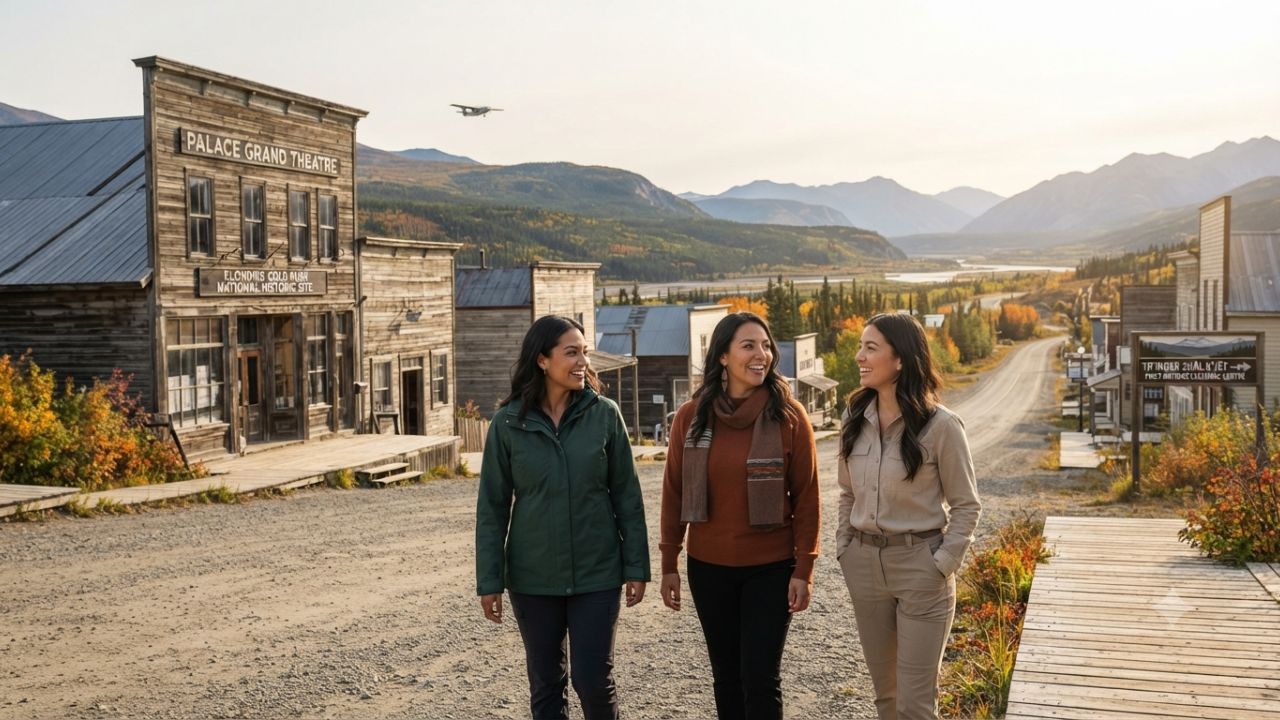
Canada's decentralized eco-federalism model redistributes visitor traffic away from metropolitan centers to rural Indigenous-led corridors.
Canada is undergoing a macro-economic shift in destination management, moving away from hyper-concentrated metropolitan tourism toward decentralized rural travel corridors. Anchored by non-metropolitan hubs such as Dawson City and Old Crow (Yukon), Tofino and Ucluelet (British Columbia), Churchill (Manitoba), Old Town Lunenburg (Nova Scotia), and Tadoussac (Quebec), a new model known as decentralized eco-federalism is redistributing visitor traffic across remote wilderness territories. Supported by Destination Canada’s Tourism Corridor Strategy Program and the national strategy Canada 365: Welcoming the World. Every Day, this initiative aligns annual overseas visitor spending exceeding $31.3 billion with Indigenous self-governance, workforce housing trusts, and ecological preservation.
Macroeconomic Scope & Decentralized Eco-Federalism
For decades, international travel to Canada remained concentrated in major urban centers (Toronto, Montreal, Vancouver) and premier national parks (Banff, Jasper). The rural corridor framework disperses over one million annual visitors across northern, coastal, and river networks.
CANADIAN TOURISM & RURAL CORRIDOR ECONOMIC DATA
| Macroeconomic Metric | Official Benchmark Metric |
|---|---|
| Summer National Tourism Spend | ~$60.0 Billion CAD |
| Annual Overseas Visitor Spend | >$31.3 Billion CAD |
| 2035 Trade Diversification Target | $30.0 Billion CAD Non-US Market Target |
| Target Rural Corridor Capacity | >1 Million Annual Visitors Dispersed |
| Key Federal Strategy Program | Destination Canada Tourism Corridor Strategy |
| Core Assessment Framework | Wealth & Wellbeing Index (6 Wellbeing Pillars) |
                 SOVEREIGN-BIOSPHERE DECENTRALIZED TOURISM ARCHITECTURE
                                       │
     ┌──────────────────┬──────────────┼──────────────┬──────────────────┐
     ▼                  ▼              ▼              ▼                  ▼
┌──────────┐      ┌───────────┐  ┌───────────┐  ┌───────────┐      ┌───────────┐
│ Border-  │      │ Equity    │  │ Rail      │  │ Biosphere │      │ Indigenous│
│ Lite     │      │ Housing   │  │ Compacts  │  │ Cap-and-  │      │ Sovereign │
│ Transit  │      │ Trusts    │  │ (Hudson   │  │ Invest    │      │ Governance│
│ (Yukon)  │      │ (Tofino)  │  │ Bay Rail) │  │ (Tadoussac│      │ (Tr'ondëk)│
└──────────┘      └───────────┘  └───────────┘  └───────────┘      └───────────┘
The Four Pillars of Canada’s Rural Corridor Framework
OPERATIONAL MATRIX OF CANADA'S RURAL TOURISM CORRIDORS
| Entity / Facility | Delays | Cancellations | Details |
|---|---|---|---|
| Corridor Pillar | Micro-Locations | Lead Governance | Transit & Permitting |
| Arctic Border-Lite | Dawson City & | Tr'ondëk Hwëch'in | CBSA Port of Entry; |
| Transit | Old Crow (Yukon) | & Vuntut Gwitchin | 1,525m runway (CYDA) |
| Equity Real Estate | Tofino (BC) & | Municipalities; | MRDT / RMI Taxes; |
| Trusts | Lunenburg (NS) | UNESCO Bylaws | Tofino Housing Trust |
| Trans-Provincial | Churchill (MB) & | Arctic Gateway; | 1,700km Hudson Bay |
| Rail Compacts | North Bay (ON) | ON Northland | Rail & Northlander |
| Biosphere Cap-and- | Ucluelet (BC) & | Clayoquot Trust; | Alliance Éco-Baleine |
| Invest Systems | Tadoussac (QC) | Parks Canada | marine conservation |
1. Arctic Border-Lite Transit & Indigenous Sovereignty (Yukon)
In Dawson City and Old Crow, entry clearance operates under Chapter 10 Final Agreements with the Tr’ondëk Hwëch’in and Vuntut Gwitchin First Nations. Dawson City Airport maintains a 1,525-meter asphalt runway accommodating Boeing 737 charters from Fairbanks, Alaska. Digital wilderness permits route foot traffic away from the 6,500 sq km Ni’iinlii’njik (Fishing Branch) Territorial Park and the Porcupine caribou herd calving grounds.
2. Equity-Anchored Hospitality & Community Housing Trusts (BC & Nova Scotia)
To combat destination gentrification, Tofino opted into BC’s Short-Term Accommodations Act, bringing 220 vacation rentals under regulatory oversight. Municipal and Regional District Tax (MRDT) revenues fund the Tofino Housing Corporation, building rent-geared-to-income housing for local workers. In Nova Scotia, Old Town Lunenburg anchors the 13-site Atlantic Canada UNESCO Tourism Corridor, using local investment syndicates to rehabilitate 18th-century properties as community-owned inns.
3. Trans-Provincial Heritage Rail Compacts (Manitoba & Ontario)
Sub-arctic overland transit to Churchill, Manitoba, relies on the 1,700 km Hudson Bay Railway, owned by the Arctic Gateway Group LP (a partnership of 29 First Nations and 12 northern communities). Supported by $175M federal and $51M provincial funds, the 45-hour VIA Rail passenger service carries eco-tourists to beluga whale and polar bear habitats. In Ontario, $100M+ is restoring the Northlander passenger train connecting Washago, North Bay, Cochrane, and Timmins.
4. Biosphere Cap-and-Invest Systems (BC & Quebec)
In Ucluelet (Clayoquot Sound UNESCO Biosphere), mandatory conservation levies fund coastal trail infrastructure via the Clayoquot Biosphere Trust. In Tadoussac (Saguenay–St. Lawrence Marine Park), whale-watching operators adhere to the Alliance Éco-Baleine code of conduct, paying per-passenger conservation fees to fund the Group for Research and Education on Marine Mammals (GREMM) in protecting beluga whales (Delphinapterus leucas).
Frequently Asked Questions
What is Canada's Decentralized Eco-Federalism tourism model?
Decentralized eco-federalism is a regional governance framework that pools municipal, Indigenous, and federal resources to route international visitors away from congested cities into rural, Indigenous-managed travel corridors.
How does Tofino protect local housing from tourism gentrification?
Tofino opted into BC's Short-Term Accommodations Act to regulate vacation rentals, allocating Municipal and Regional District Tax (MRDT) funds directly to the Tofino Housing Corporation to build affordable housing for hospitality workers.
Who owns the Hudson Bay Railway to Churchill?
The 1,700 km railway line is owned by the Arctic Gateway Group LP, a 100% community-and-Indigenous-owned coalition representing 29 First Nations and 12 northern Manitoba municipalities.
How does Tadoussac protect beluga whales during marine tours?
Operators in the Saguenay–St. Lawrence Marine Park adhere to strict Alliance Éco-Baleine speed and distance rules, collecting mandatory passenger levies that directly fund GREMM marine mammal conservation research.
Official Sources
- Destination Canada: Canada 365: Welcoming the World & Corridor Strategy
- Arctic Gateway Group LP: Hudson Bay Railway & Churchill Port Operations
- Tr’ondëk Hwëch’in Government: Yukon Heritage & Wilderness Management
- Parks Canada: Saguenay–St. Lawrence Marine Park Regulations
Related Travel Guides
Disclaimer
This article is for informational and educational purposes only. It does not constitute legal, financial, or professional advice. While we strive to provide accurate and up-to-date information, travel policies, regulations, and conditions change rapidly. Always verify information with official sources before making travel decisions. Nomad Lawyer makes no representations about the accuracy, reliability, completeness, or suitability of the information provided. Readers should consult qualified professionals for advice specific to their circumstances. The views expressed in this article are those of the author and do not necessarily reflect the views of Nomad Lawyer.
Raushan Kumar
Founder & Lead Developer
Full-stack developer with 11+ years of experience and a passionate traveller. Raushan built Nomad Lawyer from the ground up with a vision to create the best travel and law experience on the web.
Learn more about our team →