Dominica Celebrates 48 Years of Independence: Creole Heritage, Cultural Tourism, and the Frontier of Eco-Resilience

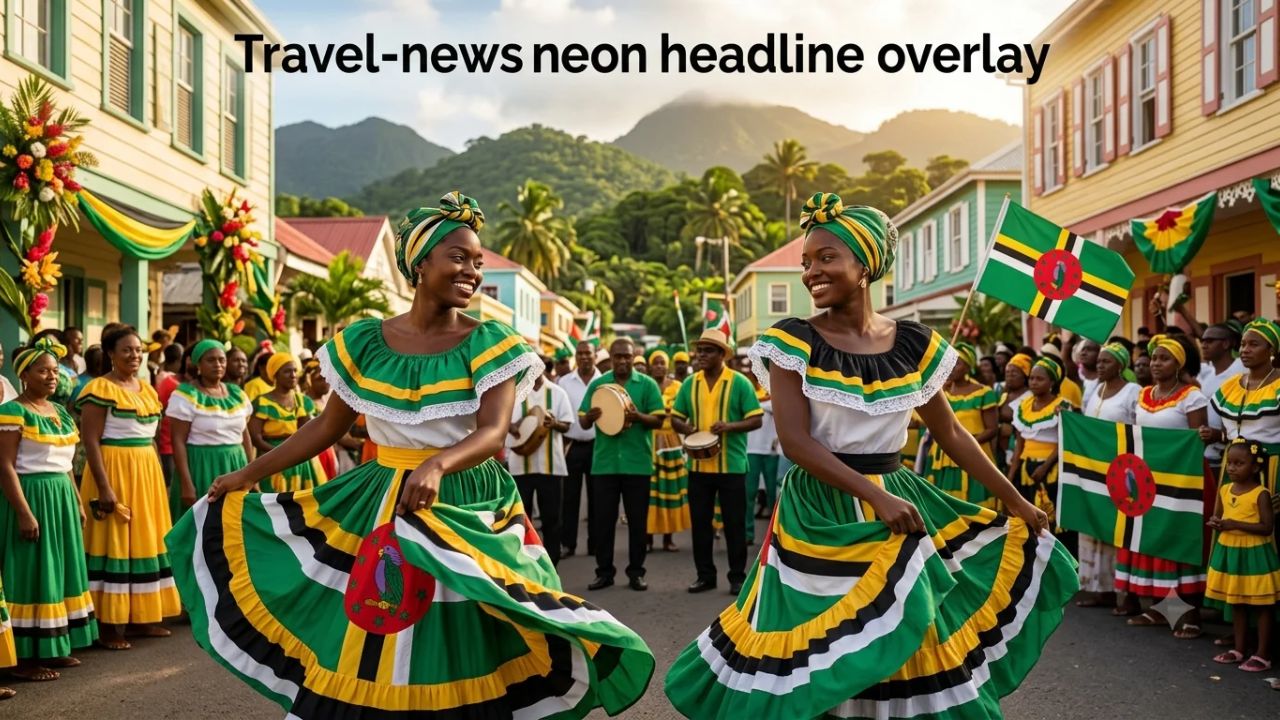
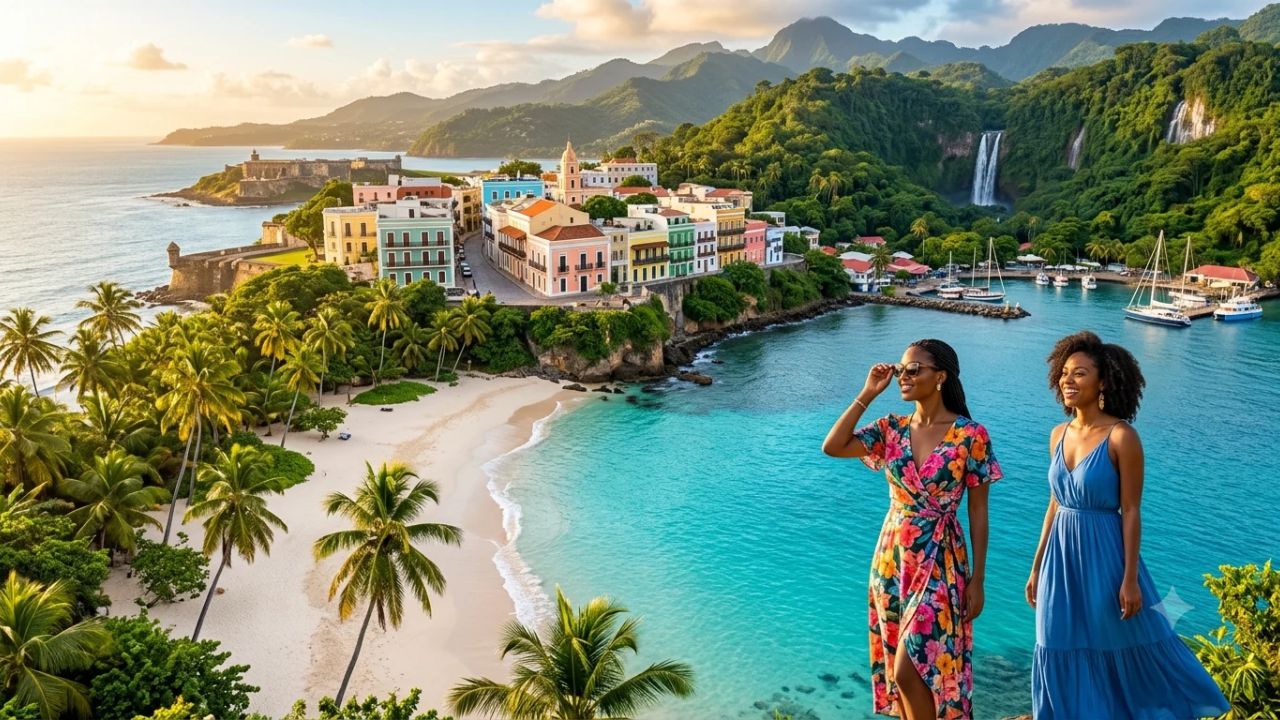
ROSEAU, Dominica — Commemorating nearly half a century of self-determination under the national theme 'Our Journey, Our Legacy, Our Future,' the Commonwealth of Dominica has brought its forty-eighth Independence anniversary celebrations to a resounding crescendo, uniting diaspora returnees, regional cultural icons, and international eco-travellers across a seven-week festival calendar. Since severing constitutional ties with Great Britain on November 3, 1978, this rugged Eastern Caribbean volcanic enclave has forged an identity distinct from its sun-and-sand neighbours. Rather than courting mass cruise tourism or constructing dense strips of all-inclusive beach compounds, the island has leveraged its steep rainforest peaks, geothermal springs, and vibrant African and indigenous Kalinago roots into an authentic cultural economy. The 2026 independence calendar, stretching from mid-September through early November, showcases how national pageantry, indigenous stewardship, and ecological fortitude combine to transform seasonal travel into long-term community prosperity.
Dominica’s anniversary programming serves as an economic catalyst that reaches far beyond the capital city of Roseau. While traditional Caribbean island getaways often rely on imported goods and overseas resort operators, Dominica’s national celebrations channel visitor expenditure directly into rural villages, local agrarian networks, seamstresses, musical performers, and family-run guest houses. From the high-energy polyrhythms of the World Creole Music Festival to the reflective solemnity of the National Day of Community Service, the island demonstrates how sovereign cultural pride can anchor a sustainable, high-value tourism model in an era fraught with climate and macroeconomic vulnerabilities.
========================================================================================
DOMINICA 48TH INDEPENDENCE & CULTURAL TOURISM VALUE CHAIN
========================================================================================
  [HISTORIC MILESTONE]       -->  48 Years of Sovereignty (Nov 3, 1978 – Nov 3, 2026)
  [NATIONAL THEME]           -->  "Our Journey, Our Legacy, Our Future"
  [FESTIVAL SPAN]            -->  7-Week Programme (September 19 – November 4, 2026)
  [CORE PILLARS]             -->  Creole Music, Wob Dwiyet Pageantry, Kalinago Heritage
  [CONSERVATION ANCHOR]      -->  Morne Trois Pitons UNESCO Site & Sperm Whale Reserve
  [RESILIENCE MANDATE]       -->  World's First Climate-Resilient Nation Framework
========================================================================================
Strategic Key Indicators for Dominica’s Cultural Tourism Economy
- Extended Festival Footprint: A comprehensive seven-week national schedule from September 19 to November 4, distributing visitor spending across coastal fishing villages, agricultural heartlands, and indigenous settlements.
- Music Industry Multiplier: The 24th edition of the World Creole Music Festival (WCMF) at Windsor Park Sports Stadium drew thousands of regional and international attendees, generating peak occupancy for Roseau’s hospitality providers and inter-island ferry carriers.
- Intangible Heritage Safeguarding: The vibrant revival of traditional Wob Dwiyet dress, Madras weaving, and the French Creole language (Kweyol) reinforces cross-generational education and micro-artisan manufacturing.
- Indigenous Economic Integration: Community-led excursions within the 3,700-acre Kalinago Territory provide sustainable revenue for craft collectives, canoe carvers, and herbal practitioners without compromising ancestral traditions.
- Pioneering Environmental Alignment: Cultural celebrations integrate with national conservation policies, encompassing the Morne Trois Pitons UNESCO World Heritage Site, the Waitukubuli National Trail, and the world’s first offshore Sperm Whale Reserve.
Sovereignty, Heritage, and the Seven-Week Independence Calendar
Dominica gained independence from the United Kingdom on November 3, 1978, establishing a republican form of government with an elected President and Prime Minister. Unlike most English-speaking Caribbean territories, Dominica's historical trajectory produced a unique demographic and linguistic identity. Settled originally by the indigenous Ortoiroid, Arawak, and Kalinago peoples, the island changed hands repeatedly between French and British colonial administrations throughout the seventeenth and eighteenth centuries. This prolonged Franco-British contestation, combined with the island's impenetrable mountain interior that provided sanctuary to self-liberated Maroon communities, allowed a vibrant French-lexicon Creole culture to flourish. When sovereign statehood was achieved in 1978, the founding leaders recognized that national cohesion depended on validating this hybrid heritage rather than adopting imported Anglo-centric norms.
In 2026, the national theme "Our Journey, Our Legacy, Our Future" encapsulates this developmental arc. The government deliberately structures the independence period not as an isolated public holiday, but as an expansive seven-week cultural season commencing in mid-September. The early weeks of the calendar emphasize historical reflection and civic consciousness through events such as History Week, National Emblems Week, and the National Youth Rally held on October 29. By engaging schools and community centres across the ten administrative parishes, the state cultivates deep civic pride among young Dominicans while priming domestic commerce for the arrival of overseas diaspora members.
The diaspora represents an indispensable economic engine during this festive window. Tens of thousands of Dominicans living in the United Kingdom, the United States, Canada, and neighbouring Caribbean islands return home annually for the independence celebrations. Their presence fills regional air bridges and maritime routes, providing essential foreign exchange and stimulating localized consumer demand. The returnees visit ancestral villages, patronize roadside food stalls, rent private vehicles, and participate in community workdays, generating a high-velocity circulation of capital that benefits micro-enterprises across Saint George, Saint David, Saint Andrew, and Saint John parishes.
The culmination of the calendar occurs over an intense four-day period anchored by the National Day Observance Ceremony on November 3. During this state ceremony at the Windsor Park Sports Stadium forecourt, the government honours outstanding citizens with national service awards, reviews the uniformed defense and police forces, and delivers the annual independence address outlining national economic goals. This is followed on November 4 by the National Day of Community Service, a civic tradition where citizens in every village clean public waterways, paint elderly community centres, clear mountain drainage ditches, and plant trees. This deliberate linkage between national celebration and civic maintenance ensures that the independence period directly improves the physical infrastructure and environmental health of the island.
The Rhythms of Roseau: World Creole Music Festival and Living Cadence
At the commercial and entertainment center of Dominica’s independence calendar lies the World Creole Music Festival (WCMF). Held annually at the Windsor Park Sports Stadium in Roseau, this multi-night spectacle represents one of the premier musical gatherings in the Western Hemisphere, dedicated specifically to celebrating musical genres rooted in the Creole-speaking world. Over the weekend of October 23 to 25, 2026, the twenty-fourth staging of the festival attracted a diverse assembly of music enthusiasts, recording executives, and cultural tourists from Martinique, Guadeloupe, Saint Lucia, French Guiana, Haiti, Europe, and North America.
========================================================================================
GENRE ARCHITECTURE AT THE WORLD CREOLE MUSIC FESTIVAL (WCMF)
========================================================================================
  Cadence-lypso   --> Pioneered by Exile One; blends Haitian Méringue and Calypso rhythms
  Bouyon          --> Fast-paced Dominican innovation born in Grand Bay; uses synthesized bass
  Zouk            --> French Antillean sound perfected by Kassav'; rich horns and percussion
  Compas          --> Haitian national rhythm; smooth guitars and intricate brass sections
  Soca / Reggae   --> Regional Afro-Caribbean cross-pollination enriching the mainstage bills
========================================================================================
The festival functions as a living laboratory for Caribbean musical innovation. Dominica holds a distinguished position in regional musicology as the birthplace of Cadence-lypso, an influential genre pioneered during the 1970s by bands such as Exile One and musical innovator Gordon Henderson. By fusing Dominican folk melodies with Haitian Méringue, Trinidadian calypso, and American soul arrangements, Cadence-lypso dominated airwaves across the Caribbean and laid the structural foundation for the subsequent rise of French Antillean Zouk. During the 1980s and 1990s, Dominican youth engineered another global phenomenon: Bouyon music. Originating in the southern community of Grand Bay, Bouyon combined traditional Jing Ping rhythms, chant vocals, and electronic synthesizers into a high-energy dance style that has since influenced modern Soca and Afrobeat productions.
The economic footprint of the WCMF on Roseau is profound. Hotels, guesthouses, and private homestays throughout the capital and adjacent valleys operate at complete capacity throughout the festival weekend. Regional ferry services operated by L'Express des Îles run multiple daily high-speed sailings connecting Pointe-à-Pitre in Guadeloupe and Fort-de-France in Martinique directly to the Roseau ferry terminal, transporting thousands of French Caribbean visitors who spend heavily on gastronomy, local ground transport, and retail crafts. Regional airlines, including Caribbean Airlines, interCaribbean Airways, and Silver Airways, expand flight schedules into Douglas-Charles Airport to handle the passenger influx. For domestic taxi cooperatives, street vendors, sound technicians, and security personnel, the festival provides a substantial economic windfall that sustains businesses well into the subsequent tourism high season.
Beyond the main stadium stage, the musical celebration spills into daytime fringe events that democratize access to the festivities. Initiated by corporate sponsors and municipal bodies, street activations like "Creole in the Street" transform central Roseau into an open-air pedestrian concourse where artisan stalls, food vendors, and acoustic performers showcase their skills to thousands of spectators. Simultaneously, the Ti Vilaj Kweyol (Creole Village), staged at the historic Dominica Botanic Gardens from October 19 to 22, pairs live musical performances with educational exhibitions on indigenous crafts, vernacular architecture, and traditional herbal medicine, bridging commercial entertainment with cultural preservation.
Textiles, Pageantry, and Jounen Kweyol: The Wob Dwiyet Revival
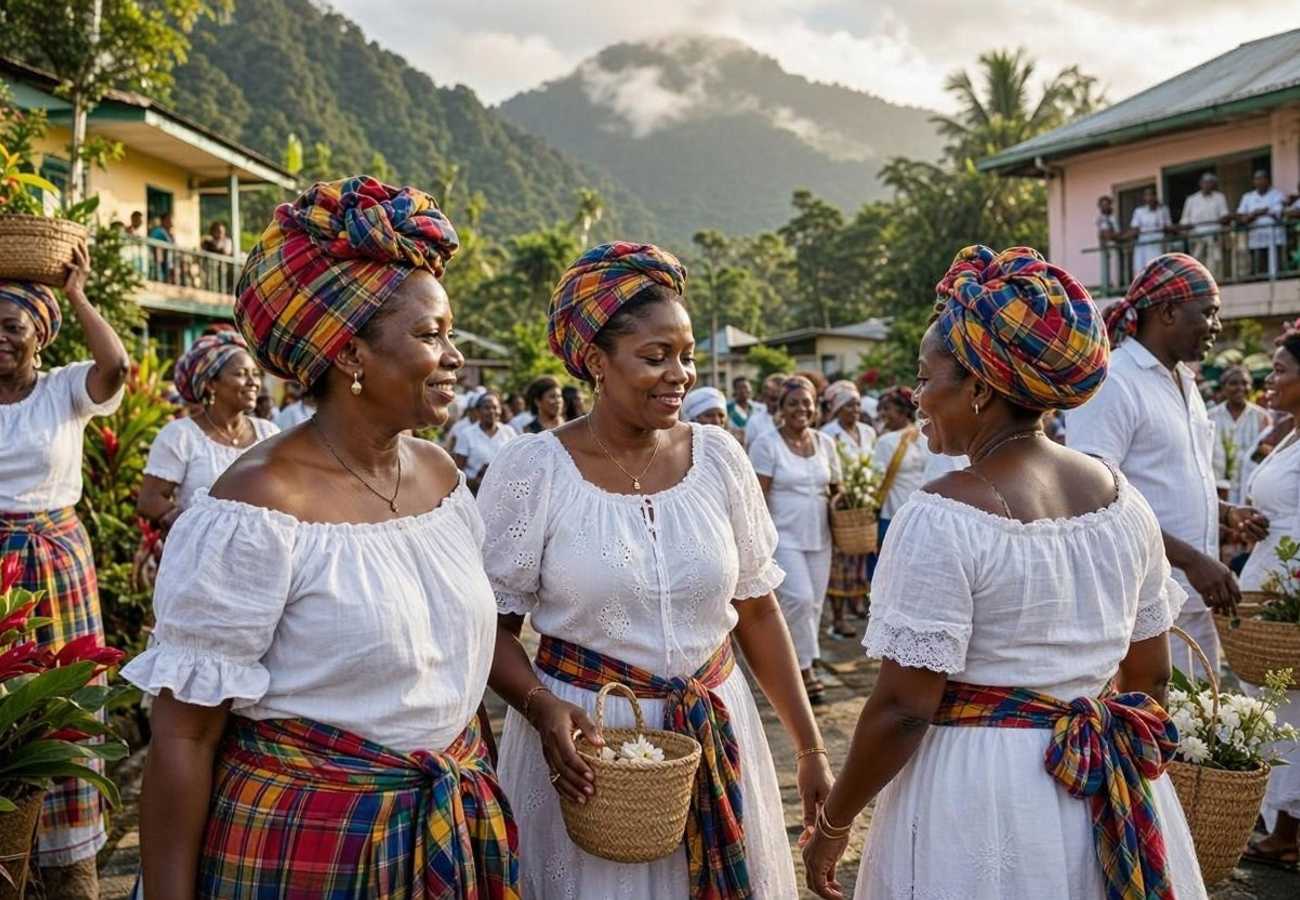
One of the most striking visual dimensions of Dominica’s independence celebrations is the national resurgence of historic textiles and traditional apparel, culminating on Jounen Kweyol (Creole Day), observed on the last Friday of October. On this day, public institutions, private commercial banks, educational academies, and diplomatic missions mandate the wearing of traditional Creole garments. Far from being an empty theatrical exercise, this widespread public adoption reflects decades of intentional work by the Cultural Division of Dominica to restore dignity to clothing once marginalized by colonial social hierarchies.
ANATOMY OF THE NATIONAL DRESS: THE WOB DWIYET
| Entity / Route | Metrics | Operational Status |
|---|---|---|
| Component | Historical Material | Cultural & Functional Role |
| Jupe (Skirt) | Stiffened white cotton / lace | Elaborate underlayer providing |
| with floral embroidery | volume and delicate movement | |
| Wob Dwiyet | High-grade Madras cotton | Sweeping outer gown gathered |
| (Outer Gown) | imported via historic trade routes | elegantly at the hips with pins |
| Foulard | Matching satin or silk | Diagonal triangular neck kerchief |
| (Collar) | draped over the shoulders | fastened with heirloom gold brooch |
| Tête En Mouchoir | Folded Madras headscarf | Symbolic folded peaks denoting |
| (Headpiece) | structured with geometric peaks | marital availability or status |
| Bijoux | Filigree gold earrings and | Heirloom treasures passed down |
| (Jewelry) | heavy chain necklaces (collier) | through matrifocal family lines |
The centerpiece of this sartorial heritage is the Wob Dwiyet, an elegant, full-length gown characterized by a fitted bodice, flowing sleeves, and a long pleated train that can be gathered up and pinned to reveal an immaculate, lace-trimmed white cotton petticoat (jupe). The outer fabric consists of brilliantly coloured Madras, a lightweight cotton fabric featuring complex plaid patterns in vibrant yellow, red, orange, and blue hues. The ensemble is completed by the foulard, a complementary silk or satin kerchief pinned across the chest, and the tête en mouchoir, an artfully folded head-tie whose arrangement carries specific social meaning. A single peak folded upward indicates that the wearer's heart is free; two peaks denote an engaged or committed status; three peaks signal marriage; and four peaks warn that the wearer is open to courting despite existing commitments.
The national focus on traditional apparel generates vital domestic manufacturing activity. In the months preceding October, fabric retailers throughout Roseau and Portsmouth report surging sales of certified Madras bolts imported from India and regional suppliers. Local seamstresses, tailors, and dressmakers work extended hours to craft bespoke outfits for school pageants, corporate teams, and contestants in the prestigious Miss Wob Dwiyet and Madame Wob Dwiyet competitions. These pageants evaluate contestants not merely on visual presentation, but on their fluency in Kweyol, their knowledge of national history, and their poise in performing traditional quadrille and bele dances. The perpetuation of these craftsmanship skills ensures that traditional textile construction remains an economically viable livelihood for artisans in rural villages like Petite Savanne, Grand Bay, and Wesley.
During the National Dress Parade and the accompanying Cultural Extravaganza at the Botanic Gardens on October 31, thousands of citizens stroll through public gardens dressed in exquisite historical garb, accompanied by the acoustic sounds of Jing Ping bands. These ensembles feature the accordion, the bamboo flûte, the gwaj (a scraped metal percussion cylinder), and the boom-boom (a long hollow bamboo tube blown to produce deep, resonant bass notes). The resulting atmosphere presents travellers with an authentic sensory encounter that contrasts sharply with standard tropical resort entertainment.
Indigenous Roots in the Kalinago Territory: Pre-Columbian Continuity
A foundational element separating Dominica from every other island in the Eastern Caribbean is the unbroken presence of its indigenous inhabitants, the Kalinago people. Known historically to European explorers as the Caribs, the Kalinago successfully defended their mountainous island redoubt—which they named Waitukubuli ("Tall is her body")—against repeated colonial invasions for over two centuries. In 1903, the British Crown established the Carib Territory along the rugged, wave-battered Atlantic coastline of northeastern Dominica. Today, the 3,700-acre Kalinago Territory encompasses eight hamlets, including Salybia, Bataca, Crayfish River, St. Cyr, and Gaulette River, governed by an elected Kalinago Chief and Kalinago Council operating alongside the national parliamentary system.
========================================================================================
KALINAGO TERRITORY HERITAGE ARCHITECTURE & CRAFTSMANSHIP
========================================================================================
  [LOCATION]             --> Atlantic Coast, Parish of Saint David (3,700 Acres)
  [POPULATION]           --> Approximately 3,000 Descendants across 8 Hamlets
  [TRADITIONAL VESSELS]  --> Kanawa (Ocean dugout canoes hollowed from giant Gommier trees)
  [BASKETRY ART]         --> Larouman reed weaving utilizing vegetable dyes and smoking
  [STAPLE FOODWAYS]      --> Cassava bread (Kassav) baked on ancestral open fire plates
  [CENTRAL FACILITY]     --> Kalinago Barana Autê (Authentic seaside cultural village)
========================================================================================
The Kalinago Territory occupies an honored role in the independence calendar. Independence celebrations routinely incorporate National Heritage Day, which rotates through various rural communities, spotlighting indigenous customs, language revival projects, and traditional food systems. The focal point for educational tourism within the territory is the Kalinago Barana Autê, a meticulously constructed model village located along the rocky shoreline at Crayfish River. At this facility, visitors observe master craftsmen carving ocean-going dugout canoes (kanawa) from massive trunks of the sacred gommier tree (Dacryodes excelsa). The process requires burning and chiselling the heartwood before expanding the hull using heated stones, water, and specialized wooden levers—a boatbuilding science developed centuries before European arrival in the Caribbean Sea.
Artisan basketry represents another vital economic lifeline for indigenous families. Kalinago weavers utilize the stems of the larouman plant (Ischnosiphon arouma), a forest reed that grows abundantly in the surrounding rainforest understory. The harvested reeds are dried, stripped into pliable strands, and soaked in natural vegetable dyes or buried in mineral-rich volcanic mud to obtain deep black and brown pigments. The artisans then weave tight, waterproof double-walled baskets (cassiers), hats, mats, and document cases that are sold directly to travellers. Purchasing these authentic crafts provides direct financial support to indigenous artisans, preserving an ancient botanical knowledge system while providing youth in the territory with a viable alternative to out-migration.
The culinary traditions of the territory also take center stage during the independence period. Travellers and domestic visitors travel along the winding coastal roads to sample freshly prepared Kassav (cassava bread) produced in traditional roadside boulanjri (bakeries). The poisonous cyanide-rich juices of the bitter cassava root are extracted using a woven tubular press known as a matapi, after which the dehydrated meal is sifted, spread onto large cast-iron griddles over open wood fires, and baked into flat, circular rounds. Flavoured with coconut flakes, ginger, cinnamon, or guava jam, Kalinago cassava bread demonstrates how sustainable, climate-resilient root crops have sustained the island's human inhabitants across successive centuries.
Culinary Anthropology: From Titiri Accras to Chatou Water
Dominica’s independence celebrations act as a national showcase for an exceptional culinary heritage shaped by volcanic soils, abundant freshwater rivers, and deep oceanic trenches. The cuisine reflects an intricate synthesis of West African agricultural techniques, French culinary preparations, and indigenous Kalinago foraging knowledge. While many Caribbean tourist destinations rely on imported processed ingredients to feed hotel guests, Dominica’s food culture during the independence season is defiantly local, emphasizing seasonality, biodiversity, and smallholder farming.
THE INDEPENDENCE HARVEST: ICONIC GASTRONOMY OF DOMINICA
| Entity / Route | Metrics | Operational Status |
|---|---|---|
| Dish / Preparation | Primary Ingredients | Cultural & Seasonal Context |
| Titiri Accras | Post-larval goby fish, chives, | Harvested during new moon river |
| Scotch bonnet, seasoned batter | mouths; deep-fried street treat | |
| Chatou Water | Fresh octopus, green fig bananas, | Hearty, restorative broth sold |
| dasheen dumplings, fresh thyme | in seaside fishing villages | |
| Crab Callaloo | Blue land crab, tender dasheen | Iconic national stew reflecting |
| leaves, coconut milk, salted meat | African and Kalinago heritage | |
| Roasted Breadfruit | Wood-fired breadfruit, flaked | Rural fuel source eaten on |
| & Smoked Saltfish | cod, sautéed onions, sweet peppers | Community Service workdays |
| Sorrel & Ginger | Hibiscus sabdariffa petals, cane | Traditional festive beverage |
| Beer | sugar, wild mountain ginger | brewed for independence tables |
A prime example of seasonal culinary anthropology is the preparation of Titiri Accras. The titiri are minute, translucent post-larval goby fish that return from the sea to migrate upstream into Dominica’s clean mountain rivers during specific lunar phases. Local fishermen gather at the mouths of major waterways, such as the Layou and Roseau rivers, using fine-mesh nets to harvest the tiny fish as they school near the surf. Mixed with a batter of flour, spring onions, garlic, thyme, and Scotch bonnet peppers, the fish are fried into golden fritters served piping hot at independence food stalls. The consumption of titiri represents a seasonal ritual that underscores the ecological connection between pristine upland watersheds and coastal ocean vitality.
Another quintessential offering during the festive season is Chatou Water. Prepared in coastal fishing communities such as Scott's Head, San Sauveur, and Colihaut, this aromatic, peppery soup features fresh chatou (wild octopus) harvested from the rocky reefs of the Caribbean coast. Simmered for hours in an herbal broth infused with garlic, local thyme, scallions, sweet peppers, and freshly grated ginger, the dish is thickened with green bananas (green figs) and miniature dasheen flour dumplings. Consumed by festival-goers late into the evening, Chatou Water exemplifies how coastal communities translate marine harvests into high-value dining experiences for visitors.
On October 31, the official calendar features "Eat Fish Day," an initiative designed to channel festival consumer spending directly into the pockets of artisanal fishermen and coastal cooperatives. Communities such as Stowe, Bioche, and Portsmouth erect temporary wooden pavilions along their beaches, serving grilled mahi-mahi, steamed red snapper wrapped in banana leaves, and stewed conch accompanied by staple provisions: boiled plantains, yams, roasted breadfruit, and dasheen. This emphasis on local provisioning ensures that independence spending does not leak away through overseas supply chains, but instead circulates through domestic agricultural cooperatives, market vendors at the Roseau Central Market, and rural fishermen operating small fiberglass pirogues.
The Nature Island Paradox: Protecting Geothermal Wilderness and Marine Sanctuaries
Dominica’s tourism identity is anchored by its official designation as "The Nature Island of the Caribbean." Geologically the youngest island in the Lesser Antilles arc, Dominica features nine active volcanic centers, steep mountain ridges rising over 4,700 feet above sea level at Morne Diablotins, and more than 365 freshwater rivers coursing through dense primary rainforests. Recognizing that unrestricted mass tourism would rapidly degrade these fragile mountain ecosystems, successive administrations have pursued a low-density, high-value ecotourism strategy designed to attract hikers, naturalists, scuba divers, and researchers.
========================================================================================
ECOLOGICAL PILLARS OF DOMINICA'S ECOTOURISM ECONOMY
========================================================================================
  [UNESCO HERITAGE]     --> Morne Trois Pitons National Park (Boiling Lake, Valley of Desolation)
  [EXPEDITION TRAIL]    --> Waitukubuli National Trail (115 miles, 14 segments, Coast-to-Coast)
  [MARINE SANCTUARY]    --> Soufrière-Scotts Head Marine Reserve (Submerged volcanic caldera)
  [CETACEAN SANCTUARY]  --> World's First Dedicated Sperm Whale Reserve (Offshore West Coast)
  [RENEWABLE ENERGY]    --> Roseau Valley Geothermal Power Project (100% Green Grid Mandate)
========================================================================================
At the core of this strategy is the Morne Trois Pitons National Park, inscribed as a UNESCO World Heritage Site in 1997. Encompassing almost 17,000 acres of southern Dominica, the park protects a stunning volcanic landscape featuring fumaroles, mud pots, and the famous Boiling Lake—the second-largest actively boiling thermal lake in the world. Visitors undertaking the rigorous eight-hour hike through the Valley of Desolation must hire certified local guides from nearby communities like Laudat, creating high-paying specialized employment for mountain stewards. Similarly, the Waitukubuli National Trail, the only long-distance walking trail spanning the entire length of a Caribbean island, winds 115 miles across fourteen segments from Scott's Head in the south to Cabrits National Park in the north. The trail takes hikers through pristine cloud forests, colonial estate ruins, and Kalinago hamlets, distributing tourist foot traffic into remote inland settlements that would otherwise remain isolated from the formal tourism economy.
Dominica’s conservation commitments extend into its territorial waters. The Soufrière-Scotts Head Marine Reserve in the southwest protects a dramatic submerged volcanic caldera where underwater cliffs plunge thousands of feet into oceanic depths. Here, divers explore sites like Champagne Reef, where geothermal gas vents bubble through subterranean fissures in shallow water, creating the sensation of swimming through a glass of effervescent champagne.
In late 2023, Dominica gained worldwide recognition by designating the world's first offshore Sperm Whale Reserve, covering nearly 300 square miles off its western leeward coast. The waters off Roseau and Soufrière host a resident population of approximately two hundred sperm whales, primarily maternal pods and their calves, that utilize the deep, sheltered submarine trenches for nursing and foraging on deep-sea squid. By establishing rigorous permit controls, mandatory observer fees, and strict vessel distance limits, the reserve turns cetacean conservation into a lucrative revenue stream for national park authorities and responsible eco-tour operators, proving that living wildlife generates greater sustainable value than extractive industries.
To power this ecological economy cleanly, the government has accelerated construction of the Roseau Valley Geothermal Power Project. Tapping the potent thermal reservoirs beneath Laudat, the geothermal plant aims to supply 100% of the island's domestic electricity requirements with clean baseload power, lowering industrial utility rates while shielding the hospitality sector from imported fossil fuel price spikes. This transition to green power reinforces Dominica’s credibility as a genuine ecotourism sanctuary.
Post-Maria Reconstruction: Pioneering Global Climate Resilience
Dominica's contemporary economic trajectory cannot be understood without examining the catastrophic impact of Hurricane Maria. On September 18, 2017, the Category 5 hurricane scored a direct hit on the island with sustained winds of 160 miles per hour, destroying or damaging over 90% of the island's housing stock, stripping every leaf from the rainforest canopies, obliterating road bridges, and inflicting economic damage estimated at 226% of national gross domestic product. Confronted with near-total destruction, the nation faced an existential choice: rebuild along vulnerable legacy designs or pioneer a completely new paradigm of climate-resilient national development.
Addressing the United Nations General Assembly shortly after the disaster, Prime Minister Roosevelt Skerrit declared that Dominica would not simply reconstruct, but would transform itself into the world's first climate-resilient nation. To realize this ambitious vision, the state established the Climate Resilience Execution Agency for Dominica (CREAD) to integrate climate-resilient criteria across every sector of governance, engineering, public health, and tourism infrastructure.
THE RESILIENT INFRASTRUCTURE MATRIX: POST-MARIA ADAPTATION
| Entity / Route | Metrics | Operational Status |
|---|---|---|
| Sector | Traditional Baseline | Post-Maria Resilient Standard |
| Energy Grid | Overhead diesel distribution | Underground cabling in Roseau; |
| highly vulnerable to high winds | geothermal baseload power plant | |
| Civil Structures | Standard timber and tin roofing; | Reinforced concrete roofs, storm |
| minimal wind bracing | shutters, seismic foundation pads | |
| Transportation | Narrow coastal bridges vulnerable | Elevated box culverts, retaining |
| to riverine debris flows | seawalls, slope stabilizing nets | |
| Luxury Lodging | Conventional beach resort design; | Self-contained off-grid solar, |
| reliance on municipal utilities | rainwater catchments, biophilic |
This resilience mandate has transformed the luxury lodging landscape on the island. Properties like Secret Bay, a luxury eco-villa resort perched on the cliff sides of Portsmouth, have earned international acclaim by pairing five-star hospitality with biophilic architectural principles. Constructed from sustainably harvested Guyanese Greenheart timber and anchored directly into bedrock with stainless steel tie-downs, the villas survived subsequent tropical storms with zero structural damage while utilizing solar microgrids and greywater recycling systems. Similarly, Coulibri Ridge, a luxury eco-resort in the southern hills near Soufrière, operates completely off-grid, utilizing expansive solar arrays, subterranean rainwater cisterns holding hundreds of thousands of gallons, and hurricane-rated construction designed to function autonomously during major natural disasters.
By integrating resilience into its tourism identity, Dominica attracts an affluent, environmentally conscious traveller demographic willing to pay premium rates for verified ecological sustainability. Visitors during the 48th Independence celebrations observe this resilience firsthand. Public buildings rebuilt after 2017 feature reinforced concrete roofs and impact-resistant glass, riverbanks in Roseau are reinforced with heavy stone gabion walls, and the lush emerald canopies of the rainforest have staged a miraculous ecological recovery, demonstrating the restorative power of nature when supported by rigorous national conservation standards.
Comparative Regional Analysis: Cultural Tourism Models in the Lesser Antilles
Dominica’s heritage tourism model differs markedly from other Caribbean destinations. While neighboring islands have pursued mass cruise disembarkations, duty-free shopping developments, and expansive golf resorts, Dominica has prioritized niche ecological and cultural preservation. The following comparative matrix illustrates these contrasting strategic choices:
REGIONAL CARIBBEAN CULTURAL & HERITAGE TOURISM BENCHMARKING (2026)
| Column 1 | Column 2 | Column 3 | Column 4 | Column 5 |
|---|---|---|---|---|
| Island Territory | Primary Tourism | Key Cultural | Infrastructure | Environmental |
| Economic Focus | Showcase Event | Model | Regulatory Stance | |
| Dominica | High-value eco- | World Creole Music | Low-density luxury | World's first |
| adventures, diving, | Festival & 7-Week | eco-lodges, trails, | Sperm Whale | |
| cultural heritage | Independence Fest | guest houses | Reserve, UNESCO | |
| Saint Lucia | Dual-focus: mass | Saint Lucia Jazz & | Large all-inclusive | Marine reserves, |
| cruise terminals & | Arts Festival, | resorts, marina | Pitons management | |
| luxury honeymoons | Jounen Kwéyòl | complexes | authority | |
| Martinique | French overseas | Tour des Yoles | Modern European | Regional Natural |
| (France) | department; high- | Rondes, Creole | road network, | Park, Mount Pelée |
| yield leisure | Heritage Month | yachting ports | UNESCO status | |
| Barbados | Established luxury | Crop Over Festival | Comprehensive belt | Coastal Zone |
| beach tourism, golf | (Carnival climax | of high-rise hotels | Management Unit | |
| and heritage sites | in early August) | and guesthouses | marine protections |
This strategic differentiation protects Dominica from the boom-and-bust cycles that afflict volume-dependent sun-and-sand destinations. By refusing to compromise its rugged topography for sprawling resort developments, Dominica retains a high degree of pricing power within the ecotourism and adventure travel sectors. Travellers visiting the island for its 48th Independence celebrations do not expect manicured sand beaches; they seek authentic cultural engagement, untamed wilderness exploration, and direct personal connections with local communities.
Infrastructure Horizons: The International Airport and Regional Connectivity
The greatest historical impediment to Dominica’s tourism growth has been accessibility. The island's dramatic topography—characterized by plunging gorges and steep volcanic peaks—prevented the construction of a conventional international airport capable of handling wide-body commercial aircraft from North America and Europe. For decades, international visitors have arrived via Douglas-Charles Airport (DOM), situated in the northeastern village of Marigot, which features a runway constrained by mountain ridges and the Atlantic shoreline, limiting operations to regional turboprop aircraft and requiring daylight-only visual flight rules until recent runway extension and lighting upgrades were completed. A secondary municipal airstrip, Canefield Airport (DCF), located just north of Roseau, accommodates only short takeoff and landing (STOL) flights and private charters.
========================================================================================
CONNECTIVITY BLUEPRINT: DOMINICA'S TRANSIT ARCHITECTURE
========================================================================================
  [PRIMARY AIRFIELD]     --> Douglas-Charles Airport (DOM, Marigot) - Turboprop hops
  [SECONDARY AIRFIELD]   --> Canefield Airport (DCF, Roseau) - Short STOL / Private charters
  [INTER-ISLAND MARITIME]--> L'Express des Îles (Connecting Guadeloupe, Martinique, St. Lucia)
  [FUTURE CATALYST]      --> Wesley International Airport Project (Long-haul direct flights)
  [REGIONAL HUBS]        --> Connections via San Juan (SJU), Barbados (BGI), Antigua (ANU)
========================================================================================
Consequently, the majority of long-haul visitors must transit through regional hubs such as Grantley Adams International Airport in Barbados, VC Bird International Airport in Antigua, or Luis Muñoz Marín International Airport in San Juan, Puerto Rico, before boarding connecting flights aboard carriers like Silver Airways, interCaribbean Airways, or Winair. While this multi-leg journey preserves Dominica’s exclusivity and shields its natural attractions from mass tourism overcrowding, it imposes substantial travel costs and time penalties that discourage casual travellers.
To resolve this bottleneck, the Dominican government is constructing the multi-million-dollar Dominica International Airport at Wesley, adjacent to Douglas-Charles on the northeast coast. Funded primarily through the country’s Citizenship by Investment (CBI) programme and constructed by international engineering contractors, the new facility will feature a 2,850-meter runway capable of accommodating direct wide-body flights from Miami, New York, London, and Paris. Slated for phased completion in the late 2020s, the airport represents the largest capital infrastructure project in the nation’s history.
The pending arrival of direct international airlift brings both immense economic opportunities and serious ecological responsibilities. On one hand, direct flights will lower transit costs, boost hotel occupancy rates, and provide local agricultural producers with direct air cargo export channels to North American and European markets. On the other hand, a sudden surge in visitor volume could strain sensitive mountain trails, fragile coral reefs, and municipal waste management systems. Tourism planners must develop rigorous carrying-capacity frameworks, expand eco-ranger monitoring teams, and enforce strict environmental impact assessments to ensure that the physical island retains the untamed natural character that defines its global brand.
Field Guide: Practical Operations for Cultural Travellers in Dominica
For travellers planning to immerse themselves in Dominica’s independence celebrations or explore its rugged terrain during the cultural festival season, meticulous preparation is essential. The following operational field guide outlines core logistical considerations:
PRACTICAL FIELD PROTOCOL: INDEPENDENCE SEASON ITINERARY
| Category / Entity | Details / Impact |
|---|---|
| Parameter | Operational Recommendation |
| Optimal Window | October 15 through November 5 offers the densest concentration |
| of WCMF concerts, Jounen Kweyol parades, and official ceremonies. | |
| Ground Transport | Rent a robust four-wheel-drive vehicle with high ground clearance |
| to navigate steep mountain switchbacks, river fords, and rain. | |
| Trail Logistics | Boiling Lake and upper Waitukubuli segments require hiring |
| certified guides; pack heavy waterproof gear and hiking boots. | |
| Kalinago Protocol | Request permission prior to photographing residents or artisans; |
| buy crafts directly from village carvers to support the tribe. | |
| Festival Tickets | Book WCMF season tickets and Roseau accommodations at least four |
| to six months in advance due to severe local capacity shortages. |
Navigating Dominica’s interior demands respect for its rugged topography. Roads winding through the central mountain spine feature hairpin turns, steep gradients, and sudden tropical downpours that can trigger localized rockfalls. Drivers should maintain cautious speeds and yield to uphill traffic. Travellers wishing to hike the Boiling Lake trail should start early in the morning from Laudat, carry ample water, energy snacks, and sulfur-resistant clothing, and always heed the guidance of licensed local guides who understand the shifting thermal activity of the Valley of Desolation.
When visiting the Kalinago Territory, visitors should recognize that they are entering sovereign communal lands. Engaging with community elders, hiring Kalinago tour guides at the Barana Autê, and purchasing authentic larouman baskets directly from craft stalls provides direct economic aid to indigenous households. Travellers should also take time to explore coastal dining spots during "Eat Fish Day" and sample local specialties like Titiri Accras, Chatou Water, and fresh cassava bread, embracing the culinary diversity that defines the island.
The Strategic Roadmap: Safeguarding Heritage While Expanding the Economy
As Dominica completes forty-eight years of independence and looks forward toward its fiftieth milestone in 2028, the nation stands at a defining economic crossroads. The success of its seven-week independence calendar demonstrates that cultural pride and environmental preservation can serve as effective engines of modern economic development. By refusing to compromise its natural assets for short-term mass tourism gains, Dominica has established a distinct identity in the global travel marketplace.
The strategic imperative over the coming decade will be preserving this delicate equilibrium as new infrastructure projects come online. The completion of the international airport will test the island's capacity to manage increased tourist volumes without diluting its pristine wilderness or commercializing its intangible Creole traditions. Continued investment in community-based tourism, vocational hospitality training for rural youth, and rigorous environmental protections will ensure that the economic benefits of tourism reach all citizens. By grounding its development in the enduring pillars of Creole heritage, Kalinago resilience, and pioneering ecological stewardship, the Commonwealth of Dominica provides an inspiring blueprint for small island developing states charting a sovereign, sustainable future in a rapidly changing world.
Related Travel Guides and Analysis
- Tunisia Asian Tourism Expansion and UNESCO Heritage Strategy (2026)
- Puerto Rico and Grenada Lead Caribbean Island Getaways for 2027
- Marriott Luxury Resorts Unveil 2026 Festive Season Across the Americas
- Cape Town Table View Beachfront Coastal Upgrade and Sustainable Tourism
- South Africa Backs Woman-Owned Spa at Addo Elephant National Park
- South Korea Beauty Tourism and Clinic Regulatory Crackdown
This article is for informational purposes. Flight routes, passenger regulations, visa rules, and transit advisories are subject to change by airlines and aviation authorities. Readers are advised to verify schedules and travel documentation with relevant carriers and border agencies before departure.
Related Stories
Dominica's 48th Independence Anniversary 2026: A Deep Dive into Creole Heritage and Festivals