
Cambodia Tourism 2026: 46% Inbound Drop, Border Shifts & Traveler Safety Guide

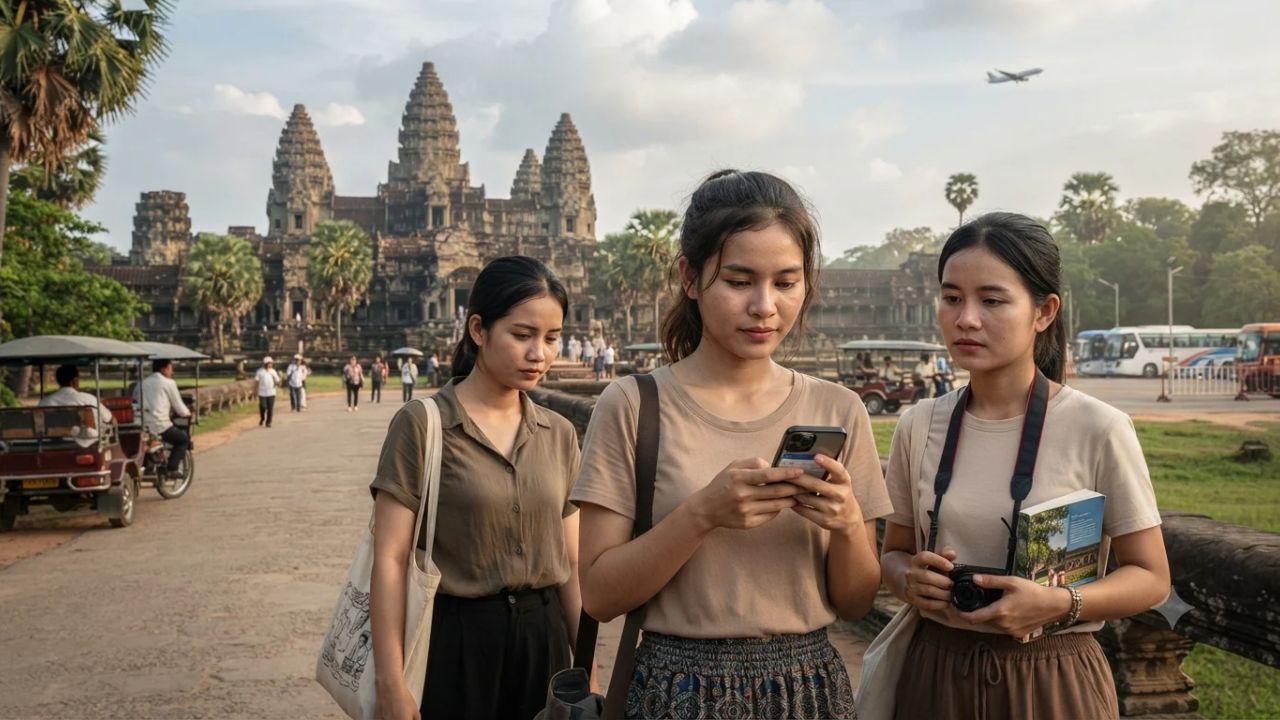
Cross-border overland arrivals from Thailand plunged by 96.2 percent between January and May 2026—dropping from over 856,000 visitors to just 32,700—as prolonged land checkpoint disruptions reshaped Southeast Asian travel flows. That unprecedented border contraction contributed to a broader 46 percent drop in total international arrivals across Cambodia, with the kingdom recording 1.99 million foreign visitors between January and July 2026 according to official monitoring by the Ministry of Tourism of Cambodia.
Behind the 46% Inbound Drop: Land Border Friction and Market Reshuffling
The steep downturn highlights a structural shift from overland backpacking routes toward direct international aviation. During the first quarter of 2026, land border arrivals collapsed by 69 percent, while international air arrivals declined by a more modest 15.9 percent. Consequently, scheduled aviation now accounts for 65.4 percent of all foreign visitor entries into the country.
Beyond Thailand, key regional source markets recorded substantial pullbacks during the first quarter:
- Laos: Arrivals plummeted by 90.6 percent.
- South Korea: Inbound travel dropped by 66.1 percent, driven by heightened travel advisories and public concern over regional cyber-fraud compounds.
- Russia & Vietnam: Russian arrivals fell by 57.3 percent, while Vietnamese visitors decreased by 22.7 percent.
- Long-Haul Resilience: Western markets showed greater stability, with France dipping 16.9 percent, the United States declining 12.9 percent, and the United Kingdom falling 11.9 percent.
In response, Cambodian authorities have pivoted toward mainland China. Between January and March, Cambodia welcomed 242,387 Chinese nationals (135,209 business travelers and 106,207 holidaymakers). To stimulate demand, the government enacted a 14-day multiple-entry visa-free trial for Chinese passport holders between June 15 and October 15, 2026, facilitated via a simplified electronic arrival card.
Despite broader headwinds, the aviation sector managed 37,248 international flight movements across the first seven months of 2026—a dip of just one percent—supported by Cambodia Airports. Phnom Penh’s new Techo International Airport handled 70.3 percent of all air traffic, while Siem Reap–Angkor International Airport processed 24 percent and Sihanoukville handled 5.3 percent.
What Makes Cambodia Unmatched: Stone Faces of Bayon and Mekong Riverways
Cambodia remains one of the world's most evocative cultural destinations, possessing monumental archaeological heritage and spiritual traditions that transcend short-term geopolitical friction.
At the heart of the kingdom lies the Angkor Archaeological Park, inscribed under the UNESCO World Heritage Convention. Spanning over four hundred square kilometers, the ancient Khmer Empire’s capital encompasses the five lotus-bud towers of Angkor Wat, the colossal stone faces of the Bayon, and the jungle-strangled corridors of Ta Prohm, where strangler figs wind through ancient sandstone blocks. Between January and August 2026, Angkor ticket sales reached 474,993 international visitors generating 22.54 million US dollars in revenue, down roughly 28 percent year-on-year, creating unusually uncrowded conditions for visiting travelers.
Beyond the temples, Cambodia reveals diverse regional highlights. Phnom Penh showcases royal Khmer architecture at the Royal Palace and the National Museum's exquisite bronze antiquities. To the southwest, Preah Sihanouk province has emerged as an economic exception; foreign visitor arrivals rose 17.8 percent in early 2026 following a 30 percent jump in 2025 (reaching 415,459 visitors), driven by the Phnom Penh–Sihanoukville Expressway, deep-water port calls, and pristine island retreats on Koh Rong.
Visitor Insider Tips: Navigating Cambodia Safely and Authentically
Navigating Cambodia during the current transition period rewards independent travelers who understand regional transport changes and local customs.
Transport and Border Transit Logistics
- Fly Direct Instead of Overland Border Crossings: Avoid overland bus transfers from Thailand or Laos, which remain plagued by lengthy checkpoint closures and localized disputes. Book non-stop flights directly into Siem Reap (SAI) or Phnom Penh (PNH) via Bangkok, Singapore, or Kuala Lumpur.
- Take the Phnom Penh–Sihanoukville Expressway: If traveling to the southern coast or ferry ports for Koh Rong, take licensed express shuttle vans on the modern four-lane expressway, cutting transit time from six hours to just two hours.
- Use Grab and PassApp for Urban Tuk-Tuks: In Phnom Penh and Siem Reap, book three-wheeled auto-rickshaws via digital ride-hailing apps like Grab or PassApp to ensure transparent metered pricing and avoid street-side fare haggling.
Temple Exploration and Cultural Etiquette
- Angkor Pass Optimization: Purchase your Angkor Pass online or at the official ticket center after 4:45 PM. Tickets bought after this time allow immediate free entry to watch the sunset from Phnom Bakheng without counting against your multi-day pass allocation.
- Modest Dress Code at Sacred Sites: When entering any temple complex or pagoda, shoulders and knees must be fully covered with breathable cotton fabrics. Lightweight scarves draped over bare shoulders are not permitted at Angkor Wat's upper Bakan sanctuary.
- Regional Flavors Beyond Amok: In traditional khmer eateries, sample authentic Fish Amok (curried freshwater fish steamed in banana leaves with lemongrass and coconut cream), Nom Banh Chok (fresh fermented rice noodles bathed in fragrant green fish curry), and stir-fried Kampot pepper crab along the coastal stalls of Kep.
Safe Accommodation Basing
- Siem Reap Old French Quarter: Base yourself in the leafy streets near Wat Bo or along the Siem Reap River, which offer boutique heritage guesthouses, art galleries, and farm-to-table dining far removed from noisy tourist strips.
- Avoid Peripheral Border Enclaves: Steer clear of unverified casino border towns like Poipet or Bavet, sticking instead to established cultural corridors and coastal island reserves.
Cultural and Environmental Context: Heritage Preservation and Ecotourism
Cambodia's tourism sector contributed 3.878 billion US dollars to the national economy in 2025, accounting for 9.8 percent of national gross domestic product. Rebuilding international traveler confidence is essential for supporting hundreds of thousands of local guides, artisans, and family-owned guesthouses who depend on sustainable visitation.
In the Cardamom Mountains, community-based ecotourism projects—such as Wildlife Alliance’s Chi Phat sanctuary—have successfully converted former wildlife poachers and illegal loggers into certified jungle trekking guides and kayak instructors. Supporting these community initiatives ensures conservation revenue directly protects endangered Indochinese leopards and Asian elephants.
At Angkor, the APSARA National Authority continues vital restoration works, utilizing modern non-invasive LiDAR scanning and traditional stone masonry techniques to preserve centuries-old hydraulic canals and temple terraces for future generations.
FAQ: Visiting Cambodia 2026
Is it safe to travel to Cambodia in 2026?
Yes. Major cultural destinations including Siem Reap, Phnom Penh, Kampot, and the southern islands of Koh Rong are completely safe and welcoming for international tourists.
How do I purchase an official Angkor Wat temple pass?
Passes can be purchased online through the official Angkor Enterprise portal or in person at the Siem Reap ticket center, available in one-day ($37), three-day ($62), and seven-day ($72) options.
What is the visa policy for international travelers?
Most foreign tourists can obtain a 30-day tourist visa on arrival or apply in advance for an electronic visa (e-Visa) online, requiring a valid passport with at least six months of remaining validity.
How has air travel replaced overland entry into Cambodia?
Due to land border closures and delays, over 65 percent of all foreign visitors now arrive via direct flights landing at Phnom Penh, Siem Reap, and Sihanoukville international airports.
With ancient temple corridors quieter than they have been in years, Cambodia offers mindful travelers an intimate encounter with the enduring soul of the Khmer Empire.
Related Travel Guides
Disclaimer
This article is for informational and educational purposes only. It does not constitute legal, financial, or professional advice. While we strive to provide accurate and up-to-date information, travel policies, regulations, and conditions change rapidly. Always verify information with official sources before making travel decisions. Nomad Lawyer makes no representations about the accuracy, reliability, completeness, or suitability of the information provided. Readers should consult qualified professionals for advice specific to their circumstances. The views expressed in this article are those of the author and do not necessarily reflect the views of Nomad Lawyer.
Raushan Kumar
Founder & Lead Developer
Full-stack developer with 11+ years of experience and a passionate traveller. Raushan built Nomad Lawyer from the ground up with a vision to create the best travel and law experience on the web.
Learn more about our team →