
Great Lakes Produce Ocean-Sized Waves: Inland Surf Guide 2026
Great Lakes produce world-class freshwater waves rivaling coastal breaks in 2026. Discover how these inland waters generate massive swells and where adventurous surfers find the best conditions across Michigan, Minnesota, and Wisconsin.

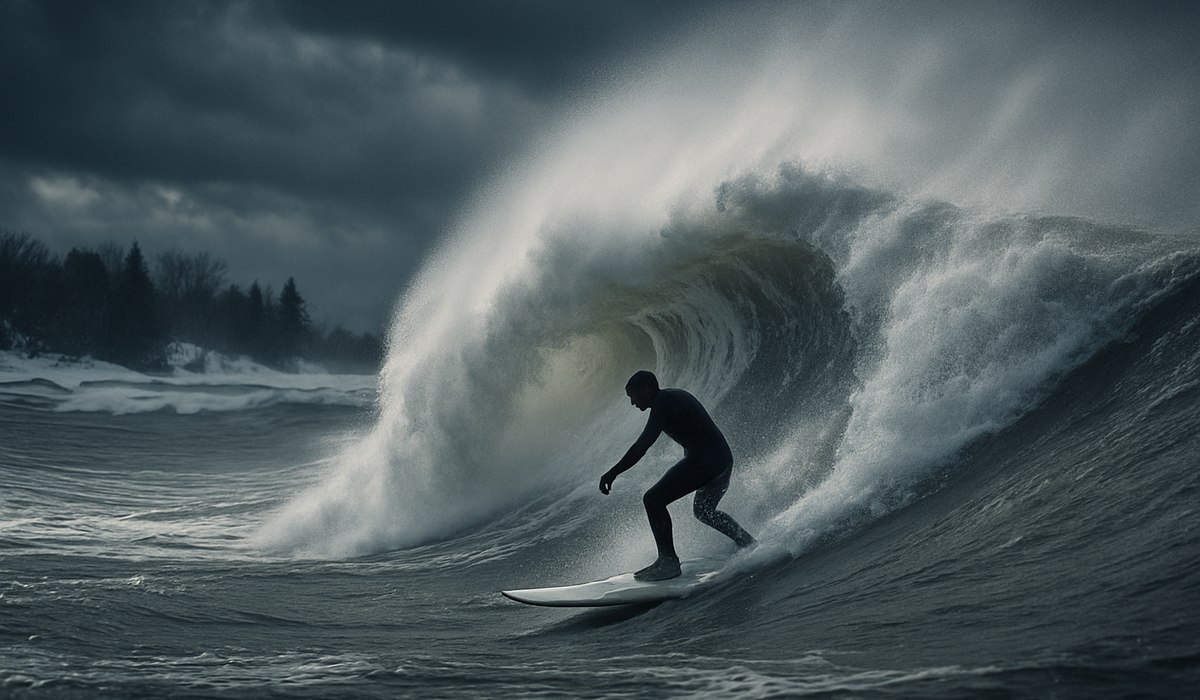
Image generated by AI
Freshwater Surfing Revolution: Great Lakes Challenge Traditional Coastal Dominance
The Great Lakes produce ocean-like waves that rival saltwater coasts, creating an unexpected freshwater surfing phenomenon sweeping across the Midwest in 2026. Travelers seeking alternative break destinations no longer need passports or extensive travel budgets to experience serious swell conditions. These massive inland water bodies generate storm-driven swells that attract experienced surfers willing to embrace frigid temperatures and unpredictable weather patterns. The discovery challenges longstanding assumptions about where legitimate surf culture exists, opening new adventure travel opportunities for cold-water enthusiasts across North America.
Why The Great Lakes Generate Ocean-Like Waves
The atmospheric mechanics behind Great Lakes swells parallel ocean storm systems, though the physics operate on a compressed scale. Powerful winter storm systems traveling across North America funnel wind energy directly across thousands of square miles of freshwater surface. This extended fetch—the distance wind travels unobstructed over water—creates cumulative wave energy similar to coastal hurricane swells.
Lake Michigan, the second-largest Great Lake by surface area, experiences the most consistent swell production. Storm systems originating in the Pacific Northwest reach these inland waters with sufficient energy remaining to generate 8-15 foot faces during peak conditions. The lake's depth, orientation, and surrounding geography concentrate wave energy toward specific beaches and point breaks. Unlike ocean waves that dissipate gradually over continental shelves, Great Lakes swells maintain intensity across the entire water column, producing steeper faces and more powerful breaking zones.
Wind-generated waves differ fundamentally from oceanic groundswell. These systems require continuous atmospheric disturbance to maintain size and power. When winter storms stall over the Great Lakes region, wave conditions can intensify for 24-48 hour periods before wind direction shifts. Advanced weather forecasting now enables surfers to predict optimal swell windows weeks in advance. Organizations like the National Weather Service provide detailed marine forecasts specifically tracking Great Lakes conditions.
Top Freshwater Surf Spots Across Michigan, Minnesota & Wisconsin
Michigan's Unbeaten Shoreline
Lake Michigan's eastern shore near Ludington produces the region's most reliable waves. South Pier Beach attracts intermediate to advanced surfers seeking consistent 4-8 foot breaks. The jetty configuration creates predictable peeling waves during northeast wind patterns. Nearby Big Sable Point offers more powerful but chaotic conditions, ideal only for experienced riders comfortable with strong currents and temperature extremes.
Wisconsin's Hidden Gem Network
Green Bay's east shore has emerged as an underrated destination for Great Lakes produce exceptional summer and autumn swells. Sturgeon Bay's protected waters generate smaller but more forgiving waves suitable for intermediate surfers developing cold-water skills. The surrounding Door County peninsula provides scenic accommodation and restaurant options that distinguish Wisconsin from purely industrial beach communities.
Minnesota's Lakefront Discovery
Lake Superior's Minnesota coastline, particularly near Duluth and Two Harbors, offers the most challenging conditions but produces the largest waves. Superior's greater depth and fetch generate consistent 6-12 foot faces during autumn and early winter. These locations demand professional-level skills and comprehensive cold-water safety protocols, including immersion suits and rescue support. For detailed Superior information, consult the Superior Kayaking and Water Safety Association.
What To Know Before Surfing The Great Lakes
Cold-water immersion represents the primary hazard for Great Lakes surfers. Winter water temperatures drop to 35-40°F, creating hypothermia risk within 15-20 minutes of submersion. Full 7mm wetsuits combined with booties, gloves, and hoods are mandatory equipment rather than optional comfort upgrades. Many experienced surfers additionally wear chest protectors to prevent breathtaking thermal shock during paddle-out.
Wave power in freshwater systems behaves distinctly from ocean breaks. The absence of salt creates different water viscosity and density characteristics. Swimmers instinctively employ different stroke mechanics, and fall impact dynamics change measurably. Waves break more suddenly and forcefully due to the compressed thermocline layers unique to enclosed freshwater systems.
Weather unpredictability demands constant condition monitoring. Great Lakes storms develop and intensify faster than oceanic systems. Wind direction shifts can transform rideable waves into choppy closeouts within 2-3 hours. Smartphone weather applications provide insufficient granularity for serious session planning—dedicated marine forecast resources prove essential for safety and enjoyment.
Best Season & Conditions For Great Lakes Surfing
Autumn and early winter produce optimal conditions for Great Lakes produce the most powerful and consistent swells. September through November features regular storm systems moving across the region, generating 4-10 foot face heights. Lake effect snow systems occasionally create unique atmospheric conditions that intensify wind fields, producing dramatic swell growth over 12-18 hour periods.
Late winter (February-March) offers smaller but cleaner waves with less chaotic wind patterns. Spring conditions deteriorate rapidly as warming water temperatures reduce density-driven thermocline effects that enhance wave organization. Summer months bring warmest water temperatures (50-55°F) but the smallest and most inconsistent swell.
Peak winter conditions typically occur during full moon phases when barometric pressure fluctuations amplify storm development. January and February produce the coldest water temperatures but the most reliable powerful waves. Serious surfers plan vacations around NOAA marine forecasts predicting significant storm systems 10-14 days in advance.
Great Lakes Surfing Conditions Data Reference
| Category | Lake Michigan | Lake Superior | Green Bay |
|---|---|---|---|
| Winter Water Temp (°F) | 35-38 | 32-36 | 34-37 |
| Peak Swell Season | Oct-Feb | Sept-Nov | Nov-Jan |
| Average Peak Wave Height | 6-10 ft | 8-14 ft | 4-8 ft |
| Recommended Wetsuit | 7mm full | 7-8mm full | 7mm full |
| Optimal Wind Direction | NE-E | NE-N | E-SE |
| Best Breaks | South Pier, Frankfort | Two Harbors, Duluth | Sturgeon Bay |
| Accessibility | Moderate | Challenging | Moderate |
| Skill Level Required | Intermediate | Advanced | Intermediate |
What This Means for Travelers
-
Plan Cold-Weather Adventures: Schedule Great Lakes surfing trips during October through February when consistent swells arrive and water temperatures, while frigid, remain stable. Book accommodation 4-6 weeks in advance during peak autumn conditions.
-
Invest in Proper Equipment: Purchase or rent professional-grade 7mm wetsuits with integrated hoods, booties, and gloves. Budget $400-800 for quality cold-water gear that directly impacts safety and comfort.
-
Master Weather Forecasting: Subscribe to NOAA marine forecasts and download dedicated swell prediction applications. Learn to interpret wind speed, direction, and fetch data to predict optimal session timing.
-
Consider Skill Development: Take cold-water immersion training courses before attempting Great Lakes conditions. Many Midwest-based surf schools offer prerequisite classes covering hypothermia recognition and emergency response protocols.
-
Explore Regional Alternatives: Visit multiple Great Lakes locations during single trips. Nearby vacation rentals and state park facilities provide diverse accommodation options for multi-week exploration of Michigan, Wisconsin, and Minnesota coastlines.
Frequently Asked Questions
What makes Great Lakes waves different from ocean waves?
Great Lakes swells are wind-generated rather than groundswell systems, meaning they require continuous storm presence to maintain size. Waves develop faster, break more suddenly, and dissipate quickly once weather systems pass. The enclosed freshwater environment creates unique density layers that affect wave propagation differently than saltwater systems.
Is Great Lakes surfing dangerous compared to ocean breaks?
Hypothermia represents the primary hazard rather than sharks or r
Disclaimer
This article is for informational and educational purposes only. It does not constitute legal, financial, or professional advice. While we strive to provide accurate and up-to-date information, travel policies, regulations, and conditions change rapidly. Always verify information with official sources before making travel decisions. Nomad Lawyer makes no representations about the accuracy, reliability, completeness, or suitability of the information provided. Readers should consult qualified professionals for advice specific to their circumstances. The views expressed in this article are those of the author and do not necessarily reflect the views of Nomad Lawyer.
Kunal K Choudhary
Co-Founder & Contributor
A passionate traveller and tech enthusiast. Kunal contributes to the vision and growth of Nomad Lawyer, bringing fresh perspectives and driving the community forward.
Learn more about our team →