Brooklyn Urban Renewal: 1024 Fulton Street Clinton Hill Redevelopment Guide 2026

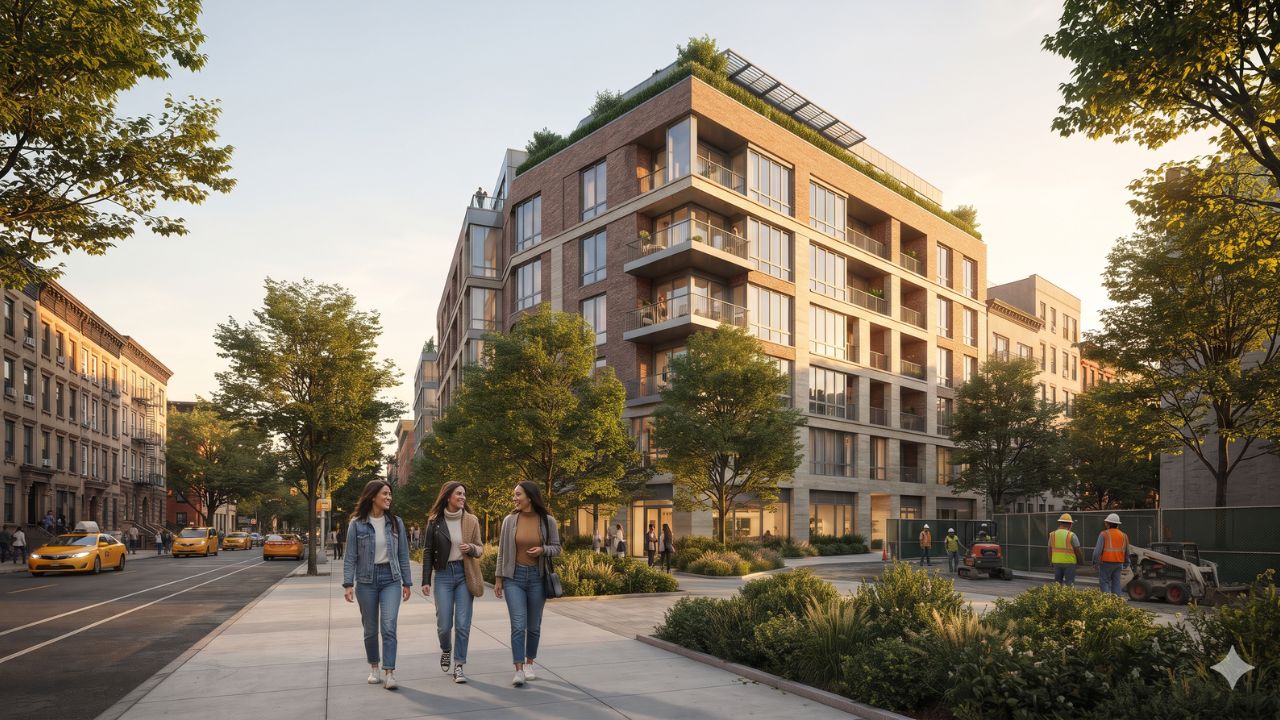
For nearly thirty years since 1997, an unsafe three-storey shell sat abandoned at 1024 Fulton Street, a blighted interruption along the historic brownstone corridor connecting Clinton Hill with Bedford-Stuyvesant. That decades-long stagnation has ended as state crews initiated demolition to clear the path for a 149,000-square-foot, all-electric mixed-use hub featuring 126 permanently affordable residences, healthcare clinics, and neighborhood cultural centers.
Announced by Governor Kathy Hochul and managed by the New York State Office of General Services, the initiative reflects a growing recognition across global travel capitals: the authenticity and vitality of an urban destination rely on the housing stability of its working artists, hospitality staff, and generational residents. By integrating sustainable Passive House engineering with deep community ownership, the project at 1024 Fulton Street demonstrates how conscious urban renewal enriches the cultural texture that draws curious travelers to Brooklyn.
The Fulton Street Blueprint: Housing, Health, and Community Space
Supervised through demolition completion in summer 2027 and targeting early 2028 for ground-up construction, the multi-story complex addresses several pressing civic requirements within a single footprint.
Overseen by Empire State Development alongside local neighborhood stakeholders, the project reserves 100% of its 126 residential units for households earning between 30% and 80% of the Area Median Income (AMI). Ranging from efficient studios to family-sized three-bedroom apartments, the housing ensures that service staff powering Brooklyn's renowned dining and hospitality scene can remain rooted in the neighborhood.
| Project Component | Spatial Scope & Specifications | Community & Traveler Significance |
|---|---|---|
| Affordable Housing | 126 permanently affordable apartments (studios to 3-beds) | Restricts rents to 30%–80% AMI, stabilizing local service workforce |
| Intergenerational Center | 27,000 sq ft community center | Integrates senior daytime programming with early childhood learning |
| Workforce Empowerment | 2,000 sq ft career and financial literacy hub | Direct job training and economic mobility programs |
| Neighborhood Healthcare | 1,000 sq ft community health clinic | Managed by One Brooklyn Health for direct preventative care |
| Environmental Performance | Passive House certified, all-electric systems, green roof | High-efficiency insulation, zero fossil fuel burn, stormwater absorption |
| Construction Workforce | ~350 temporary union and local construction jobs | Led by MWBE firms APEX Building Group and Henge Development |
| Development Ownership | Fifth Avenue Committee & Bed-Stuy Restoration Corp | Community-based nonprofit stewardship ensuring perpetual public benefit |
Why Neighborhood Preservation Matters for Cultural Travelers
Modern travelers exploring New York City increasingly look beyond midtown Manhattan skyscrapers, venturing into Brooklyn’s historic neighborhoods to experience independent coffee roasters, vintage boutiques, and community-rooted bistros. Clinton Hill, renowned for its Gothic Revival mansions, leafy tree-lined streets, and proximity to Pratt Institute, serves as a cultural bridge to Bedford-Stuyvesant, the historic epicenter of African American culture in Brooklyn.
However, unchecked real estate gentrification often prices out the very cooks, baristas, musicians, and artists who give these blocks their magnetic character. When hospitality employees face two-hour commutes from distant outer boroughs, the local dining culture suffers.
By dedicating 149,000 square feet to permanent affordability and local services, the 1024 Fulton Street redevelopment anchors long-term residents. Developed through a coalition including the Fifth Avenue Committee, the Bedford Stuyvesant Restoration Corporation, and One Brooklyn Health, the building keeps community ownership local, ensuring that Fulton Street retains its dynamic street life rather than turning into an exclusive corporate enclave.
Sustainable Architecture: The Passive House Model in Brooklyn
Beyond its social impact, the Fulton Street redevelopment sets an architectural benchmark for eco-conscious urban destinations. The complex is designed to achieve rigorous Passive House certification, incorporating an airtight building envelope, high-performance triple-glazed windows, and advanced heat-recovery ventilation systems.
These structural choices reduce space heating and cooling energy demands by up to 75% compared to standard multi-family construction. Paired with all-electric heating and domestic water systems, the building eliminates onsite fossil fuel emissions entirely.
On the roof, an extensive green roof garden will absorb stormwater runoff, easing pressure on Brooklyn’s combined sewer system during intense coastal downpours, while mitigating the urban heat island effect along Fulton Street. For urban planners and sustainability-focused travelers monitored by NYC Tourism + Conventions, the property demonstrates that green building practices can merge seamlessly with social equity.
Visitor Insider Tips for Exploring Clinton Hill and Fulton Street
Travelers wishing to discover the authentic character of Clinton Hill and surrounding avenues can use these practical neighborhood insights:
- Take the C Train to Franklin Avenue: Hop on the IND Fulton Street Line (C train) and disembark at Franklin Avenue or Clinton-Washington Avenues. Fulton Street features a dense corridor of independent Caribbean bakeries, vintage record stores, and community bookstores within a three-block radius.
- Stroll Pratt Institute's Outdoor Sculpture Park: Located six blocks north on DeKalb Avenue, Pratt Institute's campus features the largest public outdoor sculpture park in New York City, scattered across 25 acres of historic brick pathways and manicured lawns. Admission is free to the public during daylight hours.
- Explore Local Fulton Street Eateries: Skip tourist-packed chain restaurants and sample local culinary institutions along Fulton Street and Grand Avenue, featuring Trinidadian doubles, artisanal sourdough pizza, and third-wave Ethiopian pour-over coffee shops staffed by neighborhood residents.
- Observe Architecture on Clinton Avenue: Walk north along Clinton Avenue between Fulton Street and Myrtle Avenue to view historic 19th-century Gilded Age mansions built by oil magnate Charles Pratt and early industrialists, presenting some of the finest Romanesque Revival and Queen Anne townhouses in the borough.
Cultural and Urban Context: Aligning State Land with Community Needs
The transformation of 1024 Fulton Street represents a tangible milestone under Governor Hochul’s Executive Order 30, which mandates that state agencies review and repurpose underutilized, state-owned public properties for affordable residential housing. Rather than auctioning public land to private commercial developers, the state partnered with certified Minority and Women-Owned Business Enterprises (MWBEs) to steer the project.
With general contracting led by APEX Building Group and Henge Development, the project commits to exceeding 35% MWBE subcontractor participation and maintaining over 30% local hiring throughout construction.
In parallel, the initiative aligns with the city's broader Atlantic Avenue Mixed Use Plan (AAMUP), which seeks to transform industrial and underused corridors into thriving, walkable mixed-income districts. By showing that historic preservation, modern environmental engineering, and working-class housing security can coexist, Clinton Hill offers a model for how global tourism hubs can grow without erasing the communities that make them worth visiting.
FAQ: Clinton Hill and Fulton Street Brooklyn 2026
What subway lines provide access to Clinton Hill?
The C train runs directly beneath Fulton Street, stopping at Clinton-Washington Avenues and Franklin Avenue, while the G train serves Clinton-Washington on Lafayette Avenue.
When will the 1024 Fulton Street redevelopment be completed?
Demolition of the unsafe existing structure concludes in summer 2027, with ground construction scheduled to begin in early 2028.
Is Clinton Hill walkable for independent travelers?
Yes. Clinton Hill is one of Brooklyn's most walkable historic districts, offering quiet residential streets, public green spaces, and dense dining corridors along Fulton Street and DeKalb Avenue.
What is Passive House construction?
Passive House is an advanced building standard that uses airtight envelopes, extreme thermal insulation, and heat-recovery ventilation to drastically cut energy use and carbon emissions.
A great city is measured not by how fast its skylines rise, but by how well it protects the communities that give its streets their soul.
Related Travel Guides
This article is for informational purposes. Flight routes, passenger regulations, visa rules, and transit advisories are subject to change by airlines and aviation authorities. Readers are advised to verify schedules and travel documentation with relevant carriers and border agencies before departure.
Related Stories

Belize Travel Guide 2026: Long Weekend Itinerary for Reefs and Maya Ruins

Canada Winter Cities Guide 2026–2027: Nine Contrasting Cold-Weather Destinations