
The Lie-Flat Revolution: How British Airways Redefined Luxury Aviation and Transformed the Modern Business Class Experience
Discover the highly classified engineering history behind the world's first lie-flat business class seat, a radical British Airways design that permanently eliminated premium cabin exhaustion and revolutionized global travel.

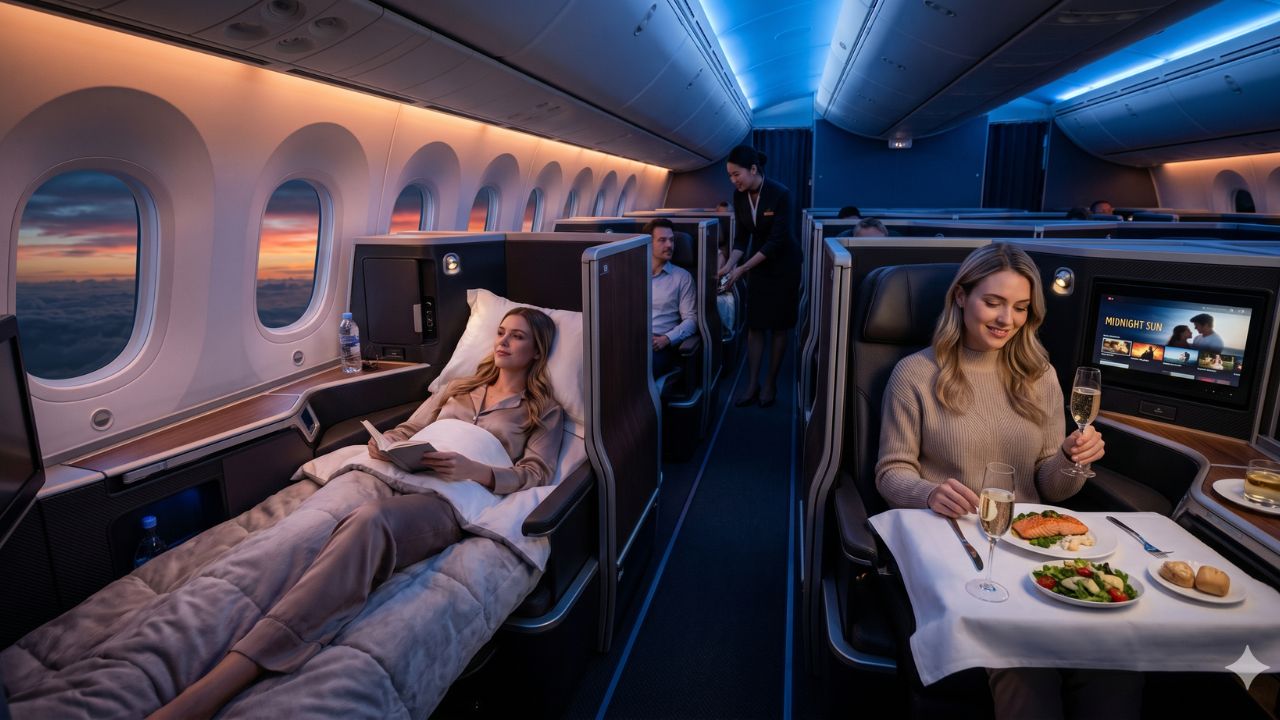
Image generated by AI
A Massive Technological Evolution Transforms Luxury Aviation
While massive sectors of the global passenger network frequently battle highly unpredictable weather events and terrifying airport disruptions, a spectacular technological evolution actively dictates the premium way passengers experience long-haul travel. Delivering highly urgent, groundbreaking airline news, verified aviation historians confirm that the modern business class experience—a beautifully luxurious oasis featuring sliding privacy doors, ambient lighting, and perfectly flat beds—was born from a highly secretive, high-stakes engineering gamble.
While desperate economy travelers attempt to navigate sudden, terrifying flight cancellations and agonizing delays by pacing crowded corridors, premium passengers expect total sanctuary. Wrapped in a luxury duvet at 35,000 feet, business travelers sleep soundly and wake up entirely refreshed. However, these exclusive aviation updates reveal that long-haul aviation wasn’t always this comfortable. Turn the clock back to the late 1990s, and the concept of a true bed in business class simply did not exist. The dramatic shift occurred in March 2000, when British Airways launched a bold, top-secret design initiative that permanently eliminated premium passenger exhaustion and violently altered the global commercial landscape.
Expanded Overview: The Genesis of Outsmarting Gravity
The sudden, highly publicized execution of this engineering milestone serves as an undeniable example of how rapidly the world's commercial aviation sector can evolve. Before the year 2000, long-haul premium travelers had to painfully endure “cradle” or deep-recline sleeper seats. While technically an improvement over standard economy, these deeply flawed seats left passengers continuously sliding forward at a harsh angle due to gravity, guaranteeing they would wake up with sore joints and restless fatigue.
Airlines had historically reserved true horizontal comfort for ultra-exclusive First Class cabins, where ticket prices were exceptionally high and floor space was abundant. The massive engineering challenge was figuring out how to forcefully fit a 180-degree flat horizontal surface into the significantly narrower footprint of a business class cabin. If an airline simply reduced the total number of seats to make room for beds, ticket prices would violently skyrocket, making the product completely unaffordable for standard corporate travelers.
Section-Wise Breakdown of the Cabin Revolution
The British Airways "Yin-Yang" Layout
British Airways definitively cracked this massive logistical puzzle by aggressively partnering with the renowned design agency Tangerine to develop an incredibly innovative, puzzle-like “yin-yang” layout. By wildly alternating forward-facing and rear-facing seats in a creative, interlocking pattern, engineers brilliantly maximized every single inch of cabin floor space.
This revolutionary layout allowed passengers to finally stretch out into a complete bed while maintaining high, highly profitable cabin density for the airline. When British Airways rolled out these brand-new Club World cabins, the global competitive landscape was completely shattered overnight. Massive rivals were violently forced to scrap their traditional seating plans and desperately invest billions to develop their own flat-bed products just to stay relevant in the premium sector.
The Innovation Race: From Open Beds to Private Suites
Once the lie-flat standard was firmly established by British Airways, global airlines frantically shifted their focus from basic horizontal comfort to absolute passenger privacy. The open-cabin layouts of the early 2000s gradually evolved into highly sophisticated, high-walled sanctuaries. Airlines like Singapore Airlines and Qatar Airways aggressively pushed these boundaries even further. The introduction of ultra-premium products like the Qatar Airways Qsuite—which features highly customizable family spaces and sliding doors—effectively turned individual seats into private mini-suites, blurring the line between Business and First Class entirely.
Premium Luxury Cabin Evolution Data Tables
To fully comprehend the massive engineering scale and strategic progression dictating this highly competitive luxury sector, the following matrices explicitly detail the exact evolution of premium cabin architecture:
Premium Cabin Design Evolution
| The Pre-2000 Standard | The Lie-Flat Paradigm (Post-2000) |
|---|---|
| Deep-recline "cradle" seating | True 180-degree flat horizontal surface |
| Continuous forward slipping gravity | Yin-yang layout optimizes floor footprint |
| Left business travelers exhausted | Transformed premium aviation business models |
Premium Luxury Cabin Evolution Matrix
| First-Generation (Early 2000s) | Modern Era Masterpieces (Present) |
|---|---|
| Open cabin layouts | Full-height sliding privacy doors |
| Shared central armrests | Direct aisle access for all passengers (1-2-1 layout) |
| Basic texturized fabric cushions | High-definition touchscreens & Memory Foam |
Passenger Impact: Wellness and Smart Logistics Management
For the modern domestic and international commuter attempting to navigate this highly competitive premium sector, the passenger impact of this design revolution is utterly profound. Modern premium design focuses heavily on complete physiological wellness, violently integrating advanced features like biometric lighting that actively reduces jet lag, memory foam bedding, and advanced noise-canceling tech built right into the headrest.
However, in an international aviation landscape increasingly plagued by sudden travel chaos and massive passenger volumes, managing your trip logistics carefully remains absolutely essential. Because major international airlines frequently update their premium cabins to heavily optimize capacity—sometimes swapping aircraft types at the very last minute to handle larger loads—travelers must heavily rely on online flight tracking platforms. Knowing exactly how to handle sudden airport delays allows premium flyers to coordinate swift lounge rebookings and fiercely protect their highly expensive cabin arrangements.
Industry Analysis: The Sustainability Shift
From a macroeconomic and industry operations perspective, the ongoing evolution of premium aircraft cabins aligns perfectly with the global aviation community’s absolute essential shift towards sustainability. Modern lie-flat suites are aggressively engineered using ultra-lightweight composite materials and highly advanced carbon-fiber frames. This violently reduces overall aircraft weight, massively lowering fuel burn per seat mile. Travelers actively build on this eco-conscious progress by choosing forward-thinking airlines that heavily invest in young, fuel-efficient fleets and fiercely support sustainable aviation fuel (SAF) initiatives, ensuring that luxury flight remains environmentally responsible.
Conclusion: A Highly Optimized Global Future
The incredible, highly publicized journey of the lie-flat seat highlights the absolutely transformative power of bold design thinking. By aggressively challenging the status quo and embracing a radical structural risk, British Airways didn’t just improve passenger comfort—they fundamentally, permanently reshaped global travel culture. As airlines continue to frantically innovate with sliding doors, smart wellness systems, and sustainable materials, the boundary between premium boutique hotels and commercial aircraft cabins will continue to blur into absolute luxury.
Key Takeaways
- The British Airways Gamble: In March 2000, BA successfully deployed the world's first true 180-degree lie-flat business class bed, instantly destroying the pre-2000 "cradle" seat standard.
- The Yin-Yang Engineering: Designers utilized a revolutionary alternating forward/rear-facing layout to fit beds into the cabin without violently reducing highly profitable seat counts.
- The Private Suite Era: Modern carriers like Qatar Airways and Singapore Airlines escalated the luxury arms race by introducing sliding doors and 1-2-1 direct aisle access.
- Aviation Wellness Tech: Present-day cabins heavily integrate biometric lighting to combat jet lag and utilize ultra-lightweight carbon fiber to dramatically reduce fuel burn.
- Passenger Survival Tactics: Premium travelers are aggressively urged to constantly monitor aircraft equipment swaps to guarantee they receive the exact luxury suite they paid for.
Disclaimer: The specific cabin evolution timelines, layout configurations, and airline operational milestones presented in this report are based on verified aviation history regarding the development of lie-flat seating. Official airline cabin products, aircraft assignments, and premium ticket amenities are highly volatile and subject to continuous, real-time update based on active carrier directives. Prospective passengers are urgently advised to fiercely verify specific seat maps and cabin features directly via the airline's official portal prior to booking.
Disclaimer
This article is for informational and educational purposes only. It does not constitute legal, financial, or professional advice. While we strive to provide accurate and up-to-date information, travel policies, regulations, and conditions change rapidly. Always verify information with official sources before making travel decisions. Nomad Lawyer makes no representations about the accuracy, reliability, completeness, or suitability of the information provided. Readers should consult qualified professionals for advice specific to their circumstances. The views expressed in this article are those of the author and do not necessarily reflect the views of Nomad Lawyer.
Kunal K Choudhary
Co-Founder & Contributor
A passionate traveller and tech enthusiast. Kunal contributes to the vision and growth of Nomad Lawyer, bringing fresh perspectives and driving the community forward.
Learn more about our team →