Brazil Launches New Groundbreaking RASOE Framework to Boost Sustainable Exports and Secure Stronger Position in Global Markets

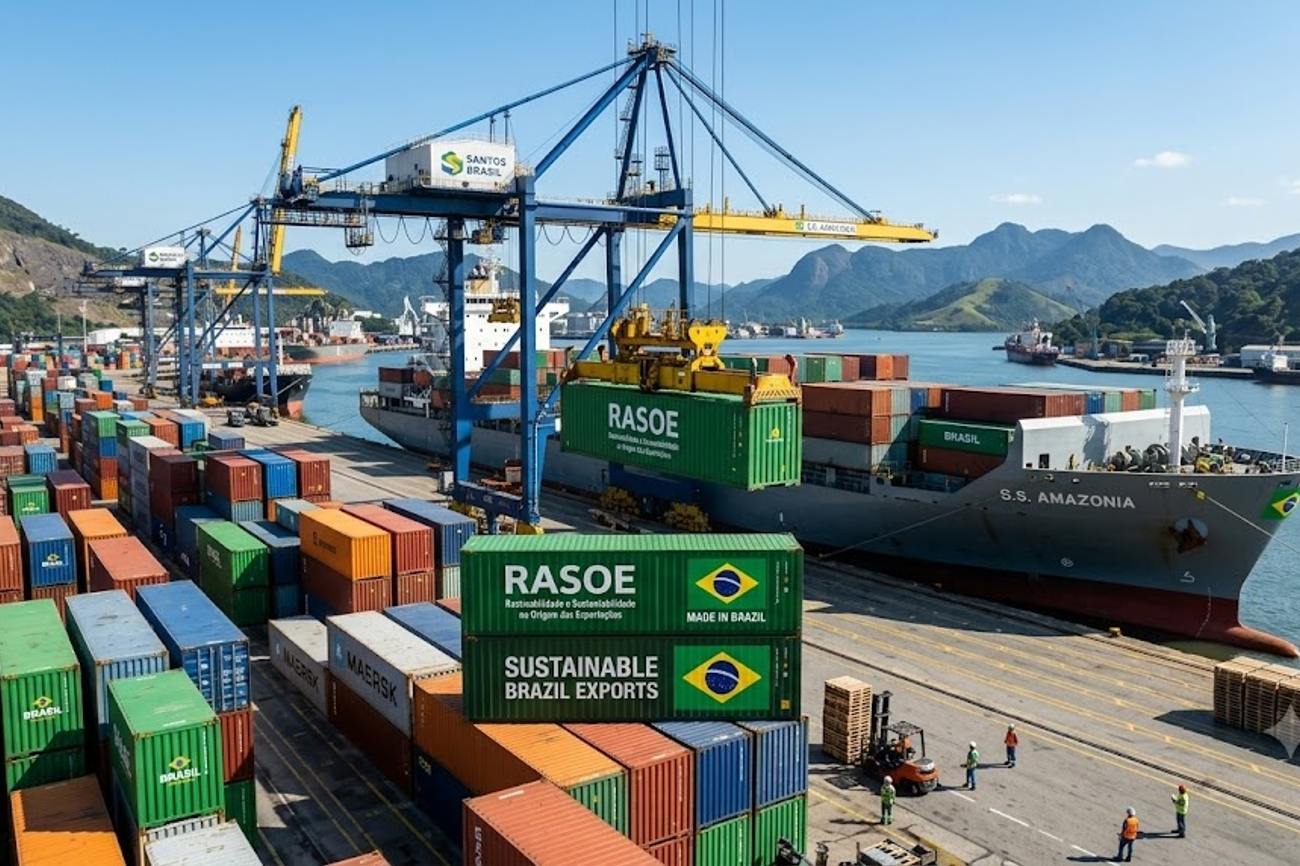
Image generated by AI
[Brasília, September 2026] — The Brazilian government has launched the Socio-Environmental Analysis Report for Export Operations (RASOE), a centralized digital framework designed to certify that agricultural exports comply with national environmental, social, and labor laws.
The initiative, formalized via a government resolution this month, integrates fragmented data from multiple federal databases into a single official document. Developed through a joint effort between Brazil’s foreign affairs and agriculture authorities, the system aims to provide international buyers with verified government data to combat concerns over deforestation and labor abuses in global supply chains.
The Drive for Unified Compliance
The launch of RASOE is a direct response to intensifying pressure from global markets, specifically the European Union (EU) and its stringent Deforestation Regulation. International importers now demand granular proof that commodities—particularly those originating from high-risk biomes—are produced without contributing to forest loss or violating human rights.
Previously, Brazilian producers had to navigate a labyrinth of separate agency reports to prove legality. RASOE eliminates this fragmentation by consolidating records on land ownership, environmental fines, and labor audits. By transforming this data into a structured government report, Brazil intends to reduce the administrative burden on exporters while increasing the transparency of its agricultural output.
Affected Travelers, Key Stakeholders and Regional Positioning
The system primarily impacts the agricultural sector, specifically producers and exporters of "forest-risk" commodities. The following sectors and entities are the primary users and subjects of the RASOE framework:
- Core Commodities: Producers of soy, cattle, coffee, cocoa, rubber, oil palm, and timber.
- Exporting Entities: Brazilian agribusinesses selling into the EU, North American, and Asian markets.
- Regulatory Bodies: The Ministry of Agriculture and Livestock and environmental protection agencies tasked with data feeding.
- International Importers: Global firms requiring traceability and "due diligence" documentation to meet their own domestic laws.
- Protected Communities: Indigenous peoples and traditional communities whose land rights are now integrated into the compliance check.
Practical Traveler Advisory and Strategic Insights
While RASOE is a trade and regulatory mechanism, its implementation has indirect but significant implications for the travel and hospitality sectors, particularly for those operating in the agribusiness and eco-tourism corridors of Brazil.
For Business Travelers and Agribusiness Consultants: Professionals traveling to the Amazon, Cerrado, or Pantanal regions for auditing or supply-chain verification will find a more streamlined data environment. The shift toward a centralized government report means that "on-the-ground" verification may increasingly rely on RASOE digital certificates rather than manual paper trails from local municipalities.
For Corporate Travel Planning: Companies specializing in sustainable sourcing will likely increase their travel footprint to Brazil to oversee the transition to this new reporting standard. This may lead to increased demand for logistics and lodging in rural agricultural hubs that were previously less frequented by international corporate auditors.
For the Eco-Tourism Sector: The integration of Indigenous rights and environmental protection data into a trade tool signals a broader government push for land-use transparency. This transparency often correlates with stricter enforcement of protected area boundaries, which may alter access routes or permits for high-end eco-lodges and guided expeditions in protected biomes.
The Path Toward Traceability
The implementation of RASOE marks a strategic pivot in Brazil's export strategy, moving from defensive postures regarding environmental critiques to a proactive, data-driven transparency model. The system does not function as a private "green label" or a voluntary certification; it is an official government record of legal standing.
Crucially, the Brazilian government has clarified that RASOE is a supportive tool, not a universal passport. Exporters must still meet the specific, often more stringent, requirements of the destination country. For example, an EU importer may still require additional third-party satellite monitoring regardless of a positive RASOE report.
The long-term goal is to secure market access by aligning Brazilian production with the World Trade Organization (WTO) principles of transparency. By linking trade policy directly to environmental governance, Brazil aims to stabilize its position as a leading global food supplier while mitigating the risk of trade sanctions or boycotts linked to deforestation.
FAQ: Brazil Export Compliance 2026
What is RASOE? RASOE (Socio-Environmental Analysis Report for Export Operations) is an official Brazilian government report that consolidates environmental, labor, and land-ownership data to prove that exported agricultural goods comply with national laws.
Does RASOE replace EU deforestation certificates? No. RASOE is a government-supported tool to help exporters gather data, but businesses must still fulfill all specific legal requirements and documentation demanded by the European Union or other importing nations.
Which products are most affected by this system? The system primarily targets forest-risk commodities, including soy, cattle, coffee, cocoa, rubber, oil palm, and wood, as well as any derived products.
Who manages the data in the RASOE system? The system is a collaborative effort between Brazil's foreign affairs and agriculture authorities, incorporating data from environmental, labor, and social policy departments.
Brazil bets on data transparency to keep its agricultural powerhouse status in a green-conscious global market.
Related Travel Guides
- Singapore Travel Wonder Merlion Park Showcases Powerful Waterfront Symbol Shaping City’s Global Identity
- Portugal Travel Gains New Spotlight As Braga Opens Five-Floor Contemporary Art Museum With Creative Experiences
- Indonesia Travel Transforms As AI And Big Data Power Next Generation MICE Tourism Growth
This article is for informational purposes. Flight routes, passenger regulations, visa rules, and transit advisories are subject to change by airlines and aviation authorities. Readers are advised to verify schedules and travel documentation with relevant carriers and border agencies before departure.
Related Stories

Zen Awakening Festival 2026: Florida's Transformational Music, Mindfulness, and Arts Gathering in Fruitland Park

Brazil Tourism Strategy 2027: Expanding UK Business Travel and 2027 Women's World Cup Infrastructure