
Bosnia and Herzegovina Sees a Foreign Tourism Drop in 2026 But the Numbers Hide an Unexpected Twist
Bosnia and Herzegovina Sees a Foreign Tourism Drop in 2026 But the Numbers Hide an Unexpected Twist

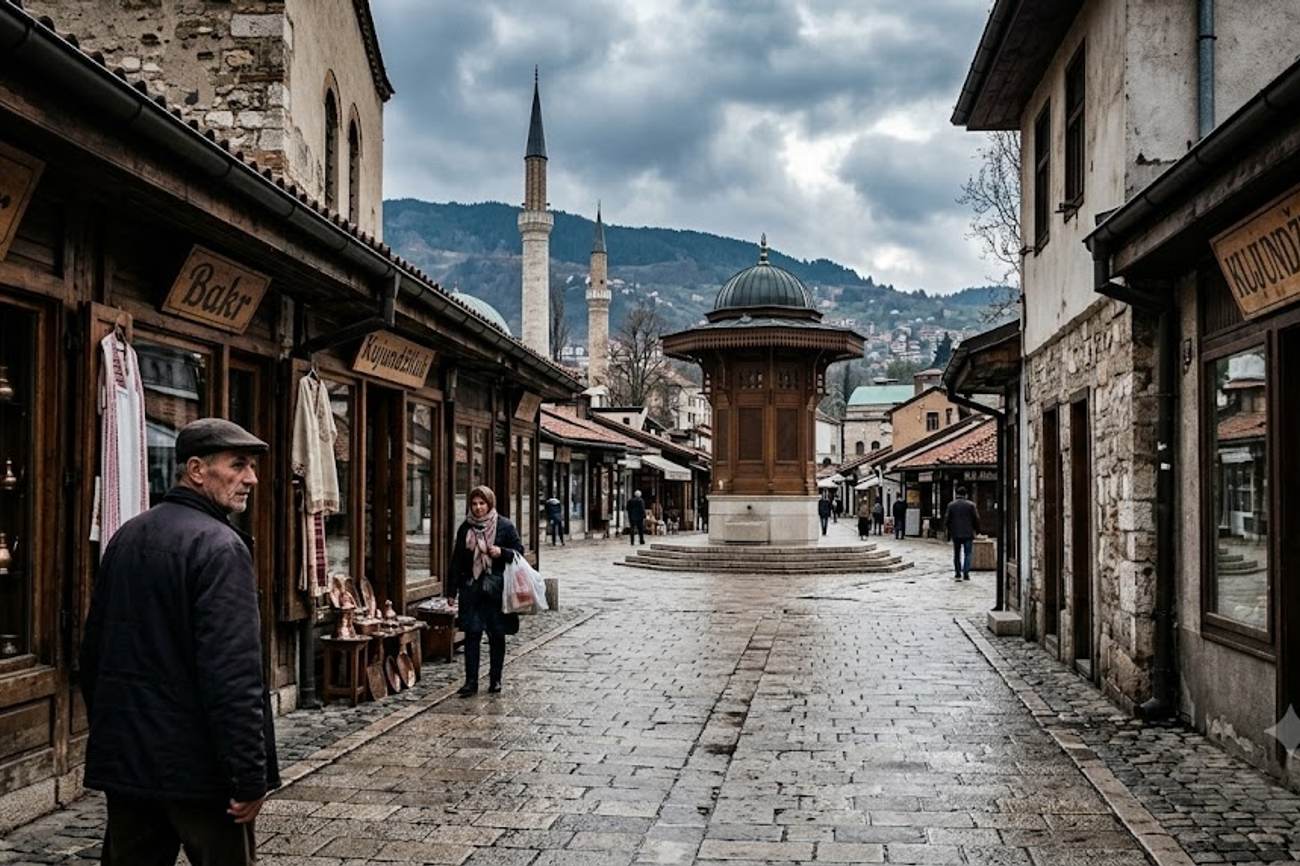
Image generated by AI
Foreign tourist arrivals in Bosnia and Herzegovina dropped by 2.3% between January and July 2026, yet foreign overnight stays rose by 0.4% during the same period. This divergence signals a fundamental shift in visitor behavior: the market is transitioning from a high-volume, short-stay model to a lower-volume, higher-engagement pattern. While the total arrival count for international visitors fell to 763,845, the resilience of the overnight stay metric suggests that the "quality" of the visit—measured by duration—is increasing even as the "quantity" of visitors dips.
The Balkan Pivot in Numbers: 2026 Performance
The data from the first seven months of 2026 reveals a tourism sector in a state of calibration. The most striking figure is the total arrival volume, which reached 1,093,162 visitors. When analyzed against the international decline, the stability of this total number (a marginal 0.1% decrease) proves that domestic travel is currently acting as a primary hedge against international volatility.
For the hospitality sector, the most critical data point is the 1,621,728 foreign overnight stays. The fact that this number grew by 0.4% despite a 2.3% drop in the number of people entering the country indicates an increase in the average length of stay (ALOS). In industry terms, this suggests a shift toward "slow tourism," where visitors are opting for deeper immersion over rapid transit. This pattern is often seen in emerging markets that are moving away from day-trip dependencies and toward integrated itinerary planning, a trend tracked closely by the World Tourism Organization (UNWTO).
The source market distribution further clarifies the country's strategic dependencies. Croatia remains the dominant force with 110,887 visitors, followed by Turkey at 98,972 and Serbia at 94,299. These three nations represent the bedrock of the international arrival base, showing a heavy reliance on regional proximity and historical ties.
Comparative Market Context: Volume vs. Value
To understand the 2026 figures, they must be viewed against the backdrop of regional Balkan tourism. While many neighboring destinations have chased aggressive growth in arrival numbers, Bosnia and Herzegovina is experiencing a contraction in volume but a stabilization in occupancy.
The following table breaks down the performance metrics for the January-July 2026 period:
| Metric | 2026 Figure | Year-over-Year Change | Market Signal |
|---|---|---|---|
| Foreign Tourist Arrivals | 763,845 | -2.3% | Softening International Demand |
| Total Tourist Arrivals | 1,093,162 | -0.1% | Domestic Market Stabilization |
| Foreign Overnight Stays | 1,621,728 | +0.4% | Increased Visitor Engagement |
| Top Source Market (Croatia) | 110,887 | N/A | Regional Dependency |
| Second Source Market (Turkey) | 98,972 | N/A | Non-EU Market Strength |
| Third Source Market (Serbia) | 94,299 | N/A | Regional Dependency |
When comparing these figures to broader IATA trends regarding regional air connectivity, the reliance on Croatia and Serbia suggests that road-based tourism remains the primary driver of arrivals. The 0.1% dip in total arrivals is statistically negligible, meaning the industry is essentially flat-lining in terms of volume, but the growth in overnight stays suggests a potential increase in Revenue Per Available Room (RevPAR) for hotels, provided that the longer stays are translating into higher spending.
What This Means for Travelers
The current data indicates a shift in how Bosnia and Herzegovina is being consumed as a destination. For the individual traveler, this transition from "stopover" to "destination" creates specific opportunities and challenges.
1. Booking Strategy for Q3 and Q4: Because total arrivals are stable (only -0.1%) but the duration of stays is increasing, hotel inventory may tighten faster than it did in previous years. Travelers should move their booking windows from 4 weeks to 8-12 weeks, particularly for boutique accommodations in high-demand hubs.
2. Itinerary Planning: The rise in overnight stays suggests that the infrastructure for longer visits is becoming more viable. Travelers should prioritize multi-city itineraries rather than centering their trip in a single location. The data suggests a trend toward exploring the "Balkan circuit," making it an ideal time to combine Bosnia and Herzegovina with visits to Croatia and Serbia.
3. Value Expectations: With a slight dip in international arrivals, there may be more flexibility in pricing for mid-range services and guided tours. Travelers may find more leverage in negotiating longer-stay discounts at guesthouses and apartments, as operators seek to capitalize on the increasing average length of stay.
Forward Projection: The Transition to High-Value Tourism
Based on the trajectory of the first seven months of 2026, Bosnia and Herzegovina is moving toward a "Value over Volume" model. The 2.3% decline in foreign arrivals is not a signal of failure, but rather a correction. When a destination sees fewer people staying for more nights, it typically leads to a reduction in "overtourism" pressures on infrastructure while maintaining economic yields.
Looking ahead, the reliance on the "Big Three" markets (Croatia, Turkey, Serbia) is a vulnerability. For the industry to grow, there must be a diversification of source markets. If the current trend of increased overnight stays continues, the country will likely see a rise in the development of luxury and long-term rental properties. We can expect a shift in marketing spend away from general awareness and toward targeted, high-yield demographics who are likely to stay 7+ days.
According to data patterns often highlighted by STR, markets that successfully pivot from volume to duration typically see an increase in sustainable tourism metrics and a higher average spend per visitor. If Bosnia and Herzegovina can maintain the +0.4% growth in overnight stays while stabilizing arrivals, the 2027 outlook will likely shift from "adjustment" to "expansion."
FAQ: Bosnia and Herzegovina Tourism 2026
Will hotel prices increase due to longer stays? Likely yes. As the average length of stay increases, the turnover rate of rooms decreases. This reduces available inventory for short-term visitors, which typically drives up the daily rate for last-minute bookings.
Is now a good time to visit Bosnia and Herzegovina? Yes. The slight decline in international arrivals (-2.3%) means destinations are slightly less crowded than in previous years, while the increase in overnight stays indicates that local services are adapting to support longer, more immersive visits.
Which markets are driving the most growth? Regional markets are dominant. Croatia (110,887 visitors), Turkey (98,972), and Serbia (94,299) are the primary drivers, suggesting that the destination is most attractive to those with easy road or short-haul flight access.
Should I book a tour or travel independently? The data supports independent, longer-term exploration. With the rise in overnight stays, the infrastructure for "slow travel" is improving, making independent itineraries more feasible than the rigid, short-term tour packages of the past.
The Balkan market is no longer a game of numbers, but a game of duration.
#BosniaHerzegovinaTourism2026 #BalkanTravelData #ForeignArrivalsDecline #OvernightStayGrowth #RegionalTourismTrends #VisitorEngagementMetrics
Related Travel Guides
- Kentucky Rock Climbing And Water Sports Travel Boom Delivers Unmatched Adrenaline Across Scenic Lands, Find Out Now
- Michigan Aligns Wisconsin and Illinois Could Be Hit by Thanksgiving Snow as US Holiday Travel Warning Grows
- UAE Overtakes Germany as Oman Records 12 Point 6 Percent Tourism Surge Driven by 491503 Gulf Arrivals in H1 2026
Disclaimer
This article is for informational and educational purposes only. It does not constitute legal, financial, or professional advice. While we strive to provide accurate and up-to-date information, travel policies, regulations, and conditions change rapidly. Always verify information with official sources before making travel decisions. Nomad Lawyer makes no representations about the accuracy, reliability, completeness, or suitability of the information provided. Readers should consult qualified professionals for advice specific to their circumstances. The views expressed in this article are those of the author and do not necessarily reflect the views of Nomad Lawyer.
Raushan Kumar
Founder & Lead Developer
Full-stack developer with 11+ years of experience and a passionate traveller. Raushan built Nomad Lawyer from the ground up with a vision to create the best travel and law experience on the web.
Learn more about our team →