
Michigan Aligns Wisconsin and Illinois Could Be Hit by Thanksgiving Snow as US Holiday Travel Warning Grows
Michigan Aligns Wisconsin and Illinois Could Be Hit by Thanksgiving Snow as US Holiday Travel Warning Grows

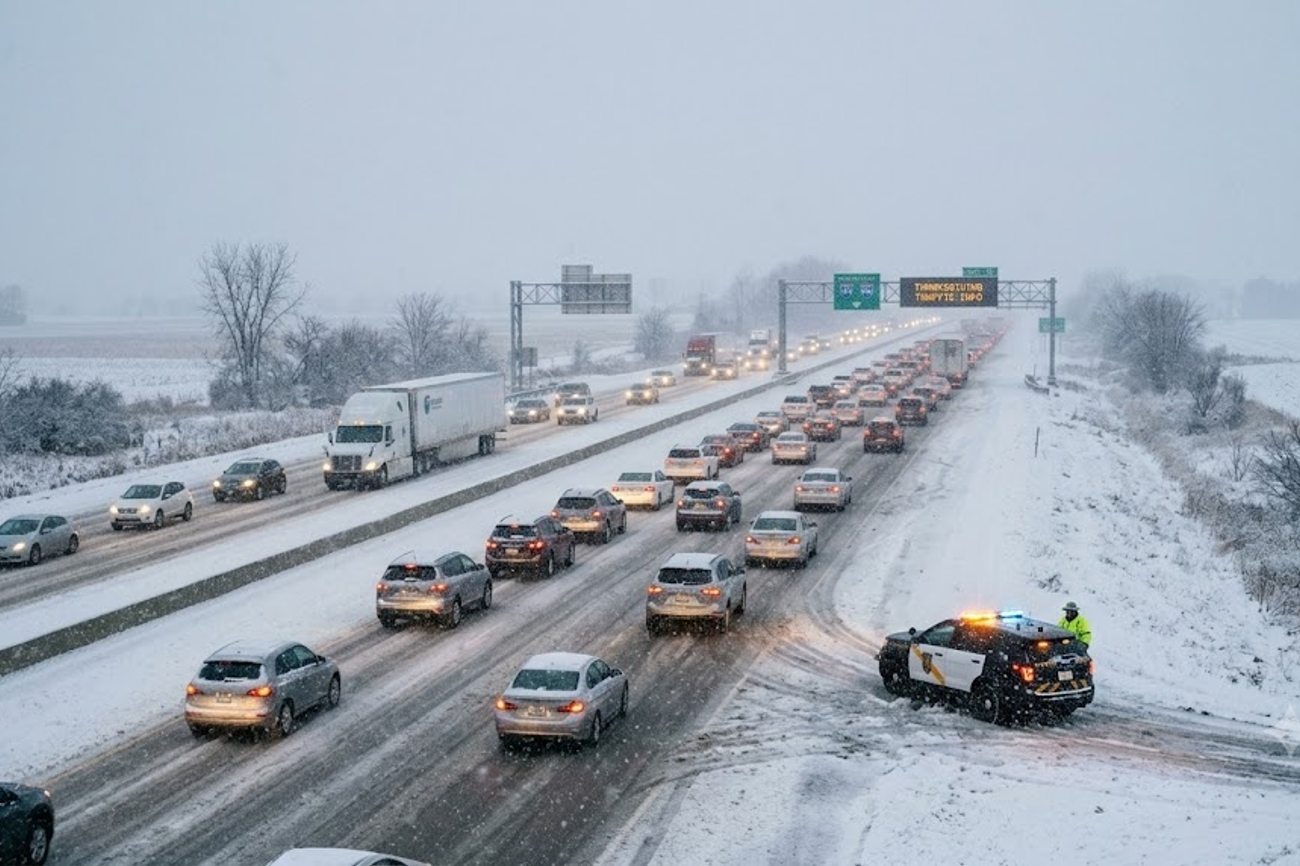
Image generated by AI
[Washington, November 2026] — Millions of American travelers face potential transit complications as winter weather forecasts signal snow showers and freezing temperatures across the Midwest and Northern Plains during the 2026 Thanksgiving holiday window.
The weather system is expected to peak around November 26, the date of Thanksgiving, creating a volatile environment for one of the year's highest-volume travel periods. While the National Oceanic and Atmospheric Administration (NOAA) and other meteorological services typically monitor these late-autumn shifts, current projections indicate a sharp divide between the freezing conditions of the North and the mild patterns anticipated in the Southeast.
The Midwest Winter Trigger
The primary driver of travel anxiety is a cold front settling over the American Midwest. This region is currently flagged as the highest-risk zone for transportation delays. Forecasts indicate that a combination of dropping temperatures and scattered snow showers will create slippery road conditions and potential hazards for aviation hubs.
The instability is not expected to manifest as a single, catastrophic storm system but rather as a series of localized events. These brief but intense bursts of snow and flurries can cause "stop-and-go" disruptions. For aviation, this means ground crews at major airports may require more time for de-icing operations, while road travelers face reduced visibility and increased braking distances.
Regional Impact Breakdown
The following table outlines the specific weather expectations and affected states for the 2026 Thanksgiving window:
| Region | Expected Conditions | Affected States | Risk Level |
|---|---|---|---|
| Midwest | Scattered snow, flurries, freezing temps | IN, OH, MI, KY, IL, WI | High |
| Northern Plains/Rockies | Light snow, high-elevation freezes | MO, ND, SD, IA, NE, KS, CO, WY, MT | Moderate |
| Northeast/New England | Cool, fair, localized flurries | ME $\rightarrow$ DC (incl. higher elevations) | Low-Moderate |
| Interior West | Mixed rain, mountain snow | CA, NV, UT, AZ | Moderate |
| Pacific Northwest | Heavy rain, wet road surfaces | WA, OR | Moderate |
| South/Southeast | Mild, dry, pleasant | TX, OK, NM, LA, AR, FL, NC, SC, VA, WV, AL, GA, MS | Low |
What This Means for Travelers
For the average passenger, these forecasts translate into a need for extreme flexibility. Corporate announcements regarding "seasonal weather" often mask the practical reality of airport gridlock and highway delays.
For Air Travelers: Expect potential delays at hubs in the Midwest. While widespread cancellations are not currently predicted, the "ripple effect" of a few snow-delayed flights in Illinois or Michigan can cause scheduling conflicts for connecting flights across the country. Passengers should monitor their flight status via the Federal Aviation Administration (FAA) or their specific airline's mobile app.
For Road Travelers: Drivers crossing the Rockies or the Northern Plains must prepare for "micro-climates." A journey that begins in a dry valley can quickly turn into a hazardous trek through snow-covered mountain passes in Colorado or Wyoming. Ensuring vehicles are equipped for winter conditions is no longer optional for these routes.
For Rail and Bus Passengers: Slippery tracks and wet roads in the Pacific Northwest and Midwest will likely lead to slower transit times. Travelers should budget an additional 2-4 hours of buffer time for long-haul journeys.
The Southern Sanctuary
In stark contrast to the north, the Southeast is positioning itself as the most stable region for holiday movement. Florida, the Carolinas, Georgia, and Mississippi are expected to remain dry and mild. While inland areas of Texas and Oklahoma may see cooler temperatures, the region is largely exempt from the winter storm threats facing the Midwest. This disparity may lead to increased congestion in southern hubs as travelers seek to avoid the northern freeze.
Post-Holiday Outlook
As the Thanksgiving window closes, the transition into December typically accelerates the onset of winter. The light snow currently predicted for the Rockies and Northern Plains is often a precursor to more severe December systems. Travelers returning home after the holiday should remain vigilant, as the weather patterns that cause "flurries" in late November often evolve into heavy snowfall by the first week of December.
FAQ: Thanksgiving Travel 2026
Which states are most likely to see flight delays? Indiana, Ohio, Michigan, Kentucky, Illinois, and Wisconsin are the primary areas of concern due to expected snow showers and freezing temperatures that can impact airport ground operations.
Is the Northeast entirely blocked by snow? No. Most of the Northeast and New England will see fair weather. Only northern regions and higher-elevation mountain communities are expected to experience flurries.
What is the weather outlook for the West Coast? The Pacific Northwest expects typical late-fall rain, which will create wet roads. The Interior West (CA, NV, UT, AZ) will see a mix of rain and mountain snow.
Are there any regions with favorable weather? Yes. The Southeast—specifically Florida, the Carolinas, Virginia, Alabama, Georgia, and Mississippi—is expected to be mild, dry, and pleasant.
Pack the heavy coats for the Midwest, but keep the umbrellas ready for the coast.
#MidwestSnow2026 #ThanksgivingTravel2026 #FAA #USWeatherAlert #RockiesTransit #SoutheastTravel2026
Related Travel Guides
- UAE Overtakes Germany as Oman Records 12 Point 6 Percent Tourism Surge Driven by 491503 Gulf Arrivals in H1 2026
- Sweden Germany and UK Fuel 12 Percent Foreign Overnight Stay Surge in Finland Attracting 7 Point 2 Million European Travelers
- Sarawak Emerges as Asia Music Tourism Hub as Borderland Festival Draws 9,000 Visitors in One Night
Disclaimer
This article is for informational and educational purposes only. It does not constitute legal, financial, or professional advice. While we strive to provide accurate and up-to-date information, travel policies, regulations, and conditions change rapidly. Always verify information with official sources before making travel decisions. Nomad Lawyer makes no representations about the accuracy, reliability, completeness, or suitability of the information provided. Readers should consult qualified professionals for advice specific to their circumstances. The views expressed in this article are those of the author and do not necessarily reflect the views of Nomad Lawyer.
Kunal K Choudhary
Co-Founder & Contributor
A passionate traveller and tech enthusiast. Kunal contributes to the vision and growth of Nomad Lawyer, bringing fresh perspectives and driving the community forward.
Learn more about our team →