
Bolivia Salar de Uyuni Travel Guide 2026: Salt Flats Luxury and Andean Heritage
Explore Bolivia's Salar de Uyuni across 10,582 square kilometers of pristine Altiplano salt crust, pairing boutique salt hotels and Andean gastronomy with remote 4x4 safaris.

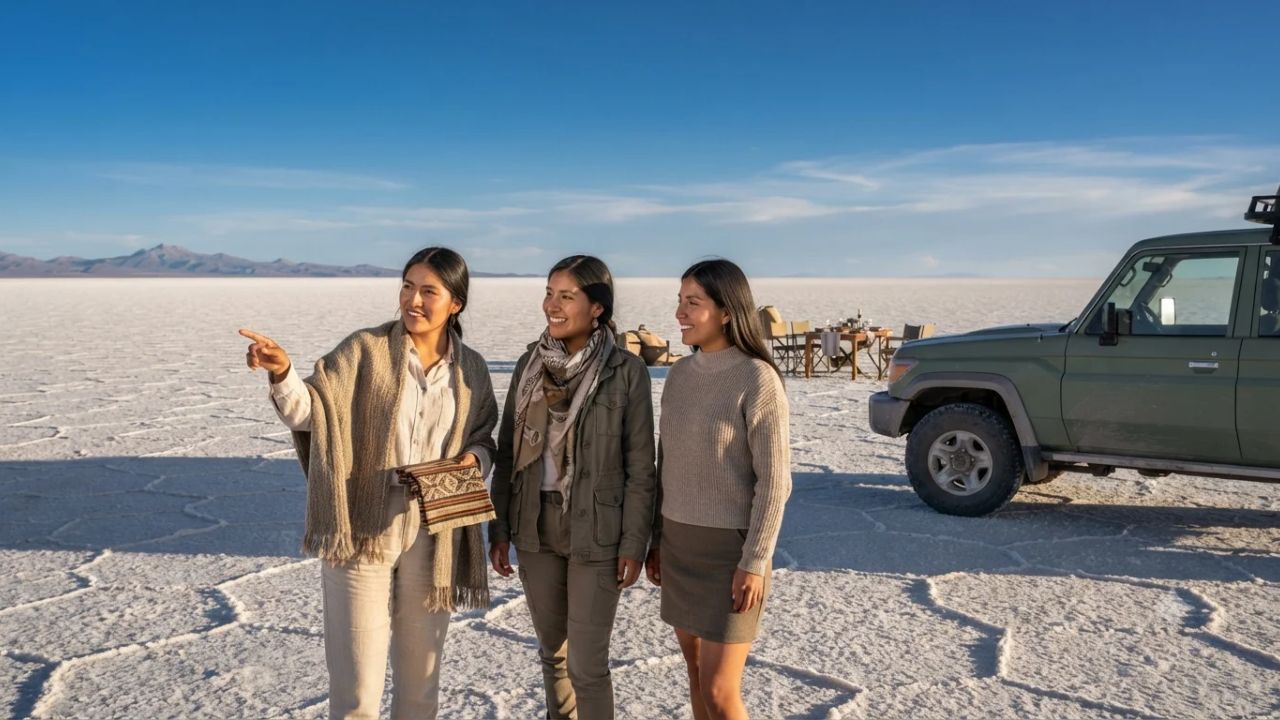
Spanning an immense 10,582 square kilometers at an elevation of 3,663 meters above sea level, Bolivia's Salar de Uyuni contains an estimated ten billion tons of mineral salts formed across prehistoric lakebeds. As the southern dry season peaks between late September and October, the Altiplano transitions from the ephemeral water reflections of summer into a vast, blinding white expanse of interlocking polygonal salt crusts. Navigated via private four-wheel-drive expeditions, this high-altitude desert reveals a sophisticated wilderness playground where boutique hotels constructed entirely from salt blocks pair with ancient Quechua and Aymara traditions, roasted royal quinoa, and artisanal Singani spirits.
The Dry Season Transformation Across the Bolivian Altiplano
The dry season, running from late April through early December according to regional expedition guides from Bolivia Travel, presents the premier window for overland traverse. While the rainy season creates shallow, reflective sky mirrors, the dry autumn and winter months bake the salt flats into dense crystalline tiles. This structural stability enables four-wheel-drive vehicles to cross deep into the interior, granting unfettered access to remote islands and volcanic horizons that remain unreachable during flooded periods.
Between September 28 and October 2, crisp atmospheric conditions generate infinite horizons under clear cobalt skies. The stark geometry of the salt crust creates a surreal perspective, drawing photographers, astronomers, and adventure travelers seeking absolute isolation away from crowded tourist circuits.
Salt Architecture, Colchani Traditions, and Island Sanctuaries
The gateway settlement of Colchani, located on the eastern rim of the salt flat, offers a compelling human dimension to this mineral desert. Local families maintain centuries-old artisanal salt harvesting traditions, carving blocks and drying salt mounds alongside vibrant markets selling hand-loomed alpaca textiles.
Further into the salt desert lies Isla Incahuasi, an ancient coral reef island rising above the white plain. Dominated by giant Trichocereus cacti growing at barely one centimeter per year—with several specimens exceeding nine meters in height and a thousand years in age—the island provides an elevated 360-degree vantage point across the crystalline basin.
Along the shores, architects have pioneered low-impact luxury through salt hotels, where walls, bed frames, dining tables, and artistic sculptures are hand-carved from solid salt blocks extracted directly from the flats, equipped with radiant underfloor heating to counter sub-zero nighttime temperatures.
Altiplano Expedition Highlights and Route Matrix
| Expedition Landmark | Elevation (Meters) | Primary Landscape Feature | Optimal Visiting Window | Unique Travel Experience |
|---|---|---|---|---|
| Salar de Uyuni Salt Crust | 3,663 m | 10,582 km² hexagonal salt polygon plain | Sunrise & late afternoon | Perspective photography, private dining, stargazing |
| Isla Incahuasi | ~3,700 m | Fossilized coral island with millennial giant cacti | 09:00 – 12:00 | 360-degree panoramic trekking across salt desert |
| Colchani Gateway Village | 3,660 m | Artisanal salt processing & indigenous crafts | Midday stops | Salt extraction workshops, boutique salt lodges |
| Train Cemetery (Cementerio de Trenes) | 3,670 m | 19th-century British steam locomotives | Early morning | Industrial heritage photography outside Uyuni town |
| Eduardo Avaroa Reserve | 4,200 – 4,800 m | Laguna Colorada, geothermal geysers, flamingos | Multi-day 4x4 circuit | High-altitude wildlife safaris and thermal hot springs |
Visitor Insider Tips for an Uyuni Expedition
Operating at high altitude requires rigorous physical preparation and localized logistics.
- Acclimatization Strategy in La Paz: Do not fly directly from sea level into Joya Andina Airport (UYU) in Uyuni. Spend at least two days acclimating in La Paz (3,640 meters) or Sucre (2,810 meters) before landing in Uyuni, and drink local muña or coca tea to alleviate mild altitude symptoms.
- UV and Thermal Protection: The blinding white salt crust reflects up to 90% of intense high-altitude solar radiation. Pack Category 4 polarized sunglasses, broad-spectrum SPF 50+ mineral sunscreen, and windproof thermal parkas for nighttime temperatures that routinely plunge below minus 5 degrees Celsius.
- Private 4x4 Charters vs. Group Convoys: Book a private Toyota Land Cruiser equipped with a satellite communicator, oxygen tanks, and a licensed local guide through certified operators rather than budget group convoys, ensuring flexible pacing and personalized photo stops.
- Cash and Fuel Logistics: Automated teller machines in Uyuni town are frequently out of service. Carry sufficient cash in Bolivian Bolivianos (BOB) to cover national park admission fees, community handicraft purchases, and driver tips.
Cultural and Environmental Context: Indigenous Heritage and Ecosystem Balance
The Salar de Uyuni sits at the center of critical ecological and geopolitical systems. Beyond its tourism allure, the underlying brine holds the world’s largest reserves of lithium, essential for global energy transition technologies. Managing this resource requires strict adherence to environmental carrying capacities and direct economic collaboration with indigenous Quechua and Aymara communities.
Further south within the Eduardo Avaroa Andean Fauna National Reserve, protected high-altitude saline lakes provide vital breeding sanctuaries for three distinct flamingo species: the James's, Andean, and Chilean flamingos. Responsible expedition operators adhere to designated vehicle tracks across the salt flats and desert corridors to prevent soil compaction and protect fragile Altiplano wetlands for future generations.
FAQ: Visiting Salar de Uyuni 2026
What is the difference between the dry season and rainy season in Uyuni?
The dry season (May to November) features hard polygonal salt crusts ideal for 4x4 driving and exploring Isla Incahuasi, while the rainy season (December to April) creates a shallow reflective water mirror.
How do I get to Salar de Uyuni from abroad?
Fly to El Alto International Airport in La Paz (LPB), then take a 45-minute domestic flight to Joya Andina Airport in Uyuni (UYU) or travel overland via scenic train and coach services.
What should I eat to experience authentic Altiplano cuisine?
Sample roasted royal quinoa harvested from Potosí, seared llama tenderloin with Andean potatoes, and craft cocktails mixed with Bolivian Singani.
Is staying in a salt hotel comfortable?
Yes. Modern luxury salt hotels in Colchani offer private heated rooms, plush bedding, fine dining restaurants, and panoramic floor-to-ceiling windows overlooking the salt flats.
Watching the sun sink beneath the infinite white horizon of Salar de Uyuni as the evening sky erupts in violet and gold is one of South America's most humbling natural spectacles.
Related Travel Guides
Disclaimer
This article is for informational and educational purposes only. It does not constitute legal, financial, or professional advice. While we strive to provide accurate and up-to-date information, travel policies, regulations, and conditions change rapidly. Always verify information with official sources before making travel decisions. Nomad Lawyer makes no representations about the accuracy, reliability, completeness, or suitability of the information provided. Readers should consult qualified professionals for advice specific to their circumstances. The views expressed in this article are those of the author and do not necessarily reflect the views of Nomad Lawyer.
Naina Thakur
Contributor & Travel Specialist
Travel enthusiast and legal writer covering visa regulations, responsible tourism, and cultural journeys across global destinations.
Learn more about our team →