
Bolivia Altiplano Night Excursions: Dark Sky Tourism
Dark sky sanctuary tourism transforms night excursions across Bolivia's Altiplano, guided by new environmental rules and indigenous heritage in 2026.

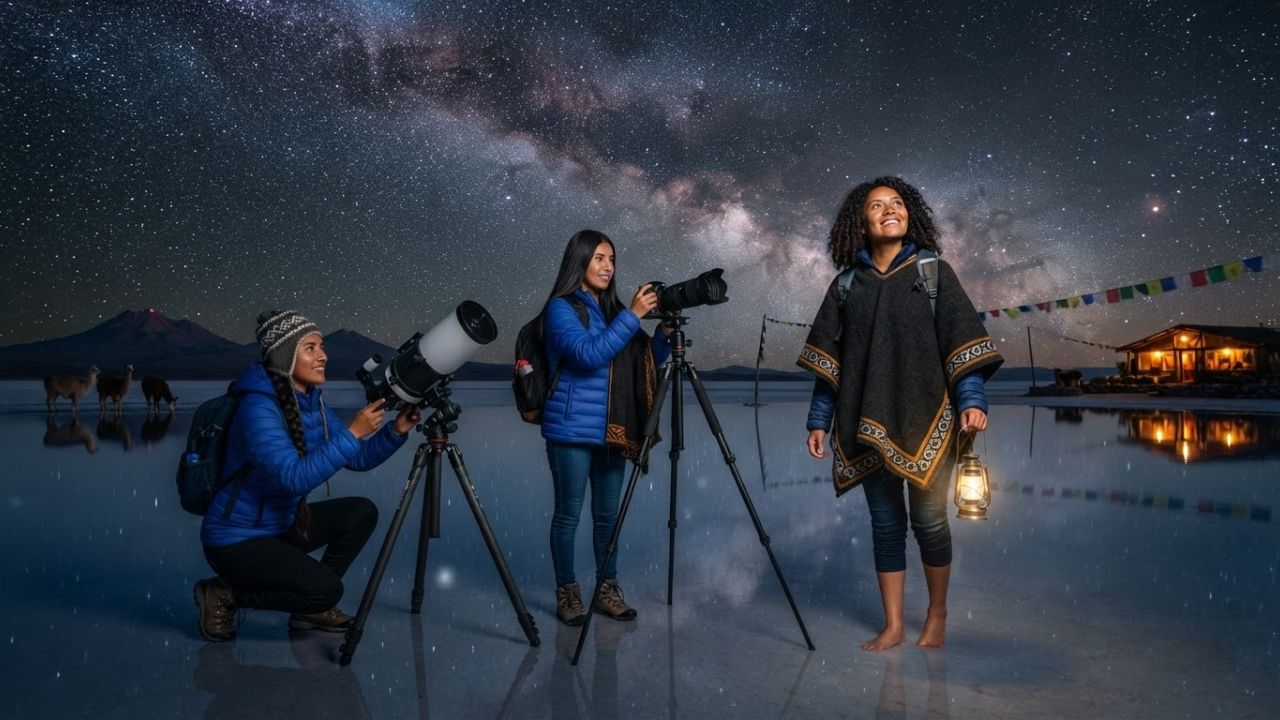
Image generated by AI
Bolivia Altiplano Night Excursions: Dark Sky Tourism
SEO Title: Bolivia Altiplano Night Excursions: Dark Sky Tourism 2026 Meta Description: Explore Bolivia's dark sky sanctuary tourism. Learn about Salar de Uyuni night tours, Tarija observatory research, and ancient Andean cosmology. Slug: bolivia-dark-sky-sanctuary-tourism-altiplano-2026 Standfirst: Bolivia's Altiplano is emerging as a premier global dark-sky sanctuary, with the government introducing specialized safety and environmental regulations for overnight stargazing excursions.
Article
[La Paz, August 7, 2026] — Astrotourism and night excursions are reshaping the tourism sector across the Bolivian Altiplano, guided by new state-level quality standards and conservation frameworks. Supervised by the Viceministerio de Turismo under the Ministerio de Desarrollo Productivo y Economía Plural, the government is establishing protected microclimates in national parks to support dark-sky photography and cultural astronomy.
At the center of this initiative is the Salar de Uyuni in Potosí, the world's largest salt flat. Located at 3,656 meters above sea level, Uyuni combines hyper-flat terrain with Bortle Class 1 dark skies. The regional regulatory body, PDUL (Programa de Dinamización Turística del Destino Salar de Uyuni y Lagunas de Colores), has introduced mandatory satellite tracking systems, speed limits for night-driving transport, and zero-trace waste limits to prevent light and chemical pollution across the salt crust.
These high-altitude night excursions coincide with peak dry season visitor volumes detailed in Peru and Bolivia Hit Peak Tourism Season in July 2026: Inca Trail, Machu Picchu, and Lake Titicaca Reach Maximum Visitor Capacity, and hospitality shifts analyzed in Bolivia Hospitality Revival Strained by 20.40% Inflation as Domestic Tourism Offsets Declines in Southern Cultural Hubs.
Bolivian Dark Sky Tourism Regional Sectors
The following table summarizes the travel sectors, scientific assets, and local conservation regulations established for the Altiplano dark sky framework.
| Night Tourism Cluster | Primary Destination & Elevation | Core Celestial Asset | Mandatory Safety/Transit Rule | Regional Vetting Board |
|---|---|---|---|---|
| Salar de Uyuni (Potosí) | Salt flat (3,656 m elevation) | Bortle Class 1 deep space views | GPS tracking & night speed limits | PDUL Regional Authority |
| Santa Ana (Tarija) | Santa Ana Valley | Observatorio Astronómico Nacional | Official timekeeper coordination | Tarija Astronomy Board |
| La Paz District | High-altitude urban gateway | Planetario Max Schreier | Authorized transport shuttles | La Paz Municipal Tourism |
| Incallacta (Cochabamba) | Archeological park | Solstice & equinox alignments | Restricted foot paths at night | Cochabamba Heritage Agency |
| El Palmar (Chuquisaca) | Protected ecosystem forest | Ecotourism & constellation trails | Certified local community guides | Chuquisaca Conservation Dept |
Technical details and rules verified in coordination with bulletins from Viceministerio de Turismo and Observatorio Astronómico Nacional.
Traveler Logistics Guide
From a ground-level perspective, the best way to navigate this is to book night excursions with certified tour operators who utilize double-cab 4×4 vehicles equipped with oxygen canisters and thermal blankets to handle Altiplano temperatures, which can drop below freezing.
- Wet vs. Dry Season Vetting: Visit during the wet season (December to March) to experience the famous salt flat mirror reflections. Choose the dry season (May to October) for optimal deep-space astrophotography. Seasonal capacities are detailed in Peru and Bolivia Hit Peak Tourism Season in July 2026: Inca Trail, Machu Picchu, and Lake Titicaca Reach Maximum Visitor Capacity.
- Scientific Gateway Visits: Coordinate a stop at the Observatorio Astronómico Nacional in Santa Ana, Tarija, or the Planetario Max Schreier in La Paz to learn about Andean constellations before traveling to remote fields.
- Accommodation Vetting: Confirm that your salt hotel has functional heating and solar generators. Energy and inflation factors are reported in Bolivia Hospitality Revival Strained by 20.40% Inflation as Domestic Tourism Offsets Declines in Southern Cultural Hubs.
- Altitude Acclimatization: Spend at least 48 hours in La Paz (3,640 meters) or Sucre (2,810 meters) to acclimatize before attempting overnight stargazing excursions at higher Altiplano elevations.
Infrastructure Impact Assessment
By implementing structured transit controls and safety standards, Bolivian authorities protect the Altiplano's fragile salt desert from off-road damage and soil compaction. The introduction of zero-trace waste requirements limits chemical residues, protecting vulnerable endemic flora and fauna. Reinvesting night tour revenues into local guide certification programs, satellite rescue beacons, and solar-powered wilderness shelters ensures that Bolivia's high-altitude tourism sector grows sustainably while preserving pristine stargazing scenery for future generations.
Related Travel Guides
The 10 Best Things to Know About Salar de Uyuni Astrotourism, According To Reddit
Disclaimer
This article is for informational and educational purposes only. It does not constitute legal, financial, or professional advice. While we strive to provide accurate and up-to-date information, travel policies, regulations, and conditions change rapidly. Always verify information with official sources before making travel decisions. Nomad Lawyer makes no representations about the accuracy, reliability, completeness, or suitability of the information provided. Readers should consult qualified professionals for advice specific to their circumstances. The views expressed in this article are those of the author and do not necessarily reflect the views of Nomad Lawyer.
Kunal K Choudhary
Co-Founder & Contributor
A passionate traveller and tech enthusiast. Kunal contributes to the vision and growth of Nomad Lawyer, bringing fresh perspectives and driving the community forward.
Learn more about our team →