
Bolivia Hospitality Revival Strained by 20.40% Inflation as Domestic Tourism Offsets Declines in Southern Cultural Hubs
Bolivia's receptive travel sector reached a massive $us 502 million in foreign visitor spend by August 2025, even as local hoteliers faced a staggering 20.40% cumulative inflation rate.

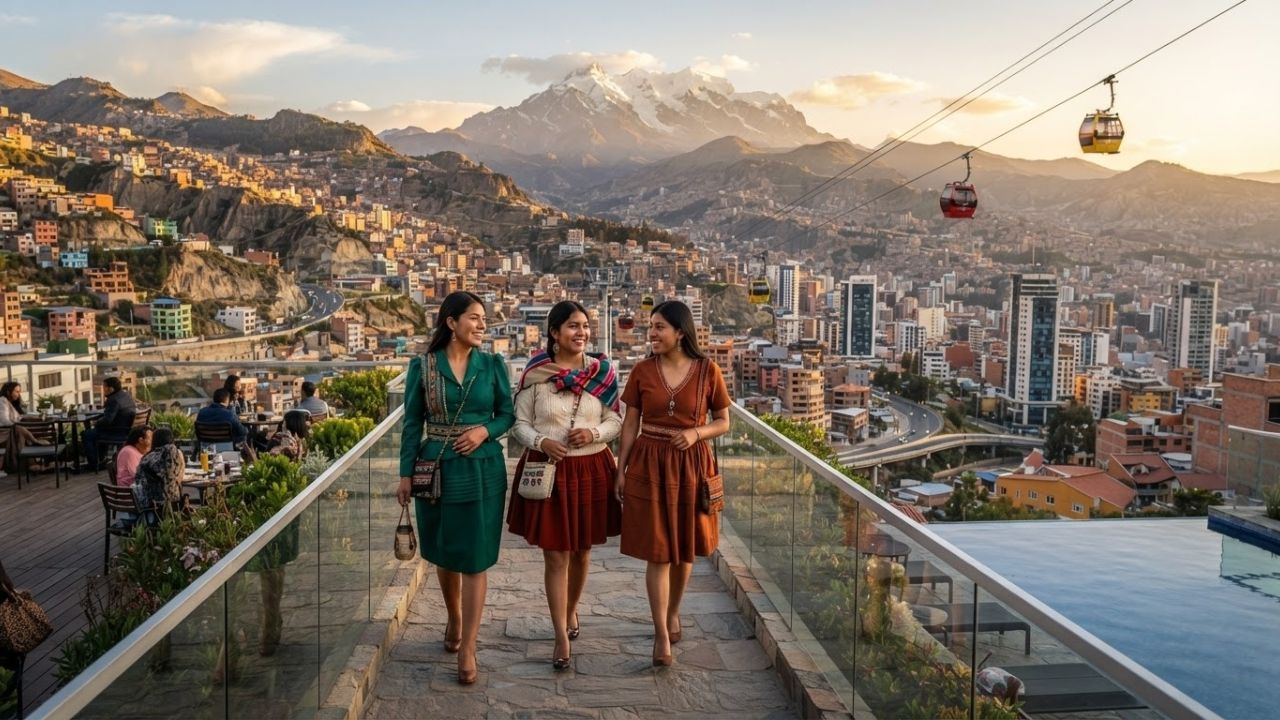
Image generated by AI
Bolivia's receptive travel sector reached a massive $us 502 million in foreign visitor spend by August 2025, even as local hoteliers faced a staggering 20.40% cumulative inflation rate. While international bookings concentrate heavily in La Paz and Santa Cruz, local travelers are stepping in to cushion declining foreign stays in historic colonial hubs.
The high-altitude valleys of the Andes carry mist into the streets of La Paz, signaling a season of economic challenges for South America's most rugged destination. While international wanderlust remains alive, hotel operators are navigating a complex financial environment. The famous warmth of Bolivian hospitality is currently tested by a 20.40% national inflation rate, forcing local guest houses and luxury accommodations to adjust their pricing. As rising operational costs affect historic commercial corridors, the resilience of the local travel market has become the industry's primary support.
For the visitor, the real impact is a shifting travel economy where domestic holidaymakers have stepped in to sustain regional communities. Rather than relying on international travelers, the hospitality sector is finding stability through regional journeys. This shifting dynamic is visible across the country's major cities, where rising food costs and overheads are squeezing lodging margins.
The Local Trend Revealed
In 2025, Bolivia experienced an expansion in foreign visitor expenditure, which reached $us 502 million by August. The Viceministerio de Turismo reported a 9% year-on-year increase in receptive travel receipts, demonstrating strong interest from international adventurers. However, this growth has occurred alongside significant domestic movement. Over 3.6 million internal trips were generated during the year, providing essential liquidity for communities across the high altiplano and tropical lowlands.
To understand the true state of the accommodation sector, the Instituto Nacional de Estadística (INE) collects daily occupancy data via Formulario 6 registries across the nine departmental capitals and El Alto. While these official records omit direct RevPAR and ADR figures, proxy metrics reveal the economic pressure. Foreign lodging expenditure climbed to 20.4% of total visitor spend in 2024, showing that lodging demand has recovered to approximately 80% of pre-pandemic (2019) volumes.
However, international arrivals are heavily concentrated. Approximately 786,134 travelers entered by land, while 359,031 foreign arrivals arrived by air, landing primarily at Viru Viru International Airport in Santa Cruz and El Alto International Airport in La Paz. Foreign entries into registered urban hotels reached 352,882 persons, but nearly 78% of these stays occurred in just two departments. La Paz and El Alto captured 33.8% of all foreign hotel guests, registering a 9.9% year-on-year growth. Meanwhile, Santa Cruz welcomed 219,182 domestic arrivals—a 14.4% increase over 2024.
Cultural & Environmental Value (Information Gain & Experience)
While the major commercial centers show steady growth, Bolivia's southern cultural hubs are experiencing a different trend. Stays in the historic colonial cities of Sucre and Potosí have fallen significantly. Foreign lodging entries in Sucre plummeted by 18.0% to 29,342 travelers, while Potosí experienced a 22.8% drop down to 13,874 foreign guests. This drop indicates that international itineraries are increasingly compressed, with visitors choosing rapid transit to the Salar de Uyuni rather than staying in historic colonial zones.
For the visitor, the real impact is the opportunity to support remote indigenous communities directly. The total travel and tourism sector generated Bs 24,469 million ($us 3,512 million) in 2025, contributing 4.9% to the national Gross Domestic Product (GDP). Spending time in southern cities directly supports family-run lodges and traditional artisan markets. Domestic travelers have helped cushion the decline, with Sucre hosting 150,807 national hotel guests (a 21.2% increase) and Potosí registering 46,204 domestic stays (a 0.6% increase over 2024's 45,943).
| Departmental Capital / El Alto | 2024 Foreign Stays | 2025 Foreign Stays | Foreign YoY Change | 2024 Domestic Stays | 2025 Domestic Stays | Domestic YoY Change |
|---|---|---|---|---|---|---|
| La Paz | 108,492 | 119,200 | +9.9% | 364,961 | 361,378 | -1.0% |
| Santa Cruz | 122,133 | 120,908 | -1.0% | 191,549 | 219,182 | +14.4% |
| El Alto | 35,250 | 37,269 | +5.7% | 127,446 | 153,096 | +20.1% |
| Sucre | 35,768 | 29,342 | -18.0% | 124,451 | 150,807 | +21.2% |
| Potosí | 17,976 | 13,874 | -22.8% | 45,943 | 46,204 | +0.6% |
| Cochabamba | 13,180 | 10,318 | -21.7% | 111,017 | 101,881 | -8.2% |
| Oruro | 9,236 | 10,014 | +8.4% | 141,126 | 149,678 | +6.1% |
| Tarija | 8,542 | 9,137 | +7.0% | 78,822 | 55,306 | -29.8% |
| Trinidad | 1,397 | 1,409 | +0.9% | 64,540 | 62,462 | -3.2% |
| Cobija | 1,428 | 1,411 | -1.2% | 27,279 | 27,973 | +2.5% |
Visitor Insider Tips
To help you navigate Bolivia's complex high-altitude environment and changing travel economy, use these local tips:
- Local Dining Specialties: Try salteñas (savory baked empanadas filled with beef or chicken and sweet gravy) in the morning, which are a staple of La Paz street food. For a traditional lunch, order sopa de maní (a rich peanut-based soup garnished with crispy fries).
- Off-Peak Visit Windows: Travel during the transitional months of May or October to avoid the heavy summer crowds while enjoying clear skies across the altiplano. If you visit in May, note that cities like Cobija have historically experienced monthly inflation spikes as high as 4.44% during this month, so verify local pricing in advance.
- Cultural Etiquette: When visiting markets or remote villages, always ask for permission (permiso) before taking photos of local residents, especially indigenous women wearing traditional pollera skirts and bowler hats.
- High-Altitude Preparation: Give yourself at least 48 hours to adjust to the altitude in La Paz or El Alto before embarking on physical treks. Drink local mate de coca (coca leaf tea) to help soothe mild altitude sickness symptoms.
- Under-the-Radar Spots: Skip the crowded segments of the salt flats and visit the quiet pre-Inca ruins of Tiwanaku or the scenic wine valleys of Tarija. Foreign guest stays in Tarija rose by 7.0% to 9,137 in 2025, though domestic stays dropped by 29.8% to 55,306, making your visit to local boutique vineyards highly valuable for the regional economy.
Tourism Outlook
Bolivia concluded 2025 with a cumulative annual inflation rate of 20.40%, representing the highest general price increase recorded in the country since 1988. The restaurants and hotels division tracked closely with this upward spiral, experiencing an approximate 19.8% annual price surge driven by escalating costs for imported amenities, energy, and food supplies. Despite these challenges, top-line revenues remain high, even as real operational profitability is squeezed.
Establishing official room occupancy and ADR tracking through Formulario 6 will be critical for enabling institutional hotel investment and precise revenue management. As international visitor numbers approach pre-pandemic highs of 1.4 million annual arrivals, expanding direct air connectivity into Santa Cruz and upgrading road infrastructure toward Uyuni will determine whether regional destinations can capture a larger share of tourist spend. By balancing price adjustments against service quality, Bolivia’s hospitality sector remains well-positioned to convert raw geographic allure into long-term economic prosperity.
Internal Connection
Disclaimer
This article is for informational and educational purposes only. It does not constitute legal, financial, or professional advice. While we strive to provide accurate and up-to-date information, travel policies, regulations, and conditions change rapidly. Always verify information with official sources before making travel decisions. Nomad Lawyer makes no representations about the accuracy, reliability, completeness, or suitability of the information provided. Readers should consult qualified professionals for advice specific to their circumstances. The views expressed in this article are those of the author and do not necessarily reflect the views of Nomad Lawyer.
Kunal K Choudhary
Co-Founder & Contributor
A passionate traveller and tech enthusiast. Kunal contributes to the vision and growth of Nomad Lawyer, bringing fresh perspectives and driving the community forward.
Learn more about our team →