
Boeing Delivers First Enhanced 787-9 to United Airlines, Unlocking Major Payload Capacity Gains for Global Carriers
Breaking airline news and aviation industry updates for 2026.

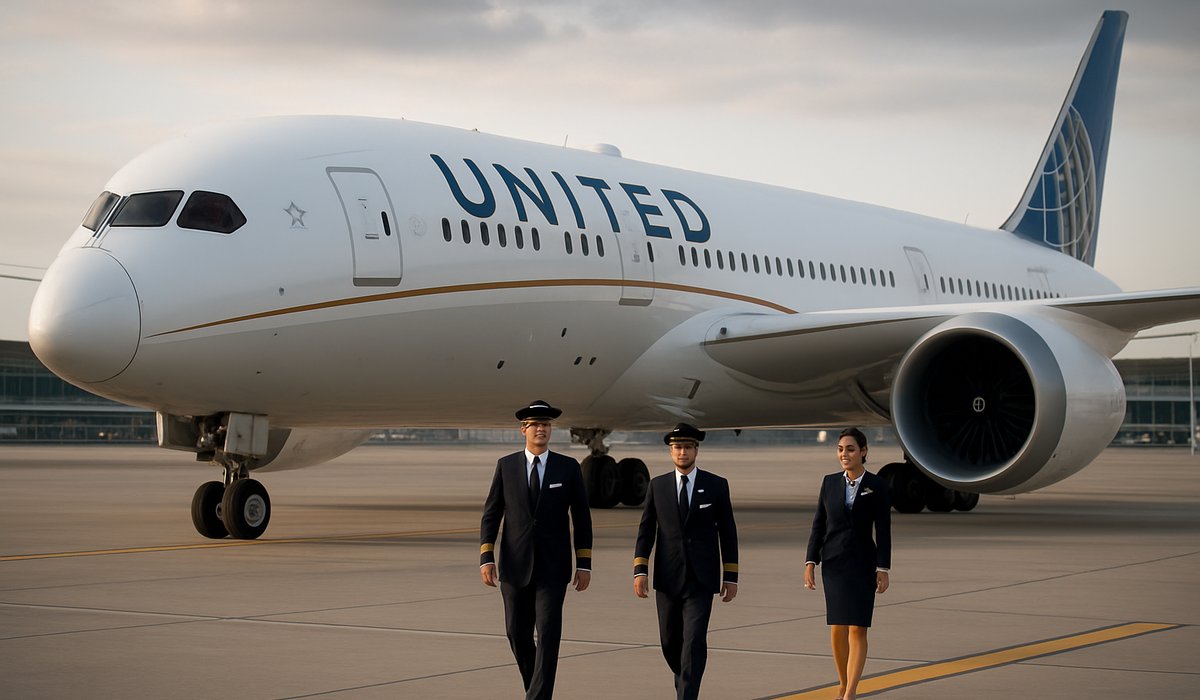
Image generated by AI
Boeing Delivers First Enhanced 787-9 to United Airlines, Unlocking Major Payload Capacity Gains for Global Carriers
Record-fast deployment of FAA-approved higher takeoff weight configuration signals new revenue opportunity for long-haul operators
Swift Regulatory Approval Translates Into Immediate Operational Advantage
Less than two months after the Federal Aviation Administration greenlit an enhanced maximum takeoff weight (iTOW) for Boeing's 787-9 and 787-10 Dreamliner models, United Airlines has become the first carrier to take delivery of an aircraft configured with the performance upgrade. The handover represents a critical transition point in commercial aviation—moving from regulatory milestone to tangible operational capability that airlines can monetize immediately.
What the iTOW Upgrade Means for Airlines and Passengers
The newly approved higher takeoff weight configuration allows 787-9 and 787-10 operators to carry additional payload on extended-range routes without sacrificing fuel capacity. This translates directly into competitive advantages: carriers can load extra cargo, accommodate more passengers on premium cabin routes, or extend range capabilities to untapped markets—all without aircraft modifications or fleet expansion.
For United Airlines specifically, the delivery signals confidence in leveraging this technical advancement across its growing Dreamliner fleet to improve route profitability and operational flexibility on transcontinental and international services.
Industry Context: Maximizing Returns on Next-Generation Aircraft
The 787 program has faced production challenges and delivery delays in recent years, making operational enhancements particularly valuable to manufacturers and operators seeking to maximize return on investment. By accelerating the deployment of iTOW-configured aircraft, Boeing demonstrates manufacturing capability while simultaneously addressing airline demands for improved payload economics.
Airlines operating long-haul routes have faced margin compression driven by volatile jet fuel prices and competition on premium international services. Enhanced payload capacity offers a direct method to increase revenue per flight without proportional cost increases—a critical advantage in today's challenging aviation economics.
Racing to Deploy Next-Generation Advantages
The compressed timeline between FAA approval and first delivery—under eight weeks—underscores Boeing's operational focus on rapidly translating regulatory clearances into fleet deployments. As additional carriers receive iTOW-configured 787s, the cumulative effect could reshape route planning and scheduling strategies across the global long-haul network.
This delivery marks an inflection point: the theoretical becomes practical, and competitive advantage becomes measurable reality for early adopters.
FAQ: 787-9 iTOW Delivery and Aviation Economics
What is maximum takeoff weight (iTOW) and why does it matter for airlines? Maximum takeoff weight determines how much total weight an aircraft can carry at departure. Higher allowances enable carriers to load more passengers, cargo, or fuel, directly improving route profitability and operational flexibility on long-haul flights.
How quickly can other airlines receive iTOW-configured 787s? Timeline depends on Boeing's production schedules and individual airline delivery positions. However, the rapid initial deployment suggests other carriers could receive upgrades within months rather than years.
Does the iTOW upgrade increase ticket prices for passengers? Not necessarily. Airlines may use additional capacity to improve margins rather than adjust pricing, though competitive routes may see modest price adjustments based on supply dynamics.
What does this mean for Boeing's competitive position against Airbus? Rapid deployment of performance enhancements strengthens Boeing's value proposition to operators, particularly on long-haul routes where payload efficiency directly impacts profitability—a key competitive metric versus the A350 and A330neo.
How does jet fuel pricing impact the value of this upgrade? Higher fuel costs amplify the economic benefit of payload optimization, making the iTOW upgrade increasingly valuable during periods of elevated aviation fuel expenses.
Related Travel Guides
- Europe's Aviation Crisis Meets Record Airline Profits: How Global Travel Is Reshaping in 2026
- Boeing 747 Remains Irreplaceable for US Presidential Transport Despite Decades of Service
- Singapore Airlines Claims Asia's Ultimate Airline Crown in 2026 to Overtake Cathay Pacific, Emirates, Thai Airways, Qatar Airways, Korean Air, and Malaysia Airlines: New Aviation Updates
Disclaimer
This article is for informational and educational purposes only. It does not constitute legal, financial, or professional advice. While we strive to provide accurate and up-to-date information, travel policies, regulations, and conditions change rapidly. Always verify information with official sources before making travel decisions. Nomad Lawyer makes no representations about the accuracy, reliability, completeness, or suitability of the information provided. Readers should consult qualified professionals for advice specific to their circumstances. The views expressed in this article are those of the author and do not necessarily reflect the views of Nomad Lawyer.
Kunal K Choudhary
Co-Founder & Contributor
A passionate traveller and tech enthusiast. Kunal contributes to the vision and growth of Nomad Lawyer, bringing fresh perspectives and driving the community forward.
Learn more about our team →