
Boeing 747 Remains Irreplaceable for US Presidential Transport Despite Decades of Service
Breaking airline news and aviation industry updates for 2026.

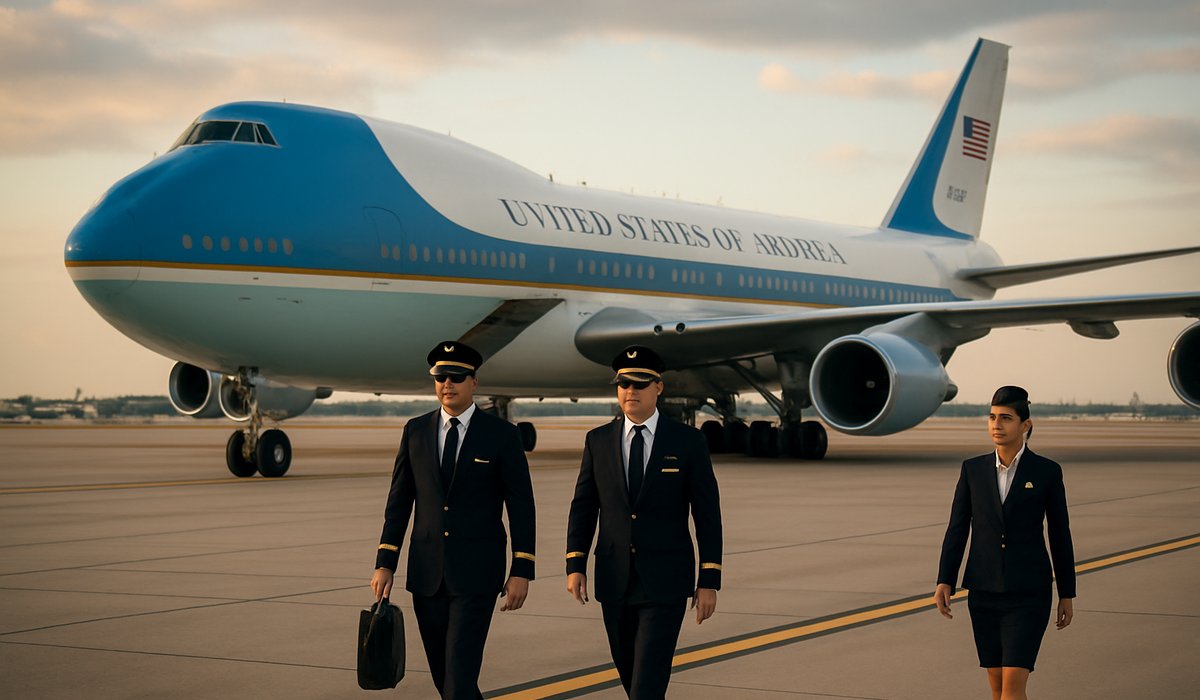
Image generated by AI
Boeing 747 Remains Irreplaceable for US Presidential Transport Despite Decades of Service
The iconic jumbo jet continues to outperform newer aircraft in specialized military and government roles, offering capabilities competitors cannot match
The Enduring Legacy of a Cold War Icon
More than five decades after its maiden flight, the Boeing 747 remains the backbone of America's most critical airborne operations, with the United States Air Force showing no signs of retiring its specially modified presidential transport fleet. The decision underscores a broader aviation paradox: newer is not always better, particularly when mission-critical requirements demand uncompromising performance and versatility.
The Air Force operates two specially configured VC-25 variants—essentially militarized 747s that serve as Air Force One—and continues to invest in their modernization rather than replacement. This commitment reflects the aircraft's singular capabilities in roles where newer competitors have systematically fallen short.
Why the 747 Outperforms Its Successor
The comparison with Airbus's A380 Superjumbo illustrates the competitive realities reshaping aviation. Launched nearly two decades after the 747's debut, the double-decker A380 arrived at precisely the wrong moment in aerospace history. By the early 2000s, the industry had already shifted decisively toward fuel-efficient twin-engine wide-body aircraft, making the A380's four-engine design economically obsolete for commercial carriers struggling with mounting jet fuel prices.
The 747, by contrast, proved far more adaptable. Its original design incorporated sufficient redundancy and flexibility to support applications far beyond passenger transport—a foresight that has extended its operational lifespan by generations.
Military and Space Applications Keep the 747 Flying
Beyond presidential duties, the 747 has become indispensable to specialized American defense and space programs. NASA relied on modified 747s as Space Shuttle Carrier Aircraft, piggyback-transporting the orbiter to launch facilities—a role no other aircraft could physically or aerodynamically accommodate.
The Air Force similarly maintains 747s for strategic airlift and specialized transport missions, where payload capacity, range, and structural integrity remain unmatched by modern alternatives. Replacing these aircraft would require developing entirely new platforms, a prospect made impractical by limited demand and astronomical development costs.
The Versatility Factor
Where the A380 specialized in high-capacity passenger transport, the 747 was engineered as a modular platform. Its cargo flexibility, exceptional climb performance, and enormous internal volume have allowed military and government agencies to configure it for missions ranging from presidential transport to airborne command centers to space shuttle carriers.
This adaptability has proven far more valuable to defense and government users than the A380's raw passenger capacity ever could be for commercial operators.
What Comes Next?
The Air Force has announced plans to eventually replace the VC-25 fleet, but replacement aircraft remain under development, with full deployment likely years away. Until then, the 747—a design concept from the 1960s—will continue commanding the skies on humanity's most consequential missions.
FAQ: Boeing 747 Presidential Transport and Aviation Capabilities
Why hasn't the US Air Force replaced Air Force One with a newer aircraft? Developing a replacement aircraft capable of matching the 747's range, payload capacity, and specialized mission requirements would require years of development and billions in investment. The Air Force is pursuing eventual replacement, but the 747 remains operationally superior for current needs.
What made the Airbus A380 less successful than the Boeing 747? The A380 arrived when the aviation industry had already shifted toward more fuel-efficient twin-engine aircraft. Four-engine wide-bodies became economically unviable as jet fuel prices rose, leaving limited commercial demand for the A380's massive capacity.
Can other aircraft perform the Space Shuttle Carrier role? No. The 747's unique structural design, payload capacity, and aerodynamic characteristics made it the only aircraft capable of safely transporting the Space Shuttle. Modern aircraft lack these specialized capabilities.
How old are the current Air Force One 747s? The two VC-25 aircraft entered service in 1990. Both continue to undergo extensive modernization to extend their operational lifespan while remaining airworthy.
Will the 747 ever be completely retired from US military service? Military and government agencies have found the 747 indispensable for specialized roles. While eventual retirement is likely as new platforms are developed, the aircraft will likely remain operational in niche military applications for years to come.
Related Travel Guides
Flight Delay Compensation Guide 2026
Understanding Airline Route Changes
Airport Security Process Updated (2026)
External Resources
Disclaimer
This article is for informational and educational purposes only. It does not constitute legal, financial, or professional advice. While we strive to provide accurate and up-to-date information, travel policies, regulations, and conditions change rapidly. Always verify information with official sources before making travel decisions. Nomad Lawyer makes no representations about the accuracy, reliability, completeness, or suitability of the information provided. Readers should consult qualified professionals for advice specific to their circumstances. The views expressed in this article are those of the author and do not necessarily reflect the views of Nomad Lawyer.
Raushan Kumar
Founder & Lead Developer
Full-stack developer with 11+ years of experience and a passionate traveller. Raushan built Nomad Lawyer from the ground up with a vision to create the best travel and law experience on the web.
Learn more about our team →