
Belgium Reveals Europe’s Most Beautiful Train Stations That Make Every Journey Feel Magical
Belgium Reveals Europe’s Most Beautiful Train Stations That Make Every Journey Feel Magical

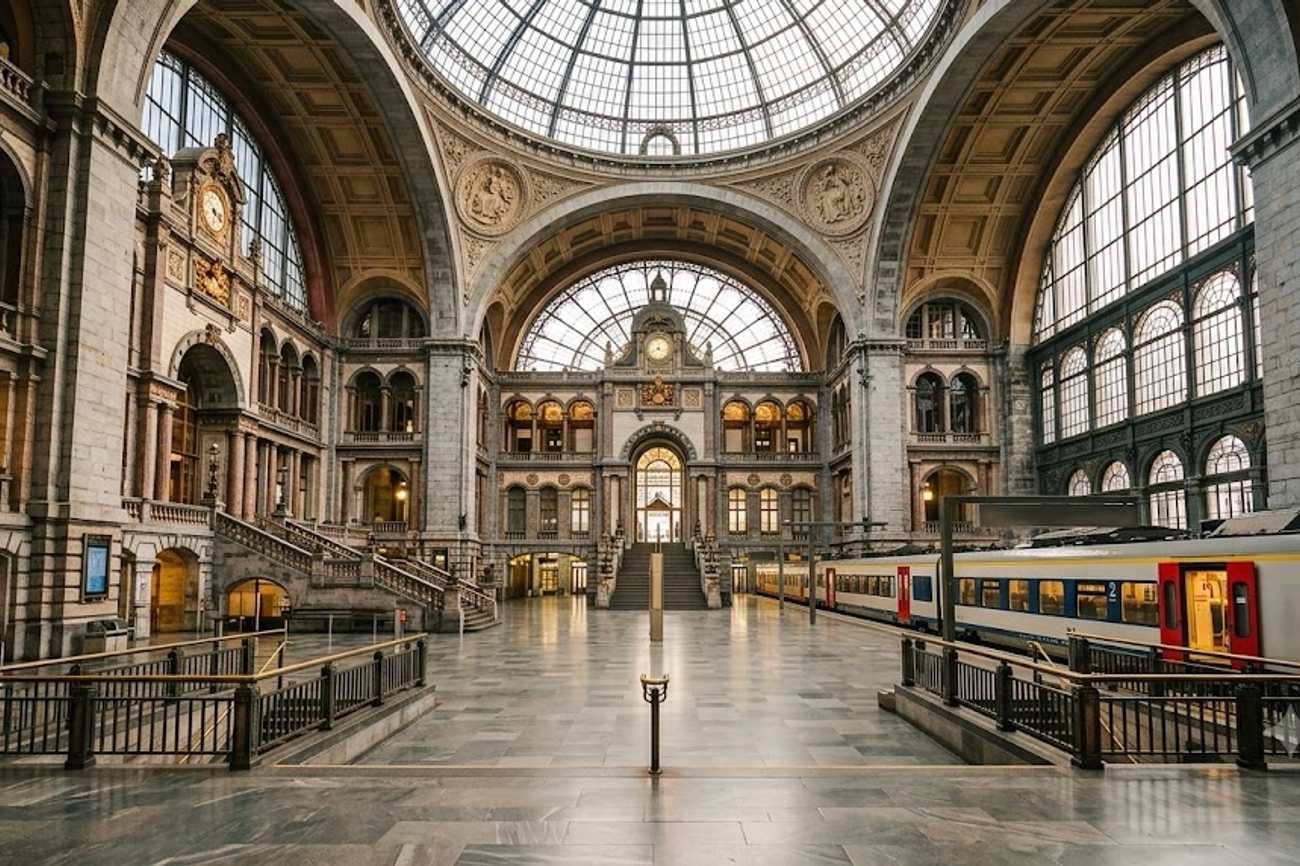
Image generated by AI
22,000 individual tiles define the interior of Porto's São Bento Station, transforming a transit hub into a permanent gallery of Portuguese heritage. This scale of artistic integration is not an anomaly but part of a broader European trend where railway infrastructure serves as a primary tool for national branding and cultural preservation. For the modern traveler, these stations are no longer mere conduits between cities; they are destination assets that dictate the pace of an itinerary.
The Architecture of National Identity
The evolution of the European railway station reflects a shift from purely industrial utility to the projection of state power and artistic ambition. In Belgium, the Antwerp-Central station exemplifies this "railway cathedral" philosophy. Its neo-Baroque waiting hall is a study in material excess, incorporating more than twenty distinct varieties of marble and stone beneath a monumental dome. This design was intended to signal Belgium's economic prowess during the industrial era, and today, it functions as a tourist draw independent of the rail traffic it manages. The facility remains accessible to the public from 04:00 until 00:30 daily, though internal services vary.
Similarly, Spain utilized the 1929 International Exposition as a catalyst for the Estació de França in Barcelona. By employing a curved architectural plan and blending iron, marble, and bronze, the city created a "ceremonial" arrival experience. The influence of Noucentisme—a Catalan cultural movement—is evident in the high concourse, which maximizes natural light to soften the industrial nature of the tracks. For those navigating the city, the station is strategically positioned near Parc de la Ciutadella and is accessible via the Barcelona Metro L4 line at Barceloneta.
Structural Engineering and Heritage Preservation
The intersection of heavy engineering and aesthetic grace is most visible in the United Kingdom and Italy. London St Pancras, opened in 1868, is defined by an iron-and-glass shed featuring twenty-five arched roof trusses, each weighing fifty-five tons. This structure represents a pivotal moment in Victorian engineering, where the scale of the roof was designed to evoke a sense of awe. However, there is a critical logistical distinction for travelers: the public sightseeing areas are separate from the international departure zones. Access to Eurostar platforms is strictly regulated, meaning the architectural experience is largely confined to the non-secure areas of the station.
In Italy, Milan Centrale demonstrates the viability of adaptive reuse. Following a comprehensive refurbishment program from 2005 to 2010, the station integrated its historic grandeur with modern pedestrian needs. The principal roof arch, boasting a 72-metre clear span, remains the centerpiece, but the transformation of the Galleria delle Carrozze—formerly a taxi and car area—into a covered public square shows how transit hubs are being reclaimed as urban living rooms.
| Station | Key Feature | Material/Metric | Opening Year |
|---|---|---|---|
| Antwerp-Central | Neo-Baroque Dome | 20+ types of stone | N/A |
| São Bento | Azulejo Tiles | 22,000 tiles | 1916 |
| St Pancras | Iron-and-Glass Shed | 55-ton roof trusses | 1868 |
| Milan Centrale | Roof Arch | 72-metre clear span | N/A |
| Limoges-Bénédictins | Art Deco Glass | Chestnut leaf motifs | 1929 |
Expert Analysis: The Commercialization of Transit Heritage
The data suggests a clear trend: European rail operators are pivoting toward "experience-based" transit. When a station like Limoges-Bénédictins offers a guided tour for €6 per adult (scheduled for 23 October 2026), the station ceases to be a utility and becomes a revenue-generating museum. This shift is a response to the rise of "slow travel," where the journey is marketed as part of the destination.
For travelers, the direct consequence is a bifurcation of the station experience. We see this in Prague Main Station, where the historic Art Nouveau entrance—reconstructed between 1901 and 1909—has been repurposed as the Fanta Café. While the station operates 24/7, the cultural asset (the café) operates on a commercial schedule from 08:00 to 20:00. This creates a "heritage bubble" within the transit hub; the traveler may have a ticket for a midnight train, but they cannot access the architectural highlight of the station at that hour.
Furthermore, the preservation of sites like Le Train Bleu at Paris Gare de Lyon illustrates the luxury tier of rail heritage. Opening in 1901 for the Universal Exhibition and receiving historic-monument protection in 1972, Le Train Bleu operates as a high-end restaurant. The pricing pressure here is significant; a general ticket to Gare de Lyon does not grant access to the interior of the restaurant. This creates a tiered experience where the "most beautiful" parts of the station are gated behind a dining reservation.
Belgium's rail network is anchored by the architectural grandeur of Antwerpen-Centraal, often cited as one of the world's most beautiful stations. Travelers can easily navigate these hubs and plan their itineraries using the official resources provided by Visit Flanders, the tourism board for the region.
From a regulatory standpoint, the designation of São Bento as a "Property of Public Interest" ensures that the 22,000 tiles are preserved, but it also limits how the station can be modernized. As we approach the 110th anniversary of São Bento on 5 October 2026, we will likely see an increase in heritage-focused tourism, which may clash with the operational needs of a working railway. The challenge for the International Union of Railways (UIC) and local operators is balancing the "museumification" of these spaces with the efficiency required for modern high-speed rail.
Key Takeaways
- Logistical Gating: High-value architectural sites, such as Le Train Bleu in Paris or the Eurostar platforms at St Pancras, require separate bookings or security clearances and are not open for general sightseeing.
- Temporal Limitations: Historic zones within stations (like Prague's Fanta Café) often follow commercial business hours (08:00–20:00) regardless of the train schedule.
- Heritage Milestones: 5 October 2026 marks the 110th anniversary of São Bento in Porto, likely triggering a surge in heritage-related travel to the region.
- Adaptive Infrastructure: Modern refurbishments, such as those at Milan Centrale (2005–2010), are turning former vehicle lanes into pedestrian-centric public squares.
- Paid Access: Some stations, specifically Limoges-Bénédictins, have transitioned to a paid tour model (€6) for access to specific passenger building areas.
FAQ: European Rail Heritage 2026
Can I visit the interior of Le Train Bleu without a train ticket? Yes, as it is a working restaurant and lounge bar. However, access to the most lavish rooms often requires a reservation. Check opening times in advance, as a general station visit does not guarantee entry to all areas.
Is the architecture of St Pancras accessible to all visitors? The Gothic exterior and the main iron-and-glass train shed are public. However, the international departure zones for Eurostar are restricted and require a valid travel document for entry.
What is the best way to see the tiles at São Bento Station? The tiled vestibule is the central attraction and is generally open to the public. Since it is a working station, arriving during off-peak hours allows for a better view of the 22,000 tiles.
Are there guided tours for railway architecture in France? Yes, Limoges-Bénédictins offers guided tours of its 1929 passenger building. Note that these tours typically exclude the clock tower and underground street.
The station is no longer the start of the trip; it is the first destination.
Tags: Antwerp-Central, São Bento Porto, St Pancras International, Gare de Lyon, Limoges-Bénédictins, European Rail Heritage 2026
Related Travel Guides
- Rail Europe Unveils Leadership Change After Omio Takeover as Company Targets Next Phase of Rail Travel Growth
- Kazakhstan Introduces Next-Generation Travel With Astana Light Rail Driverless System
- India Unveils Next-Level Travel Revolution With Second Sleeper Vande Bharat Connecting Delhi Varanasi Route
Disclaimer
This article is for informational and educational purposes only. It does not constitute legal, financial, or professional advice. While we strive to provide accurate and up-to-date information, travel policies, regulations, and conditions change rapidly. Always verify information with official sources before making travel decisions. Nomad Lawyer makes no representations about the accuracy, reliability, completeness, or suitability of the information provided. Readers should consult qualified professionals for advice specific to their circumstances. The views expressed in this article are those of the author and do not necessarily reflect the views of Nomad Lawyer.
Raushan Kumar
Founder & Lead Developer
Full-stack developer with 11+ years of experience and a passionate traveller. Raushan built Nomad Lawyer from the ground up with a vision to create the best travel and law experience on the web.
Learn more about our team →