Arctic Drilling Ban Shapes Future Tourism

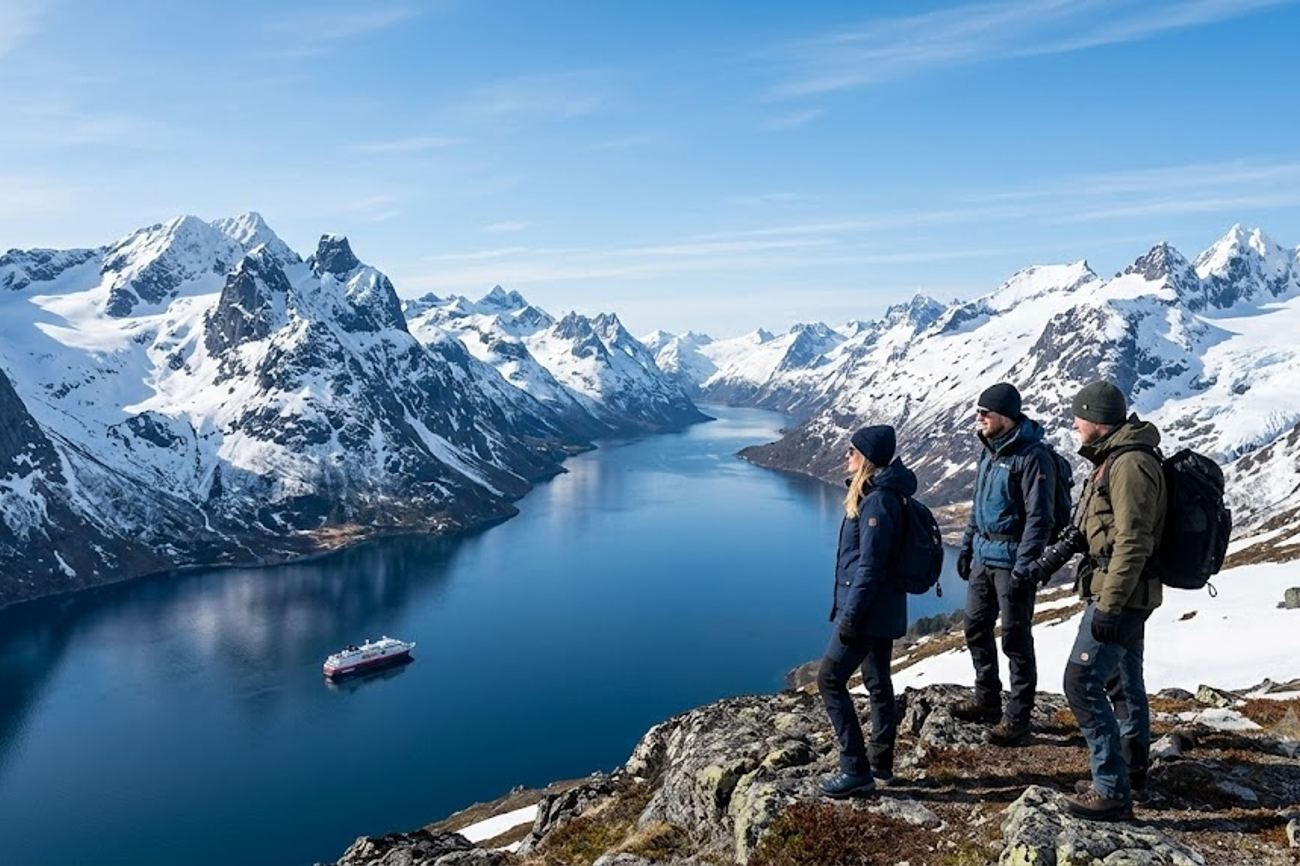
Image generated by AI
54.4 per cent of total EU gas imports were supplied by Norway between January and June, a figure that underscores the precarious tension between Brussels' environmental mandates and its practical energy dependencies. This statistical dominance provides the backdrop for a widening diplomatic rift as the European Union prepares to double down on its ban against new oil and gas exploration in the Arctic. While Norway views the Barents Sea as a strategic hedge against global energy volatility, the European Commission is signaling that climate preservation outweighs the immediate allure of fossil fuel expansion.
The Geopolitical Friction of the 2026 Arctic Strategy
The European Union is currently refining its regional blueprint, with a revised Arctic strategy scheduled for unveiling on 20 October 2026. This document will update the existing 2021 Arctic policy framework, shifting the focus toward a more aggressive intersection of climate priorities and strategic security. At the heart of this update is the EU's refusal to budge on its moratorium against new Arctic drilling.
The friction arises from a fundamental disagreement over the definition of "security." For the European Commission, security is framed as long-term ecological stability and the mitigation of environmental degradation. For Norway, security is an immediate, logistical necessity. Norwegian Energy Minister Terje Aasland has consistently argued that exploration in the Barents Sea is not merely a national economic interest but a European one, designed to stabilize supply chains amid a volatile global market.
Crucially, the EU's drilling restriction is structured as a non-binding political commitment. This nuance is a calculated diplomatic maneuver; by avoiding a legally enforceable multilateral agreement, Brussels can maintain its moral and political leadership on climate change without triggering a legal crisis or imposing direct prohibitions on Norway’s sovereign activities within its own waters. This "soft ban" allows the EU to signal its intentions to the global community while avoiding a total rupture with its most vital energy partner.
Energy Dependency vs. Ecological Preservation
The data reveals a deepening reliance on Norwegian energy that complicates the EU's environmental narrative. The increase from 52.1 per cent of EU gas imports in the same period of 2025 to 54.4 per cent in the first half of 2026 demonstrates that Europe is becoming more, not less, dependent on its northern neighbor.
| Metric | 2025 (Jan-June) | 2026 (Jan-June) | Trend |
|---|---|---|---|
| Norway's Share of EU Gas Imports | 52.1% | 54.4% | +2.3% |
| EU Arctic Policy Framework | 2021 Version | 2026 Revision | Strategic Shift |
| Strategy Release Date | N/A | 20 October 2026 | Upcoming |
This dependency creates a paradox for the European Commission, which must balance the pursuit of a 90 per cent reduction in emissions with the reality of current energy prices and supply resilience. The debate is further complicated by the timeline of extraction. WWF-Norway has pointed out a critical flaw in the "energy security" argument: new developments in the Barents Sea would likely not yield usable gas until approximately 2045. This creates a temporal gap where the environmental cost is paid immediately, but the energy benefit arrives decades after the EU's projected transition to clean electricity and electrification.
Expert Analysis: The Logistics of Arctic Transition
For the high-end traveler and the polar expedition industry, this policy clash is not merely a matter of diplomacy; it is a roadmap for the physical transformation of the North. The tension between industrial expansion and conservation directly dictates how the Arctic will be accessed and experienced over the next twenty years.
Belgium has joined Norway and other countries in banning Arctic drilling, a move that is expected to shape the future of tourism in the region. As a result, tourists can expect to see more sustainable and environmentally-friendly tourism practices, with a focus on preserving the natural beauty of the Arctic landscape, as outlined by the Norwegian Ministry of Climate and Environment. This shift is likely to attract a new wave of eco-conscious tourists to the region, seeking unique and responsible travel experiences.
For travelers booking routes to the Barents Sea or Greenland, the direct consequence of the EU's stance is a pivot toward "conservation-led infrastructure." When the EU prioritizes sustainable economic development over drilling, investment shifts from heavy industrial ports and pipeline corridors toward eco-tourism hubs and sustainable transport links. However, the Norwegian push for energy security suggests a parallel track where industrial infrastructure—roads, deep-water ports, and airstrips—may still be developed under the guise of energy logistics.
The pricing pressure created by this dynamic is subtle but real. As the EU pushes for electrification and a move away from fossil fuels, the cost of traditional fuel-based polar expeditions may rise due to regulatory taxes or "green" levies. Conversely, the development of critical minerals and infrastructure, as discussed at the Arctic Summit in Rovaniemi, Finland, on 13 and 14 September 2026, will likely increase the accessibility of remote regions.
The presence of representatives from Germany, Denmark, Estonia, Latvia, Lithuania, Romania, France, Greece, the Netherlands, Poland, and Sweden at the Rovaniemi summit indicates that the Arctic is no longer a peripheral concern but a central pillar of European economic security. For the nomad traveler, this means the "wild" Arctic is rapidly becoming a managed geopolitical zone. The shift toward "comprehensive security," as advocated by Finnish Prime Minister Petteri Orpo, means that future travel to these regions will be inextricably linked to the region's role in providing critical minerals and maintaining trade route resilience.
Key Takeaways
- Energy Dominance: Norway now provides 54.4 per cent of EU gas imports (up from 52.1 per cent in 2025), giving Oslo significant leverage in energy security debates.
- Policy Timeline: The European Union will release its revised Arctic strategy on 20 October 2026, maintaining a non-binding ban on new oil and gas drilling.
- The 2045 Gap: Environmental critics argue that new Barents Sea projects are irrelevant for current energy crises, as production would not begin until roughly 2045.
- Infrastructure Shift: The Rovaniemi Summit (Sept 13-14, 2026) signaled a move toward "comprehensive security," linking Arctic travel and logistics to critical minerals and trade resilience.
- Regulatory Nature: The EU's drilling ban remains a political commitment rather than a legal mandate, allowing Norway to continue exploration without direct EU legal interference.
FAQ: Arctic Travel and Policy 2026
Will the EU drilling ban affect my travel to Norway or Greenland? No. The ban targets new industrial exploration, not tourism. In fact, the EU's focus on sustainable development may lead to more eco-friendly infrastructure and protected nature reserves in these destinations.
The ban on Arctic drilling is also expected to impact passenger logistics, with airlines and tour operators adapting to new regulations and guidelines. For example, travelers can visit the Official Aviation Authority of Norway website to stay up-to-date on the latest flight information and travel requirements for the region. As the tourism industry in the Arctic continues to evolve, visitors can expect to see a range of new and innovative tourism initiatives, from sustainable accommodations to environmentally-friendly tour operators, catering to the growing demand for responsible travel experiences.
Why is the Barents Sea so important for European energy? The Barents Sea contains significant untapped gas reserves. With Norway providing over 54 per cent of EU gas imports, these reserves are seen by Oslo as a vital backup for European energy stability.
What happened at the Rovaniemi Arctic Summit in September 2026? Leaders from 11 European nations and EU officials met to discuss "comprehensive security." This included not just military defense, but the protection of trade routes, critical minerals, and sustainable development in the North.
Is the EU actually stopping Norway from drilling? Not legally. The EU's position is a political commitment. Because it is not a legally binding multilateral agreement, Norway can still pursue its own energy policies in its territorial waters.
The Arctic is transitioning from a pristine frontier to a calculated chessboard of energy and ecology.
Tags: Barents Sea, European Commission, Norway Energy Policy, Rovaniemi Summit 2026, Arctic Strategy 2026, EU-Norway Gas Trade
Related Travel Guides
This article is for informational purposes. Flight routes, passenger regulations, visa rules, and transit advisories are subject to change by airlines and aviation authorities. Readers are advised to verify schedules and travel documentation with relevant carriers and border agencies before departure.
Related Stories

European Mass Protests Disrupt Travel Across France, Italy, Belgium, and Turkey in 2026

Brussels Travel Costs Surge 2026: How Energy Inflation Impacts Budget Stays in Ixelles and Anderlecht