
Beijing Leads China’s Next Tourism Era With Smart Technology, Seamless Travel And Global Visitor-Friendly Reforms
Beijing Leads China’s Next Tourism Era With Smart Technology, Seamless Travel And Global Visitor-Friendly Reforms

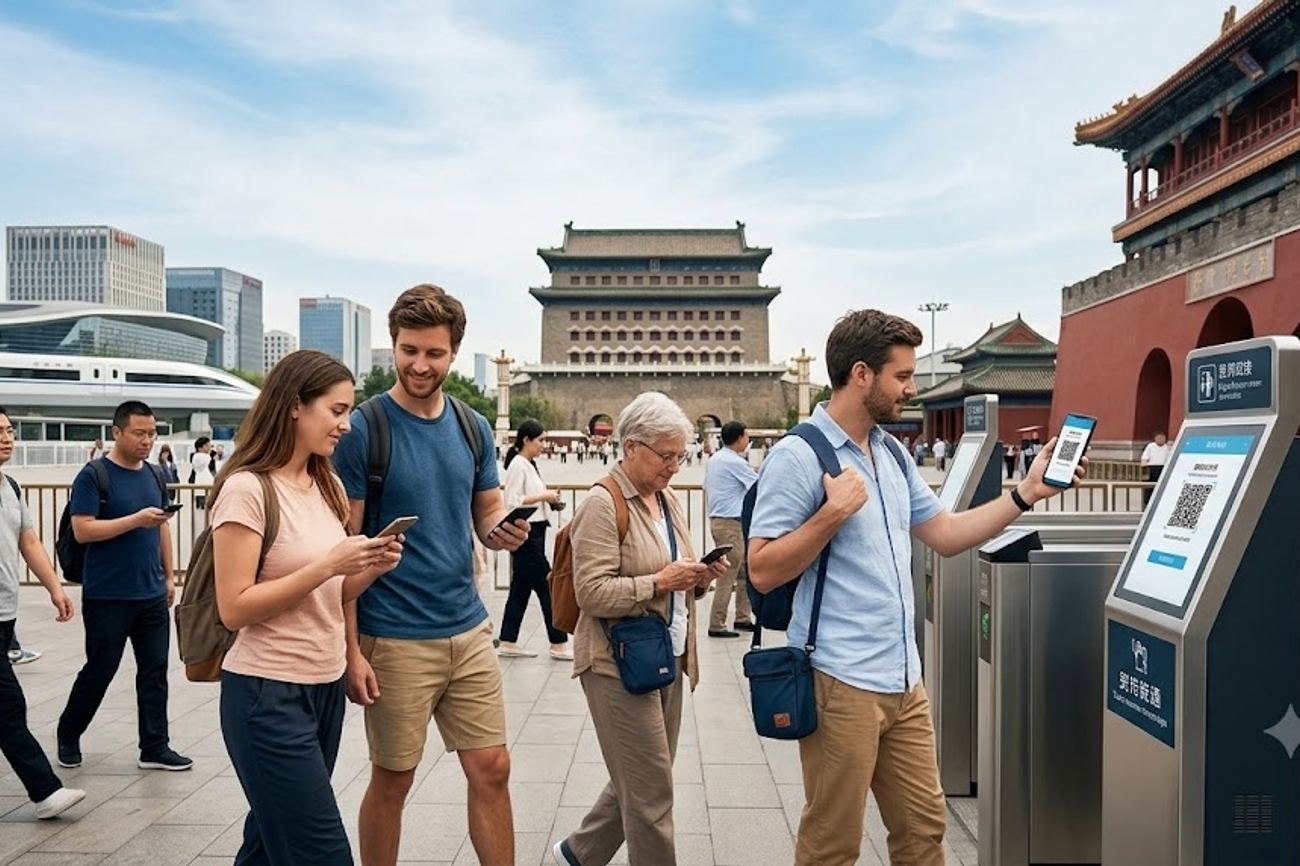
Image generated by AI
[Beijing, September 14, 2026] — Beijing has launched a sweeping overhaul of its tourism infrastructure, integrating artificial intelligence, contactless foreign payment systems, and expanded visa-free entry to position the city as the primary digital gateway for international travelers entering China.
The initiatives were unveiled at the 2026 World Conference on Tourism Cooperation and Development held at Shougang Park, a key component of the China International Fair of Trade Services. Under the theme “Smart Tourism, Shared Prosperity,” city officials and global tourism leaders announced a transition toward a "connected and independent" visitor experience. The reforms aim to eliminate long-standing friction points for overseas tourists—specifically language barriers, payment hurdles, and complex entry requirements—by replacing traditional group-tour dependencies with AI-driven autonomy.
The Digital Pivot: China Bound · Beijing
The centerpiece of the modernization effort is the launch of "China Bound · Beijing," an English-language smart cultural tourism platform. This digital ecosystem is designed to act as a comprehensive concierge, managing the entire traveler lifecycle from pre-departure planning to real-time on-the-ground navigation.
The platform is deployed across three primary channels: a dedicated English website and mini-programs integrated into Alipay and WeChat. By leveraging these existing digital giants, Beijing is ensuring that visitors do not need to download obscure, standalone apps to navigate the city.
Key functionalities of the China Bound platform include:
- Pre-Arrival Logistics: Comprehensive visa and entry guidance, destination research, and transport planning.
- On-Site Navigation: Interactive mapping and detailed attraction information.
- Personalized Curation: Recommendations for cultural experiences and local neighborhood exploration.
- AI Support: The "Kuki AI panda," a real-time travel assistant capable of providing instant support to visitors.
This shift reflects a broader change in global traveler psychology. Beijing is pivoting away from the "fixed itinerary" model, recognizing that modern nomads prefer independent exploration of local restaurants and residential districts over curated tour bus routes.
Eliminating the Payment Wall
For years, the "digital wall" of China's mobile-only payment ecosystem served as a significant deterrent for international visitors who lacked local bank accounts or Chinese phone numbers. Beijing is dismantling this barrier by introducing direct contactless payment capabilities across its entire urban rail network.
International visitors can now use foreign-issued bank cards for "tap-to-ride" access at subway gates, bypassing the need to purchase local transit cards or undergo complex registration processes. This system is now operational across more than 490 stations.
The following international payment networks are now fully supported for subway access:
- Visa
- Mastercard
- American Express
- JCB
- UnionPay
Beyond public transport, the city is scaling these payment reforms to major heritage sites. The Badaling Great Wall has already implemented enhanced international payment acceptance, serving as the blueprint for other cultural landmarks. Additionally, the city has streamlined the financial experience for shoppers; over 2,000 retail outlets now offer instant tax refunds, with a recognition system that spans 17 provincial-level regions.
Visa Liberalization and Entry Reforms
To complement the digital upgrades, the Chinese government has aggressively expanded its visa facilitation framework. These measures are designed to attract stopover tourists and business travelers who previously avoided the region due to bureaucratic hurdles.
The current visa landscape includes:
- Mutual Visa Exemptions: Agreements now in place with 29 countries.
- Unilateral Visa-Free Entry: Arrangements covering 50 nations.
- Extended Transit Access: A 240-hour (10-day) visa-free transit window for eligible travelers from 55 countries.
The 240-hour transit policy is a strategic tool to encourage "stopover tourism." Under this rule, a traveler flying from London to Tokyo with a layover in Beijing can stay in the city for up to 10 days without a traditional visa. However, the Ministry of Foreign Affairs of the People's Republic of China maintains strict requirements: travelers must hold confirmed onward tickets to a third country or territory. A round-trip flight (e.g., London to Beijing and back to London) does not qualify for this exemption.
Market Recovery and Growth Metrics
These reforms are not speculative; they are responding to a massive surge in inbound demand. Data from the first half of 2026 indicates that Beijing is experiencing a robust recovery in international arrivals.
| Tourism Indicator | H1 2026 Data |
|---|---|
| Total Inbound Visits | 3.27 Million |
| Foreign Visitor Share | > 85% |
| Total Tourism Spending | 30 Billion Yuan (~US$4.5 Billion) |
| Year-on-Year Spending Growth | 40% |
The 40% growth in spending suggests that visitors are not only returning in higher numbers but are also spending more per capita, likely driven by the ease of the new payment systems and the shift toward independent, high-spend urban exploration.
The Roadmap for Global Integration
The next phase of Beijing's strategy involves exporting the "Smart Tourism" model to other Chinese hubs. By establishing Beijing as the "digital gateway," the city is creating a standardized experience that international travelers can carry with them as they move into the interior of the country.
The integration of AI assistants like Kuki is expected to evolve, moving from simple Q&A to predictive travel management, where the AI can suggest itinerary adjustments based on real-time crowd density at attractions like the Forbidden City or the Temple of Heaven. The goal is to create a frictionless environment where the technology disappears into the background, leaving the traveler to focus on the cultural experience.
FAQ: Beijing International Travel 2026
Do I still need a local SIM card or app to use the subway in Beijing? No. You can now use foreign-issued Visa, Mastercard, American Express, JCB, or UnionPay cards for "tap-to-ride" access at all 490+ subway stations without needing a local transport card or registration.
How does the 240-hour visa-free transit work? If you are a citizen of one of the 55 eligible countries and are traveling to a third destination (e.g., New York $\rightarrow$ Beijing $\rightarrow$ Seoul), you can stay in Beijing for up to 10 days without a visa, provided you have a confirmed onward ticket.
What is "China Bound · Beijing"? It is an English-language digital platform available via website, Alipay, and WeChat. It provides AI-powered travel assistance (via the Kuki panda), visa guidance, interactive maps, and transport planning specifically for overseas visitors.
Can I get a tax refund on my shopping in Beijing? Yes. Over 2,000 retail stores now support instant tax refunds. The system is integrated across 17 provincial-level regions to make the process seamless for international shoppers.
Beijing is no longer just a destination; it is becoming a frictionless digital interface for the world.
#BeijingTourism2026 #ChinaBound #PEKAirport #SmartTourism #VisaFreeChina #AlipayTravel
Related Travel Guides
- Vietnam Changes Global Travel Forever By Proving That Meaningful Long Stays Beat Quick Visits Across Asia
- Italy Aligns With Germany and Other Countries as Travellers Rank Europe’s Top 6 Destinations for Service Experiences
- Ireland’s Hidden Kylemore Abbey And Cloghleagh Woods Travel Escape That Whispers Pure Seasonal Magic Across the Country
Disclaimer
This article is for informational and educational purposes only. It does not constitute legal, financial, or professional advice. While we strive to provide accurate and up-to-date information, travel policies, regulations, and conditions change rapidly. Always verify information with official sources before making travel decisions. Nomad Lawyer makes no representations about the accuracy, reliability, completeness, or suitability of the information provided. Readers should consult qualified professionals for advice specific to their circumstances. The views expressed in this article are those of the author and do not necessarily reflect the views of Nomad Lawyer.
Raushan Kumar
Founder & Lead Developer
Full-stack developer with 11+ years of experience and a passionate traveller. Raushan built Nomad Lawyer from the ground up with a vision to create the best travel and law experience on the web.
Learn more about our team →