
Barcelona And More Cities Drive Europe’s Heritage Hotel Boom as Rural Estates Attract Luxury Capital

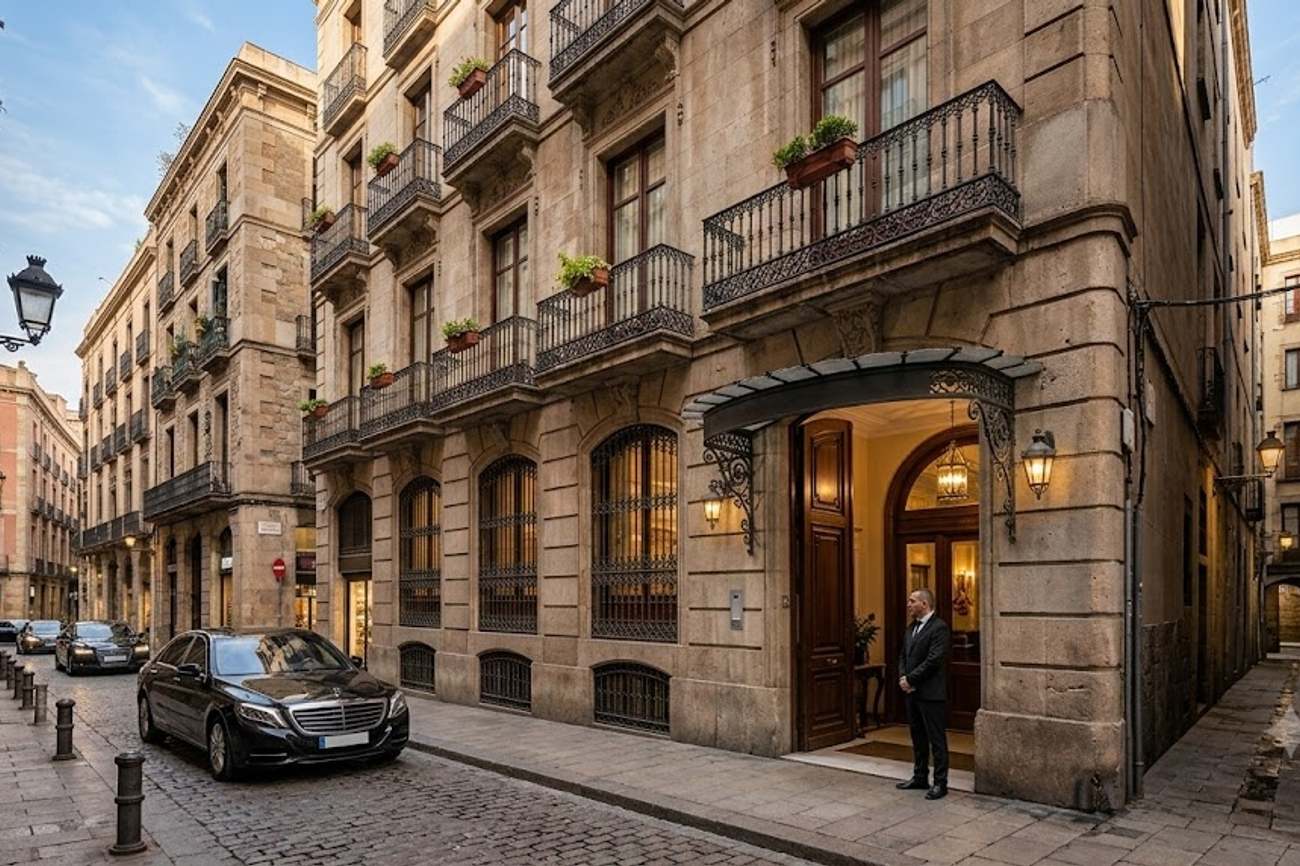
Image generated by AI
A seismic shift in capital allocation is changing the European hospitality industry as real estate institutional funds move away from overcrowded gateway cities to rural areas. With hostile moratoriums imposed by municipalities on hotel projects in urban areas, along with strict caps on short-term rentals in Barcelona, Florence, and Lisbon, private equity groups are allocating billions of dollars to rural regions. The historic heritage restoration revolution is converting centuries-old monasteries, hidden medieval castles, and prestigious vineyards into ultra-low density and super high value luxury hideaways. With the replacement of urban high cost and low margin projects with architectural restorations of high barrier to entry, real estate arbitrage has never been so effective.
The Regulatory Squeeze in European Urban Gateways
Metropolitan gateway markets across Southern and Western Europe have reached a regulatory tipping point. Driven by escalating resident friction, severe housing affordability crises, and the erosion of civic infrastructure under the weight of mass tourism, municipal governments have erected strict legislative barriers against hotel expansion. These urban policy interventions have transformed the economics of metropolitan hospitality development from a predictable growth play into an administrative and legal gauntlet.
In Barcelona, municipal authorities established a sweeping precedent through the Pla Especial Urbanístic d’Allotjaments Turístics (PEUAT), an urban zoning mechanism designed to curtail visitor accommodations. PEUAT segmented the Catalan capital into strict regulatory zones: Zone 1, encompassing the historic Ciutat Vella and adjacent high-pressure districts, instituted a policy of natural reduction where no new hotel licences are granted even upon the closure of an existing establishment. In Zone 2, new licences remain frozen under strict zero-growth mandates, and early provisions penalised full renovations by requiring owners to forfeit up to 20% of their total room inventory. Because municipal authorities have signalled that commercial visitor beds will not expand, operating licences have become scarce intangible assets, often representing 15% to 35% of an urban hotel’s total enterprise value.
Stage Market / Region Key Characteristics Investment / Financial Metrics Urban Gateway Hotel Markets Barcelona, Florence and other major urban gateways Strict municipal moratoriums and zoning bans, including Barcelona PEUAT and Florence UNESCO rental caps Severe supply compression; licence scarcity premiums of 15%–35% of enterprise value; yields compressed to 3.50%–4.50% Institutional Capital Reallocation Shift from major urban markets toward secondary and regional heritage destinations Institutional capital redirected toward markets with greater conversion opportunities and less supply restriction Focus on acquiring and repositioning heritage assets outside constrained gateway cities Secondary & Regional Heritage Conversion Nodes Spain: Castile-León, Asturias; Italy: Umbria, Tuscany; Portugal & France Heritage properties positioned for hospitality conversion and destination-led investment Opportunities created through adaptive reuse and regional tourism demand
Barcelona is leading Europe's heritage hotel boom, with many historic buildings being converted into luxury hotels. According to the Spanish Tourism Board, the city's rich cultural heritage and modernist architecture make it an attractive destination for tourists. As a result, investors are flocking to the city to restore and repurpose historic estates into high-end hotels. Operational Execution & Value Capture Medieval monasteries, châteaux and conventual estates Adaptive reuse of heritage properties, typically 20–90 keys Significant capex of €800,000–€1.5 million+ per key for seismic retrofits, MEP micro-trenching and restoration Subsidies & Support Spain, Italy, Portugal and France Public funding and tourism-development programmes support heritage conversion EU NextGen / PNRR, Portugal Revive and France Destination Plan Revenue & Yield Potential Converted heritage hotels and luxury destination properties Premium accommodation combined with wine, wellness and branded residences ADR of €800–€2,500+; yield on cost of 6.50%–8.50%, representing a 300–400 bps spread over metropolitan cap rates
A parallel dynamic has gripped Italy’s primary art cities. In Florence, the municipal council enacted a decisive ban on new short-term residential tourist leases across the UNESCO World Heritage historic core, a policy repeatedly upheld by regional administrative courts seeking to protect the city’s residential fabric. Coupled with strict Italian preservation laws that restrict the spatial reconfiguration of historic Renaissance palazzi, the scope for scaling commercial hospitality in downtown Florence has narrowed substantially. In Venice, authorities have layered daily day-tripper entry fees onto stringent preservation edicts that prohibit the conversion of canal-front residential architecture into commercial lodging, seeking to stabilise a lagoon environment under immense ecological and demographic stress.
The growth of heritage hotels in rural areas is also being driven by the increasing demand for unique and authentic travel experiences. The European Travel Commission reports that tourists are seeking out rural estates and historic hotels that offer a glimpse into the region's history and culture. This shift in consumer preferences is attracting luxury capital to rural areas, where investors are restoring and renovating historic properties to meet the growing demand.
Portugal and France have enacted equally stringent measures. In Lisbon and Porto, municipal master plans have suspended new short-term rental registrations across historic central parishes, while simultaneously limiting permits for large-scale hotel developments to ease housing displacement. In Paris, the municipal council has capped private holiday rentals at strict annual limits, enforced commercial property change-of-use compensation laws, and imposed zoning restrictions that make central hotel conversions cost-prohibitive. As municipal constraints compress urban development pipelines, institutional capital has faced declining returns, motivating fund managers to seek alternative avenues for deployment.
Municipal Gateway Regulatory Planning Mechanism Primary Restrictions Imposed Direct Valuation and Market Impact Barcelona, Spain PEUAT (Special Tourist Accommodation Plan) Zero new hotel licences in Zones 1 and 2; strict containment in outer zones. Licences command 15%–35% of enterprise value; high urban barriers. Florence, Italy UNESCO Core Municipal Decrees & Court Rulings Ban on new short-term rentals in UNESCO historic centre; freeze on large hotel permits. Constrained central supply; historic conversion redirected to countryside.
As the heritage hotel sector continues to grow, passengers are benefiting from improved logistics and transportation links. The Airports Council International Europe notes that many regional airports are expanding their routes and services to cater to the increasing number of tourists visiting rural areas. With more flights and transportation options available, tourists can easily access and explore Europe's rural estates and heritage hotels, making it an exciting time for the tourism industry. Venice, Italy Lagoon Conservation Decrees & Day-Tripper Levies Limits on large cruise docking; strict bans on palazzi hotel expansions. High operational costs; luxury capital pivots to private lagoon islands. Lisbon, Portugal Municipal Master Plan & AL Containment Zones Moratorium on new short-term rentals in historic quarters; selective zoning caps. Capital deployed to regional estates through national incentive schemes. Paris, France Commercial Compensation Rules & Rental Caps Strict 120-day residential rental caps; commercial conversion penalties. Focus shifts to destination estates in the Loire Valley and Provence. Institutional Underwriting: Yield Arbitrage and Capital Allocations
The redirection of institutional capital toward historic countryside assets is rooted in financial fundamentals. Prime urban luxury hotels across gateway capitals trade at compressed yields, with capitalization rates hovering between 3.50% and 4.50%. These low yields reflect intense competition among institutional buyers and sovereign funds for rare metropolitan trophy assets. However, in an era of sustained borrowing costs, this compressed yield profile offers thin risk-adjusted spreads over sovereign debt, making core metropolitan assets vulnerable to capital value corrections.
In contrast, historic adaptive reuse projects across secondary regional destinations offer an attractive yield arbitrage. Institutional investors targeting the conversion of medieval abbeys, rural monasteries, and aristocratic country seats underwrite stabilized yield-on-cost metrics between 6.50% and 8.50%. This creates a 300-to-400-basis-point premium over metropolitan acquisitions. The yield spread reflects the operational complexity and extended gestation timelines inherent to monumental renovations, rewarding patient capital with higher operating cash flows
FAQ: Barcelona And More Cities Drive Europe’s 2026
What's driving Europe's heritage hotel boom? Investment in rural estates and historic city hotels.
Which cities are leading the boom? Barcelona, Paris, and Rome are top destinations.
What amenities can I expect? Luxury services, fine dining, and cultural experiences.
How can I book a heritage hotel? Online platforms or direct hotel websites offer easy booking.
Related Travel Guides
- French Polynesia Welcomes New Luxury Milestone As Four Seasons Bora Bora Wins Michelin Recognition
- Vietnam Fortifies it’s Luxury Travel Environment as Four Seasons The Nam Hai Earns Praise With Two Michelin Keys
- Asia Hospitality Tightens Foreign Investment Rules as Japan and More Countries Reshape Luxury Resort Development
This article is for informational purposes. Flight routes, passenger regulations, visa rules, and transit advisories are subject to change by airlines and aviation authorities. Readers are advised to verify schedules and travel documentation with relevant carriers and border agencies before departure.
Related Stories

EU Probes Booking.com Under Digital Services Act Over Fake Hotel Listings, Hijacked Reservations, and Search Ranking Transparency