Asia Hospitality Tightens Foreign Investment Rules as Japan and More Countries Reshape Luxury Resort Development

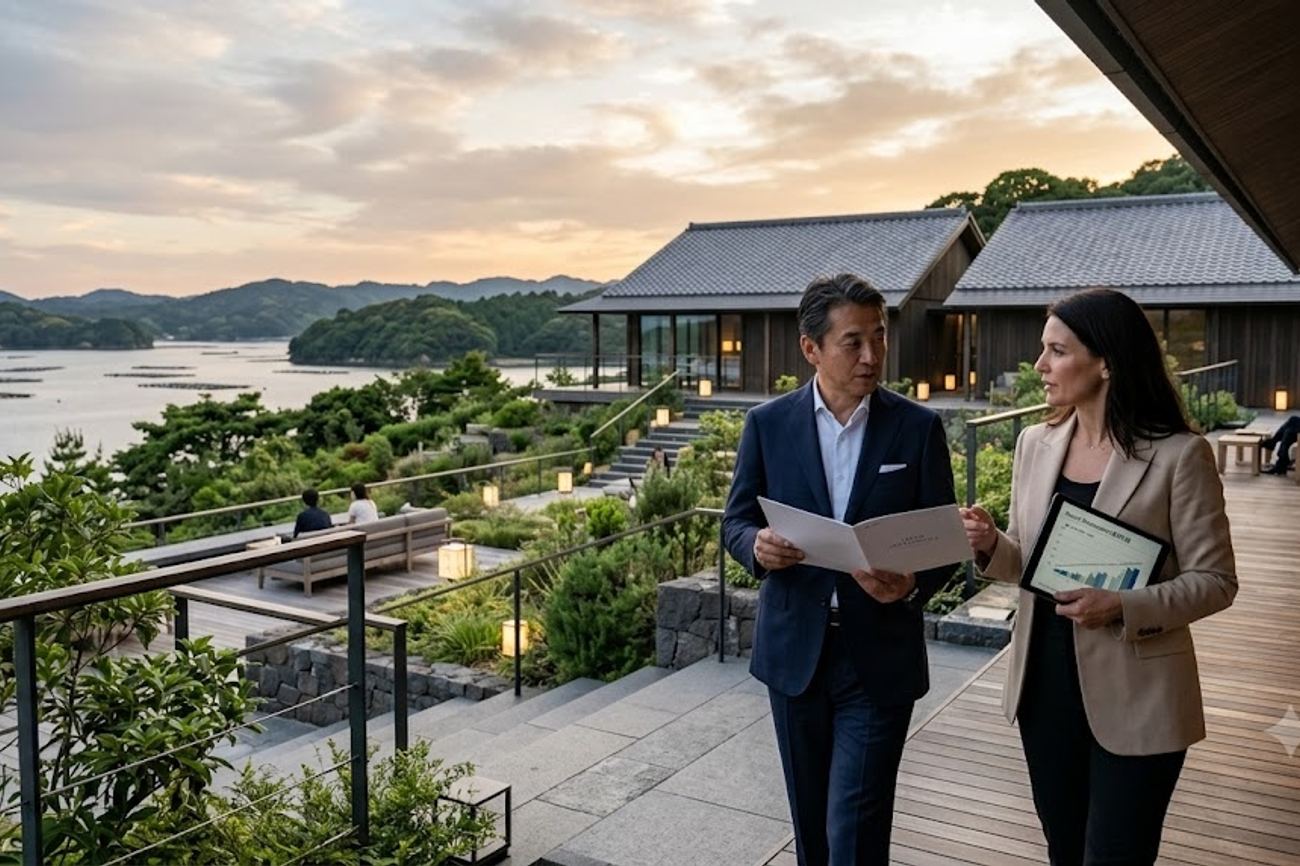
Image generated by AI
A major shift is taking place within the luxury resort investment space in Asia, where increased government scrutiny of foreign investments in terms of corporate structure, financing, land purchases, and compliance is being enforced. In nations such as Japan, Thailand, Indonesia, Vietnam, and India, governments have begun to implement new measures to screen projects and make the process more transparent and secure for strategic and environmentally sensitive locations. This represents a shift for foreign hotel companies, private equity, and other investors as it affects the way investment projects are managed, financed, and screened.
Strategic Imperative: Balancing Capital Inflows with National Sovereignty
The rapid expansion of cross-border real estate investment across Asia-Pacific luxury resort markets has prompted a fundamental realignment of sovereign economic policy. For over a decade, accelerating tourism demand stimulated aggressive foreign direct investment into primary leisure destinations. However, unchecked capital flows exposed structural vulnerabilities, including non-transparent corporate vehicles, speculative land banking, revenue leakage through illicit foreign-controlled networks, and ecological degradation in sensitive marine ecosystems.
In response, host nations are re-asserting statutory authority over domestic land assets. Governments across the region are deploying sophisticated regulatory frameworks designed to filter out opaque offshore capital while encouraging institutional, sustainable investment. Rather than erecting complete barriers to entry, host nations are implementing rigorous screening mechanisms centered on national security clearances, automated corporate registry audits, mandatory ultimate beneficial ownership disclosures, and strict environmental carrying capacity limits.
This structural realignment marks the end of speculative, light-touch foreign real estate acquisitions. International hotel operators, private equity funds, and cross-border asset managers must now navigate complex multi-agency approval processes. Failure to comply with evolving statutory mandates exposes investors to severe administrative penalties, license revocations, asset freezes, and irreversible reputational damage.
The Evolution of Regulatory Oversight Across Key Asian Destinations
The regulatory shift manifests differently across sovereign jurisdictions, reflecting localized national security priorities and market conditions. In Japan, foreign land acquisition rules focus on national security and infrastructure protection surrounding defense installations and territorial waters. In Southeast Asia, Thailand and Indonesia target illegal proxy structures and undercapitalized shell companies that erode tax bases and destabilize local economies. Meanwhile, Vietnam and India integrate foreign investment screening with strict coastal environmental mandates and strategic border corridor protections.
Country Primary Legislative Instrument Core Screening Mechanism Key Administrative Authority Targeted Market Segment
Asia's hospitality industry is experiencing a shift in foreign investment rules, with countries like Japan implementing stricter regulations to ensure sustainable development. For more information on Japan's investment policies, visit the Japanese Government's Ministry of Land, Infrastructure, Transport, and Tourism website, which provides detailed guidelines for investors. This move is expected to impact the growth of luxury resorts in the region, with investors needing to adapt to new requirements. Japan Important Land Survey Act / FEFTA Pre-signing notifications & 20-day post-acquisition BOJ filings Cabinet Office / Ministry of Finance High-density resort hubs & border islands Thailand Foreign Business Act B.E. 2542 AI-driven corporate registry audits & 49% foreign equity caps Department of Business Development / AMLO Island hospitality & tour supply chains Indonesia BKPM Regulation No. 5 of 2025 Dual-threshold capitalization & KBLI registration freezes Ministry of Investment (BKPM) Luxury eco-lodges & protected marine zones Vietnam Revised Land Law Decrees Capital origin verification & 50–70 year lease equity audits MONRE / Ministry of Planning and Investment Coastal SEZs & integrated resort developments
The tightening of foreign investment rules is also affecting passenger logistics, with travelers facing potential changes in accommodation options and tourist facilities. To stay up-to-date on the latest travel advisories and airport information, travelers can check the Singapore Tourism Board website, which offers insights into the country's tourism industry and infrastructure developments. As countries reshape their luxury resort development strategies, tourists may need to plan their trips more carefully to ensure a seamless experience. India FDI Press Note 3 Policy Inter-ministerial security clearance & MHA background vetting DPIIT / Ministry of Home Affairs Strategic border corridors & island chains Japan: Economic Security Oversight and Real Estate Regulation in Prime Resort Hubs The Important Land Survey Act: Monitored Areas and Pre-Signing Notifications
Japan’s approach to foreign investment screening centers on national economic security and infrastructure safeguarding. The foundational statute governing strategic real estate transactions is the Act on the Review and Regulation of the Use of Real Estate Surrounding Important Facilities and on Remote Territorial Islands (commonly referenced as the Important Land Survey Act or REIRA). Promulgated in June 2021 and fully brought into force in September 2022, REIRA empowers the Japanese Cabinet Office to monitor, audit, and regulate land acquisitions adjacent to critical state infrastructure.
Under REIRA statutory guidelines, the Ministry of Land, Infrastructure, Transport and Tourism (MLIT) and the Cabinet Office designate two distinct geographic oversight zones:
Tourism insights suggest that the reshaping of luxury resort development in Asia will prioritize sustainability and environmental conservation, with governments emphasizing the importance of responsible tourism practices. For information on sustainable tourism initiatives and eco-friendly resorts, visit the Thai Ministry of Tourism and Sports website, which showcases the country's efforts to promote environmentally friendly tourism. As the industry evolves, tourists can expect to see more eco-lodges and sustainable resorts popping up across the region, offering unique and responsible travel experiences.
Monitored Areas: Real estate situated within approximately 1,000 metres of strategic national installations—including Japan Self-Defense Forces (JSDF) garrisons, United States Armed Forces facilities, Japan Coast Guard sites, and designated critical infrastructure such as nuclear power plants and international airports—alongside remote border islands. The government maintains statutory authority to conduct administrative background inquiries into land users and property titleholders within these zones. Special Monitored Areas: High-priority zones surrounding key military command centres or uninhabited border islands essential for territorial sea demarcation. In these areas, contracting parties intending to transfer or create ownership rights over land or building floor space equal to or exceeding 200 square metres must submit advance notifications to the Prime Minister prior to executing purchase and sale agreements.
The implementation of REIRA directly impacts international hospitality capital allocation in primary resort regions such as Niseko and Sapporo in Hokkaido, Hakuba in Nagano Prefecture, historic districts in Kyoto, and coastal installations in Okinawa. Luxury eco-lodge developments, ski resort expansions, and heritage home conversions (machiya) within a 1,000-metre radius of defense installations or essential municipal water reservoirs are subject to mandatory governmental scrutiny. If the Cabinet Office concludes that a real estate asset is being used—or is at clear risk of being used—for activities that impede facility operations, it possesses statutory authority to issue administrative recommendations, cease-and-desist orders, or transaction injunctions. Non-compliance or fraudulent notification submission carries criminal penalties, including up to six months imprisonment or fines reaching JPY 1 million.
FEFTA 2026 Reporting Mandates and Ultimate Beneficial Ownership Transparency
Complementing REIRA’s spatial restrictions, the Ministry of Finance significantly tightened cross-border financial surveillance under the Foreign Exchange and Foreign Trade Act (FEFTA). Effective April 1, 2026, major statutory updates removed long-standing reporting exemptions for residential property acquisitions made by non-residents. Under current FEFTA mandates, any non-resident acquiring real estate in Japan—irrespective of whether the property is designated for commercial hospitality operations or private residential use—must complete and submit Form 22 (Report on Acquisition of Real Estate in Japan) to the Minister of Finance via the Bank of Japan within 20 days of contract execution.
Concurrently, amendments to the Real Property Registration Act enforced by the Legal Affairs Bureau require individual foreign buyers to disclose verified nationality details during property registration. Corporate purchasers operating through offshore vehicles must disclose the nationality of corporate representatives and identify whether
FAQ: Asia Hospitality Tightens Foreign Invest 2026
Will new rules affect my hotel bookings? No, existing bookings remain unchanged.
How will this impact luxury resort development? New projects may face stricter regulations.
Are all Asian countries tightening rules? No, only select countries like Japan.
Will prices increase due to new regulations? Possibly, due to increased development costs.
Related Travel Guides
- Asia’s Luxury Hotels Transform Artisan Procurement as Philippine Tourism and More Drive the B2B Craft Revolution
- Sandals South Coast and Many Other Hotels Are Under Renovation with Upgraded Accommodation and Guest Facilities in Jamaica
- NoMad Hilton Singapore Opens in 2026 as Asia Pacific Debut With Luxury Design and Heritage Experiences
This article is for informational purposes. Flight routes, passenger regulations, visa rules, and transit advisories are subject to change by airlines and aviation authorities. Readers are advised to verify schedules and travel documentation with relevant carriers and border agencies before departure.
Related Stories

Marriott Unveils 2026 Holiday and New Year Programmes Across 11 Luxury Resorts in the Americas

JW Marriott Mussoorie Walnut Grove Resort Appoints Rahul Valsakumar as Director of Food and Beverage to Lead Himalayan Luxury Dining