
Thai Airways Plans Nonstop Bangkok to Auckland Relaunch to Boost South Pacific Connectivity in 2026
Thai Airways is preparing to restore direct flights between Bangkok and Auckland, aiming to recapture long-haul market share and strengthen Southeast Asia-New Zealand tourism and business links.

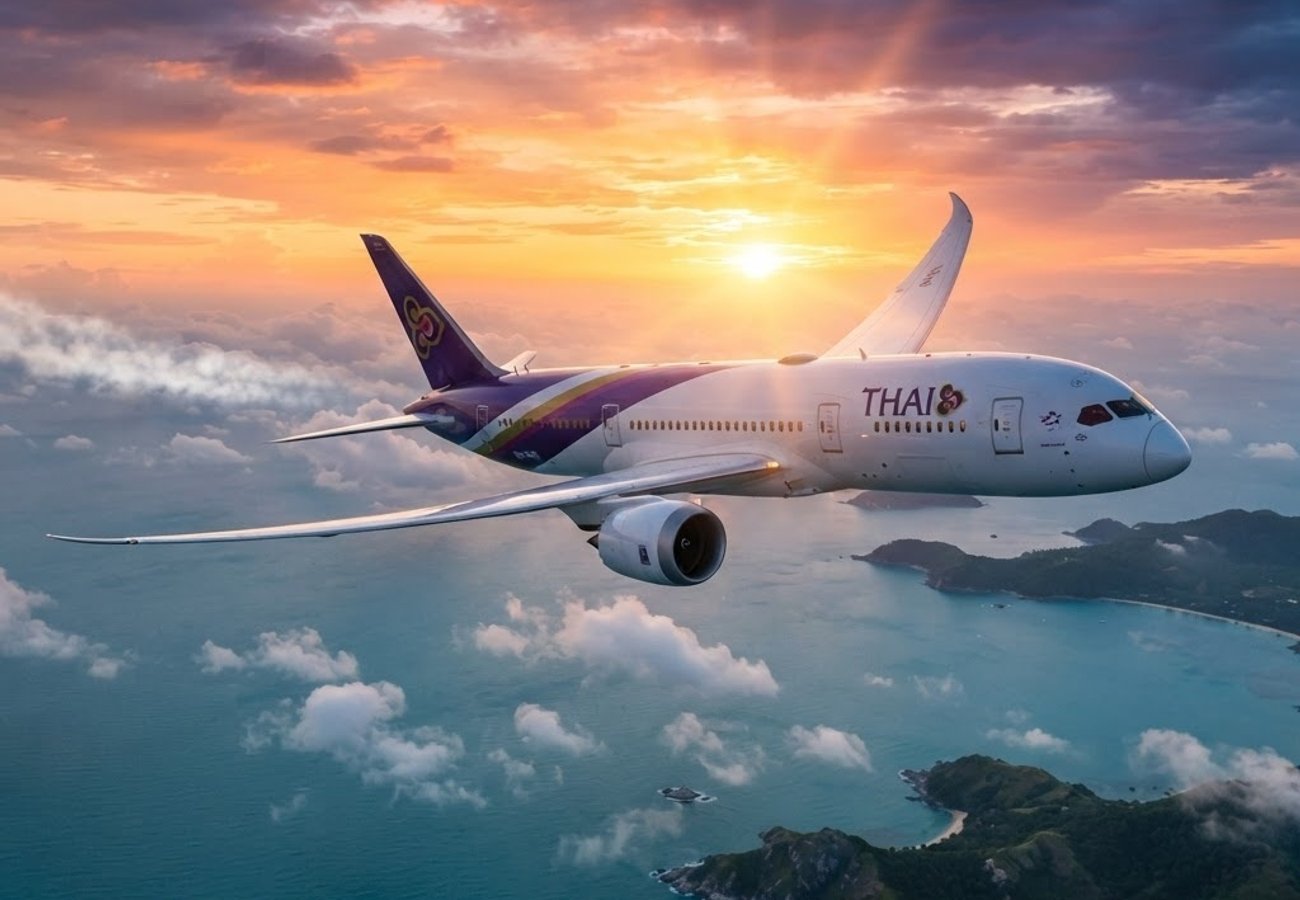
Image generated by AI
Travelers between Thailand and New Zealand are facing a significant reduction in transit times as Thai Airways prepares to relaunch its nonstop service from Bangkok to Auckland, ending a five-year gap in direct connectivity.
The restoration of this strategic long-haul link is expected to reshape tourism and corporate travel flows across the South Pacific corridor. Since the cessation of direct services in March 2021, passengers have been forced to rely on one-stop connections via hubs in Singapore, Kuala Lumpur, Sydney, Melbourne, and Denpasar. The return of the Thai flag carrier to New Zealand's largest city marks a pivotal step in the airline's post-restructuring growth strategy.
Strategic Restoration of the Bangkok–Auckland Corridor
The pairing of Bangkok Suvarnabhumi (BKK) and Auckland (AKL) has historically served as a vital artery for New Zealanders seeking a streamlined gateway into mainland Southeast Asia and onward to Europe. According to historical schedule data, the direct link was severed during the pandemic, with the final flights operating in March 2021.
Current route tracking data confirms a total absence of nonstop capacity between these two primary cities. This void has left a significant portion of the market dependent on third-party hubs. However, internal network plans indicate that Auckland is prioritized for restoration in the latter half of 2026. This move is part of a synchronized expansion effort that includes the return of services to various Chinese and European destinations.
Industry analysts suggest that the reintroduction of these flights will eliminate the friction of multiple airline combinations and extended travel durations, providing a high-value alternative for both the leisure and corporate sectors.
Oceania Expansion and the Perth Success Model
The planned Auckland relaunch is not an isolated event but the culmination of a broader regional push into Oceania. In March 2024, Thai Airways successfully revived daily operations between Bangkok and Perth, utilizing Boeing 787-8 Dreamliner aircraft configured with 256 seats.
These services, including flights TG481 and TG482, currently stand as the sole nonstop options for the Bangkok–Perth route. This successful deployment has served as a commercial proof-of-concept, demonstrating the viability of secondary long-haul markets. By integrating Auckland into this network, the airline creates a comprehensive four-point Oceania pattern, linking Thailand to all major Australian gateways and New Zealand’s primary hub.
Furthermore, corporate documentation regarding the airline's restructuring outlines an aggressive fleet expansion. Between 2027 and 2033, the carrier expects to integrate up to 80 new aircraft. This surge in capacity suggests that the airline is not merely aiming for the status quo but is preparing to increase flight frequencies and explore untapped Pacific markets.
Market Drivers: Tourism, Education, and VFR Traffic
Despite the current lack of direct flights, latent demand is already surfacing. Booking portals have begun displaying Thai Airways fares for the city pair via partner hubs, with economy-class roundtrip prices for selected 2027 dates starting around THB 39,890.
The surge in interest is driven by three primary demographics:
- Nature and Leisure Tourism: Thai travelers are increasingly seeking New Zealand for its cooler climates, self-drive holiday options, and landscape tourism.
- Southeast Asian Hubbing: New Zealanders continue to use Bangkok as a primary entry point for beach vacations and regional itineraries across Southeast Asia.
- VFR and Education: A resilient market of students and "Visiting Friends and Relatives" (VFR) provides a steady, year-round baseline of demand that is less susceptible to seasonal tourism fluctuations.
Currently, more than 20 one-stop combinations exist between Bangkok and Auckland, operated by carriers from the Gulf states, Malaysia, Singapore, and Australia. A direct service is expected to recapture a significant share of this traffic by removing the need for intermediate immigration and security screenings.
Gateway Impact for Suvarnabhumi and Auckland Airports
The return of direct widebody service will have systemic effects on both endpoints. For Bangkok Suvarnabhumi, the route reinforces its status as a global bridge, allowing New Zealand passengers to connect efficiently to regional capitals such as Yangon, Phnom Penh, and Hanoi.
For Auckland Airport, the arrival of Thai Airways' widebody aircraft diversifies the long-haul operator mix. This provides New Zealand exporters and corporate entities with more direct access to the Thai market and neighboring economies.
| Route Segment | Current Status | Planned Change (2026) | Primary Aircraft Type (Expected) |
|---|---|---|---|
| Bangkok $\rightarrow$ Auckland | One-stop only | Nonstop Relaunch | Widebody (B787/A350) |
| Bangkok $\rightarrow$ Perth | Nonstop (Daily) | Frequency Maintenance | Boeing 787-8 (256 seats) |
| Bangkok $\rightarrow$ Sydney/Melb | Nonstop | Network Integration | Widebody |
Why This Matters for the Modern Traveler
For the passenger, the relaunch of the Bangkok–Auckland route is more than just a convenience; it is a significant reduction in "travel friction." Eliminating a layover in a third country can shave several hours off a journey and remove the stress of missed connections in crowded hubs.
From a logistical standpoint, the direct link lowers the barrier for "multi-city" itineraries. A traveler can now realistically plan a trip that combines New Zealand's nature with Thailand's urban centers without the exhaustion of multiple take-offs and landings. Additionally, the introduction of a direct competitor often triggers a "price war" among the one-stop carriers currently dominating the route, which could lead to lower fares across the board for all travelers heading to Asia from New Zealand.
The return of the Thai flag carrier to Auckland signals a new era of South Pacific connectivity and a bold bet on the resilience of long-haul tourism.
Related Travel Guides
Disclaimer
This article is for informational and educational purposes only. It does not constitute legal, financial, or professional advice. While we strive to provide accurate and up-to-date information, travel policies, regulations, and conditions change rapidly. Always verify information with official sources before making travel decisions. Nomad Lawyer makes no representations about the accuracy, reliability, completeness, or suitability of the information provided. Readers should consult qualified professionals for advice specific to their circumstances. The views expressed in this article are those of the author and do not necessarily reflect the views of Nomad Lawyer.
Raushan Kumar
Founder & Lead Developer
Full-stack developer with 11+ years of experience and a passionate traveller. Raushan built Nomad Lawyer from the ground up with a vision to create the best travel and law experience on the web.
Learn more about our team →