
Bahamas Travel Update as US Refreshes Advisory While Caribbean Paradise Continues Attracting Visitors
Bahamas Travel Update as US Refreshes Advisory While Caribbean Paradise Continues Attracting Visitors

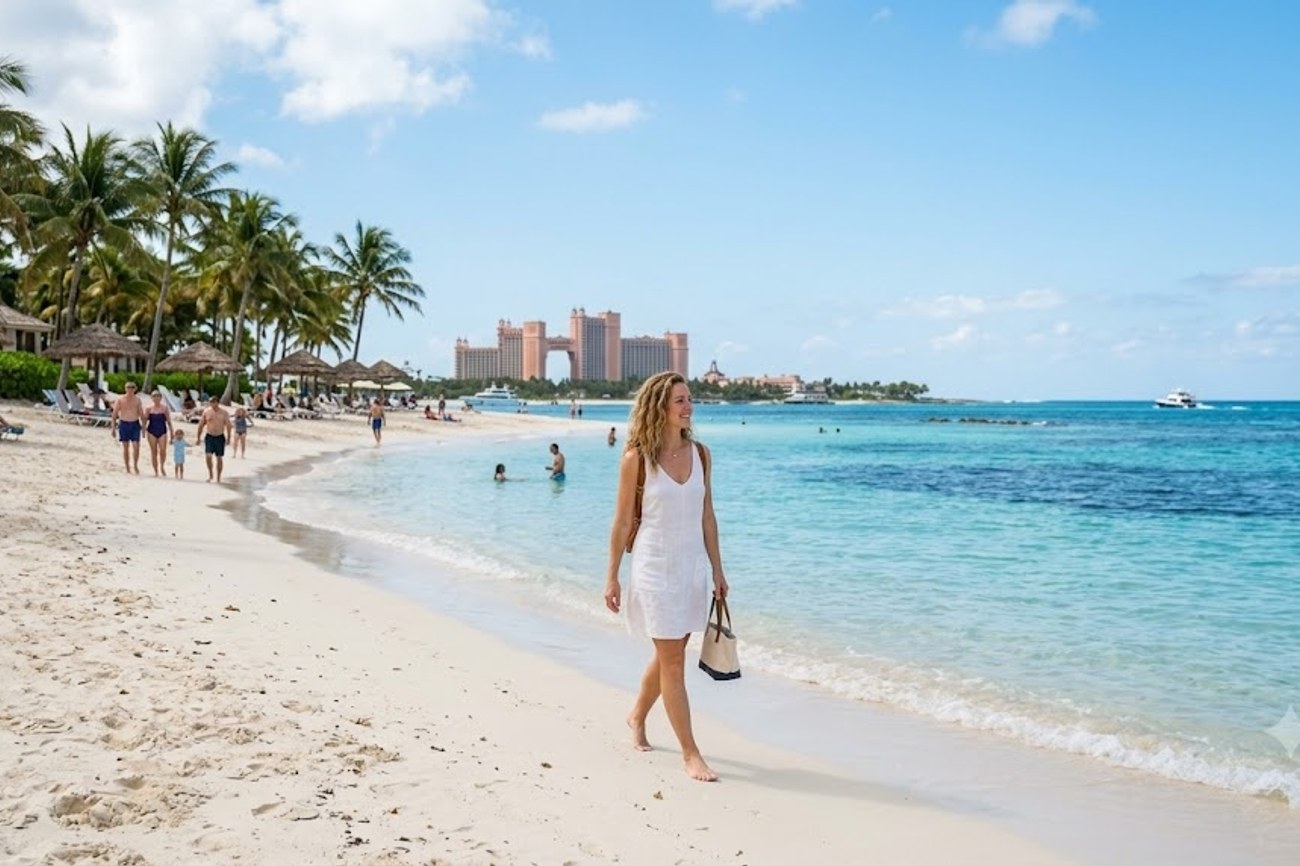
Image generated by AI
The United States Department of State has maintained The Bahamas at a Level 2 travel advisory, a designation that signals "Exercise Increased Caution" and mirrors the risk profiles of several other high-traffic Caribbean hubs. While this status often triggers alarm among casual travelers, data from the World Travel & Tourism Council indicates that destination demand in the Caribbean has remained resilient despite static or fluctuating safety ratings, as the region continues to capture a massive share of the North American short-haul market.
The Bahamas Risk Profile in Numbers
The current Level 2 advisory is not a new restriction but a refresh of existing guidance. The core of the US Department of State's concern centers on crime-related risks, specifically robbery, burglary, and violent crime. These incidents are not evenly distributed across the archipelago but are concentrated in high-density urban centers.
Data points from the advisory specifically highlight Nassau (New Providence Island) and Freeport (Grand Bahama) as the primary zones where visitors must maintain heightened situational awareness. This pattern is typical for "Gateway Cities" in the Caribbean, where the intersection of high tourist density and local economic disparities often leads to a higher per-capita crime rate compared to the "Out Islands."
The persistence of the Level 2 rating indicates a plateau in the safety trajectory. It suggests that while the Bahamian government has implemented tourism infrastructure improvements, the underlying crime metrics in urban hubs have not decreased sufficiently to warrant a move to Level 1 ("Exercise Normal Precautions"). For the travel industry, this means the Bahamas is operating in a "managed risk" environment, where the volume of arrivals continues to grow despite the official caution.
Comparative Regional Safety Benchmarks
When placing The Bahamas within the broader Caribbean context, the Level 2 designation is a common benchmark. Many destinations in the region fluctuate between Level 1 and Level 2 based on seasonal crime spikes or political instability. The Bahamas' stability at Level 2 suggests a predictable risk environment rather than an escalating one.
The following table compares the current US State Department positioning for key Caribbean hubs to provide a regional baseline:
| Destination | US State Dept Level | Primary Risk Driver | Market Position |
|---|---|---|---|
| The Bahamas | Level 2 | Urban Crime (Nassau/Freeport) | High-Volume Gateway |
| Dominican Republic | Level 2 | Crime / Localized Violence | Mass Market / All-Inclusive |
| Jamaica | Level 2 | Violent Crime / Gang Activity | Cultural / High-Growth |
| Aruba | Level 1 | General Safety | Premium / Low-Risk |
| Haiti | Level 4 | Civil Unrest / Extreme Violence | Restricted / Non-Tourism |
The data shows that The Bahamas sits in the "Cautionary Middle." It is significantly safer than the high-risk zones of the Greater Antilles (Level 4) but lacks the near-universal safety rating of the ABC islands (Aruba, Bonaire, Curaçao). According to IATA reports on passenger flow, these safety ratings rarely deter cruise passengers, as the "controlled environment" of a cruise ship mitigates the perceived risk of a Level 2 destination.
What This Means for Travelers
For the individual traveler, a Level 2 advisory should be viewed as a operational guide rather than a deterrent. The data suggests that the risk is geographic, not systemic.
If you are planning a trip to The Bahamas in the coming quarters, the following data-driven strategies are recommended:
- Geographic Diversification: If your risk tolerance is low, shift your itinerary from Nassau and Freeport toward the Out Islands or the Exuma region. These areas lack the high-density urban crime patterns cited in the US advisory.
- Transportation Security: In Nassau, avoid unregulated transit. Use vetted hotel transfers or reputable ride-sharing services. The advisory's focus on robbery suggests that "transitional spaces"—the movement between a secure resort and a public attraction—are the highest risk points.
- Insurance Calibration: Given the Level 2 status, ensure your travel insurance specifically covers "trip interruption" and "medical evacuation." While crime is the focus of the advisory, the geographic dispersion of the islands means medical facilities in the Out Islands are limited compared to New Providence.
- Booking Windows: Because the Bahamas remains a top-tier destination for US travelers regardless of the advisory, demand for luxury resorts on Paradise Island remains inelastic. Booking 12-16 weeks in advance is recommended for peak winter seasons to avoid the price surges associated with limited inventory.
Forward Projection: The "Safe-Haven" Shift
Looking at the current trajectory, we are seeing a trend toward "Safe-Haven Tourism" within the Caribbean. As urban centers in various nations face rising costs and crime, there is a measurable shift in high-net-worth traveler behavior toward isolated, luxury-enclave tourism.
The Bahamas is leaning into this by expanding its "Out Island" luxury offerings. By moving the tourist footprint away from the high-risk zones of Nassau and Freeport and toward private cays and boutique Exuma resorts, the destination can maintain high ADR (Average Daily Rate) while reducing the number of tourists exposed to the risks mentioned in the Level 2 advisory.
We expect the US State Department to maintain the Level 2 rating for the next 12-24 months. Significant movement to Level 1 would require a systemic drop in urban crime statistics that typically takes years of policy implementation to achieve. However, the "cruise-port economy" will likely continue to grow, as the Cruise Lines International Association continues to expand Caribbean itineraries, effectively insulating passengers from the risks that affect independent land-based travelers.
FAQ: Bahamas Travel Safety 2024-2025
Will hotel and flight prices increase due to the advisory? No. The Level 2 advisory is a long-standing designation. Prices are driven by seasonal demand and fuel costs, not by the safety rating. Demand remains high, particularly for luxury segments.
Is it safe to visit Nassau and Freeport? Yes, provided you follow the "increased caution" guidelines. Avoid unfamiliar areas after dark and keep valuables secure. The risks are comparable to many major US metropolitan areas.
Should I avoid The Bahamas in favor of other islands? Only if you have a zero-risk tolerance. Compared to other Caribbean destinations, The Bahamas offers a stable balance of accessibility and safety. The Out Islands provide a lower-risk alternative to the urban hubs.
Which travel insurance is best for Level 2 destinations? Choose a policy that includes comprehensive theft coverage and emergency medical transport. Ensure the policy does not have "exclusion clauses" for regions under Level 2 advisories.
Data suggests that while the warning remains, the allure of the archipelago continues to outweigh the caution.
#BahamasTourism2024 #USStateDeptAdvisory #CaribbeanMarketAnalysis #NassauCrimeMetrics #TravelRiskManagement #OutIslandsGrowth
Related Travel Guides
Disclaimer
This article is for informational and educational purposes only. It does not constitute legal, financial, or professional advice. While we strive to provide accurate and up-to-date information, travel policies, regulations, and conditions change rapidly. Always verify information with official sources before making travel decisions. Nomad Lawyer makes no representations about the accuracy, reliability, completeness, or suitability of the information provided. Readers should consult qualified professionals for advice specific to their circumstances. The views expressed in this article are those of the author and do not necessarily reflect the views of Nomad Lawyer.
Naina Thakur
Contributor & Travel Specialist
Travel enthusiast and legal writer covering visa regulations, responsible tourism, and cultural journeys across global destinations.
Learn more about our team →