Australia Scales ReefSeed Technology in Cairns: A New Era of Coral Restoration Tourism 2026

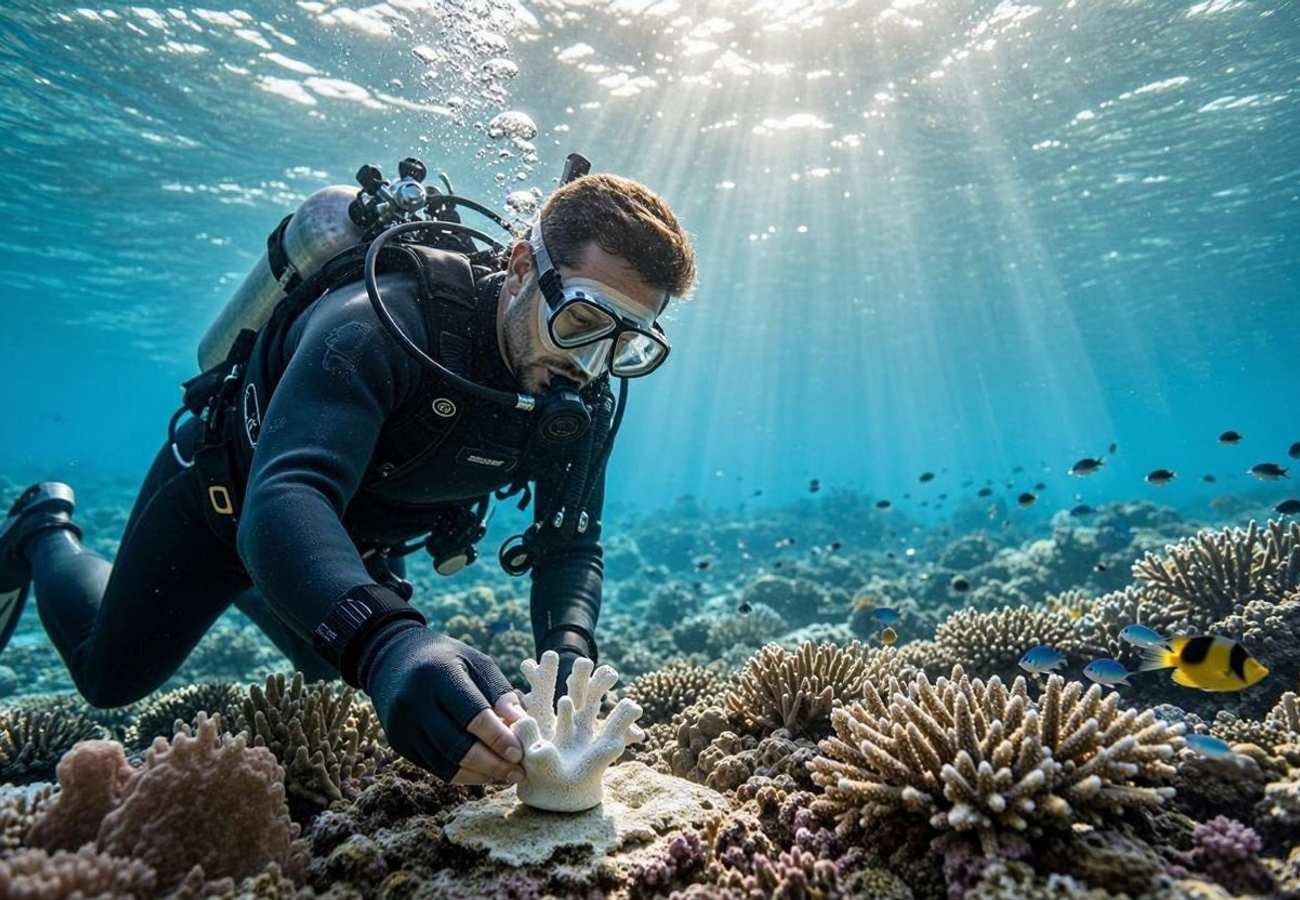
Image generated by AI
Imagine landing in Cairns and discovering that your reef excursion is no longer just a sightseeing trip, but an active participation in a biological rescue mission. Instead of merely observing bleached coral skeletons, passengers are now witnessing the deployment of thousands of lab-grown, heat-tolerant coral larvae designed to rebuild the ecosystem in real-time.
The Shift to Active Biological Intervention
For decades, the strategy for protecting the Great Barrier Reef relied on passive conservation—creating "no-take" zones and restricting anchor damage. However, repeated thermal anomalies and mass bleaching events proved that spatial protection cannot shield shallow-water corals from systemic climate stress.
Australia has now pivoted toward an "active intervention" model. This strategy integrates high-tech marine biotechnology with the logistical power of the commercial tourism sector and the sovereign governance of First Nations communities. The economic stakes are massive; a report by Deloitte Access Economics values the social and economic icon value of the reef at 95 billion Australian dollars, with an annual value-added contribution of 9 billion Australian dollars supporting over 77,000 full-time equivalent positions.
A critical challenge identified by the Great Barrier Reef Marine Park Authority is the extreme concentration of tourism. Currently, 86% of all visitor activity is crammed into just 7% of the marine park, primarily around Cairns, Port Douglas, and the Whitsundays. To prevent these high-traffic nodes from collapsing, the Australian Government, via the Reef Trust, has funded the Reef Restoration and Adaptation Program.
The ReefSeed System: Industrializing Coral Growth
The technical driver of this revolution is the ReefSeed system, developed by the Australian Institute of Marine Science (AIMS). This system moves coral propagation out of fixed land-based laboratories and into standardized, intermodal containers. These "plug-and-play" hatcheries can be stationed at dive resorts or commercial ports, allowing for decentralized restoration.
The process is managed by the Autospawner architecture, which automates three critical biological stages:
- Gamete Harvesting: Surface skim flumes automatically collect egg-sperm bundles during seasonal spawning, removing the need for manual overnight collection.
- Mass Fertilization: Optical fluidic sensors monitor sperm density to ensure high fertilization efficiency and prevent polyspermic mortality.
- Larval Settlement: Planula larvae are induced to settle onto engineered ceramic and composite substrates.
Unlike traditional methods where 99% of larvae are lost to predation in the open ocean, these juvenile corals are fixed to ceramic tabs. These tabs are hydrodynamically designed to wedge into reef crevices naturally, removing the need for toxic chemical epoxies.
Restoration Methodology Comparison
| Operational Characteristic | Traditional Manual Micro-Fragmentation | ReefSeed Modular Mariculture |
|---|---|---|
| Reproductive Method | Asexual cutting / clonal budding | Automated sexual mass spawning |
| Labor Requirement | 100-200 divers and lab staff | 2-3 technicians supervising hardware |
| Infrastructure | Fixed multi-million dollar labs | Standardized intermodal containers |
| Fixing Method | Diver-applied chemical epoxy | Self-stabilizing ceramic tabs |
| Genetic Profile | Clonal replicates (no variation) | High recombination (heat-tolerant) |
The scale of deployment is accelerating rapidly. Initial seasonal trials saw 16,000 seeding devices deployed, which grew to 44,000 in the second phase. The upcoming campaign targets a massive increase to 120,000 engineered units.
Passenger Rights and Environmental Ethics
As tourism shifts toward "restoration tourism," travelers should be aware of the evolving legal and ethical framework surrounding these activities. While these programs are government-sanctioned, passengers engaging in "citizen science" or restoration excursions should verify the following:
- Permit Compliance: Ensure the operator holds valid permits from the Great Barrier Reef Marine Park Authority to avoid contributing to illegal disturbances.
- Liability Waivers: Active restoration often involves different safety protocols than standard snorkeling. Review your insurance coverage for "active conservation" activities.
- Contribution Transparency: If a tour operator charges a "restoration fee," passengers have the right to request documentation on how those funds are allocated to the Reef Trust or AIMS.
Rebooking and Visiting Strategy
For those planning a trip to the East Australian Restoration Corridor, the experience varies by hub:
- Cairns & Port Douglas: The primary entry points for high-density reef interaction. Best for those wanting to see the ReefSeed modules in action.
- Townsville: The scientific heart of the operation, home to the SeaSim training center. Ideal for travelers interested in the technical and educational side of marine biology.
- The Whitsundays: Focuses on integrating luxury tourism with ecological recovery.
If your primary goal is to witness the "Restoration Revolution," check FlightRadar24 for the most efficient routes into Cairns (CNS) or Townsville (TSV) to maximize your time in the field.
FAQ: Reef Restoration Tourism 2026
Is the ReefSeed process harmful to the natural reef? No. The system uses sexual reproduction to increase genetic diversity and employs ceramic tabs that wedge naturally into the reef, avoiding the use of toxic glues or mechanical fasteners.
Can tourists actually help plant the coral? Yes, many operators in Cairns are integrating "citizen science" into their itineraries, allowing passengers to assist technicians in deploying seeding devices under strict supervision.
Does this mean the Great Barrier Reef is fully recovered? No. This is an industrial-scale intervention to prevent total collapse. While the technology is promising, the reef still faces systemic threats from rising ocean temperatures.
The transition from passive observation to active restoration marks the only viable path forward for the survival of the world's largest living structure.
Related Travel Guides
This article is for informational purposes. Flight routes, passenger regulations, visa rules, and transit advisories are subject to change by airlines and aviation authorities. Readers are advised to verify schedules and travel documentation with relevant carriers and border agencies before departure.
Related Stories
El Salvador Hosts Second Latin American Traditional and Ancestral Cooking Congress in San Salvador 2026

US International Tourism 2026: Overseas Arrivals Drop 7% as Mexico and Canada Drive 50% of Traffic