
Breaking Airline News: 54 Flight Cancellations Plunge Qantas, Jetstar, and Air New Zealand into Trans-Tasman Travel Chaos
Breaking airline news: Amidst a terrifying era of severe operational fragility, massive flight cancellations violently plunge Qantas, Jetstar, and Air New Zealand passengers into extreme trans-Tasman travel chaos.

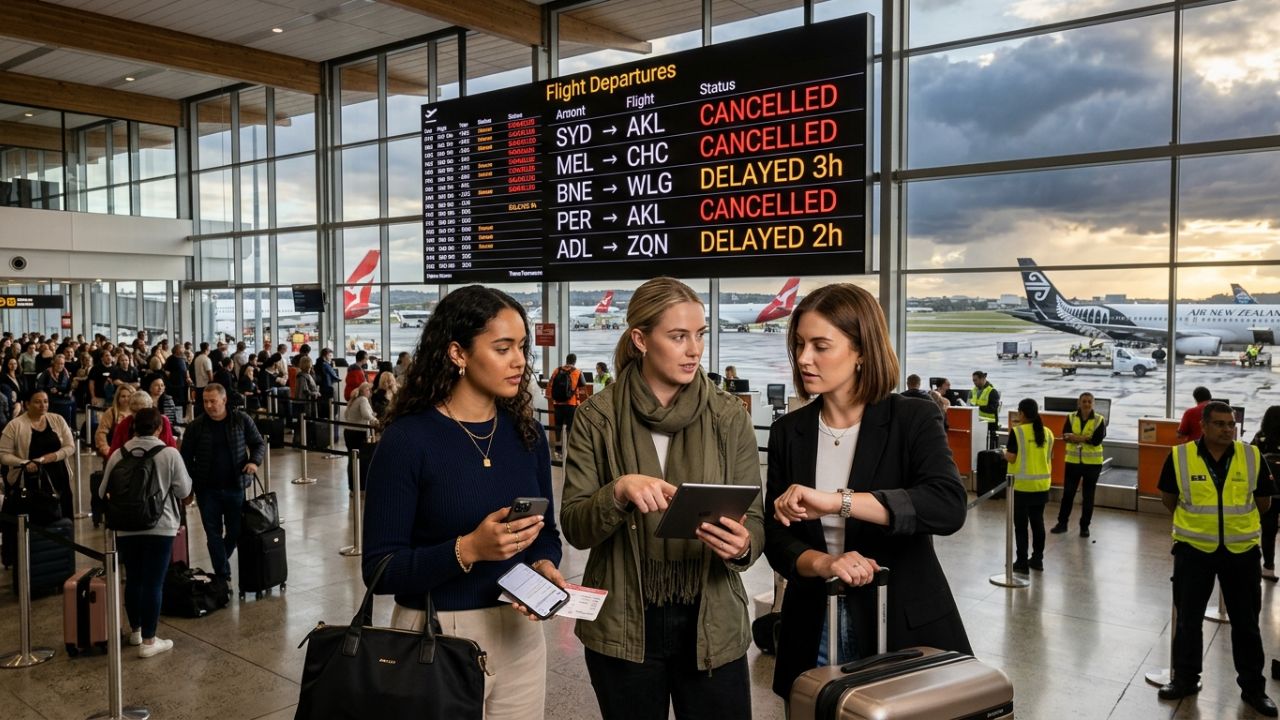
Image representing the intense strategic battle as hundreds of stranded passengers desperately navigate severe flight cancellations and massive terminal gridlock, battling extreme travel chaos across the trans-Tasman aviation grid.
Breaking Airline News: 54 Flight Cancellations Plunge Qantas, Jetstar, and Air New Zealand into Trans-Tasman Travel Chaos
As paralyzing terminal bottlenecks, terrifying logistical failures, and severe operational fragility violently threaten to completely shatter passenger mobility across Oceania, the trans-Tasman aviation grid has suffered a devastating network collapse. In a harrowing display of infrastructure vulnerability, hundreds of travelers are currently suffering across Australia and New Zealand after major operators suddenly executed massive flight cancellations and triggered a terrifying cascade of delays. This sudden, catastrophic disruption instantly severed critical aviation lifelines, plunging passengers relying on Qantas, Jetstar, Network Aviation, Alliance, Air New Zealand, and Sounds Air into absolute, extreme travel chaos. By violently executing 54 cancellations and initiating 674 unannounced delays at peak impact, the airlines completely destroyed travel itineraries connecting major hubs like Sydney, Perth, Brisbane, Adelaide, Port Lincoln, and Auckland, leaving tourists and corporate executives trapped in an agonizing state of transit paralysis.
In a brutal demonstration of how fragile modern aviation networks truly are, the sheer logistical nightmare of attempting to navigate between these two nations rapidly degenerated into a terrifying transit scenario. For passengers, securing a confirmed boarding pass meant absolutely nothing as departure boards violently flipped to red across multiple time zones. The terrifying ripple effects of this operational meltdown—driven by a lethal combination of airline schedule adjustments, severe operational constraints, and regional airport congestion—violently spread across both domestic and international terminals. As airport operations buckled under the immense pressure of stranded travelers attempting to rebook, the incident proved that even highly established legacy carriers are violently susceptible to localized bottlenecks, cascading into massive, uncontrollable travel chaos that spans an entire continent.
Expanded Overview: The Massive Scale of the Trans-Tasman Contagion
The terrifying crisis of overwhelming passenger stress currently gripping the Australian and New Zealand networks brutally exposes the severe limitations of airlines attempting to maintain high-demand schedules. Recognizing that aggressively operating compromised fleets leads directly to systemic failure, carriers including Qantas and Air New Zealand were forced to execute these massive groundings. The sheer scale of this infrastructural collapse is immense. Because massive hubs like Sydney and Auckland serve as highly critical connective nodes, the combination of mass cancellations and extreme delays created uncontrollable ripple effects, heavily delaying arriving passengers and departing executives attempting to secure connections.
Section-Wise Breakdown: The Operational Realignment
Shattering the Australian Grid: Domestic Hub Collapse
The most terrifying aspect of this specific travel chaos is its brutal, uneven impact across Australia's primary domestic infrastructure. Sydney International Airport leads the list of devastation, absorbing massive congestion as the busiest hub. Perth and Brisbane followed closely, trapping inbound and outbound passengers. Even smaller regional airports, including Adelaide International and Port Lincoln, suffered notable operational challenges, proving that regional operators like Alliance and Network Aviation are severely exposed. To fully comprehend the massive logistical fallout, review the exact Australian operational metrics below.
Australian Airports Disruption Matrix
| Airport | Cancelled Flights | Delayed Flights | Impact Severity |
|---|---|---|---|
| Sydney International | 2 | 123 | Extreme (Busiest Hub) |
| Perth International | 5 | 117 | Severe (Domestic/Inbound) |
| Brisbane Airport | 6 | 103 | Severe (Queensland Routes) |
| Adelaide International | 5 | 41 | Moderate |
| Port Lincoln | 2 | 7 | Localized Disruption |
| Armidale | 1 | Minimal | Localized Disruption |
Australian Airlines Disruption Matrix
| Airline | Cancelled Flights | Delayed Flights |
|---|---|---|
| Qantas | 3 | 60 |
| Jetstar | 3 | 79 |
| QantasLink | 4 | 55 |
| Network Aviation | 2 | 23 |
| Alliance Airlines | 2 | 6 |
The New Zealand Contagion: Trans-Tasman Severance
Simultaneously, the failure to launch flights stranded passengers expecting to travel across New Zealand. Auckland International Airport, the nation's busiest hub, suffered intense operational pressure. Meanwhile, Wellington International suffered a highly disproportionate ratio of cancellations, signaling severe staffing and scheduling challenges. Legacy operator Air New Zealand and regional carrier Sounds Air were violently forced to sever their local schedules.
New Zealand Airports Disruption Matrix
| Airport | Cancelled Flights | Delayed Flights |
|---|---|---|
| Auckland International | 2 | 28 |
| Wellington International | 7 | 7 |
New Zealand Airlines Disruption Matrix
| Airline | Cancelled Flights | Delayed Flights |
|---|---|---|
| Air New Zealand | 5 | 24 |
| Sounds Air | 5 | 1 |
Passenger Impact: Surviving the Oceania Lockdown
For the hundreds of travelers attempting to navigate the rapidly collapsing transit corridors via Sydney, Brisbane, and Auckland, this massive capacity failure represents a highly terrifying reality. The brutal reality of enduring unannounced delays inflicts intense psychological stress—leaving the passenger entirely stranded and draining financial resources. By aggressively executing tactical survival protocols, passengers can drastically reduce their exposure to these terrifying logistical environments.
What Passengers Can Do Now: A Survival Guide
Travelers desperately preparing to navigate the highly fragile trans-Tasman network must immediately execute the following survival protocols when facing a sudden cancellation:
- Violently Monitor Airline Status: Do not rely solely on terminal announcements. Verify your flight’s latest status via the Qantas, Jetstar, or Air New Zealand official mobile apps for immediate updates and dedicated notifications.
- Execute Immediate Rebooking Defense: Contact customer service immediately for alternate flights or compensation options. Because delays are generating massive knock-on effects, early, aggressive contact is the only way to secure an extraction out of bottlenecks like Perth or Wellington.
- Consider Alternative Routing Strategies: If your domestic flight is violently canceled, immediately investigate alternative regional transport, such as trains or buses within Australia, if schedules are absolutely critical.
Industry Analysis: The Economics of Hub Fragility
From a strategic aviation perspective, the travel turmoil currently threatening legacy networks highlights the terrifying vulnerability of high-demand domestic routing. Industry analysts confirm that the massive disruption perfectly demonstrates how operational bottlenecks and staffing pressures can violently infect the entire Oceania corridor. When carriers like Qantas and Air New Zealand suffer synchronized disruptions, the lack of operational resilience guarantees that thousands of passengers will suffer severe travel chaos, heavily disrupting connectivity across both nations.
Conclusion: A Strategic Retreat to Ensure Aviation Survival
As the extremely critical travel network continues to face terrifying strain, the massive disruptions executed across Australia and New Zealand represent a massive warning to passengers attempting to rely blindly on scheduled itineraries. Author's Observation: All information regarding the specific airline cancellations, delays, and affected routing was obtained manually from FlightAware’s official website. In order to maintain absolute passenger safety, airlines actively modify schedules without warning. At the time of this final summary snapshot, the travel disruption stabilized slightly to reflect 426 total delays and 30 cancellations actively impacting passengers, confirming that surviving modern aviation requires terrifyingly swift adaptability and a highly aggressive approach to rebooking.
Key Takeaways
- Massive Tactical Failure: The Australia and New Zealand aviation grids suffered a massive operational meltdown, peaking at 54 flight cancellations and 674 delays.
- Primary Operators Crippled: Qantas, Jetstar, QantasLink, Air New Zealand, and Sounds Air suffered severe scheduling collapses, stranding hundreds.
- Total Network Contagion: The travel chaos violently spread to major hubs including Sydney, Perth, Brisbane, Auckland, and Wellington.
- Severe Regional Isolation: Regional airports like Port Lincoln and Armidale suffered localized but highly disruptive cancellations.
- Traveler Advisory: Stranded passengers must aggressively monitor official airline apps, avoid physical queues by contacting customer service immediately, and prepare alternative travel routes to escape the massive terminal gridlock.
Related Travel Guides
- How Airline Consolidations Are Sparking Major Travel Chaos Across the Globe
- Navigating Severe Flight Cancellations: A Passenger's Guide to Surviving Airport Disruptions
- The Ultimate Guide to Beating Airport Congestion During the 2026 Summer Surge
Zealand), and the comprehensive airport impact matrices presented in this article are based on official intelligence sourced manually from FlightAware as of June 12, 2026. Specific flight availability, terminal conditions, and exact aircraft delays are highly dynamic and subject to immediate, unannounced changes based on operational capacity and airline safety mandates. Passengers are strongly advised to meticulously verify specific route availability and rebooking rights directly with their operating airline before attempting to navigate through affected hubs.*
Disclaimer
This article is for informational and educational purposes only. It does not constitute legal, financial, or professional advice. While we strive to provide accurate and up-to-date information, travel policies, regulations, and conditions change rapidly. Always verify information with official sources before making travel decisions. Nomad Lawyer makes no representations about the accuracy, reliability, completeness, or suitability of the information provided. Readers should consult qualified professionals for advice specific to their circumstances. The views expressed in this article are those of the author and do not necessarily reflect the views of Nomad Lawyer.
Kunal K Choudhary
Co-Founder & Contributor
A passionate traveller and tech enthusiast. Kunal contributes to the vision and growth of Nomad Lawyer, bringing fresh perspectives and driving the community forward.
Learn more about our team →