
Alstom CEO Performance Issues Trigger 28% Stock Drop in April 2026
Alstom's new CEO Martin Sion reveals profitability shortfall despite €27.6bn order intake in 2026. Manufacturing misalignment sparks 28% stock price decline and strategic overhaul.

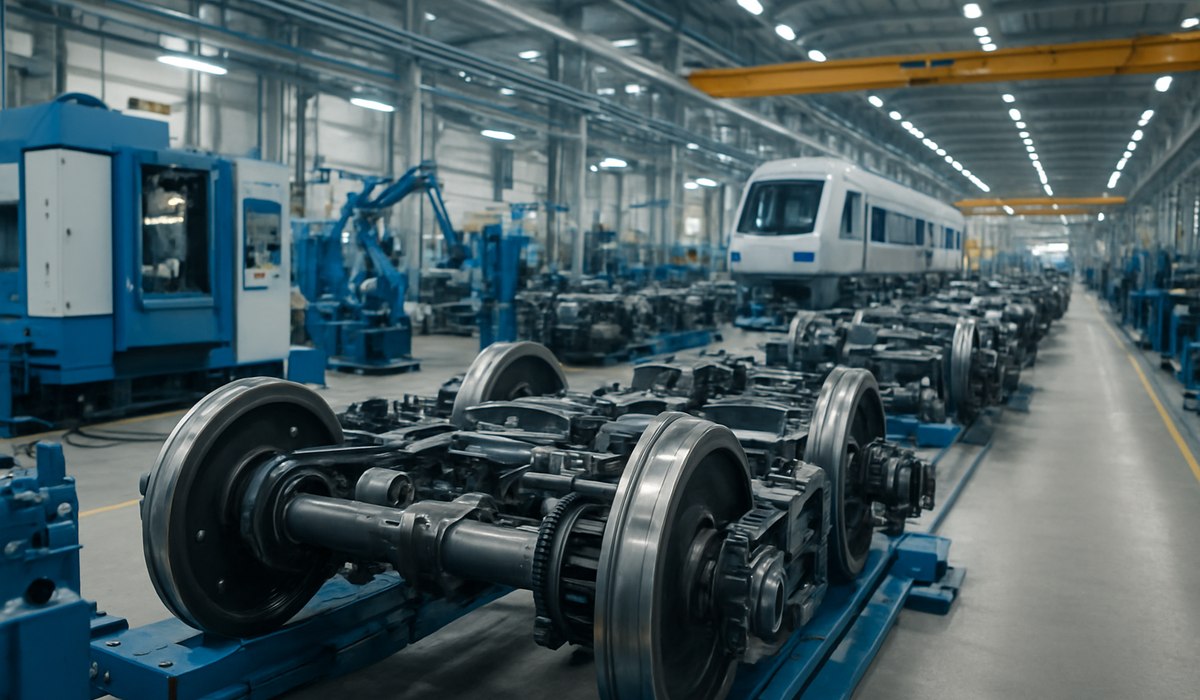
Image generated by AI
Europe's Rail Network Facing Delays as Alstom CEO Admits Critical Performance Gap
Martin Sion, who assumed leadership of Alstom on April 1, 2026, publicly acknowledged that the European rail manufacturer's profitability collapsed despite record commercial activity. In a surprise April 16 analyst call, Sion revealed that a €27.6 billion order intake and 7% organic sales growth failed to translate into financial strength. The announcement triggered a 28% stock price plummet the following morning, raising concerns about rail infrastructure timelines across Europe and potential travel disruptions for millions of commuters.
The Alstom CEO performance issues stem from misalignment between engineering, manufacturing, and supply chain operations across Italian, French, and German plants. Production ramps underperformed, project delays cascaded through the backlog, and gross margins contracted to 6%, down from historical 7% targets. For travelers relying on European rail networks—particularly new rolling stock deployments—these operational breakdowns signal extended timelines for modernized train fleets and potential service disruptions.
New Leadership Faces Immediate Operational Crisis
Sion's appointment represented a leadership transition at a critical juncture. Within his first two weeks, he toured Alstom's manufacturing footprint and identified systemic execution failures. "Let me be very clear from the start, this is not the way I was expecting to start my mandate," Sion stated during the analyst conference call.
The core problem: Alstom operates in a project-based business where timeline adherence is non-negotiable. When development, industrialization, and manufacturing sites fail to coordinate, production advances while regulatory homologation remains incomplete. This creates cascading domino effects across the €100 billion backlog. Sion emphasized that the company's inability to maintain planning discipline directly undermines its position as a global rail leader.
The Alstom CEO performance issues extend beyond internal operations. Geopolitical constraints in the Middle East added external pressure during the fiscal year 2025-26. Combined with slower-than-anticipated rolling stock production ramps, these factors compressed profitability margins and free cash flow generation.
Production Planning and Alignment Issues Across European Plants
Manufacturing output declined 2% year-over-year, with Alstom producing 4,284 passenger cars in 2025-26 versus 4,383 previously. The company attributes this to "rolling stock projects moving at a slower than anticipated pace, prolonging the ramp-up phase." This slowdown directly impacts European rail operators and passengers expecting delivery of modernized train fleets.
Sion's assessment revealed three structural problems: insufficient traction on planning discipline, weak coordination between engineering and supply chain functions, and production scheduling misalignment. These aren't isolated incidents but systemic issues affecting multiple large projects simultaneously.
Free cash flow generation suffered accordingly. Alstom generated €330 million in 2025-26, a 34% decline from €502 million the previous year, despite remaining within guidance bands of €200-400 million. For investors and rail operators depending on capital deployment for infrastructure upgrades, this shortfall signals constrained investment capacity for the coming years.
Sion's strategic response centers on three pillars: tighter day-to-day execution discipline, stronger planning protocols, and enhanced cross-functional coordination. An action plan will be announced later in 2026, but immediate operational restructuring has commenced across European manufacturing facilities.
Market Reaction and Financial Implications for Stakeholders
The stock market's 28% decline on April 17, 2026, reflected investor alarm at both the magnitude of performance gaps and uncertainty around recovery timelines. Alstom revised its three-year cumulative free cash flow guidance downward, withdrawing the previous €1.5 billion forecast. This revision signals deeper structural challenges than previously disclosed to capital markets.
For the 2026-27 financial outlook, Alstom projects 5% organic sales growth with adjusted EBIT margins rebounding to approximately 6.5%. However, capital expenditure for service infrastructure expansion and unfavorable trade working capital adjustments will constrain cash generation below historical benchmarks. The company expects adjusted margins to recover toward fiscal 2023-24 levels, but timing remains uncertain.
These financial headwinds have direct implications for European rail modernization timelines. Infrastructure operators depending on Alstom deliveries face potential project delays. Travel infrastructure expansion—particularly in France, Germany, and Italy—may experience extended schedules as the manufacturer prioritizes execution discipline over rapid production increases.
Alstom's preliminary results showed adjusted EBIT margin contraction to 6% in 2025-26, down from previous guidance of 7%. This margin compression reflects both gross margin pressure and the failure to leverage 7% organic sales growth into profitability gains. Such metrics indicate manufacturing inefficiency or supply chain cost inflation that new leadership must resolve.
Sion's Strategic Assessment Across European Manufacturing
During his initial facility tours, Sion identified that development, industrialization, and manufacturing across multiple sites operate without sufficient alignment. This architectural problem creates unnecessary complexity, redundant processes, and timeline conflicts. In project-based businesses, such misalignment directly translates to cost overruns and schedule delays.
His priority involves driving operational transformation focused on execution quality, not volume growth. This represents a strategic shift from expansion to stabilization. Sion plans to review Alstom's industrial portfolio and footprint, including existing transformation initiatives, to determine which operations support long-term profitability and which drain resources without delivering returns.
The Alstom CEO performance issues extend into commercial strategy. Sion indicated that Alstom will adopt a more focused product and commercial approach, potentially narrowing the portfolio to segments where the company can maintain planning discipline and margin integrity. This suggests potential divestitures or consolidation of manufacturing capacity across European plants.
For rail operators and infrastructure planners across Europe, this strategic reassessment could mean extended delivery windows for certain rolling stock types as Alstom right-sizes operations. However, it may also result in improved execution quality for critical projects once stabilization occurs.
| Metric | 2025-26 Result | Prior Year | Change | Impact on Operations |
|---|---|---|---|---|
| Order Intake | €27.6bn | €19.8bn | +39% | Strong commercial activity masked execution gaps |
| Organic Sales Growth | 7% | 4% | +3% | Revenue growth failed to improve profitability |
| Adjusted EBIT Margin | 6% | 7% | -1% | Margin compression signals operational inefficiency |
| Free Cash Flow | €330m | €502m | -34% | Reduced capital for infrastructure investments |
| Passenger Cars Produced | 4,284 | 4,383 | -2% | Production ramp slower than planned |
| Book-to-Bill Ratio | 1.4x | 1.0x | +0.4x | Increased backlog extends delivery timelines |
| Net Debt | €400m | €434m | -€34m | Slight balance sheet improvement amid challenges |
| Projected 2026-27 Sales Growth | 5% | 7% (realized) | -2% | Slower growth expected during stabilization phase |
What This Means for Travelers: Five Key Takeaways
-
Extended Train Fleet Modernization Timelines: European rail operators expecting delivery of new Alstom rolling stock should anticipate delays. Manufacturing execution issues mean projects move at slower-than-anticipated paces. If you depend on route-specific modernization for improved comfort or frequency, plan for extended wait times through 2026-27.
-
Potential Service Disruptions During Transition: As Alstom restructures operations and tightens planning discipline, some European rail networks may experience temporary capacity constraints. Regional operators managing Alstom projects should monitor
Disclaimer
This article is for informational and educational purposes only. It does not constitute legal, financial, or professional advice. While we strive to provide accurate and up-to-date information, travel policies, regulations, and conditions change rapidly. Always verify information with official sources before making travel decisions. Nomad Lawyer makes no representations about the accuracy, reliability, completeness, or suitability of the information provided. Readers should consult qualified professionals for advice specific to their circumstances. The views expressed in this article are those of the author and do not necessarily reflect the views of Nomad Lawyer.
Raushan Kumar
Founder & Lead Developer
Full-stack developer with 11+ years of experience and a passionate traveller. Raushan built Nomad Lawyer from the ground up with a vision to create the best travel and law experience on the web.
Learn more about our team →