
Asia Air Travel Hit by 300 Cancellations and 2,595 Delays
Widespread flight disruptions hit Asia, recording 2,595 delays and 300 cancellations due to Typhoon Dolphin and airspace congestion.

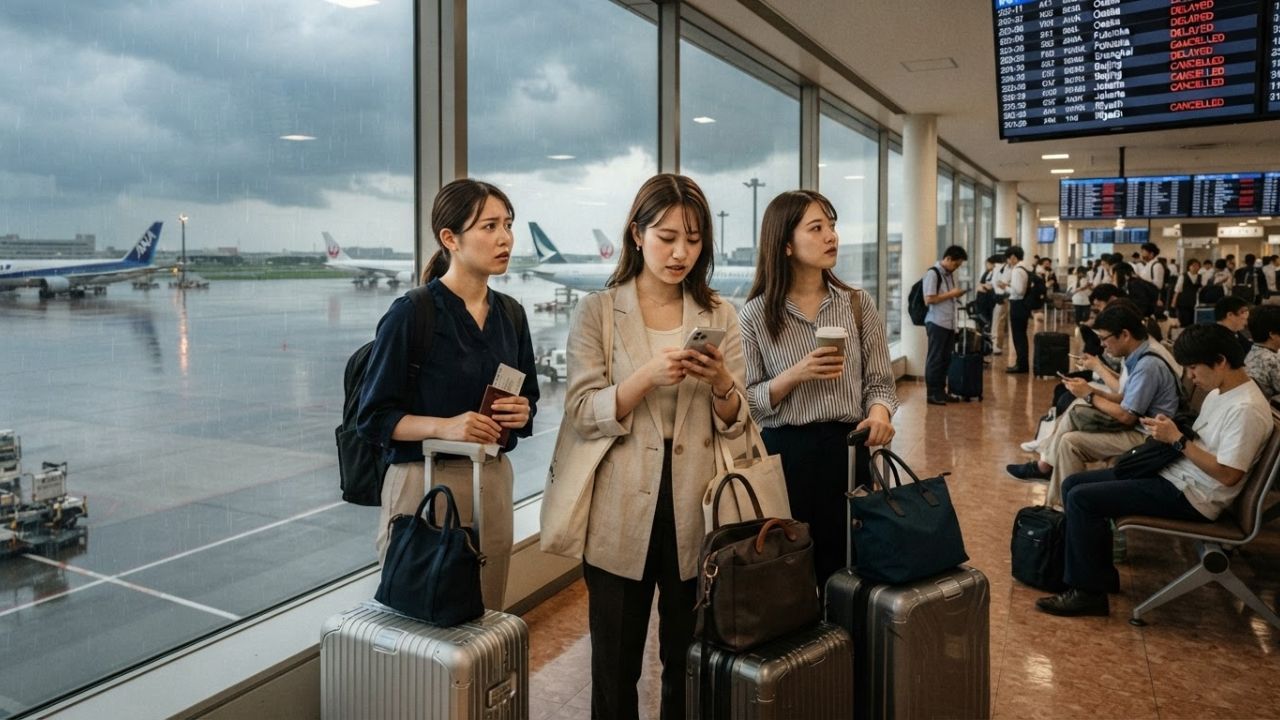
Image generated by AI
Aviation hubs across Asia are experiencing severe disruptions, recording 2,595 delays and 300 cancellations on August 6, 2026. While Typhoon Dolphin forces regional flight cuts in southern Japan, terminal congestion is causing major backlog delays in China.
The commercial aviation market in the Asia-Pacific region is highly interconnected, meaning that schedule disruptions at major hub airports quickly cascade through regional networks.
When typhoons limit flights in southern Japan or slot capacity is constrained in eastern China, carriers must adjust departures across neighboring air corridors to protect aircraft safety margins.
Weather Pressures: Typhoon Dolphin Forces Cancellations in Southern Japan
Southern Japan is experiencing significant route cuts as Typhoon Dolphin approaches Okinawa and the Amami region. The Japan Meteorological Agency has forecast deteriorating weather conditions, prompting airlines to implement precautionary schedule adjustments.
The impact is concentrated at regional airports serving southern islands:
- Kagoshima Airport: Recorded the highest cancellation rate of the day as regional routes were suspended.
- Island Terminals: Amami, Yakushima, Okinoerabu, and New Tanegashima airports have experienced extensive cancellations on turboprop routes operated by Japan Air Commuter.
- Mainline Carriers: Both Japan Airlines (JAL) and All Nippon Airways (ANA) have adjusted schedules, though major hubs like Tokyo Haneda and Osaka Itami continue to operate with significant delays.
Airspace Congestion: Chinese Hubs Accumulate Extensive Ground Delays
In China, flight disruptions are driven by slot limitations and high traffic density across major eastern provinces. According to real-time logs from FlightAware, China accounted for over two-thirds of the regional delay total.
The heaviest operational pressure is concentrated at Shanghai Pudong International Airport, which recorded the highest delay total of the day.
Other major hubs, including Shanghai Hongqiao, Beijing Capital, Zhengzhou Xinzheng, and Xiamen Gaoqi, also reported backlogs. This gridlock has affected regional carriers like China Eastern, Air China, Shanghai Airlines, and XiamenAir, causing delays to ripple through domestic hub-and-spoke networks.
Operational Restructuring: Saudi Airlines Implement Precautionary Cancellations
Saudi Arabia has recorded high levels of cancellations across Riyadh, Jeddah, Gizan, Najran, and Abha. Unlike operators in China, who kept aircraft moving despite lengthy delays, Saudi carriers chose to cancel flights to protect schedule integrity.
National carrier Saudia and budget operator flyadeal have suspended selected domestic and regional services.
These adjustments occur as airlines manage regional air traffic challenges alongside ongoing aviation security concerns linked to regional tensions.
Transit Backlogs: Slower Traffic Flow at Jakarta Soekarno-Hatta
In Southeast Asia, flight delays are centered at Jakarta Soekarno-Hatta International Airport in Indonesia. While the terminal remains fully open, aircraft departure intervals have been extended to manage domestic schedule density.
Batik Air has registered the largest share of delays in Jakarta, with minor schedule changes also affecting Garuda Indonesia, Lion Air, and Citilink.
Traveler Advisory and Regional Flight Rebooking Tips
To help you manage travel delays during the current storm and congestion cycle:
- Monitor Storm Tracks: If you are scheduled to fly to Okinawa, Kagoshima, or nearby islands, check JMA updates regularly to see if your flight falls within the storm window.
- Register for Automated Notifications: Enable push alerts on your airline's application to receive instant updates on schedule changes before traveling to the terminal.
- Avoid Tight Connections in Shanghai: If you have an international connection at Shanghai Pudong, ensure you have at least three hours of transfer time to cushion against domestic backlog delays.
- Local Culinary Specialties:
- Kagoshima Ramen: Sample this local noodle dish featuring rich pork broth and green onions when transiting through southern Japan.
- Xiaolongbao: Enjoy fresh soup dumplings at terminal restaurants during layovers in Shanghai.
- Verify Rebooking Options: If your regional flight in Japan or Saudi Arabia is cancelled, check alternative train connections (such as the Shinkansen) or nearby airport codes.
Future Projections for Asian Air Traffic Management and Storm Resilience
The simultaneous disruptions across East and Southeast Asia highlight the value of robust alternate airport networks. By coordinating storm adjustments and managing slot allocations, carriers can protect passengers while maintaining regional safety standards.
Over the coming decade, continued investments in satellite-based navigation and storm-tracking flight systems will improve aviation resilience. By maintaining strict safety margins and utilizing flexible alternate routes, regional operators ensure that passengers travel safely across Asia.
Data Table
| Regional Market | Primary Disruptive Factor | Most Affected Airport | Impacted Carriers | Primary Operational Consequence |
|---|---|---|---|---|
| Japan | Typhoon Dolphin | Kagoshima Airport (KOJ) | Japan Airlines, All Nippon, Japan Air Commuter | Widespread cancellations on southern island routes |
| China | Airspace Congestion | Shanghai Pudong (PVG) | Air China, China Eastern, Shanghai Airlines | Long delays cascading through hub networks |
| Saudi Arabia | Operational Capacity / Security | Riyadh (RUH) & Jeddah (JED) | Saudia, flyadeal | High cancellation rates to maintain schedule integrity |
| Indonesia | Domestic Traffic Density | Jakarta Soekarno-Hatta (CGK) | Batik Air, Garuda Indonesia, Lion Air | Moderate delays on domestic commuter lines |
Key Takeaways
- Typhoon Disruptions: Typhoon Dolphin is forcing widespread flight cancellations across Okinawa and the southern islands of Japan.
- Congestion Backlogs: Shanghai Pudong and Beijing Capital are experiencing extensive delays, accounting for the majority of the region's 2,595 delays.
- Network Strategy: Saudi carriers are prioritizing early cancellations over extended delays to protect network reliability.
FAQ
Q: Are airlines liable for compensation during typhoon-related cancellations? A: No, severe weather is classified as an extraordinary circumstance, meaning carriers are not required to pay compensation, though they must assist with re-booking.
Q: How can travelers check if their flight through Shanghai is delayed? A: Passengers should monitor real-time flight tracking portals like FlightAware or check the departure board on the Shanghai airport authority website.
Q: What is the projected path of Typhoon Dolphin? A: The typhoon is forecast to move toward Okinawa and the Amami region, bringing strong winds and heavy rainfall that may affect operations for the next 24 to 48 hours.
Related Travel Guides
Disclaimer
This article is for informational and educational purposes only. It does not constitute legal, financial, or professional advice. While we strive to provide accurate and up-to-date information, travel policies, regulations, and conditions change rapidly. Always verify information with official sources before making travel decisions. Nomad Lawyer makes no representations about the accuracy, reliability, completeness, or suitability of the information provided. Readers should consult qualified professionals for advice specific to their circumstances. The views expressed in this article are those of the author and do not necessarily reflect the views of Nomad Lawyer.
Kunal K Choudhary
Co-Founder & Contributor
A passionate traveller and tech enthusiast. Kunal contributes to the vision and growth of Nomad Lawyer, bringing fresh perspectives and driving the community forward.
Learn more about our team →