
Asia Aviation Crisis 2026: 2,597 Flight Delays and 224 Cancellations Hit Bangkok and Mumbai
Massive aviation disruptions across Asia have resulted in 2,597 delays and 224 cancellations, severely impacting major hubs including Bangkok, Mumbai, and Jeddah.

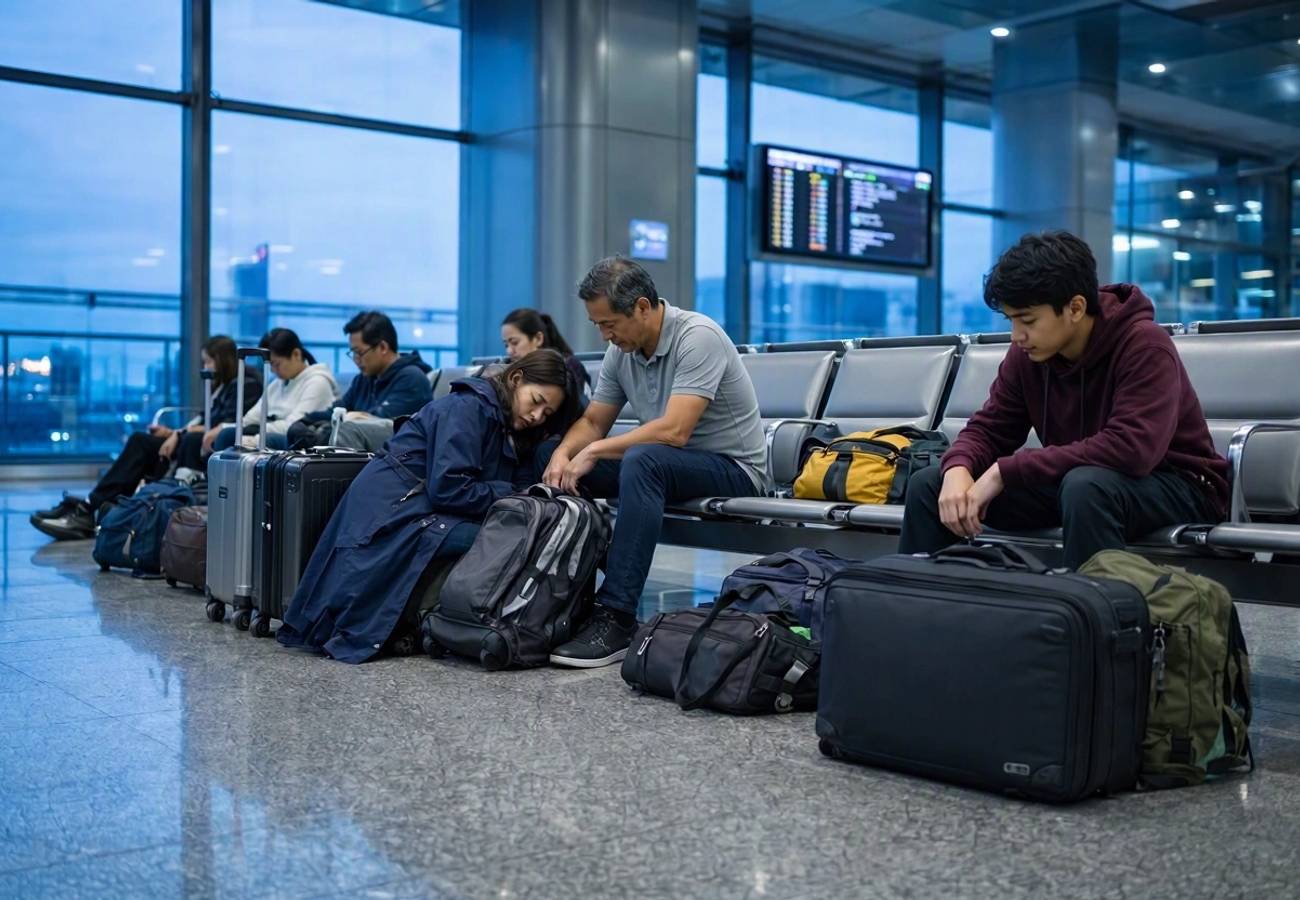
Image generated by AI
[Bangkok, October 27, 2026] — A massive wave of aviation disruptions has paralyzed travel across Asia, resulting in 2,597 recorded flight delays and 224 cancellations. The chaos spans eight countries, including Thailand, India, China, the Philippines, Indonesia, Saudi Arabia, Qatar, and the UAE, leaving thousands of passengers stranded at major international gateways.
The disruptions were logged through October 26, 2026, with the heaviest impact concentrated in South Asia and the Middle East. Operational failures, combined with air traffic control restrictions and airport capacity constraints, have triggered a domino effect across regional networks. Travelers are currently facing significant bottlenecks at hubs managed by entities such as the Airports Authority of India (AAI) and the Airports of Thailand (AOT).
Operational Failures and Systemic Bottlenecks
The current crisis is the result of a convergence of operational challenges. Airline scheduling adjustments and acute crew availability shortages have collided with strict air traffic control restrictions. In several hubs, aircraft turnaround times have spiked due to ground congestion, meaning a single delay in one city is now triggering subsequent cancellations across the network.
Weather volatility and maintenance backlogs have further exacerbated the situation. For passengers, this means that even flights departing from "stable" airports may be delayed if the incoming aircraft is stuck in a congested hub like Mumbai or Bangkok.
Regional Disruption Data
The scale of the disruption varies by city, with Mumbai and Delhi recording the highest volume of delays. The following table details the specific impact across the most affected Asian airports.
Airport Disruption Statistics
| Airport Name | City | Delays | Cancellations | Delay Rate (Dep/Arr) |
|---|---|---|---|---|
| Chhatrapati Shivaji Maharaj Intl | Mumbai | 437 | 15 | 47% / 47% |
| Indira Gandhi Intl | Delhi | 341 | 11 | 24% / 22% |
| Suvarnabhumi Airport | Bangkok | 321 | 6 | N/A |
| Ninoy Aquino Intl | Manila | 276 | 9 | 35% / 29% |
| Soekarno-Hatta Intl | Jakarta | 228 | 18 | N/A |
| King Abdulaziz Intl | Jeddah | 217 | 35 | N/A |
| Kempegowda Intl | Bengaluru | 184 | 9 | N/A |
| Dubai International | Dubai | 162 | 10 | N/A |
| Hamad International | Doha | 123 | 2 | N/A |
| King Khalid Intl | Riyadh | 19 | 35 | N/A |
| Meilan Airport | Haikou | 19 | 20 | N/A |
Carrier Impact Analysis
While multiple airlines are affected, a small group of carriers is bearing the brunt of the cancellations. Akasa Air and Hainan Airlines have seen a disproportionately high number of cancellations relative to their total flight volume.
| Airline | Delayed Flights | Cancelled Flights |
|---|---|---|
| Air India | 183 | 8 |
| China Eastern | 151 | 14 |
| Saudia | 127 | 26 |
| PAL Express | 107 | 7 |
| Philippine Airlines | 74 | 6 |
| Batik Air | 53 | 18 |
| Shenzhen Airlines | 35 | 10 |
| Akasa Air | 32 | 39 |
| Hainan Airlines | 20 | 29 |
| Tianjin Airlines | 13 | 23 |
What This Means for Travelers
For anyone currently booking or holding a ticket in the Asia-Pacific or Middle East regions, the "business as usual" approach to airport arrivals is no longer viable.
Immediate Passenger Impact:
- Extreme Unreliability: With departure delay rates hitting 47% in Mumbai, passengers should expect significant wait times regardless of the "scheduled" time.
- Connecting Flight Risks: Short layovers in Bangkok or Manila are now high-risk. A delay in the first leg is highly likely to result in a missed connection.
- Compensation Eligibility: Depending on the jurisdiction, passengers may be entitled to food, hotel vouchers, or monetary compensation. Travelers should refer to the International Air Transport Association (IATA) guidelines on passenger rights.
Actionable Steps:
- Digital Verification: Do not rely on your original itinerary. Check the airline's mobile app or official website immediately before departing for the airport.
- Documentation: Save all boarding passes, receipts for meals, and hotel invoices. These are mandatory for any future insurance claims or reimbursement requests.
- Notification Settings: Enable push notifications for all airline apps to receive real-time gate changes and cancellation alerts.
Recovery Timeline and Next Steps
Aviation authorities are currently working to clear the backlog of delayed aircraft. However, because the delays are systemic—meaning aircraft are out of position—a full return to schedule is not expected immediately.
Passengers are advised to contact their airlines directly to discuss rebooking options or full refunds if their flight has been cancelled. For those traveling through Saudi Arabia, the high cancellation counts at Jeddah and Riyadh suggest that operational recovery in the Kingdom may take longer than in Southeast Asian hubs.
FAQ: Asia Flight Disruptions 2026
What should I do if my flight from Mumbai or Bangkok is cancelled? Contact your airline immediately via their app or customer service line to request rebooking on the next available flight. If the alternative is unacceptable, you are entitled to request a full refund for the unused portion of your ticket.
Am I entitled to compensation for these delays? Compensation depends on the airline's home country and the route. Check your ticket's "Conditions of Carriage" and local aviation laws. Keep all receipts for expenses incurred during the delay to support your claim.
How can I tell if my connecting flight is affected? Check the flight status of your incoming aircraft. If your first flight is delayed by more than two hours, contact the second airline to notify them or explore alternative flight options to avoid being stranded.
Why are so many flights cancelled in Jeddah and Riyadh specifically? While specific causes vary by flight, these hubs are experiencing some of the highest cancellation rates in the region due to a combination of airport capacity constraints and operational adjustments.
Expect continued volatility across Asian hubs for the remainder of the week.
Related Travel Guides
Disclaimer
This article is for informational and educational purposes only. It does not constitute legal, financial, or professional advice. While we strive to provide accurate and up-to-date information, travel policies, regulations, and conditions change rapidly. Always verify information with official sources before making travel decisions. Nomad Lawyer makes no representations about the accuracy, reliability, completeness, or suitability of the information provided. Readers should consult qualified professionals for advice specific to their circumstances. The views expressed in this article are those of the author and do not necessarily reflect the views of Nomad Lawyer.
Naina Thakur
Contributor & Travel Specialist
Travel enthusiast and legal writer covering visa regulations, responsible tourism, and cultural journeys across global destinations.
Learn more about our team →