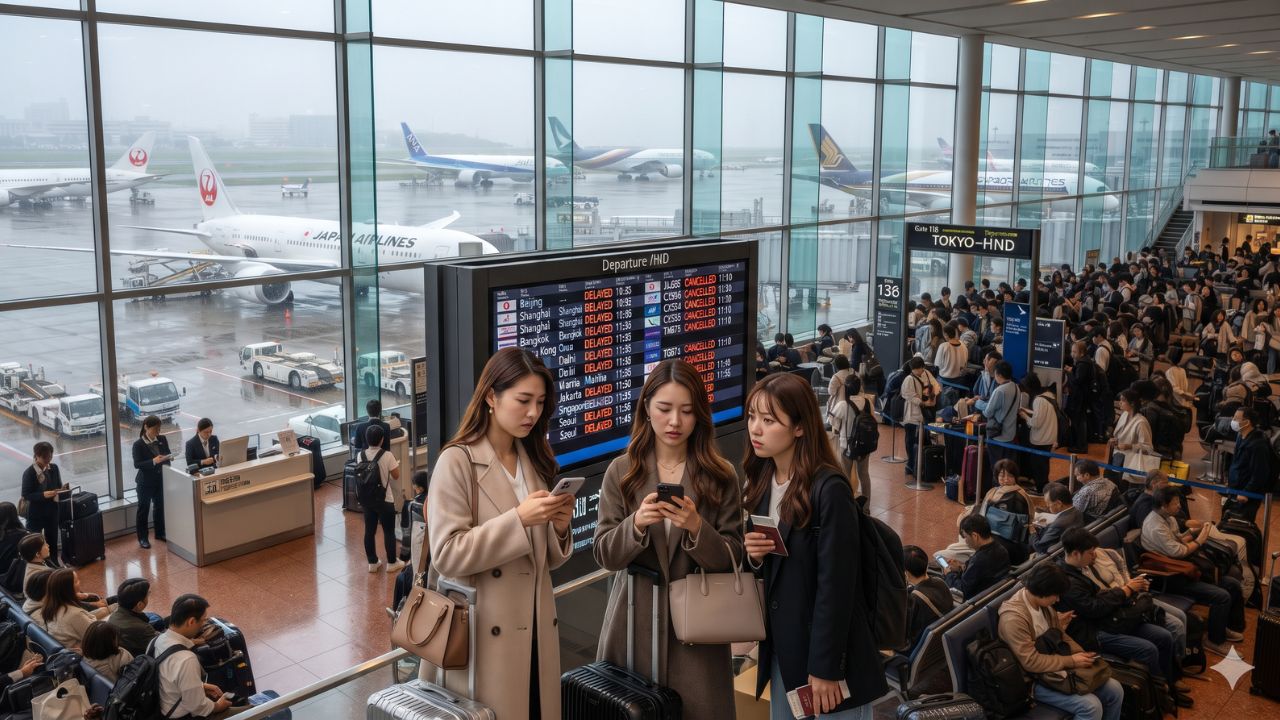
Asia Flight Cancellations 2026: 355 Grounded Flights and 3,667 Delays Hit Tokyo, Jakarta, and Major Chinese Hubs

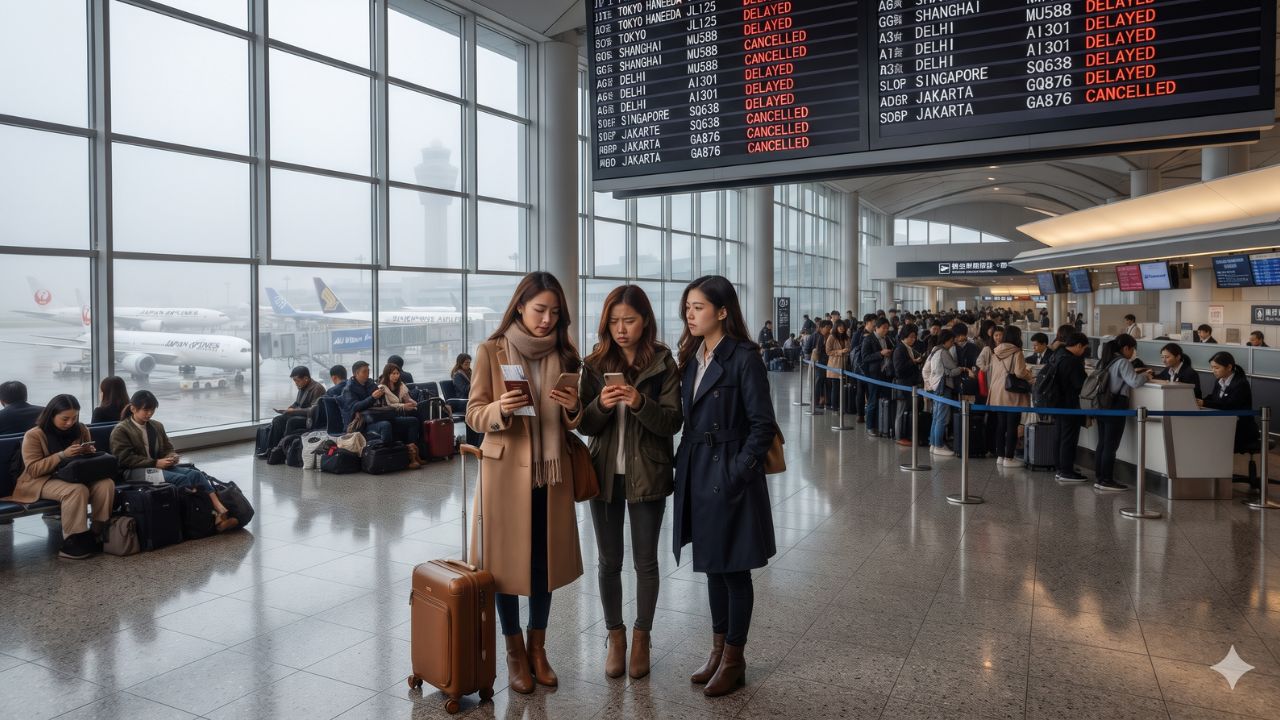
More than half of all flight cancellations across 23 Asian hubs are concentrated in ten Chinese airports, revealing a quiet operational bottleneck far exceeding regional weather disruptions. On 25 November 2026, air travelers across the Asia-Pacific and Middle East faced widespread disruption as airports recorded 3,667 delays and 355 cancellations. Tokyo Haneda logged the highest delay tally at 482 flights, while Jakarta’s Soekarno-Hatta led cancellations with 43 grounded departures.
Rather than a single regional storm, this gridlock stems from localized pressures converging at once: seasonal fog in northern India, severe weather in Indonesia, security suspensions in the Gulf, and domestic carrier backlogs in China.
Regional Disruption Across 23 Major Hubs
While delays stretched from the Arabian Gulf to the Japanese archipelago, flight impacts stemmed from distinct local drivers.
Chinese airports absorbed 1,217 delays and 190 cancellations across ten monitored hubs: Shanghai Pudong (PVG), Beijing Capital (PEK), Hangzhou (HGH), Xi'an (XIY), Chongqing (CKG), Chengdu Tianfu (TFU), Wuhan (WUH), Tianjin (TSN), Dalian (DLC), and Lanzhou (LHW). Shanghai Pudong logged 318 delays and 18 cancellations, Beijing Capital saw 208 delays and 30 cancellations, and Chengdu Tianfu recorded 105 delays and 34 cancellations. Neither the Civil Aviation Administration of China (CAAC) nor the China Meteorological Administration (CMA) posted severe storm closures, indicating carrier-driven backlogs.
In Japan, Tokyo Haneda (HND) logged 482 delays and 4 cancellations, while Narita (NRT) recorded 174 delays and 7 cancellations. Japan Airlines cited clear conditions over Tokyo, confining storm alerts to northern Hokkaido via New Chitose (CTS).
Southeast Asian hubs tallied 572 delays and 60 cancellations, led by Jakarta Soekarno-Hatta (CGK) where Indonesia's BMKG meteorology agency issued extreme weather alerts from 24 to 26 November. Singapore Changi (SIN) logged 241 delays and 3 cancellations, alongside flight holds in Denpasar Bali (DPS).
Master Matrix: Regional Aviation Disruption Load
The following breakdown documents delays, cancellations, and core contributing factors across the 23 monitored hubs on 25 November 2026:
| Regional Zone | Hubs Monitored | Delays | Cancellations | Leading Hubs (Delays / Groundings) | Primary Trigger |
|---|---|---|---|---|---|
| China | PVG, PEK, HGH, XIY, CKG, TFU, WUH, TSN, DLC, LHW | 1,217 | 190 | Shanghai Pudong (318 / 18), Beijing Capital (208 / 30), Chengdu Tianfu (105 / 34) | Schedule backlogs & carrier equipment strain |
| Japan | HND, NRT, CTS | 735 | 15 | Tokyo Haneda (482 / 4), Narita (174 / 7) | Runway congestion & Hokkaido winter alerts |
| India | BOM, DEL, BLR | 624 | 50 | Mumbai (283 / 18), Delhi (257 / 21), Bengaluru (84 / 11) | Low-visibility fog & DGCA airline scrutiny |
| Southeast Asia | CGK, SIN, DPS | 572 | 60 | Jakarta (261 / 43), Singapore Changi (241 / 3) | BMKG severe weather & airline maintenance |
| Middle East | JED, DXB, RUH, DMM | 519 | 40 | Jeddah (209 / 20), Dubai (148 / 9), Riyadh (93 / 4) | Regional airspace security restrictions |
Airline Performance: Cancellations and Aircraft Groundings
Disruptions were heavily weighted toward specific domestic and regional carriers:
- Air China: 77 cancellations and 202 delays, representing the highest number of grounded domestic flights.
- Garuda Indonesia: 50 cancellations and 31 delays, primarily driven by severe rainfall over Java and fleet availability constraints.
- China Eastern Airlines: 36 cancellations and 475 delays, topping the region in total delayed flights.
- Akasa Air: 31 cancellations and 41 delays across Indian and Gulf sectors.
- SpiceJet: 22 cancellations and 11 delays, following a 17 November show-cause notice from India's Directorate General of Civil Aviation (DGCA) over grounded airframes and unpaid lessor dues.
- Hainan Airlines: 18 cancellations and 75 delays.
- Tianjin Airlines: 10 cancellations and 27 delays.
- XiamenAir: 7 cancellations and 124 delays.
- Air India: 5 cancellations and 116 delays.
Fog Alerts in Northern India and Gulf Airspace Suspensions
In India, the India Meteorological Department declared dense morning fog advisories for New Delhi after temperatures at Safdarjung dropped to 8°C. Delhi International Airport Limited (DIAL) warned of low-visibility procedures impacting runway throughput. While fog moved briefly toward Punjab and Himachal Pradesh, forecasters project dense fog will return to Delhi-NCR on 26 and 27 November.
In the Gulf, security measures follow the 22 November drone interception near Riyadh, extending disruption since the 10 October incident at King Khalid International Airport (RUH). Regulated by the General Authority of Civil Aviation, carriers enacted suspensions through 30 November:
Etihad Airways suspended passenger and cargo flights between Abu Dhabi and both Riyadh and Dammam. IndiGo halted flights to Riyadh, Jeddah, Dammam, and Madinah. Akasa Air cancelled flights to Riyadh and Jeddah, while Air India and Air India Express extended suspensions to Riyadh and Dammam after halting Jeddah flights through 24 November. At Dubai International (DXB), where 148 delays occurred, route suspensions continue for Singapore Airlines, Cathay Pacific, Air Canada, KLM, Finnair, SWISS, Austrian Airlines, ITA Airways, and Korean Air, though Lufthansa and Eurowings resumed limited service on 25 November.
Visitor Insider Tips for Managing Asian Flight Disruptions
Navigating cross-border travel during overlapping weather and airspace alerts requires defensive planning:
- Avoid Tight Connections in Tokyo and Changi: With Tokyo Haneda logging 482 delays and Changi recording 241 late arrivals, build at least a 2.5-hour connection window for interline itineraries.
- Track Early Morning Visibility in Delhi: Check live CAT III runway status before heading to Indira Gandhi International Airport. Flights between 5:30 AM and 10:00 AM face high diversion risks during winter fog.
- Rebook Gulf Flights Through Alternate Hubs: Travelers holding tickets to Saudi Arabia on suspended routes must request rebooking immediately, seeking routing via Muscat or Doha where airspace operates normally.
- Monitor Japanese Weather Advisories: Travelers heading to northern ski destinations should consult the Japan Meteorological Agency for winter squalls affecting Hokkaido and Tohoku runways.
Environmental and Geopolitical Realities of Modern Air Corridors
Simultaneous disruptions across Asian skies illustrate how seasonal meteorology intersects with airspace boundaries. Winter temperature inversions over the Indo-Gangetic Plain generate dense fog, reducing visibility and triggering airborne holding patterns that burn excess jet fuel.
Meanwhile, restricted flight corridors over the Middle East compress air traffic control sectors, amplifying minor schedule friction into continent-wide backlogs. Recognizing that international flight corridors operate at high capacity encourages travelers to maintain flexible itineraries and monitor flight status proactively.
FAQ: Asian Flight Disruptions 2026
Which Asian airport had the most flight delays on 25 November?
Tokyo Haneda Airport logged the region's highest delay tally with 482 delayed flights, followed by Shanghai Pudong with 318 delays and Mumbai with 283 delays.
Why are flights to Saudi Arabia suspended through 30 November?
Following drone activity near Riyadh on 22 November, carriers including Etihad, IndiGo, and Akasa Air suspended services to Riyadh, Dammam, and Jeddah through 30 November 2026 for security reviews.
What is causing flight disruptions across Chinese airports?
Despite benign weather across central China, ten major hubs recorded 1,217 delays and 190 cancellations driven by airline maintenance backlogs and network scheduling constraints.
How does Delhi winter fog affect flight schedules?
Dense winter fog drops visibility below CAT III minimums between 5:00 AM and 10:00 AM, triggering ground delays and routing diversions across northern Indian airports.
Across the vast skies of Asia, seasoned travelers remember that a flexible itinerary is the surest passport through shifting winter corridors.
Related Travel Guides
- US Thanksgiving Travel Alert 2026: 17.6 Million TSA Screenings, 81-Minute Checkpoint Waits, and Nationwide Flight Delays
- Chicago Christmas Travel 2026: Insider Guide to Holiday Markets, Light Shows, and Extended Winter Attractions
- Texas Thanksgiving Travel Alert 2026: Highway Closures Across Fort Worth and El Paso
This article is for informational purposes. Flight routes, passenger regulations, visa rules, and transit advisories are subject to change by airlines and aviation authorities. Readers are advised to verify schedules and travel documentation with relevant carriers and border agencies before departure.
Related Stories

Asian Aviation Gridlock: Over 7,400 Flight Delays Strike Tokyo, Delhi, and Regional Hubs

US Travelers Face Bahrain Flight Disruptions: Aviation Security Risks and Passenger Rights 2026