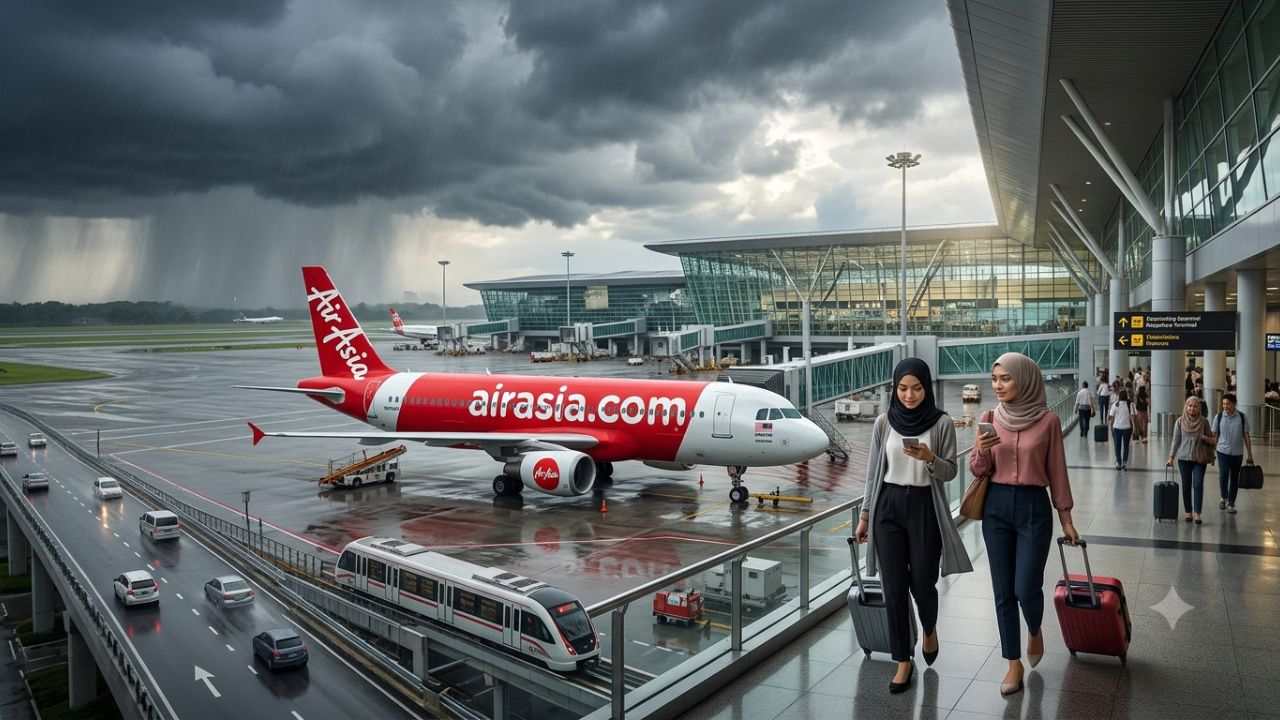
Asia Aviation Gridlock: 4,461 Delays and 365 Flight Cancellations Hit Mumbai, Tokyo, Dubai, and Regional Hubs

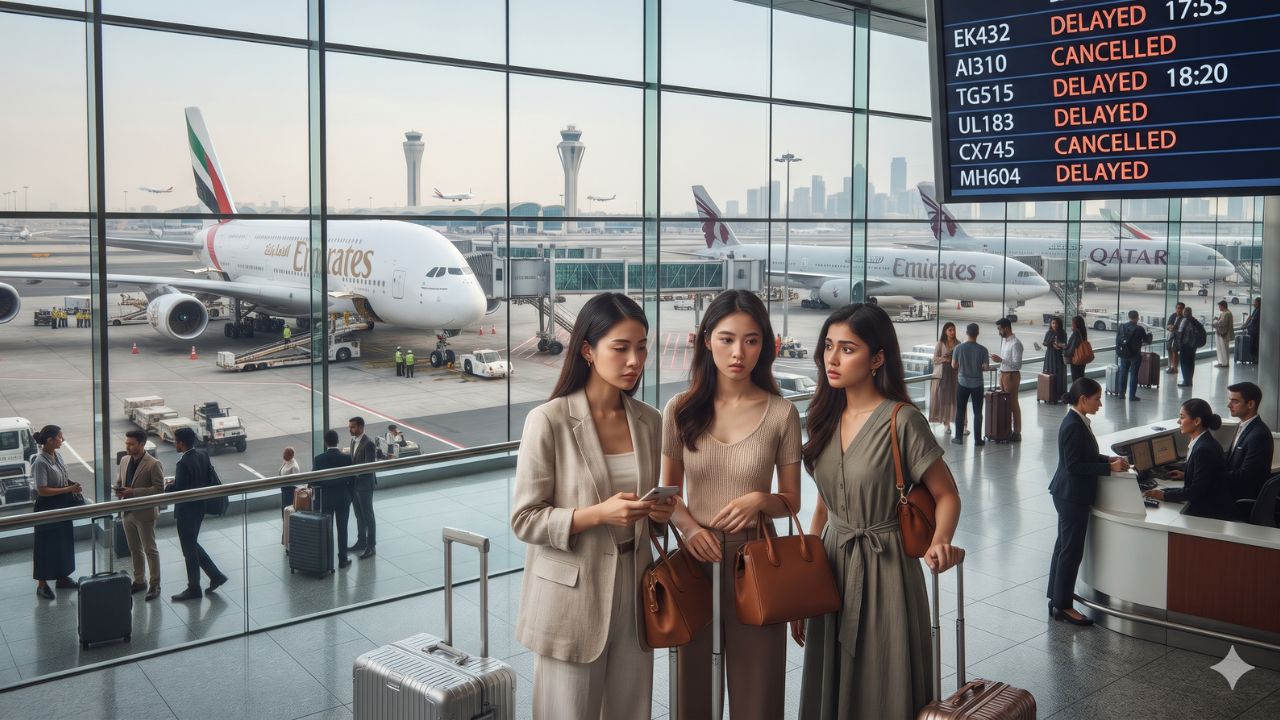
While low-cost giant IndiGo absorbed an astonishing 613 flight delays while keeping over 99 percent of its schedule airborne, domestic carrier SpiceJet suffered an acute operational breakdown, cancelling nearly four out of every ten scheduled departures in a single afternoon. On 17 November 2026, severe weather phenomena and infrastructure constraints combined to create an aviation gridlock across 48 major air hubs, resulting in 4,461 delayed flights and 365 outright cancellations spanning South Asia, East Asia, Southeast Asia, and the Arabian Gulf.
Aviation tracking data captured on 16 November 2026 at 3:50:11 pm ET (corresponding to 17 November at 12:51 am GST) reveals that schedule breakdowns spread simultaneously across multiple geographic zones. Thick seasonal fog warnings across northern India degraded runway visibility, squall lines and thunderstorms struck central Thailand, tight airspace routing rules choked departure slots across eastern China, and airfield maintenance programs slowed runway turnover in Vietnam. The resulting operational squeeze hit long-haul travelers making tight connections at major international transfer hubs from Tokyo to Dubai.
Transpacific and Inter-Asian Bottlenecks: Analyzing the 48-Airport Gridlock
India stood as the hardest-hit aviation territory in the network, with its two primary commercial gateways absorbing the brunt of systemwide delays. Mumbai’s Chhatrapati Shivaji Maharaj International Airport (BOM) led all tracked facilities across Asia, logging 407 delayed flights alongside 28 cancellations. Delhi’s Indira Gandhi International Airport (DEL) trailed closely with 347 delays and 29 cancellations. Farther south, Bengaluru’s Kempegowda International Airport (BLR) logged 139 delays and 15 cancellations.
The disruption extended into regional Indian centers: Ahmedabad recorded 63 delays and seven cancellations, Navi Mumbai registered 48 delays and six cancellations, and Kolkata counted 48 delays and four cancellations. Travelers flying into secondary industrial cities and pilgrimage centers encountered comparable schedule deterioration: Pune recorded 41 delays and 12 cancellations, Kochi noted 28 delays and 10 cancellations, Jaipur reported 31 delays and four cancellations, while Bagdogra recorded nine delays and six cancellations.
In East Asia, Tokyo’s Haneda Airport (HND) experienced 330 delays and three cancellations, becoming one of the most delay-heavy terminals in the Pacific basin. Island hubs were not spared: Okinawa’s Naha Airport recorded 81 delays and three cancellations, while Hokkaido’s New Chitose Airport logged 50 delays and three cancellations.
Mainland China faced intense slot management across its economic powerhouses. Guangzhou Baiyun International Airport logged 192 delays and five cancellations, Shanghai Pudong registered 165 delays and three cancellations, and Chengdu Tianfu recorded 95 delays and three cancellations. In the capital, Beijing Capital logged 91 delays and five cancellations, while Beijing Daxing recorded 46 delays and 10 cancellations. Interior airports—including Hohhot Baita, Chifeng, and Lanzhou Zhongchuan—reported cascading secondary delays as incoming aircraft failed to arrive on schedule.
Southeast Asia and the Gulf saw immediate ripple effects across long-haul transfer points:
- Bangkok Suvarnabhumi (BKK): Recorded 292 delays and four cancellations as monsoonal cells swept through central Thailand.
- Singapore Changi (SIN): Logged 241 delays and four cancellations, disrupting tight onward connections toward Australasia and Europe.
- Jakarta Soekarno-Hatta (CGK): Reported 224 delays and 16 cancellations amidst equatorial squalls.
- Hanoi Noi Bai (HAN): Handled 151 delays and three cancellations during scheduled runway resurfacing intervals.
- Hong Kong International (HKG): Documented 136 delays and three cancellations.
- Dubai International (DXB): Handled 137 delays and 22 cancellations, while neighboring Sharjah recorded 41 delays and seven cancellations.
- Saudi Arabian Gateways: Jeddah’s King Abdulaziz International posted 116 delays and 14 cancellations, Riyadh’s King Khalid International reported 65 delays and eight cancellations, and Dammam’s King Fahd International logged 43 delays and four cancellations.
Tracking and flight records compiled through FlightAware confirm that international transit travelers absorbed severe downstream delays on transcontinental routes.
Airport and Airline Disruption Metrics
The severity of Tuesday's travel disruption varied dramatically depending on airline fleet utilization, turnaround buffers, and crew scheduling policies.
| Airport or Airline Entity | Flight Delays Recorded | Flight Cancellations | Operational Rate / Impact Details |
|---|---|---|---|
| Mumbai (BOM) | 407 delays | 28 cancellations | Highest individual delay tally across Asia |
| Delhi (DEL) | 347 delays | 29 cancellations | Primary northern hub impacted by low visibility |
| Tokyo Haneda (HND) | 330 delays | 3 cancellations | Peak East Asian delay facility |
| Bangkok Suvarnabhumi (BKK) | 292 delays | 4 cancellations | Storm-related ground hold programs |
| Singapore Changi (SIN) | 241 delays | 4 cancellations | High proportion of missed intercontinental transfers |
| Jakarta (CGK) | 224 delays | 16 cancellations | Severe domestic and regional disruption |
| IndiGo Airlines | 613 delays | 3 cancellations | 27% operations delayed; 0% cancellation rate |
| China Eastern Airlines | 206 delays | 21 cancellations | 8% operations delayed; 0% displayed cancellation rate |
| China Southern Airlines | 174 delays | 2 cancellations | 7% operations delayed; 0% displayed cancellation rate |
| Air India | 166 delays | 1 cancellation | 27% operations delayed; 0% displayed cancellation rate |
| Jetstar | 156 delays | 11 cancellations | 43% operations delayed; 3% cancellation rate |
| SpiceJet | 25 delays | 49 cancellations | 20% delays; 39% cancellation rate (highest cancellation share) |
| Akasa Air | 45 delays | 37 cancellations | 18% delays; 15% cancellation rate |
| Air China | 112 delays | 27 cancellations | 6% delays; 1% cancellation rate |
| Batik Air | 55 delays | 17 cancellations | Regional Southeast Asian schedule compression |
| Tianjin Airlines | 33 delays | 17 cancellations | North China regional schedule cancellation surge |
| Saudia | 56 delays | — | 12% tracked flight operations delayed |
| flydubai | 37 delays | — | 13% tracked flight operations delayed |
| Air Arabia | 36 delays | — | 16% tracked flight operations delayed |
What Makes Asian Aviation Corridors Vulnerable to Compound Cascades
Aviation in Asia functions on exceptionally tight aircraft turnaround windows. Budget carriers across India and Southeast Asia regularly program ground turnarounds as short as 25 to 35 minutes to maximize daily aircraft flight hours. When a pre-dawn flight out of Delhi or Kolkata experiences a two-hour fog delay, that specific airframe remains behind schedule for every subsequent sector it flies until midnight.
Carriers took divergent operational paths during the 17 November event:
- The High-Delay Absorption Strategy: Carriers such as IndiGo chose to absorb 613 delayed sectors rather than scrub routes. This protected passenger passenger itineraries from total cancellation, but caused passenger hold times inside terminals to balloon into eight-to-ten-hour waits.
- The Strategic Cancellation Strategy: Airlines facing fleet constraints or pilot duty-hour limitations chose preemptive cancellations. SpiceJet grounded 49 flights, representing 39 percent of its active operational program. Akasa Air cancelled 37 flights (15 percent of its flying schedule), while Jetstar recorded an operational delay rate of 43 percent across 156 flights alongside 11 cancellations.
Domestic passengers inside India can reference statutory airline consumer rights directly through the Directorate General of Civil Aviation.
Visitor Insider Tips: Beating Terminal Snarls Across Asian Hubs
When widespread weather or airspace events paralyze regional skies, standard travel routines fail. Seasoned travelers rely on specific tactical measures:
- Target Early Morning Rotations: Book the first flight of the day (departing between 5:30 AM and 6:45 AM). These aircraft usually overnight at the airport, meaning departure relies solely on current local runway conditions rather than delayed inbound flights from another city.
- Avoid Same-Day Short Transfers: If connecting between separate international tickets in Bangkok, Singapore, or Tokyo, maintain a minimum four-hour transfer buffer. At Changi and Suvarnabhumi, transit security lines lengthen dramatically when multiple delayed widebodies land simultaneously.
- Check Secondary Transport Options: When domestic flights inside Japan face Haneda runway sequencing holds, remember the Shinkansen bullet train network operated via the Japan National Tourism Organization provides storm-resilient connections between Tokyo, Nagoya, and Osaka without baggage check limits.
- Terminal Lounges as Workstations: At Mumbai Terminal 2 and Delhi Terminal 3, paid-access lounges hit capacity early during fog events. If stranded outside security, the airport transit hotels (such as Niranta in Mumbai) offer hourly day-use sleeping pods if booked in advance.
- Document Every Boarding Announcement: Keep digital screenshots of airline departure board alterations and push notifications. If forced to claim hotel accommodations or ticket refunds under passenger charter rules, timestamped digital proof expedites claims.
Cultural and Environmental Context: Meteorology, Crop Burning, and Overstretched Skies
The November aviation disruptions across South Asia are intimately bound to environmental cycles. With the arrival of early winter, dropping surface temperatures across the Indo-Gangetic Plains trigger thermal inversions. Cooler air near the ground traps vehicle emissions, industrial particulate matter, and the smoke from post-harvest crop residue burning across Punjab and Haryana.
This seasonal atmospheric combination produces dense radiation fog and smog, reducing runway visual range (RVR) at Delhi, Jaipur, and Amritsar below Category III instrument landing thresholds. Even with advanced CAT III-B autoland systems, ground surface movement of aircraft between taxiways and boarding gates slows by 50 percent, creating severe tarmac congestion.
Simultaneously, the late autumn transition in Southeast Asia produces intense convective storm cells along the Intertropical Convergence Zone, causing holding patterns above Bangkok and Jakarta. As tourist arrival volumes peak across Asia ahead of the year-end holidays, air traffic corridors operate at full capacity, leaving zero operational margin when regional weather shifts.
FAQ: Navigating Asian Aviation Transit in 2026
What caused the widespread Asian flight cancellations on 17 November 2026?
Disruptions were caused by dense fog warnings across northern India, severe thunderstorms in Thailand, airspace management restrictions in China, and scheduled runway maintenance in Vietnam, creating compound delays across 48 airports.
Which airline suffered the highest cancellation rate during the disruption?
SpiceJet recorded the highest cancellation proportion, cancelling 49 flights, which accounted for 39 percent of its scheduled operations, alongside 25 delayed services.
How should passengers handle missed connecting flights across Asian hubs?
Passengers on single itineraries should report to their operating carrier's transfer desk for automatic rebooking and accommodation vouchers. Those on separate tickets must file for travel insurance claims and secure new seats immediately.
Are compensation refunds mandatory for weather-related flight delays in India?
Airlines are generally exempt from paying financial compensation for delays caused by natural weather events, but they are required to provide refreshments, communication facilities, and alternate travel arrangements under DGCA consumer directives.
Related Travel Guides
- North American Winter Travel Delays and Airline Cancellation Protocols
- Essential International Transit Rules and Airline Passenger Rights
- Southeast Asia Island Routes and Flight Connection Strategies
When autumn skies across Asia tighten, smart transit planning turns an unyielding terminal delay into an unruffled onward journey.
This article is for informational purposes. Flight routes, passenger regulations, visa rules, and transit advisories are subject to change by airlines and aviation authorities. Readers are advised to verify schedules and travel documentation with relevant carriers and border agencies before departure.
Related Stories
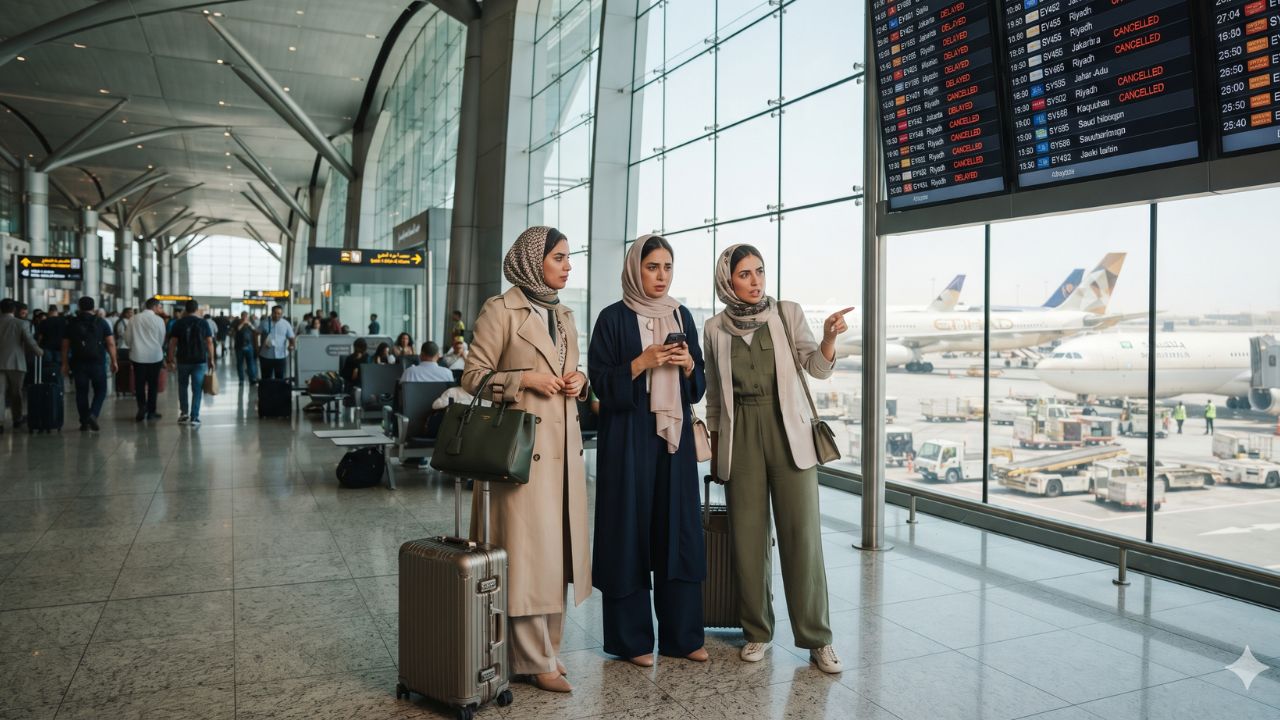
Middle East Flight Disruptions: Over 820 Delays and 90 Cancellations Hit Dubai, Riyadh, and Istanbul
US CDC Ebola Rule 2026: New Health Attestation Requirements for India to USA Flights